
Mango is Uganda’s best-known fruit, and mango growing in Uganda is a practical, long-term enterprise for any O-level Agriculture learner to study. A mango is a tropical perennial fruit crop that keeps producing for over twenty years once established, unlike annual crops such as maize or beans. Grafted trees begin bearing in about three to four years, so a well-planned orchard becomes an asset that outlives the person who planted it.
These notes explain varieties, site selection, planting, orchard care, pest control and marketing, and every section ties the theory to a real Ugandan farm example.
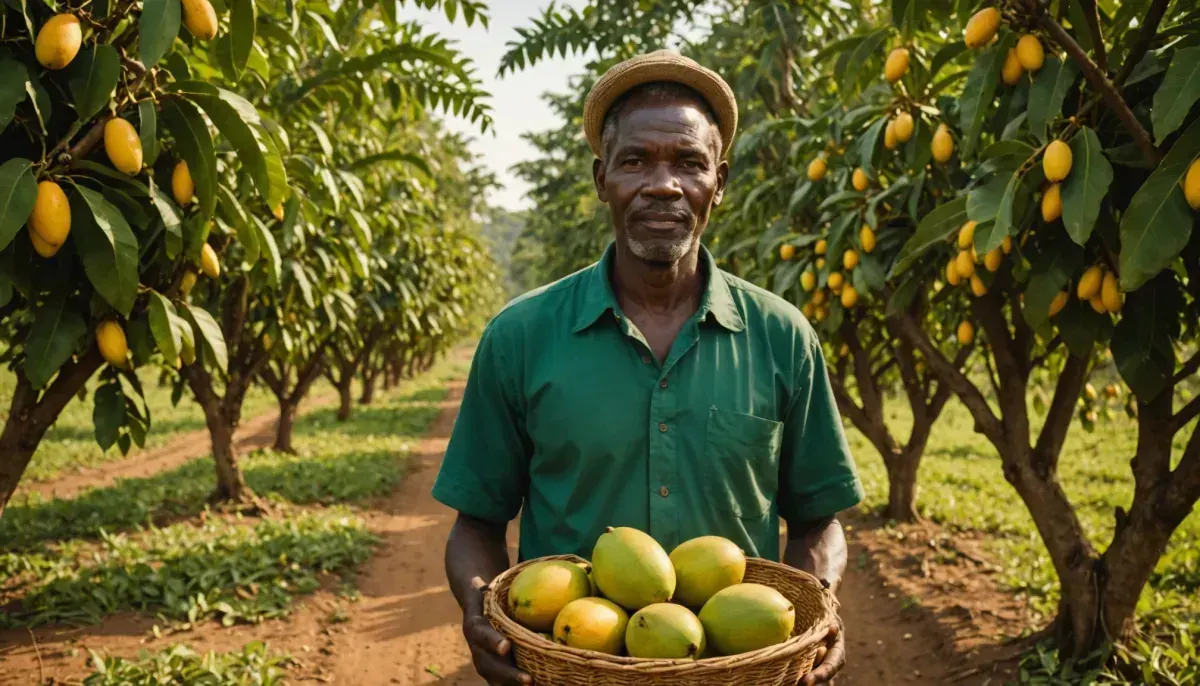
Mango varieties grown in Uganda
Mango growing in Uganda uses two broad kinds of trees: local seedling types and improved grafted types. Local types grow easily from seed and are hardy, but their fruit is often small and fibrous. Improved grafted types are joined onto strong rootstock, bear earlier, and produce larger, less fibrous fruit. Choosing the right kind, and the right season of fruiting, is the first management decision a grower makes.
Because mango is a perennial fruit crop, it sits under perennial crop production in the NCDC lower-secondary Agriculture syllabus, which you can download from the National Curriculum Development Centre. Learning mango as a worked perennial-crop example makes the wider syllabus topic concrete.
- Local seedling mangoes: Many homestead trees in Uganda grow from discarded seed, and these trees are hardy and long-lived but bear variable, often fibrous fruit.
- Improved grafted mangoes: Scion wood from a selected tree is grafted onto rootstock, so the new tree reproduces the parent’s fruit exactly.
- Shorter maturity: Grafted trees begin bearing about three to four years after planting, while a seedling tree raised from seed takes longer to fruit.
- Early-season types: Fruit matures when few other mangoes are on sale, which helps a grower win attention and better terms at market.
- Late-season types: These extend the harvest window so an orchard does not dump all of its fruit at once.
- Local versus improved: Local types are cheap to establish and tough, but improved grafted types fetch steadier demand for larger, less fibrous fruit.
- Fibre content: Local mangoes often have stringy, fibrous flesh, whereas improved selections are bred for smoother, juicier flesh that markets prefer.
- Colour at ripeness: Skin colour ranges from green to yellow, orange and red, and colour alone does not tell you whether the fruit is sweet.
- Fruit size: Improved grafted types are selected for larger, more uniform fruit, which grades and packs better for a commercial buyer.
- Buying planting material: Buy grafted seedlings from a reputable nursery rather than raising seedlings from any seed you happen to find.
- Rootstock: A grafted seedling is joined onto hardy rootstock, which supplies a strong root system and better tolerance of soil pests.
- Adaptation: Different types suit different rainfall and altitude zones, so a grower should pick types known to perform well in their own district.
- Dual-purpose trees: Some local types are valued for shade and timber as much as for fruit, so farmers keep them around the homestead.
- Season planning: Combining early, mid and late-season types spreads both income and harvest labour across more months of the year.
| Feature | Local seedling mangoes | Improved grafted mangoes |
|---|---|---|
| How propagated | Grown from seed | Scion grafted onto rootstock |
| Time to first fruit | Longer, often five years or more | About three to four years |
| Fruit size and uniformity | Smaller and variable | Larger and uniform |
| Fibre in the flesh | Often fibrous | Smoother, juicier |
| Cost to establish | Low, seed is free | Higher, seedlings must be bought |
| Market demand | Local and informal | Steadier, suits supermarkets and export |
Common mistake: judging ripeness by colour alone. A green-skinned mango can be fully ripe and sweet inside, while a brightly coloured one can still be hard and sour. Squeeze the fruit gently and smell the stem end instead.
Site selection and planting
Successful mango growing in Uganda begins with the right site and careful planting. Mangoes need deep, well-drained soil, full sunlight, and enough spacing for the tree’s wide canopy. Planting is done in a prepared hole at the start of the rains. Get these first steps right and the orchard needs less costly correction later.
- Sunlight: Choose a sunny, open site, because mango is a full-sun crop and shaded trees grow tall while bearing poorly.
- Drainage: Mango roots rot in waterlogged soil, so avoid valley bottoms and clay pans that hold water after heavy rain.
- Soil depth: Deep soil lets the taproot go down, which anchors the tree and reaches moisture during dry spells.
- Soil type: Sandy-loam and well-drained loam are ideal, while very heavy clay and very shallow soils are poor choices for mango.
- Wind exposure: A gentle windbreak protects young trees, but a crowded, shaded corner is worse than an open, exposed position.
- Spacing: Space grafted trees 8 to 10 metres apart so each canopy gets full light and air when the tree is mature.
- Planting time: Plant at the onset of the rains so the young tree establishes without needing heavy, costly watering.
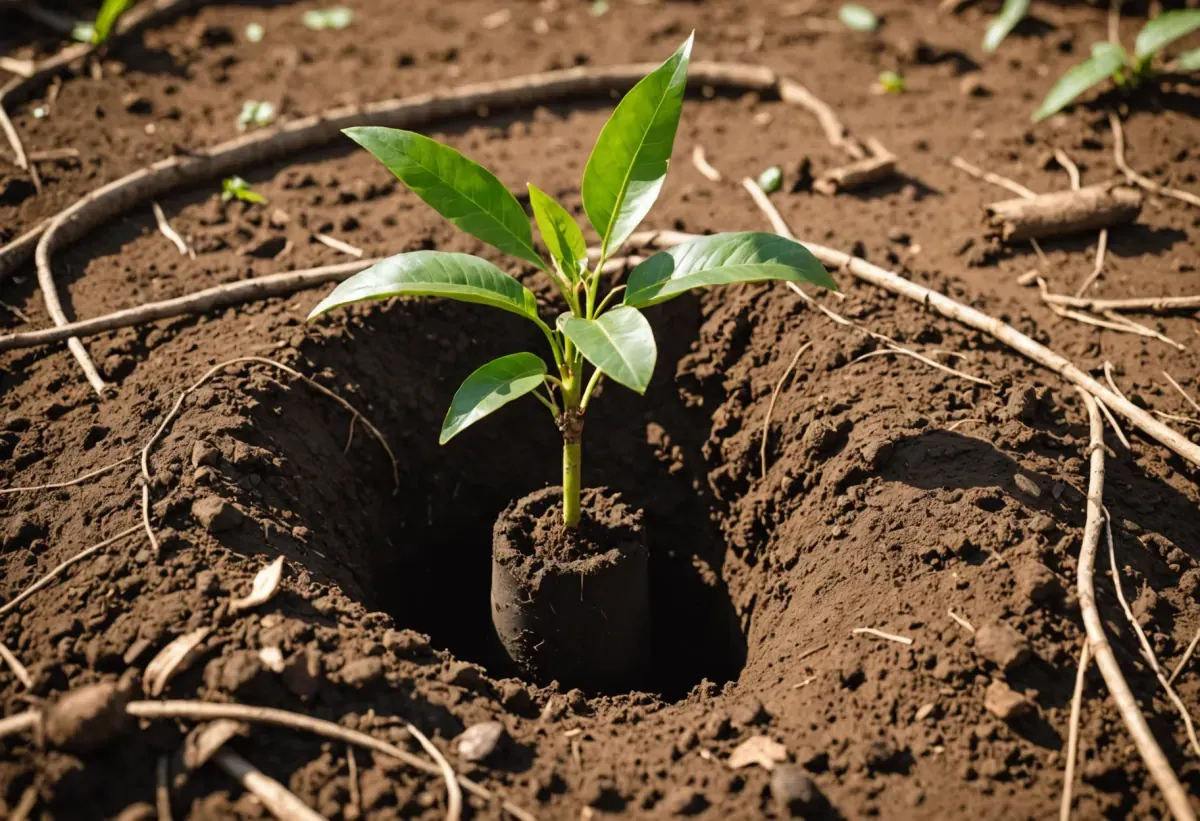
- Hole size: Dig a planting hole about one metre wide and one metre deep, and keep the topsoil separate from the subsoil.
- Hole preparation: Mix the topsoil with well-rotted compost or manure and return the mixture to the hole before planting.
- Seedling handling: Plant grafted seedlings, and set each one so the graft union stays above the soil line.
- Firming and watering: Firm the soil gently around the roots and water in well to remove air pockets that would dry out the roots.
- Mulching: Spread mulch around each young tree, but keep it away from the stem to prevent rot and termites.
- Staking: Stake young trees on windy sites so the root ball is not rocked loose while the tree is still establishing.
- Record keeping: Record each tree’s type and planting date so management and harvest planning stay accurate.
Orchard management practices
Once trees are planted, steady returns in mango growing in Uganda come from routine care. Young trees need watering, weeding and protection, while mature trees need pruning, feeding and sanitation. A simple seasonal calendar keeps every operation on time, which is what the table below provides.
- Watering young trees: Water young trees regularly, especially in the first dry season, because their roots have not yet gone deep.
- Watering mature trees: Mature trees need less frequent watering, but dry-season water at flowering and fruit-fill improves fruit size and retention.
- Mulching: Renew the mulch yearly to conserve soil moisture and to smother weeds around the base of each tree.
- Weeding: Keep the root zone weed-free, because weeds compete for water and nutrients and give pests a hiding place.
- Organic manure: Apply well-rotted organic manure annually to feed the tree and improve the structure of the soil.
- Fertiliser: Apply a balanced NPK fertiliser as the tree begins to bear, but follow the recommended rate rather than guessing.
- Pruning: Prune to open the centre of the canopy so sunlight and air reach the inside and fruit is set all over the tree.
- Training: Train a young tree to a single main stem and three or four well-spaced branches that form a strong frame.
- Thinning: Remove dead, diseased and crossing branches so the tree does not waste energy and pests have fewer hiding places.
- Orchard sanitation: Collect and destroy fallen fruit and prunings, because they carry pests and disease into the next season.
- Monitoring: Walk the orchard regularly to spot pests, disease and nutrient problems while they are still small and cheap to fix.
- Integrated pest management: Combine traps, cultural control and only necessary sprays so pests are controlled without overusing chemicals.
- Record keeping: Record operations, yields and costs so you can compare seasons and learn what actually pays on the farm.
| Operation | When in the year | What it involves |
|---|---|---|
| Planting | Onset of rains (around March–April or August–September) | Dig prepared holes, set grafted seedlings, water in |
| Watering young trees | Throughout the first two dry seasons | Water regularly at the root zone |
| Mulching | After planting, renewed yearly | Spread mulch, keep it away from the stem |
| Weeding | Continuous, heavier in the rainy season | Clear the root zone and between rows |
| Manure application | Once a year, before the rains | Spread well-rotted manure around the drip line |
| NPK fertiliser | Start of each rainy season once bearing | Apply balanced NPK at the recommended rate |
| Pruning | After harvest, in the dry season | Open the centre, remove dead and crossing wood |
| Training young trees | First two to three years | Select the main stem and frame branches |
| Orchard sanitation | After harvest and before flowering | Remove and destroy fallen fruit and prunings |
| Pest monitoring | Weekly, more often in the fruiting season | Check leaves, shoots and fruit for pests |
| Fruit fly control | From flowering to harvest | Hang bait or pheromone traps, bag fruit if needed |
| Anthracnose control | Rainy season and at flowering | Prune for airflow, remove infected parts |
| Dry-season irrigation | Dry spell at flowering and fruit-fill | Water to support flowering and fruit growth |
| Harvesting | When fruit mature, per type and season | Pick firm, mature fruit and handle gently |
Exam tip: In a UNEB question, “orchard sanitation” means more than sweeping the farm. It means collecting and destroying fallen fruit and prunings, because these carry fruit flies, anthracnose and other pests into the next season. Always name the practice, then give the reason it works.
Pests and diseases of mango
Pests and diseases are the biggest threat to mango growing in Uganda, and they attack at specific stages. The main pests are fruit flies, mango weevils and aphids, while the main diseases are anthracnose and powdery mildew. Each has recognisable symptoms and a control method, so a learner can act before fruit is ruined.
- Fruit flies: Adult flies lay eggs under the skin, and the maggots tunnel through the flesh, causing the fruit to rot from the inside.
- Mango weevil (seed weevil): The weevil’s larva bores into the seed, and infested fruit can look perfect outside while being ruined inside.
- Aphids: These small sap-sucking insects cluster on young shoots and flower stalks, curling the leaves and weakening the tree.
- Anthracnose: This fungus causes black, sunken spots on leaves, flowers and fruit, and it spreads fastest in wet, humid weather.
- Powdery mildew: A white powdery coating forms on young leaves and flower clusters, causing flowers to drop and fruit set to fail.
- Regular monitoring: Inspect leaves, shoots and young fruit weekly so a new infestation is caught before it can spread.
- Sanitation: Collect and bury or burn fallen fruit and prunings, because these shelter fruit flies and mango weevils.
- Pheromone and bait traps: Hang fruit-fly bait or pheromone traps to lure and kill adult flies before they lay their eggs.
- Biological control: Encourage natural enemies such as ladybirds, which feed on aphids and other soft-bodied pests.
- Neem-based sprays: Neem-based organic pesticides can suppress pests while being gentler on beneficial insects than broad chemicals.
- Pruning for airflow: Keep the canopy open so leaves dry quickly, which slows the spread of anthracnose and powdery mildew.
- Timed spraying: Apply a fungicide only when disease appears or when the weather stays persistently wet, not on a fixed calendar.
- Record keeping: Note what appeared, when it appeared and what worked, so next season’s control is planned and not improvised.
| Pest or disease | Symptoms | Control |
|---|---|---|
| Fruit fly | Small puncture marks; maggots in the flesh; fruit rots and drops | Collect fallen fruit; hang bait or pheromone traps; bag fruit; keep orchard clean |
| Mango weevil | Fruit looks normal but the seed is tunnelled and hollow | Destroy infested fruit; sanitise; use clean planting material |
| Aphids | Curled, distorted young leaves; sticky honeydew on shoots | Encourage ladybirds; use neem-based spray when severe |
| Anthracnose | Black, sunken spots on leaves, flowers and fruit; die-back of shoots | Prune for airflow; remove infected parts; timed fungicide in wet weather |
| Powdery mildew | White powdery coating on young leaves and flowers; poor fruit set | Prune for airflow; remove infected parts; apply sulphur or a recommended fungicide |
Common mistake: confusing anthracnose with powdery mildew. Anthracnose makes black, sunken spots on fruit and leaves, while powdery mildew is a white powdery coating on young leaves and flowers. Naming the correct symptom is what earns the mark in an exam.
Harvesting and marketing mangoes
Harvesting and marketing are where mango growing in Uganda turns effort into income. Fruit must be picked mature but firm, handled gently, and sorted before sale. A grower who grades carefully and chooses the right marketing channel keeps more of the value than one who dumps mixed fruit at the farm gate.
- Maturity: Harvest when the fruit is mature but still firm, because overripe fruit bruises easily and does not travel well.
- Ripeness signs: Look for a colour change, rounded full cheeks and a slight give when squeezed, and never rely on colour alone.
- Picking method: Cut or twist the fruit off with a short stalk, and avoid pulling so that you do not tear the skin.
- No dropping: Never let fruit drop to the ground, because bruising starts rot and lowers the grade the fruit will fetch.
- Time of day: Harvest in the cooler morning hours and keep picked fruit out of direct sun to slow down ripening.
- Sorting and grading: Sort by size, ripeness and freedom from blemishes so that each grade matches a different kind of buyer.
- Cleaning: Wipe or wash fruit gently to remove sap and dust without scratching or bruising the skin.
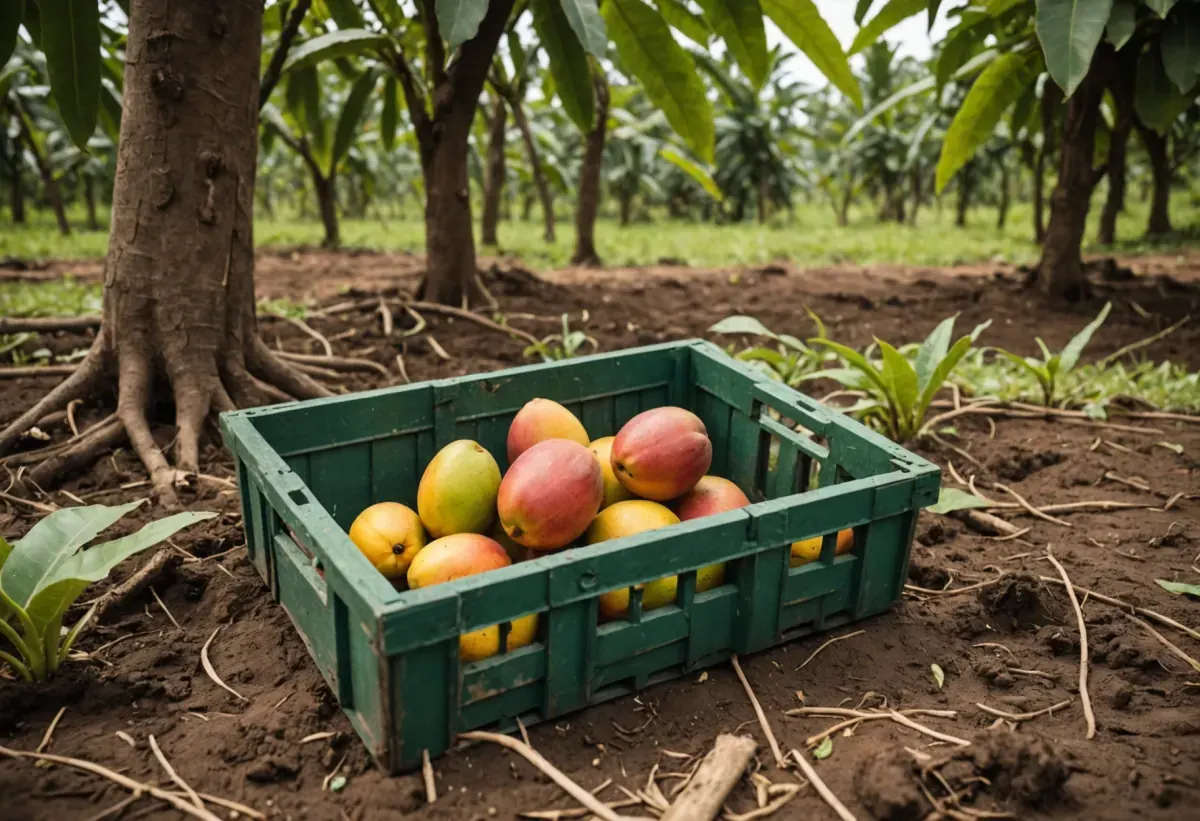
- Packaging: Pack in shallow crates or boxes lined with soft material, and avoid deep piles that crush the bottom layer.
- Storage: Store fruit in a cool, dry, shaded place, because heat and moisture speed up ripening and spoilage.
- Transport: Move fruit in padded, secure crates so the boxes do not slide and crush one another on the journey.
- Local market: Selling directly to market vendors or consumers brings quick cash and puts the grower in touch with buyers.
- Cooperatives: Joining a farmer cooperative lets growers pool fruit and bargain collectively, which cuts out low-paying middlemen.
- Value addition: Turning lower-grade fruit into juice, dried slices, pulp or jam means very little of the harvest is wasted.
- Regional export: Clean, well-graded Ugandan mangoes are sold to neighbouring markets such as Kenya, South Sudan and Rwanda.
| Stage | Indicator or action | Reason or detail |
|---|---|---|
| Skin colour | Begins to change from green to yellow or orange | One sign of maturity, but not the only test |
| Cheek fullness | Shoulders and cheeks look rounded and full | Shows the fruit has filled out to size |
| Feel | Slight give when gently squeezed | Means the flesh has matured |
| Stem-end smell | Sweet smell near the stem end | Indicates ripeness developing |
| Sap | Sap runs clear and thin when the stalk is cut | Thick milky sap means the fruit is still immature |
| Harvest timing | Pick mature but firm fruit | Avoids bruising and overripeness |
| Harvest method | Cut or twist with a short stalk | Prevents tearing the skin |
| Handling | Never drop the fruit | Bruising starts rot and lowers grade |
| Sorting and grading | By size, ripeness and blemishes | Matches each grade to a suitable buyer |
| Packing | Shallow, padded crates | Prevents the bottom layer being crushed |
| Storage | Cool, dry and shaded | Slows spoilage and ripening |
| Transport | Padded, secure crates | Avoids crushing and sliding on the road |
| Marketing channel | What the grower does | Advantage or consideration |
|---|---|---|
| Local open market | Sells direct to market vendors or consumers | Quick cash, little grading pressure |
| Urban wholesale | Supplies traders serving Kampala, Mbarara and Gulu | Larger volumes and steadier demand |
| Supermarkets | Grades and packs to a set standard | Better price but strict quality rules |
| Juice processors | Sells sound fruit of any size | Absorbs large volumes, accepts lower grades |
| Export buyers | Meets size, quality and plant-health rules | Highest value but the strictest standards |
| Farmer cooperative | Pools fruit with other growers | Collective bargaining cuts out middlemen |
| Own value-added sales | Processes juice, dried mango or jam | Higher margin but more work and equipment |
| Institutions | Direct supply to schools, hotels and caterers | Repeat orders and reliable income |
Frequently asked questions about mango growing in Uganda
How long does a mango tree take to bear fruit in Uganda? A grafted mango tree usually starts bearing about three to four years after planting. A seedling tree grown from seed takes longer, sometimes five years or more, and its fruit is more variable. Buying grafted seedlings is the fastest way to reach a first harvest.
What is the best spacing for mango trees in Uganda? Space grafted mango trees 8 to 10 metres apart. This gives each tree enough light and air when its canopy is full-grown, and it stops the roots from competing. Close spacing forces trees to grow tall and bear poorly, so resist the temptation to squeeze in extra trees.
Which mango variety should I plant in Uganda? Choose improved grafted types rather than local seedling trees if you are selling the fruit. Grafted types bear earlier and give larger, less fibrous fruit that markets prefer. Pick early, mid and late-season types so your harvest is spread across more months instead of arriving all at once.
How do I control fruit flies in my mango orchard? Combine several methods: collect and destroy fallen fruit, hang bait or pheromone traps to catch adult flies, and keep the orchard clean. You can also bag individual fruit and use neem-based sprays. Relying on one method alone rarely works, because fruit flies breed in fallen fruit.
What causes black spots on mango fruit? Black, sunken spots on fruit and leaves are usually anthracnose, a fungal disease that spreads in wet, humid weather. Improve airflow by pruning, remove infected parts, and avoid overhead watering. A white powdery coating on young leaves and flowers is a different disease, powdery mildew.
When is a mango ready to harvest? Harvest when the fruit is mature but still firm. Look for rounded, full cheeks, a slight give when squeezed, and a colour change from green. Never drop the fruit, and handle it gently, because bruising starts rot and lowers the grade a buyer will pay for.
Can I grow mangoes profitably on a small plot? Yes. Even a few well-spaced grafted trees can earn, especially if you grade the fruit, join a cooperative, and add value by drying or juicing the lower grades. Start small, manage the trees properly, and expand once the orchard is established and paying.
Key terms and revision summary
| Term | Definition |
|---|---|
| Perennial crop | A crop that lives and produces for more than two years, such as a mango tree |
| Grafting | Joining a selected scion onto rootstock so the new tree copies the parent |
| Rootstock | The rooted lower part onto which a scion is grafted; it supplies roots and vigour |
| Scion | The shoot of a chosen variety that is grafted onto the rootstock |
| Seedling | A plant raised from seed rather than grafted |
| Orchard | A planted area of fruit trees managed for fruit production |
| Orchard sanitation | Removing and destroying fallen fruit and prunings to cut pest and disease carryover |
| Integrated pest management (IPM) | Combining traps, cultural, biological and careful chemical control |
| Anthracnose | A fungal disease causing black, sunken spots, worst in wet weather |
| Powdery mildew | A fungal disease forming a white coating on young leaves and flowers |
| Fruit fly | A pest whose maggots tunnel through ripening fruit |
| Mango weevil | A pest whose larva bores into the mango seed |
| Mulching | Covering soil with plant material to conserve moisture and suppress weeds |
| Graft union | The point where scion and rootstock join; keep it above the soil line |
Test yourself with these exam-style questions, then check the answer outlines.
- State four practices a farmer should carry out when planting mango seedlings. Outline: dig a one-metre-by-one-metre hole; mix topsoil with well-rotted manure; plant a grafted seedling at the onset of rains; keep the graft union above the soil; firm and water in; mulch away from the stem.
- Describe how a mango grower can control fruit flies without relying only on chemicals. Outline: collect and destroy fallen fruit; hang bait or pheromone traps; bag individual fruit; keep the orchard clean; encourage natural enemies.
- Explain the difference between a local seedling mango and an improved grafted mango. Outline: a seedling grows from seed, fruits later and gives variable, fibrous fruit; a grafted tree copies the parent, fruits in three to four years and gives larger, less fibrous fruit.
- Outline the steps of harvesting and handling mangoes for a supermarket market. Outline: pick mature but firm fruit; never drop it; sort and grade by size and blemishes; clean gently; pack in shallow padded crates; store cool and dry; transport carefully.
- Why is orchard sanitation important in controlling anthracnose? Outline: the fungus survives on infected fallen fruit and leaves; removing and destroying them cuts the source of infection; pruning for airflow keeps leaves dry and slows spread.
Mango growing in Uganda also pairs naturally with other fruit-crop notes. If you are studying growing guavas profitably, compare the two crops side by side, then anchor both back to the Senior 3 Agriculture notes and the past papers for exam practice.



Leave a Reply