
Tag: senior 1

  • Senior 1 Entrepreneurship topics: full topic breakdown

    Senior 1 Entrepreneurship topics: full topic breakdown

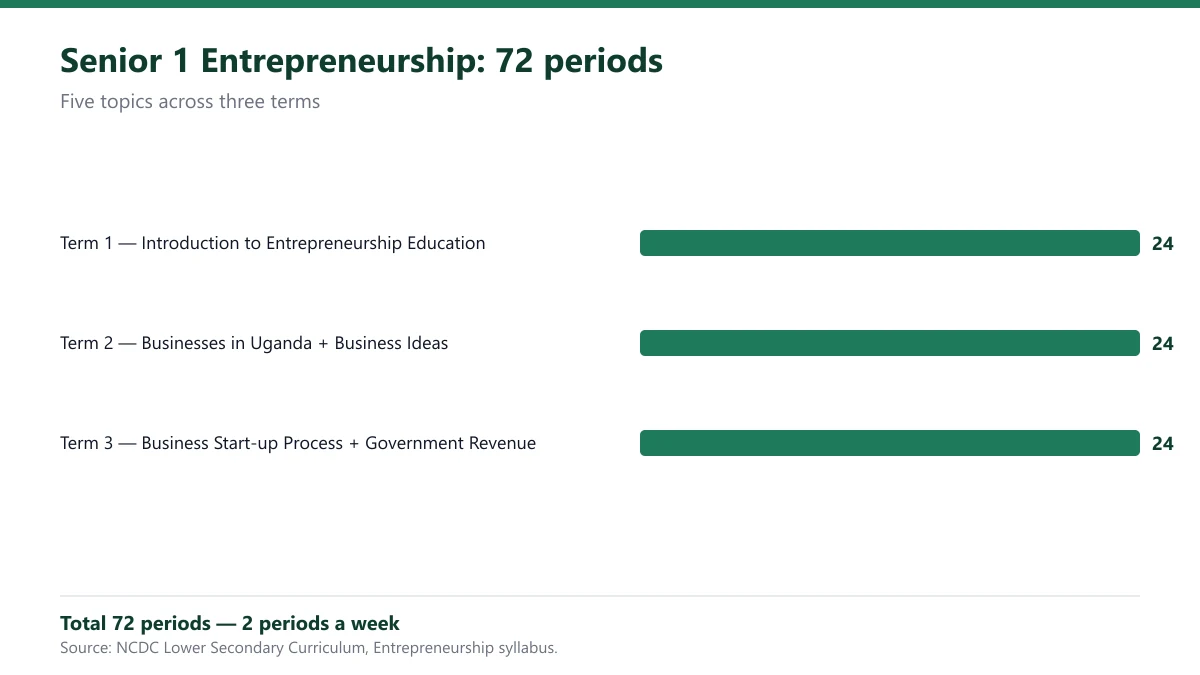
    Senior 1 Entrepreneurship topics cover five units across 72 periods: Introduction to Entrepreneurship Education, Businesses in Uganda, Business Ideas and Opportunities, Business Start-up Process, and Introduction to Government Revenue. The year opens by building entrepreneurial awareness, then moves to scanning the environment and finally to the start-up process. This guide lists every sub-topic, its exact period count and its learning outcomes.

    • 72 periods total — 24 in Term 1 and 24 in each of Terms 2 and 3.
    • Five topics — from Introduction to Entrepreneurship Education to Introduction to Government Revenue.
    • Two periods a week — compulsory in Senior 1 and Senior 2.
    • Three themes — Creating an Entrepreneurial Awareness, Scanning the Environment, and the Start-up Process.
    • 13 numbered sub-topics — each with its own period allocation.
    • Outcome codes — (k), (u), (s), (v) and (gs) tag every learning outcome.

    What is Senior 1 Entrepreneurship?

    Senior 1 Entrepreneurship topics make up the first-year lower secondary Entrepreneurship course in Uganda’s O-level. They introduce learners to entrepreneurial thinking before they scan the business environment and learn the start-up process. The subject is compulsory in Senior 1 and Senior 2 and is taught for two periods a week. read more

  • Aina za Vyakula: The Ultimate Guide to Types of Food

    Aina za Vyakula: The Ultimate Guide to Types of Food

    Discover the diverse world of food types. This guide covers 20 categories, from grains to superfoods, with practical examples and health insights.

  • 🏠 Nyumba: Sehemu za Nyumba

    Learn about Houses and their Parts – Kiswahili Beginners’ Guide (With Explanations + 70+ Examples)

    Understanding the vocabulary for parts of a house helps beginners talk about their homes, describe objects, and form simple everyday sentences.
    This blog explains each part of a house in Kiswahili + English, with many examples to help Senior One learners build confidence.

    ⭐ 1. Maana ya Nyumba (Meaning of House)

    Nyumba = House
    Nyumba ni mahali ambapo watu wanaishi na kupata makazi. Ina vyumba (rooms), vifaa (furniture), na sehemu mbalimbali zinazotumika kwa shughuli tofauti. read more

  • Upatanishi wa Nyakati za Kisarufi (Agreement in Tenses)

    Katika Kiswahili, upatanishi wa nyakati humaanisha uunganishaji sahihi wa viambishi vya wakati (tenses) na ngeli za nomino pamoja na viwakilishi vya watu (subject prefixes).
    Hii ni mada muhimu kwa wanafunzi wa Kiswahili kwa sababu inasaidia kutunga sentensi sahihi, zenye mpangilio na maana kamili.

    Katika blogi hii, tunachunguza:

    • Maana ya upatanishi wa nyakati
    • Aina za nyakati (wakati uliopo, ujao, uliopita, nk.)
    • Jinsi ya kupatanisha nafsi + wakati
    • Mifano mingi (50+)
    • Jedwali kamili la viambishi
    • Mazoezi ya kukusaidia kufahamu

    🌟 1. Maana ya Upatanishi wa Nyakati za Kisarufi

    Upatanishi huu ni makubaliano kati ya nafsi (subject prefix), wakati (tense marker), na kitenzi (verb) ili kutoa habari sahihi kuhusu wakati kitendo kinatokea.

    Muundo wa sentensi: read more

  • Msamiati wa Ununuzi na Uuzaji (Shopping & Selling Vocabulary)

    Katika mada hii, tutajifunza msamiati muhimu unaotumika wakati wa kununua na kuuza sokoni, dukani, au mtandaoni. Lugha hii ni muhimu kwa wanafunzi, wafanyabiashara, na watu wote wanaofanya shughuli za kila siku za manunuzi.

    ✅ A. Maneno Muhimu ya Ununuzi na Uuzaji

    1. Vitendo (Verbs) vya Ununuzi na Uuzaji

    1. Kununua – to buy
    2. Kuuza – to sell
    3. Kupima – to measure
    4. Kupunguza – to reduce
    5. Kuongeza – to add
    6. Kuweka – to put/place
    7. Kuchagua – to choose
    8. Kurejesha – to return
    9. Kulipia – to pay for
    10. Kuagiza – to order
    11. Kubandika bei – to label price
    12. Kusajili – to register
    13. Kupokea – to receive
    14. Kutuma – to send
    15. Kuorodhesha – to list
    16. Kukokotoa – to calculate
    17. Kuandikisha risiti – to write a receipt

    ✅ B. Maneno ya Bei na Malipo (Price & Payment Vocabulary)

    1. Bei – price
    2. Punguzo – discount
    3. Ofa – offer
    4. Shilingi – money (currency)
    5. Fedha / pesa – money
    6. Ada – charge/fee
    7. Kodi – tax
    8. Malipo – payments
    9. Kiasi – amount
    10. Thamani – value
    11. Gharama – cost
    12. Bei ya jumla – wholesale price
    13. Bei ya rejareja – retail price
    14. Rembesha – bargain
    15. Lipa kidogo kidogo – pay in installments
    16. Cheti cha malipo – receipt
    17. Kurudishiwa pesa – refund

    ✅ C. Vifaa na Vitu vya Uuzaji (Things Used in Selling)

    1. Mizani – weighing scale
    2. Kasha – box
    3. Rafu – shelf
    4. Kaunta – counter
    5. Kikapu – basket
    6. Toroli – trolley
    7. Pakiti – packet
    8. Mfuko – bag
    9. Stoo – store
    10. Kitabu cha mauzo – sales book
    11. Kitabu cha hisabu – ledger
    12. Mashine ya POS – point of sale machine
    13. Mzigo – stock
    14. Bidhaa – product
    15. Kibandiko cha bei – price tag

    ✅ D. Msamiati wa Mteja na Muuzaji (Customer & Seller Vocabulary)

    1. Mteja – customer
    2. Muuzaji – seller
    3. Mfanyabiashara – businessperson
    4. Mwanunuzi – buyer
    5. Msambazaji – supplier
    6. Mtoa huduma – service provider
    7. Mnunuaji wa jumla – wholesaler
    8. Mnunuaji wa rejareja – retailer
    9. Karibu tena – welcome again
    10. Huduma kwa mteja – customer service

    ✅ E. Misemo Inayotumiwa Wakati wa Ununuzi (Useful Shopping Phrases)

    1. Ni bei gani? – What’s the price?
    2. Naweza kupata punguzo? – Can I get a discount?
    3. Nipimie kilo moja. – Measure me one kilo.
    4. Natafuta bidhaa bora. – I’m looking for quality products.
    5. Gharama ni kubwa. – The cost is high.
    6. Nipatie risiti. – Give me a receipt.
    7. Sina pesa ya kutosha. – I don’t have enough money.
    8. Malipo kwa simu? – Mobile payment?
    9. Nataka kulipia kwa awamu. – I want to pay in installments.
    10. Hii ni ghali sana. – This is too expensive.
    11. Ninaagiza bidhaa hizi. – I am ordering these products.
    12. Nimebadilisha mawazo. – I’ve changed my mind.
    13. Una bidhaa mpya? – Do you have new stock?
    14. Hii imeharibika. – This is damaged.
    15. Naweza kurudisha? – Can I return it?

    ✅ F. Mifano ya Sentensi 50+ (Example Sentences)

    1. Nimekuja kununua mahindi.
    2. Muuzaji alinipatia punguzo.
    3. Bei ya sukari imepanda.
    4. Mteja alilipa kwa simu.
    5. Napenda bidhaa zenye ubora.
    6. Muuzaji anapima nyanya kwa mizani.
    7. Ninaagiza bidhaa mtandaoni.
    8. Niambie bei ya mwisho.
    9. Natafuta soko lenye bei nafuu.
    10. Ninaorodhesha orodha ya mahitaji.
    11. Karibu uangalie bidhaa zetu.
    12. Dukani kuna ofa maalumu.
    13. Ninaomba risiti ya malipo.
    14. Niambie gharama ya jumla.
    15. Nataka kilo mbili za mchele.
    16. Mteja alirudisha bidhaa.
    17. Muuzaji anapakia mizigo kwenye kartoni.
    18. Tuma bidhaa kwa gari la usafirishaji.
    19. Hii bidhaa haina ubora mzuri.
    20. Tunauza kwa bei ya rejareja.
    21. Wauzaji walipandisha bei leo.
    22. Naomba ubadilishe hela kubwa.
    23. Nataka kununua kwa wingi.
    24. Sitaki bei hiyo, ni ghali.
    25. Muuzaji alikubali kupunguza bei.
    26. Soko ni nje ya mji.
    27. Nimepoteza risiti yangu.
    28. Bei inaanzia elfu mbili.
    29. Nimepata bidhaa rahisi sokoni.
    30. Hii siyo bei ya mwisho.
    31. Naomba maelezo ya bidhaa.
    32. Muuzaji aliniuzia bidhaa mbovu.
    33. Tunafanya mauzo ya mtandaoni.
    34. Bidhaa zimefika ghala leo.
    35. Uuzaji unaendelea vizuri.
    36. Ninafunga bidhaa na mfuko.
    37. Biashara inahitaji uwazi.
    38. Ninaweka bidhaa kwenye rafu.
    39. Tunapokea malipo ya simu tu.
    40. Ninaongeza bidhaa mpya dukani.
    41. Hii bidhaa inahitajika sana.
    42. Natafuta bidhaa zilizo kwenye ofa.
    43. Ninaomba urejeshe chenji yangu.
    44. Nataka kukokotoa jumla ya bei.
    45. Tunaagiza bidhaa kutoka Kampala.
    46. Nimepata mteja mpya.
    47. Wanunuzi wapo wengi leo.
    48. Bei hii haiwezi kushuka zaidi.
    49. Ninaongeza oda nyingine.
    50. Tunatuma bidhaa kwa muda.
    51. Mteja alichelewa kulipa.
    52. Uuzaji mtandaoni unaongezeka.
    53. Bei ya mafuta inaathiri biashara.

    ✅ G. Dialogi Fupi za Mazoezi (Short Practice Dialogues)

    1. Sokoni

    Mteja: Ni bei gani ya nyanya?
    Muuzaji: Kilo moja ni elfu mbili.
    Mteja: Naweza kupata punguzo?
    Muuzaji: Chukua kwa elfu moja na mia tano.

    2. Dukani

    Mwanunuzi: Nataka mchele kilo tano.
    Muuzaji: Ni elfu kumi kwa jumla.
    Mwanunuzi: Naomba risiti.
    Muuzaji: Karibu, hii hapa. read more

  • Biashara: Bidhaa za Dukani na Sokoni

    Learn the names of goods sold in shops and markets in Kiswahili. Includes 50+ examples, clear English explanations, real-life sentences, and vocabulary for beginner learners.

    Introduction

    Biashara (business or trade) is an important part of daily life in East Africa. Many people buy and sell goods in maduka (shops) and masoko (markets). For Kiswahili beginners, understanding the names of common goods helps in real communication—whether buying food, clothing, tools, or household items.

    In this blog, we explore: read more

  • Basic Mail Merge in Microsoft Word: A Step-by-Step Tutorial for Beginners

    Learn Basic Mail Merge in Microsoft Word with this beginner-friendly tutorial. Step-by-step instructions for creating personalized letters and labels, with troubleshooting tips and keyboard shortcuts. Perfect for small businesses and beginners.

  • Mastering Inserting & Editing Objects: A Simple Guide to Better Documents

    Learn the essential skills of inserting and editing objects like images, shapes, and tables to create visually compelling and professional documents.

  • Master Your Page Layout & Printing: A Simple Guide to Perfect Documents

    Learn the simple steps for perfect page layout & printing, from setting margins to adding headers and printing flawlessly.

  • Master Your Documents: A Beginner’s Guide to Styles & Themes

    Learn to format documents quickly and professionally. This beginner-friendly tutorial covers applying built-in styles (like Heading 1) and changing document themes using both shortcut keys and your mouse.

  • Microsoft Word Made Easy: Your Step-by-Step Guide to Formatting & Editing Documents

    Learn the essential steps to format and edit documents in Microsoft Word. This beginner-friendly guide covers text selection, font changes, bold/italic/underline, highlighting, and handy tools like Format Painter.

  • 10 Essential Tips for Creating Microsoft Word Documents Like a Pro

    Discover 10 powerful tips to master Microsoft Word, from creating and typing in documents to using essential shortcuts and closing files securely.

  • 10 Essential Microsoft Shortcut Keys to Boost Your Productivity

    Discover 10 powerful Microsoft shortcut keys for general use and screen readers. Learn actionable tips to save time, navigate faster, and boost your daily productivity.

  • Mimea na Mazao ya Mimea – Mwongozo

    Plants and Plant Products – A Complete Beginner’s Guide

    Mimea ni viumbe muhimu sana katika maisha ya binadamu, wanyama, na mazingira kwa ujumla. Katika lugha ya Kiswahili, kujua majina ya mimea na mazao yao husaidia wanafunzi kuelewa mada za chakula, kilimo, mazingira, na matumizi ya kila siku. Blog hii itakusaidia kujifunza kwa urahisi kwa kutumia mifano mingi, maelezo mafupi, na tafsiri za Kiingereza.

    1. Mimea ni nini? (What are plants?)

    Mimea ni viumbe hai vinavyoota ardhini na hutengeneza chakula chao kwa kutumia mwanga wa jua, maji, na hewa.
    Plants grow from the soil and make their own food using sunlight, water, and air. read more

  • Vivumishi Vimilikishi (Possessive Adjectives in Kiswahili)

    Learn Kiswahili possessive adjectives (vivumishi vimilikishi) with simple explanations, English translations, rules, charts, and more than 100 examples. Perfect for beginners, teachers, and Senior One & Two Kiswahili learners.

    Introduction

    In Kiswahili grammar, vivumishi vimilikishi (possessive adjectives) show ownership or possession. They tell us whose? something belongs to. These possessive adjectives change depending on the noun class in Kiswahili.

    For beginners, this topic is extremely important because it appears in daily speech, school exams, essays, and reading passages. This long-form guide offers simple English explanations alongside Kiswahili examples to help learners understand easily. read more

  • Vivumishi Viashiria (Demonstrative Adjectives)

    A Beginner-Friendly English–Kiswahili Learning Blog

    Learn Kiswahili demonstrative adjectives (vivumishi viashiria) with clear English explanations, Kiswahili examples, tables, and over 50 practice items. Understand how to use “huyu, huyu, yule, hawa, wale” and more across all noun classes.

    Introduction

    Vivumishi viashiria are demonstrative adjectives used to point out people, animals, or things.
    In English, they are words like:

    • this
    • that
    • these
    • those

    In Kiswahili, they change depending on the noun class. For beginners, this topic can be confusing, so this blog explains everything in English, with Kiswahili examples and translations. read more

  • Nomino za Ngeli ya A–Wa: Nouns in the M–Wa Class

    Learn the Kiswahili A–Wa noun class with clear explanations, English translations, rules, and over 70 examples for beginners. Understand how to form singular and plural nouns, agreement with verbs, adjectives, and possessives—perfect for students and Kiswahili language learners.

    Introduction

    Ngeli ya A–Wa also known as Ngeli ya M-Wa is one of the most important noun classes in Kiswahili. It mainly includes people (humans). When teaching Kiswahili to beginners, the A–Wa class is usually the easiest to start with because its patterns are predictable. read more

  • Ndege wa Pori (Wild Birds)

    Learn mnames of ndege wa pori (wild birds) in Kiswahili with English translations, examples, and simple explanations for beginner learners. Perfect for Senior One and Two Kiswahili lessons.

    Introduction

    Wild birds, known in Kiswahili as ndege wa pori, are birds that live freely in forests, savannahs, wetlands, mountains, grasslands, and other natural habitats. They are different from ndege wa nyumbani (domestic birds) such as chickens, ducks, and pigeons because they are not raised by humans.

    In this lesson, we focus on: read more

  • Wanyama wa Pori (Wild Animals)

    Learn about wanyama wa pori (wild animals) in Kiswahili with clear English explanations, pronunciation help, and many examples. Perfect for Kiswahili beginners in Senior One and Senior Two.

    Introduction

    In this beginner-friendly Kiswahili lesson, we explore wanyama wa pori—animals that live in the wild. These are animals found in forests, national parks, game reserves, mountains, grasslands, and other natural habitats. This topic is important because learners interact with wild animals in stories, textbooks, news reports, and daily conversations. read more

  • Ndege wa Nyumbani (Domestic Birds): Kiswahili Vocabulary for Beginners

    Learn Kiswahili vocabulary about Ndege wa Nyumbani (domestic birds) with English explanations and many examples. Perfect for beginners studying Kiswahili in Senior One. Includes characteristics, importance, sentence examples, and a practice quiz.

    Introduction

    Domestic birds, or Ndege wa Nyumbani, are birds kept by people at home or on farms for eggs, meat, feathers, companionship, or cultural value. Many African households keep various birds around the compound, making this topic essential for beginner Kiswahili learners. read more

×
Listen to Remedial Radio

Listen to Remedial Radio

Enjoy the rhythm of knowledge. where books sing!
Learn More
🚀 Stuck in School? Catch Up and Stand Out!

🚀 Stuck in School? Catch Up and Stand Out!

Don't let difficult topics hold you back. Our fast-track Remedial Courses are designed to bridge the gap and boost your confidence instantly.

What We Offer:

  • Speak Kiswahili From Day One: Master conversational Swahili with zero stress.

  • English for Locals: Perfect your grammar and speak English with absolute confidence.

  • Targeted Remedial Support: Easily catch up on core subjects you find challenging.

Stop struggling. Start mastering.


Learn More
