
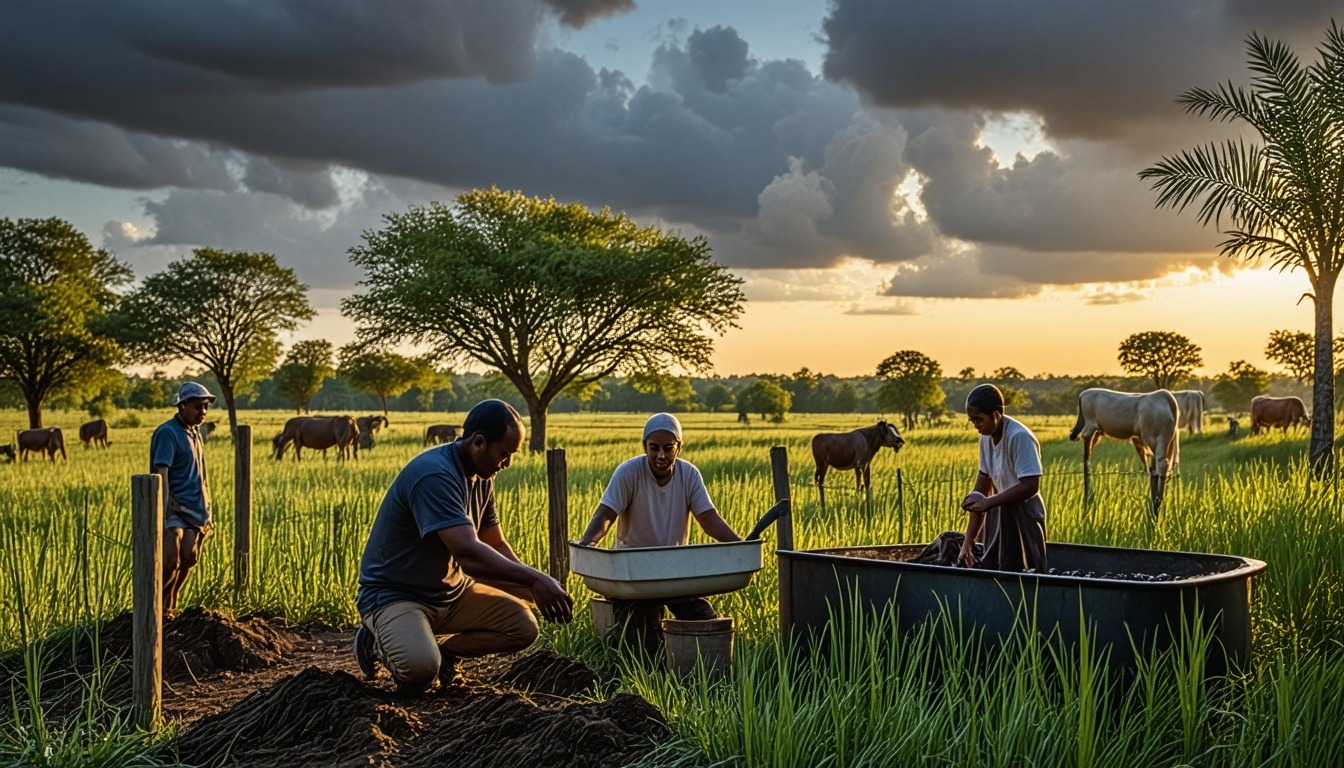
Introduction to Agronomic Practices and Grazing Management
Agronomic practices and grazing management are the twin pillars of sustainable pasture-based livestock systems. Whether you are tending a small pasture garden or managing extensive rangelands, the integration of scientifically sound land preparation, soil fertility management, strategic shade and water placement, and a well-designed rotational grazing plan can dramatically improve forage yield, animal performance, and environmental stewardship. This comprehensive guide walks through the essential components of agronomic care and grazing planning, offering actionable insights for farmers, ranchers, and land managers.
Pasture ecosystems are dynamic. They respond to every management decision—from the way you till the soil to the frequency with which livestock are moved. Effective pasture management isn’t a one-size-fits-all recipe; it requires observation, adaptation, and a solid understanding of plant growth, animal nutrition, and ecological processes. In this article, we explore five critical domains: agronomic practices for establishing a pasture garden, land preparation and fertilization, the role of shade trees and water points, designing sustainable grazing systems, and conservation harvesting techniques. Each section provides detailed, practical points to help you build a resilient and productive pasture.
The ultimate goal is to create a system that supports both the land and the livestock for generations to come. By applying the principles outlined here, you can enhance biodiversity, improve soil organic matter, reduce erosion, and ensure a steady supply of high-quality forage. Let’s dive into the world of pasture agronomy and grazing management.
Agronomic Practices in Growing a Pasture Garden
A pasture garden is more than just a field of grass; it is a carefully curated agricultural ecosystem designed to supply nutritious forage while improving soil health. Agronomic practices in growing a pasture garden involve selecting the right species, managing planting density, and orchestrating a balanced plant community. Below are detailed points that every pasture manager should consider.
1. Soil Testing and Amendment Adjustments
Before establishing any pasture garden, a comprehensive soil test is non-negotiable. Soil tests reveal pH, macro and micronutrient levels, and organic matter content. Most pasture grasses prefer a pH between 6.0 and 7.0. If the pH is too low, agricultural lime should be applied to raise it; if too high, elemental sulfur or acidifying fertilizers can help. Soil testing also guides phosphorus (P) and potassium (K) applications, ensuring that you avoid both deficiencies and toxicities. for instance, a pasture with a phosphorus index of 15 may require an initial application of 50 pounds of P2O5 per acre, but a high-testing soil might need none. This precision prevents environmental pollution and saves money.
2. Selection of Adaptive Grass and Legume Mixtures
The plant species chosen for a pasture garden must match the local climate, soil type, and grazing intensity. Cool-season grasses such as tall fescue, perennial ryegrass, and orchardgrass thrive in temperate regions, while warm-season grasses like bermudagrass, switchgrass, and bahiagrass are better suited to southern climates. Including legumes—such as white clover, red clover, or alfalfa—boosts nitrogen fixation and improves forage quality. A mixture of 70% grass and 30% legume is often ideal. for instance, a pasture in the midwestern United States might be seeded with 12 pounds of orchardgrass, 4 pounds of white clover, and 8 pounds of tall fescue per acre. This diversity ensures extended grazing seasons and resilience against pests and drought.
3. Proper Seeding Rates and Methods
Seeding rates directly influence pasture stand density and competition with weeds. Too little seed leaves gaps for invasives; too much seed creates overcrowding and reduces tillering. Drill seeding is preferred over broadcasting because it places seeds at the correct depth (1/4 to 1/2 inch) and ensures good soil-to-seed contact. for instance, when establishing a pasture of perennial ryegrass, use 20-25 pounds per acre if drilled, and 30-35 pounds if broadcast. Also, consider staggering planting times: a spring planting of warm-season grasses and a fall planting of cool-season grasses can provide year-round grazing. Calibrate equipment carefully to avoid skips and double planting, and always follow with a light cultipacker to firm the seedbed.
4. Managing Weed Competition without Herbicides
Weeds are the natural enemies of a young pasture garden. Aggressive weeds like ragweed, pigweed, and thistle can outcompete seedlings for light, water, and nutrients. Integrated weed management begins with cultural practices: mowing slightly higher than the grass canopy to shade weed seeds, using competitive species mixes, and maintaining optimal fertility. For persistent weed problems, targeted spot spraying may be necessary, but organic methods such as flame weeding or vinegar-based solutions can be used in small areas. An example: a pasture garden infested with dandelions can be repeatedly mowed to prevent seed heads, and then competitive clovers can be overseeded to fill gaps. In established pastures, grazing timing can suppress weeds—sheep and goats particularly enjoy browsing broadleaf weeds.
5. Irrigation Scheduling and Water Management
Precision irrigation is a critical agronomic practice, especially in arid and semi-arid regions. Over-irrigation wastes water and leaches nutrients, while under-irrigation stunts growth and reduces forage quality. Use soil moisture sensors or evapotranspiration data to schedule irrigation. for instance, a pasture in Arizona might require 1.5 inches of water per week during peak summer, applied in two 0.75-inch events to prevent runoff. Drip irrigation or center pivot systems can be adapted for pasture, but costs must be weighed. In many cases, establishing drought-tolerant species and building soil organic matter can reduce irrigation needs significantly. Mulching between rows (if a pasture is planted in rows for effective grazing) also conserves moisture.
6. Rotation and Rest Periods
A pasture garden should be managed as a series of paddocks that are grazed and then rested. This agronomic practice is essential for maintaining plant vigor and preventing overgrazing. After grazing, plants need time to regrow and replenish root reserves. for instance, perennial ryegrass can be grazed every 7-10 days in the growing season, but needs at least 21 days of rest. A simple rotation system involves splitting the pasture into 4-6 paddocks and moving livestock based on forage height. Graze cool-season grasses when they reach 8-10 inches and stop grazing when they are 3-4 inches to leave sufficient leaf area for regrowth. This rotational approach also distributes manure evenly, enhancing nutrient cycling.
Land Preparation and Fertilizer Application for Pastures
Successful pasture establishment begins long before seeding. The physical and chemical condition of the soil determines whether a pasture will thrive or fail. Land preparation and fertilizer application for pastures require careful planning, mechanical operations, and a deep understanding of soil-plant interactions. Below are six critical points.
1. Clearing and Debris Removal
The first step in land preparation is clearing the site of trees, shrubs, rocks, and previous crop residue. While some scattered shade trees are beneficial (as discussed later), excessive woody vegetation must be removed to allow sunlight to reach the soil. Use bulldozers, root rakes, or hand tools, depending on the scale. For instance, a 2-acre pasture garden may only need a tractor with a box blade to remove small brush, whereas a 100-acre field might require a forestry mulcher. After clearing, perform a soil test to identify any compaction or drainage issues. If stumps remain, they can be ground out to avoid equipment damage and provide a smooth seedbed.
2. Primary Tillage: Deep Plowing vs. Conservation Tillage
Tillage loosens compacted soil, incorporates organic matter, and prepares a seedbed. but, excessive tillage degrades soil structure and organic matter. Conservation tillage—such as no-till or strip-till—is gaining popularity because it preserves soil aggregates and reduces erosion. For a new pasture, often a single deep plowing (6-8 inches) is necessary to break hardpan. Then, a disc harrow or field cultivator creates a fair seedbed. If converting from cropland, no-till drilling directly into killed sod is an excellent option. for instance, a farmer in Iowa might spray glyphosate on old corn fields, wait two weeks, and then no-till drill a grass-legume mix. This preserves soil moisture and organic carbon.
3. Leveling and Drainage Improvement
Uniform terrain is crucial for uniform irrigation and machinery operation. Land leveling with a laser grader can eliminate low spots that collect water and drown seedlings. Conversely, poor drainage can be corrected by installing tile drains or surface ditches. A pasture with a slope of 1-3% benefits from gentle contours to facilitate water flow but prevent erosion. If your land is flat, consider raised beds or mounding for grasses that dislike wet feet. For instance, perennial ryegrass and white clover tolerate moderately drained soils, but alfalfa requires excellent drainage. Monitoring soil moisture after heavy rains can guide your design.
4. Soil pH Management and Liming
Soil pH is the master variable of soil fertility. Most pasture legumes require pH 6.5-7.5, while grasses perform well at pH 6.0. Acidic soils (<5.5) impede nutrient uptake and can be toxic to plants. Lime applications should be based on the soil test’s agronomic recommendation. for instance, a sandy loam soil with pH 5.8 might need 1 ton of agricultural lime per acre to raise pH to 6.5. Dolomitic lime is preferred when magnesium is also low. Apply lime at least 3-6 months before planting to allow reaction, and incorporate it if possible. Maintaining optimal pH enhances the efficiency of fertilizer, as nutrients like phosphorus become more available.
5. Fertilizer Application: Timing, Rates, and Sources
Fertilizer application for pastures must be precise. Nitrogen (N) is the most limiting nutrient for grass growth, but it is also volatile and prone to leaching. Applying N in split applications—e.g., 50 pounds per acre in early spring, then 30 pounds after the first grazing cycle—maximizes uptake and minimizes waste. Phosphorus (P) and potassium (K) can be applied at planting or in a maintenance program. For legumes, no N is required because they fix their own; but, they do need adequate P, K, and micronutrients. Use a blend like 19-19-19 for establishing grass-legume mixes, or organic sources such as composted manure. Recent research shows that slow-release polymer-coated fertilizers reduce N2O emissions and improve pasture yield by 15% compared to conventional urea.
6. Incorporating Organic Matter and Cover Crops
Soil organic matter is the lifeline of pasture fertility. Before planting, incorporate compost, manure, or a green manure cover crop such as oats, rye, or vetch. for instance, planting a winter rye cover crop in fall and then mechanically killing it in spring provides a natural mulch that suppresses weeds and feeds soil microbes. In pasture renovation, aerial seeding of cover crops into existing sods can add diversity without full tillage. A trial in Georgia found that pastures with 5% organic matter sustained forage growth with 30% less synthetic fertilizer compared to soils with 2% organic matter. so, regular applications of compost (1/4 inch per acre) and maintaining permanent plant cover are excellent practices.
Utilization of Shade Trees and Water Points in Pastures
Incorporating shade trees and strategically placed water points into pasture design is an agronomic and animal welfare practice that pays dividends. Trees provide cover from extreme heat, reduce wind chill, and contribute to biodiversity, while water points influence grazing distribution and nutrient cycling. Here are six essential utilization strategies.
1. Selecting and Positioning Shade Trees
Not all trees are suitable for pastures. Ideal species have non-invasive roots, moderate size, and high canopy density. Examples include oak, maple, hackberry, and honey locust. Trees should be placed on the east and west sides of grazing paddocks to provide afternoon shade, as livestock seek relief from midday heat. A spacing of 30-50 feet between trees allows grass growth while creating a comfortable microclimate. But avoid clustering too many trees; a shaded area of 30-50% is ideal. For instance, a study in Missouri found that beef cattle spent 20% more time grazing when shade was available in the afternoon, improving average daily gain by 12%.
2. Protecting Young Trees from Livestock Damage
Newly planted trees are vulnerable to rubbing, browsing, and trampling. Protective tree shelters (5-foot tall plastic tubes) are cost-effective and promote early growth. Additionally, use electric fencing or a single wire to keep livestock a distance of at least 5 feet from the trunk. In a pasture with mature trees, install a permanent fence around the dripline to protect roots from compaction. for instance, a dairy farm in New Zealand uses portable ‘temporary’ shade structures made of wooden posts and netting, allowing them to move shade as needed, while young plantings are caged. This ensures long-term tree survival and continuous shade provision.
3. Water Point Placement to Encourage Uniform Grazing
The distribution of water points dramatically impacts grazing patterns. Livestock rarely graze more than 800 feet from water in flat terrain, and in hilly country this distance is even shorter. Place water troughs in every paddock, or at least in a central location accessible to multiple paddocks. A common approach is to have a central water source with laneways radiating outward, so livestock can move easily to each grazing area. This encourages them to graze areas far from the water, preventing undergrazing and weed encroachment. for instance, a ranch in Montana installed a solar-powered water line that serviced five paddocks, and forage utilization increased from 40% to 70%.
4. Types of Watering Systems and Their Maintenance
There are several options: spring-fed troughs, wells with float valves, and portable water tanks. Nose pumps are ideal for remote paddocks, as they allow animals to pump water voluntarily without electricity. Regularly inspect and clean troughs to prevent algae and disease. In winter, use heated or insulated watering systems. The rule of thumb is that a mature cow needs 12 gallons of water per day, but this can double in hot weather. A 1,000-gallon trough can serve a 50-cow herd for about two days. Ensure that the water flow rate is adequate (at least 8 gallons per minute) to refill quickly. Automatic waterers reduce labor and are an environmentally sound choice.
5. Creating Silvopasture Systems for Mutual Benefits
Silvopasture integrates trees, forage, and livestock in a single system. This is a high-intensity utilization of shade trees and water points. Trees provide timber and fruit, while their leaf litter enriches soil. Pruning trees to raise the canopy lets sunlight reach grass. for instance, an ice-cream bean (Inga edulis) silvopasture in Costa Rica supports 3-4 times more forage than open pastures and enhances milk production. In temperate regions, black walnut and pine trees can be planted at 100 trees per acre, with grazing beginning after 3 years. Water points can be dry ponds or riparian buffers that also filter runoff. This holistic approach increases overall farm profitability and resilience.
6. Riparian Buffers and Water Quality Protection
When pasture borders streams or ponds, a riparian buffer of native trees and shrubs should be maintained to filter sediment and nutrients, shade the water, and provide wildlife habitat. Livestock access to the stream should be limited to designated crossings, with reinforced ramps and fencing. Implement an off-stream water supply to draw animals away from the water body. Research at the University of Georgia found that rotational grazing coupled with riparian buffers reduced nitrate and phosphate loading in streams by up to 80%. This practice not only protects water quality but also reduces veterinary costs from waterborne pathogens. so, the utilization of shade trees and water points goes hand-in-hand with environmental conservation.
Designing a Sustainable Grazing Plan
A sustainable grazing plan is a blueprint for matching forage availability with livestock demand, while safeguarding soil health and plant resilience. It moves beyond simple set-stocking into dynamic systems that mimic natural movements. This section provides 8 key elements for designing a plan that works.
1. Calculate Carrying Capacity and Stocking Rate
Knowing how many animals your pasture can support is the foundation of any grazing plan. Carrying capacity is the number of animal units (AU) your property can sustain for a season without degrading resources. One animal unit equals a 1,000-pound cow plus her calf. To estimate from your region, use standard tables: in the eastern US, a good pasture might support 2 AU per acre, while the arid west may only support 1 AU per 5 acres. Stocking rate should be conservative—typically 80% of your estimated capacity—to allow a safety margin for drought. For instance, if you have 10 acres with a capacity of 2 AU/acre, your total capacity is 20 AU. As an 80% conservative rate, you would stock 16 AU (which is 16 cow-calf pairs). Overstocking is the most common cause of pasture failure.
2. Define Grazing Periods and Rest Periods
In rotational grazing, the pasture is divided into paddocks, with a grazing period of 3-7 days and recovery periods of 21-45 days, depending on season and grass type. for instance, a cool-season grass paddock might be grazed for 4 days and rested for 30 days. But the rule “graze half, leave half” is classic: remove animals when they have consumed about 50% of the aboveground biomass. A good tool is to use a grazing stick to measure plant height. In a tall fescue pasture, move animals when plants are 6 inches; stop grazing at 3 inches. This leaves leaf area for photosynthesis and root reserves. The rest period must be adjustable based on growth; in spring, you might need only 20 days rest, but in summer 45 days.
3. Implement Adaptive Multi-Paddock (AMP) Grazing
Adaptive multi-paddock grazing is a modern technique that involves high stocking density over a very short period (1-5 days) followed by a longer recovery (60-120 days). This mimics the movement of wild herds. The dense hoof action tramples some vegetation, creating soil cover, while manure and urine are concentrated and then spread. A study by the Savory Institute showed that AMP grazing regenerates grasslands by increasing soil carbon by up to 3% in 20 years. To implement, you need at least 8-12 paddocks, but even smaller farms can adopt it by using portable electric fences. Start with 4 paddocks and gradually split them. Measure forage growth every week to adapt your move schedule based on weather and plant phenology.
4. Incorporate Strategic Supplementation and Mineral Placement
Even with great grazing, livestock may need minerals and protein supplements, especially in dry seasons. Place mineral feeders and hay bunks in areas that need extra nutrient inputs, such as areas far from water or underused corners. This encourages livestock to distribute grazing and manure more evenly. for instance, placing a mineral feeder at the top of a slope encourages animals to travel uphill, reducing pasture camping near water. Use self-limiting feed supplements to avoid overconsumption. In a sustainable plan, the goal is to close the nutrient cycle: urine and manure deposit nitrogen, phosphorus, and potassium near where the supplement was consumed, so strategically locate them to improve forage in poor patches.
5. Use Biotic and Abiotic Triggers for Grazing Decisions
Forage growth isn’t constant; it is a curve. The grazing plan should be governed by the growth stages of grasses, not calendar dates. In spring, grasses grow exponentially; delay grazing until they reach the 3-leaf stage to allow root development. Then, graze rapidly to prevent over-maturity. In dry weather, use “best rested” strategy: if a paddock hasn’t recovered to the desired height, don’t graze it even if animals are hungry—offer hay instead. Conversely, during abundant growth, you can hay or graze ahead of schedule. A good trigger is the “s econd leaf” rule: graze a paddock when grass has produced at least 3 fully expanded leaves. Using these cues protects the grass plant from overgrazing and maintains vigor.
6. Create Sacrifice and Overflow Areas
No grazing plan is complete without designated sacrifice areas that will endure heavy traffic during wet weather or when forage is scarce. These should be placed on well-drained, durable sites such as rock pads or dry lots. Feed hay, provide water, and manage manure to minimize pollution. also, plan an overflow area for the “green season” when growth exceeds demand, such as a hayfield or an area that can be closed for hay production. for instance, if you have 10 acres, designate 1 acre as a summer sacrifice/feedlot, and 2 acres as an overflow hayfield, leaving 7 acres for grazing. This prevents overgrazing of the main pasture and ensures a stable feed supply.
7. Monitor Grazing Efficiency and Animal Performance
A sustainable plan isn’t a set-and-forget program. Track key indicators: residual forage height after grazing, days of rest, body condition score of livestock, and weaning weights. Use a grazing chart or app to record paddock usage. If animals lose weight or forage residuals are below 2 inches, adjust stocking rate. On the other hand, if a paddock has too much leftover and signs of unpalatable plants, increase stock density or move faster. For instance, a producer in Texas uses her monthly weighings to determine if the pasture is adequate; if steers aren’t gaining at least 2 lbs/day, he provides extra protein or moves them to a fresh paddock. This adaptive management keeps the system productive.
8. Plan for Drought and Seasonal Variability
Drought is a reality in most regions. A sustainable grazing plan must have a drought contingency: reduce stocking rates by selling or moving animals early, keep the soil covered with extra hay, and avoid grazing plants below 4 inches during stress. Also, consider strategic destocking: it is better to sell animals in moderate condition than to let the pasture die. Build a fodder budget: a cow-calf pair needs 26 pounds of dry matter per day. During a drought, if forage growth is only 10 pounds per day per acre, you may need to supplement with hay. An effective method is to ration grazing: use an in-paddock shade and water infrastructure to create temporary overnight corrals, controlling how much area is grazed each day. This “management-intensive” approach is practiced in Namibia and has proven to restore range productivity even in low rainfall years.
Pasture Conservation and Harvesting Measures
Conservation and harvesting are essential to preserving the nutritional value of forage and the ecosystem health of the pasture. Whether you are haying, silage-making, or simply managing leftovers, the goal is to capture peak quality and avoid waste. Here are five comprehensive measures for efficient pasture conservation.
1. Timing of Cut: The Window of Opportunity
The nutritional quality of forage declines rapidly as it matures. The ideal time to harvest cool-season grasses is at the early heading stage, when crude protein is 16-20% and fiber is still digestible. For warm-season grasses, harvest when they reach 12-18 inches tall and before seed heads become fibrous. Monitor using a forage probe or simply by squeezing a handful; if juice is released, it is too lush, if it is tough, it is too old. The “first cutting” should occur about 45 days after spring growth begins, with subsequent cuts every 30-35 days. For alfalfa, harvest when 10% of plants have one flower. This timing balances yield and quality. Delaying by one week may reduce digestibility by as much as 5%.
2. Haymaking Techniques and Field Curing
Haymaking is a race against time and weather. After mowing, the forage must dry to 15-20% moisture to be stored as hay. To speed up drying, use a mower-conditioner that crimps the stems, increasing surface area. Spread the swath wide (8-10 feet) to expose more forage to sun. Rake and bale when the moisture content reaches about 18% for small square bales and 15% for large round bales. Always test moisture with a hay probe; if too high, you risk mold and spontaneous combustion. Ideal conditions are 70-80°F with a gentle breeze: such weather may allow field curing in 48 hours. Avoid raking when the forage is brittle to reduce leaf loss, which is the most nutrient-rich part.
3. Silage and Haylage Production for Quality Preservation
When weather is unreliable, silage or haylage is a superior alternative. Wilting the forage to 40-60% moisture before ensiling promotes fermentation. Use a mower-conditioner and let the swath dry for a few hours, then chop to 1 to 2 centimeters and pack tightly in a silo or pit. The addition of a lactic acid bacterial inoculant can lower the pH quickly, reducing spoilage. for instance, a dairy farm in Wisconsin makes haylage from first-cut alfalfa, achieving 22% crude protein and 40% NDF, which is highly digestible. The oxygen barrier is crucial; cover the pile with two layers of plastic and weigh it down. Once opened, the silage face should be removed at least 6 inches per day to prevent heating.
4. Stockpiling for Fall/Winter Grazing
Stockpiling involves accumulating forage in late summer and deferring grazing until winter. This is one of the cheapest conservation measures because it avoids machinery and fuel costs. for instance, a producer in Virginia might stockpile tall fescue by applying 60 pounds of nitrogen in August and preventing grazing until November. This creates a standing forage that retains nutrients under snow and can be grazed using strip grazing. Use portable fencing to ration out a few days of feed at a time. The forage quality will decline, but with protein supplementation, it can sustain beef cows through winter. Research shows that stockpiling saves $15-20 per cow per month compared to hay feeding, while also reducing manure concentration near barns.
5. Grazing Crop Residues and Cover Crops
After a cash crop is harvested, grazing the corn stalks or wheat straw is an effective conservation practice. These residues have low protein but can provide energy and fiber, especially when supplemented with a protein lick. Cover crops such as winter rye, crimson clover, or radishes can be grazed, but they should be managed to allow regrowth and soil protection. A popular system is to plant a diverse cover crop mix in August, graze it in November and March, and then terminate it in April for no-till corn. This “plant-graze-plant” approach builds soil organic matter while providing cheap forage. A study at Iowa State found that grazing cereal rye increased subsequent corn yield by 3%. Ensure that cattle are moved frequently to prevent soil compaction, and avoid grazing when the soil is saturated.
The Interconnection Between Agronomy and Grazing Management
While we have discussed agronomic practices and grazing management separately, they are inextricably linked. Soil fertility affects forage growth, which dictates grazing pressure, which in turn impacts soil compaction and nutrient cycling. For instance, overgrazing reduces leaf area, cutting the plants’ ability to photosynthesize and produce root exudates that feed beneficial mycorrhizal fungi. Conversely, too little grazing can cause grasslands to become moribund, reducing biodiversity. so, a holistic approach is essential.
Effective agronomic practices in growing a pasture garden minimize the need for external inputs by fostering healthy soil life. Land preparation and fertilizer application for pastures must be tailored to the specific plant community and livestock system. The utilization of shade trees and water points isn’t just about animal comfort; it also creates nutrient hotspots that influence plant growth. Designing a sustainable grazing plan requires you to understand how plants respond to defoliation and how animals distribute their waste. And pasture conservation and harvesting measures ensure a year-round supply of feed without degrading the permanent canopy.
Assume you are managing a small dairy farm with 20 hectares. By implementing rotational grazing with adequate rest periods, you might double your forage yield from 3 to 6 tonnes dry matter per hectare. This, in turn, allows you to reduce the area under cultivation and dedicate more land to conservation buffers. A well-designed grazing plan is the ultimate fertilizer: it moves nutrients from dung and urine to where they are needed, at the right time. Thus, we can view grazing animals as tractors and mowers combined. The goal of the manager is to choreograph this dance for the benefit of the entire ecosystem.
Monitoring and Adapting Your Pasture System
No plan survives contact with reality. Pasture management is an iterative process that requires regular monitoring and quick adaptation. Here are some practical ways to track your pastures and adjust.
1. Visual Observations and Plant Monitoring
Take a walk through your pasture every week. Look for signs of overgrazing: muddy patches, ripped grass roots, and palatable species disappearing. Look for undergrazing: old mature grass, excessive top growth, and weeds. Use a stethoscope or soil probe to check compaction. Record plant height in each paddock with a grazing stick. for instance, if you see that the cool-season grass in Valley Paddock is only 3 inches high while the animals are still there, you likely need to move them to a new paddock. This kind of observation is more informative than any spreadsheet.
2. Soil Health Tests
Monitor soil organic matter, aggregate stability, and microbial activity every 2-3 years. The soil respiration test (Solvita) measures the carbon dioxide released from a soil sample, indicating microbial activity. A healthy pasture soil should have a respiration value of 5-7 ppm, and you can use this to guide management. If your soil tests are declining, you may need to reduce stocking rates, increase rest periods, or add compost. for instance, a rancher in Texas noticed a 10% decline in organic matter over five years; he switched to AMP grazing and added biochar, and within three years the organic matter had increased by 2%.
3. Performance Metrics
Track livestock weight gains, body condition scores, and milk production. If these metrics fall below targets, it may be due to insufficient forage quantity or quality. Use a portable livestock scale or weigh bands to measure periodically. For a cow-calf operation, aim for a calf weaning weight equal to 45-55% of the cow’s mature weight. If your calves are weaning at 450 pounds from a 1,200-pound cow (37%), you might have a forage quality problem. Adjust by increasing legume content in the pasture or supplementing animals with distillers’ grains. This feedback loop is crucial for profitability.
4. Adjusting to Climate News
Each year is different. Pay attention to long-term weather forecasts. If a dry summer is predicted, consider reducing your herd size early or planting annual forage crops like sorghum-sudan as a backup. If a wet spring is expected, you might be able to graze more intensively to prevent lush growth from suppressing clover. A flexible mindset is essential; don’t become married to a fixed grazing schedule. Instead, use a “grazing chart” that shows each paddock’s last grazed and rest days, and adjust based on current weather.
5. Record Keeping and Software Tools
Maintain a pasture journal or use agronomy apps like PastureMap or GrazeCalc. Record dates of grazing, rest lengths, fertilizer applications, and harvest dates. GPS-enabled tools can map forage height and even predict optimum grazing windows. for instance, the app HerdXL uses satellite data to estimate forage biomass and recommends stock moves. These digital tools can reduce the guesswork and increase your confidence. But remember: the trend is more important than the individual data point.
Frequently Asked Questions
What are the most important agronomic practices for establishing a pasture garden?
The most critical practices are: soil testing and lime/fertilizer adjustment, selecting adapted species mixtures, proper seeding rates and methods, managing weeds, irrigation scheduling (where needed), and rotating grazing with rest periods. Each of these must be tailored to your specific climate and soil. for instance, a pasture garden in a humid subtropical climate might focus on warm-season grasses like bermudagrass, while a cool-season region should prioritize orchardgrass and clover.
How do I determine the right fertilizer application for my pasture?
Start with a soil test. For grass pastures, apply nitrogen based on yield goals—typically 50-100 pounds per acre per year, split into 2-3 doses. Phosphorus and potassium should be based on soil test results, ensuring they are at the optimum range. Legumes require no added nitrogen but need phosphorus and potassium, and a pH above 6.3. If you use manure, test it for nutrient content, as manure provides both nutrients and organic matter. Consider your budget and the environmental risks: never over-apply nitrogen near creeks or wells.
Why are shade trees important in a grazing system?
Shade trees help maintain animal comfort by reducing heat stress, which in turn improves feed intake and weight gain. They also create a diversified landscape, providing habitat for birds and beneficial insects. In silvopastures, trees produce timber and fruit while their leaves sometimes serve as forage. Additionally, shade encourages animals to rest in designated areas, preventing them from camping near water sources and thus spreading nutrients more evenly.
What are the key components of a sustainable grazing plan?
A sustainable grazing plan must include: a correct stocking rate, sufficient rest periods for plants, multi-paddock design to allow rotation, contingency for drought, and a method of monitoring livestock and forage. It should be flexible enough to adapt to weather and plant growth. plus, to be truly sustainable, you should also consider soil health and biodiversity, ensuring that your grazing practices build rather than deplete resources.
How can I conserve pasture forage for winter?
There are several conservation methods: haymaking, silage, haylage, and stockpiling. Haymaking involves cutting, drying, and baling, and is best done during a sunny spell. Silage and haylage allow you to preserve forage at a higher moisture content, which is more reliable in wet climates. Stockpiling is a low-cost method where you allow grass to grow in late summer to accumulate a standing crop for winter grazing. You can also integrate crop residues and cover crops as feed. The optimal method depends on your scale, equipment, and climate.
What is rotational grazing and why is it better than continuous grazing?
Rotational grazing divides the pasture into smaller paddocks and moves livestock through them sequentially. Each paddock gets a recovery period after grazing. This practice prevents overgrazing, encourages more even manure distribution, increases forage production, and improves soil health. Continuous grazing, on the other hand, subjects plants to repeated grazing without rest, leading to lower yields and gradually degraded pasture. Rotational grazing is especially beneficial during the growing season, but it requires more management attention.
Conclusion
Agronomic practices and grazing management aren’t separate chores; they are intertwined facets of a single, dynamic system. The success of a pasture lies in the soil, and every leaf, animal, and water droplet is a node in that living network. Implementing the agronomic practices in growing a pasture garden starts with soil understanding and ends with careful harvest. Land preparation and fertilizer application for pastures set the stage for abundant forage, while the utilization of shade trees and water points ensures that cows are comfortable and evenly distribute their impact. Designing a sustainable grazing plan is the art and science of balancing forage demand with livestock needs, and pasture conservation and harvesting measures protect the fruits of your labor for times of scarcity.
Remember that none of these practices exist in isolation. A change in grazing duration affects plant health, which in turn alters fertilizer requirements. A new watering system can shift grazing away from delicate riparian zones. The best managers are also observers, constantly learning from the land and making adjustments. don’t be afraid to begin with small, incremental changes and then scale up. Test your soil, build a grazing chart, plant a few more shade trees, and always leave a grass buffer. Your pasture, your animals, and your future generations will thank you.
As you move forward, embrace experimentation and documentation. Share your experiences with local extension agents and fellow graziers. When you adopt these evidence-based principles, you join a community of land stewards who are regenerating grasslands across the globe. Whether you have a one-acre pasture garden or a thousand-acre ranch, the promise is the same: with careful management, the land can become more fertile, more productive, and more resilient. Start today by evaluating your current pasture with fresh eyes, and take the first small step toward sustainable transformation.
Leave a Reply