
Soil pH is a measure of the acidity or alkalinity of the soil, read on a scale from 0 to 14 where 7 is neutral. A reading below 7 means the soil is acidic, while a reading above 7 means it is alkaline. This single number decides whether plant nutrients dissolve in soil water, stay locked up, or reach toxic levels.
A learner who can test soil pH and correct it is therefore half-way to managing a fertile plot. These notes explain what the scale means, what causes acidity and alkalinity, how it affects crops, and how to test and correct the soil.

Meaning of soil pH and the pH scale
Soil pH measures the concentration of hydrogen ions in the soil solution, read on a scale that runs from 0 to 14. A value of 7 is neutral; values below 7 are acidic and values above 7 are alkaline. The more hydrogen ions there are, the lower the pH and the more acidic the soil.
- Hydrogen-ion concentration: Soil pH measures how many hydrogen ions (H+) are held in the soil solution rather than any single nutrient.
- Acidity direction: The more hydrogen ions the soil holds, the lower its pH reading and the more acidic it is.
- Alkalinity direction: The fewer hydrogen ions the soil holds, the higher its pH reading and the more alkaline it is.
- Hydroxide ions: Alkaline soil holds an excess of hydroxide ions (OH–) where acid soil holds excess hydrogen ions.
- Scale limits: The pH scale runs from 0 at the strong acid end to 14 at the strong alkaline end.
- Neutral point: A value of 7 sits at the middle of the scale and is called neutral.
- Acidic range: Any reading below 7 marks the soil as acidic.
- Alkaline range: Any reading above 7 marks the soil as alkaline.
- A condition, not a nutrient: Soil pH is a property of the soil, not a food the crop eats, yet it controls the food supply.
- Nutrient availability: Soil pH decides which nutrients dissolve in soil water and remain available for plant roots.
- Ideal for many crops: Neutral soil with a pH close to 7 is ideal for many crops because nutrients are usually well available.
- Syllabus placement: The NCDC O-level Agriculture syllabus covers soil pH under Topic 1.3 Soil Science, where learners test samples and recommend improvements.
- One number to read: A learner reads the value as a single number that describes the soil’s condition, like a thermometer describes heat.
- Foundation for correction: You cannot choose a correction until you know the number, so this scale comes first in every soil question.
The syllabus places this under Soil Science, a foundation topic that supports the whole Senior 3 Agriculture notes series. The National Curriculum Development Centre sets out the topic in its Agriculture Syllabus (NCDC Agriculture Syllabus, PDF), where learners determine pH with a soil-testing kit.
| pH range | Soil condition | What it means |
|---|---|---|
| 0 to 6 | Acidic | Hydrogen ions are in excess; some nutrients can be limited and some elements can rise toward toxic levels. |
| 7 | Neutral | Hydrogen and hydroxide ions are balanced; ideal for many crops. |
| 8 to 14 | Alkaline | Hydroxide ions are in excess; some nutrients can become less available. |
Common mistake: writing that a low pH means the soil has no hydrogen ions. The opposite is true — a low pH means many hydrogen ions are present.
Causes of soil acidity and alkalinity
Acidity and alkalinity both begin with natural conditions and then are shaped by farming choices. Acid soil forms where acidic parent material, rainfall leaching or organic acids build up hydrogen ions, while alkaline soil forms in dry, evaporating places with alkaline minerals. Knowing the cause points to the right correction.
- Acidic parent material: Some rocks weather into acid-forming minerals, so the soil is acidic from the moment it forms.
- Rainfall leaching: Heavy rain washes basic nutrients such as calcium out of the topsoil and leaves hydrogen ions behind.
- Organic acids from decay: As plant litter and crop residues decompose, they release organic acids into the soil solution.
- Ammonium-based fertilisers: Repeated use of ammonium fertilisers slowly pushes the pH down, which is why they are used deliberately to acidify alkaline soil.
- Arid and semi-arid regions: Alkaline soils are often linked to arid or semi-arid regions where rainfall is scarce.
- High evaporation: High evaporation rates draw water upward and concentrate salts in the topsoil.
- Alkaline minerals: The presence of alkaline minerals in the parent material leaves the soil alkaline.
- Deficiency of hydrogen ions: Alkaline soil is defined by a deficiency of hydrogen ions, the opposite of an acid soil.
- Excess of hydroxide ions: Alkaline soil holds an excess of hydroxide ions in the soil solution.
- Parent material sets the start: The chemistry of the parent rock fixes the starting pH before any farming begins.
- Water movement decides direction: Whether rain leaches bases out or evaporation concentrates salts up decides which way the pH drifts.
- Human practices add to it: Fertiliser choice can nudge the pH in either direction, so farm practice is also a cause.
- More than one cause can act: A single plot can be acid for two or three reasons at once, which is why a test is needed to name them.
- Cause points to cure: Naming the cause tells the farmer the correction, because leaching and alkaline minerals need different responses.
Rainfall leaching is the same process a learner meets again in soil water dynamics and drainage, where moving water carries dissolved matter through the soil.
| Cause | Direction it pushes pH | Mechanism |
|---|---|---|
| Acidic parent material | Makes soil acid | Acid-forming rocks weather into the soil. |
| Rainfall leaching | Makes soil acid | Rain washes basic nutrients out and leaves hydrogen ions behind. |
| Organic acids from decay | Makes soil acid | Decomposing plant material releases organic acids. |
| Ammonium-based fertilisers | Makes soil acid | Repeated use slowly lowers the pH. |
| Arid or semi-arid climate | Makes soil alkaline | Alkaline soils are common in dry regions. |
| High evaporation | Makes soil alkaline | Salts concentrate as water evaporates. |
| Alkaline minerals | Makes soil alkaline | Alkaline minerals sit in the parent material. |
Effects of wrong pH on crops
Wrong pH harms a crop mainly through nutrients. In acid soil, calcium, magnesium and phosphorus can be limited while aluminium, iron and manganese rise toward toxic levels; in alkaline soil, phosphorus, calcium and magnesium can become less available. Extreme pH also inhibits the soil organisms that recycle nutrients.
- Nutrient lock-up: At the wrong pH, essential nutrients stay locked in forms that crop roots cannot take up.
- Calcium in acid soil: Acid soil can limit calcium, which plants need to build cell walls.
- Magnesium in acid soil: Acid soil can also limit magnesium, the mineral at the centre of the green pigment chlorophyll.
- Phosphorus at both extremes: Phosphorus can be limited in acid soil and become less available in alkaline soil, so either extreme starves the crop of it.
- Aluminium toxicity: In acid soil, aluminium becomes more available and can reach toxic levels that damage roots.
- Iron toxicity: Iron also becomes more available in acid soil and can rise to toxic levels.
- Manganese toxicity: Manganese behaves the same way in acid soil, becoming more available and potentially toxic.
- Calcium in alkaline soil: Calcium can also become less available as the pH rises above neutral.
- Magnesium in alkaline soil: Magnesium can likewise become less available in alkaline conditions.
- Microbial activity: Extreme pH inhibits the activity of soil microorganisms that break down organic matter and recycle nutrients.
- Microbe preferences: Different microorganisms have different pH preferences, so a shift in pH changes which ones are most active.
- Visible signs: Because nutrients are short or toxic, crops grow slowly, look pale or stunted, and give a lower yield.
- Crop choice matters: Some crops tolerate slightly acid or slightly alkaline conditions better than others, so matching the crop to the pH avoids losses.
- Neutral is safest: Keeping the soil near neutral keeps most nutrients available, which is why it is ideal for many crops.
| Nutrient or organism | In acid soil (below 7) | In alkaline soil (above 7) |
|---|---|---|
| Phosphorus (P) | Can be limited or locked up | Can become less available |
| Calcium (Ca) | Can be limited | Can become less available |
| Magnesium (Mg) | Can be limited | Can become less available |
| Aluminium (Al) | More available, can reach toxic levels | Not noted as toxic |
| Iron (Fe) | More available, can reach toxic levels | Not noted as toxic |
| Manganese (Mn) | More available, can reach toxic levels | Not noted as toxic |
| Soil microorganisms | Extreme pH inhibits activity; different microbes prefer different pH | Extreme pH inhibits activity; different microbes prefer different pH |
Exam tip: when asked how pH affects crops, name at least two nutrients and say what happens to each, rather than writing only that “pH affects growth”.
Testing soil pH on a farm
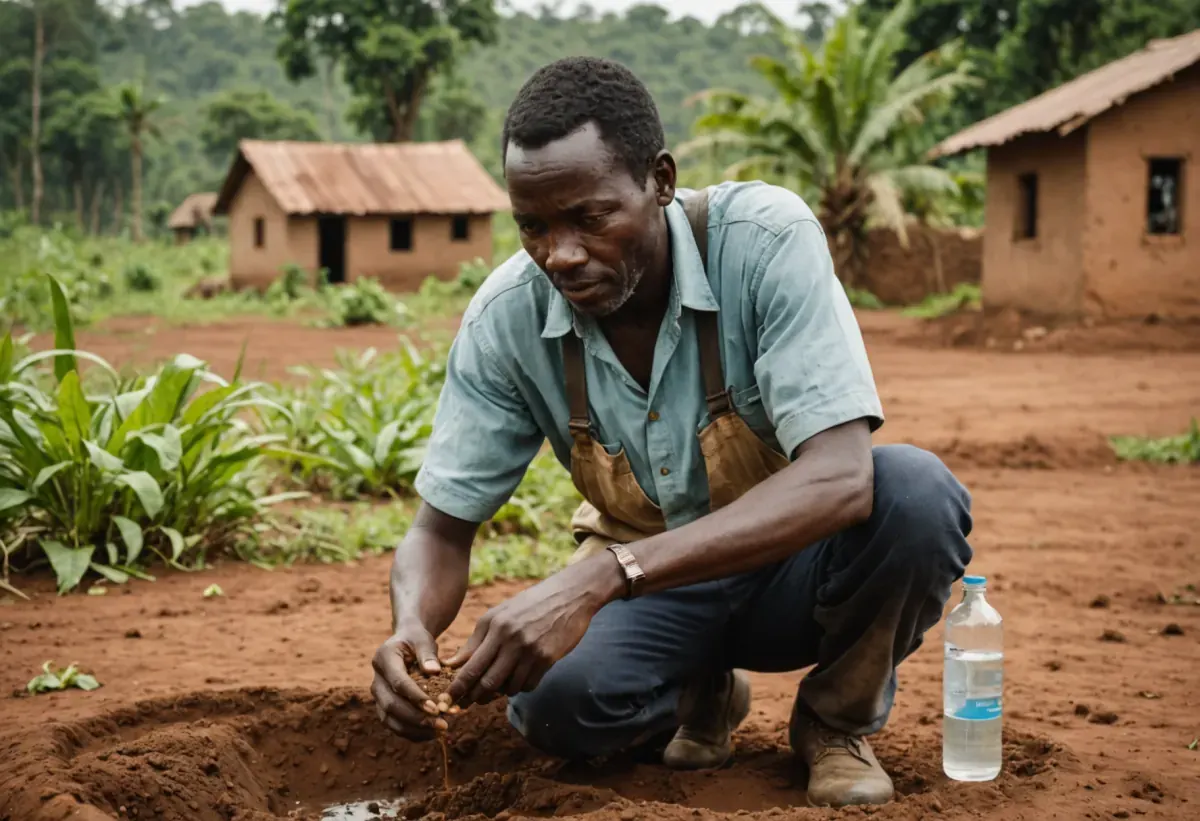
Testing soil pH on a farm starts with a clean soil sample mixed into water to make a soil solution. The pH of that solution is then read with litmus paper, an indicator solution, a pH meter or a commercial test kit. Each method has its own use and its own limitation.
- Why sample first: A soil test is the only reliable way to know the pH before spending money on lime or fertiliser.
- Clean sampling: Collect a small amount of soil free of stones, leaves and surface litter, since these change the reading.
- Mix into water: Stir the soil sample into clean water to make a soil solution whose pH can be read.
- Litmus paper: Dip litmus paper (or a pH test strip) into the soil solution and compare the colour it turns against the colour chart.
- Litmus paper limitation: Litmus paper only shows whether the soil is acid or alkaline, not an exact number.
- Indicator solution: Add drops of an indicator to the soil solution and match the resulting colour to a colour scale.
- Indicator limitation: Matching a colour by eye means two learners can read slightly different values from the same sample.
- pH meter: Insert the probe of a pH meter into the soil solution or wet soil and read the number on the display.
- pH meter advantage: A pH meter gives an exact numerical reading instead of a colour judgement.
- pH meter limitation: A meter must be calibrated and handled carefully or it returns wrong numbers.
- Commercial test kit: A soil pH test kit bundles the chemicals, colour chart and instructions for a complete test.
- Syllabus kit contents: The NCDC syllabus soil-testing kit includes test tubes, indicators, soil samples, droppers, barium sulphate and a Munsell chart.
- Sample several spots: Test soil from several spots and mix them, because pH can vary across one plot.
- Record and compare: Write down the reading and the date so you can compare the soil before and after any correction.
Testing the pH is one step in the fuller soil test a farmer runs before choosing fertilizers and the importance of soil testing, because the pH reading and the nutrient results are read together.
| Method | How it is used | Limitations |
|---|---|---|
| Litmus paper | Dip the paper into the soil solution and compare the colour to a chart. | Shows only acid or alkaline, not an exact number. |
| Indicator solution | Add drops of indicator to the soil solution and match the colour to a scale. | Colour reading depends on the eye, so results vary. |
| pH meter | Insert the probe into the soil solution or wet soil and read the number. | Needs calibration and careful handling. |
| Commercial test kit | Follow the kit instructions to mix soil, chemicals and colour chart. | Results are only as good as the sampling and the colour match. |
Correcting acidic and alkaline soils
Acid soil is corrected by adding agricultural lime, which is calcium carbonate, to raise the pH. Alkaline soil is corrected with elemental sulphur or ammonium-based fertilisers, which lower the pH. Organic matter, gypsum, drainage and tolerant crops support these main corrections.
- Lime for acid soil: Agricultural lime, which is calcium carbonate, is added to acid soil to raise the pH and reduce acidity.
- How lime helps: Lime supplies calcium and, by raising the pH, improves nutrient availability and crop productivity.
- Sulphur for alkaline soil: Elemental sulphur is used to lower the pH of alkaline soil.
- Ammonium fertilisers for alkaline soil: Ammonium-based fertilisers can also be used to lower pH in alkaline soil.
- Organic matter: Compost and manure improve soil structure and help buffer the soil against sudden pH changes.
- Gypsum: Gypsum, which is calcium sulphate, supplies calcium to soils that need it.
- Drainage: Removing excess water stops waterlogging and salt build-up from worsening the soil’s condition.
- Tolerant crops: Choosing crops that tolerate the existing pH avoids the cost of correction where the soil is only slightly off.
- Test before acting: The amount of lime needed depends on the current pH, the soil type and the target pH, so never guess it.
- Buffering capacity: The amount of sulphur needed depends on the soil’s current pH and its buffering capacity.
- Read the recommendation: A soil-test report states a rate, which the learner turns into a real quantity for the actual plot.
- Worked example: Convert the plot area to hectares, then multiply it by the recommended rate to get the lime to apply.
- Re-test to confirm: After applying lime or sulphur, test the soil again to confirm the pH has moved toward the target.
- Spread and mix: Apply the measured material evenly and work it into the topsoil so it contacts the soil it must change.
| Correction method | What it does |
|---|---|
| Liming materials (agricultural lime, calcium carbonate) | Raise the pH of acid soil by neutralising excess hydrogen ions. |
| Organic matter (compost, manure) | Improves soil structure and buffers pH changes. |
| Gypsum (calcium sulphate) | Supplies calcium to soils that need it. |
| Drainage | Removes excess water so waterlogging and salts do not worsen the soil. |
| Choice of tolerant crops | Avoids the cost of correction where the existing pH is only slightly off. |
Worked example: calculating lime from a soil-test recommendation
The sources give no single universal lime rate, because the correct amount always depends on the soil test. A learner therefore calculates the lime to apply by reading the rate on the report and scaling it to the plot. Follow these steps.
- Read the recommendation. Suppose the report says to apply 2.5 tonnes of agricultural lime per hectare. This 2.5 is an illustrative figure — use the number on your own report.
- Measure the plot. A plot of 40 m by 50 m has an area of 40 × 50 = 2,000 m².
- Convert to hectares. One hectare is 10,000 m², so the plot is 2,000 ÷ 10,000 = 0.2 hectares.
- Multiply rate by area. Lime needed = 2.5 tonnes per hectare × 0.2 hectares = 0.5 tonnes, which is 500 kg.
Exam tip: show every step — the area in hectares, then rate multiplied by area — and always write the unit (tonnes or kilograms) in your answer.
Adding lime or sulphur changes the same soil whose soil composition of air, water and humus also decides how well the correction spreads and takes effect.

Frequently asked questions about soil pH
What does soil pH mean?
Soil pH measures the concentration of hydrogen ions in the soil solution on a scale from 0 to 14. A reading of 7 is neutral, a reading below 7 is acidic, and a reading above 7 is alkaline. It matters because it controls which nutrients a crop can take up.
What is the difference between acidic and alkaline soil?
Acidic soil has a pH below 7 and holds an excess of hydrogen ions. Alkaline soil has a pH above 7 and holds an excess of hydroxide ions. Both extremes change which nutrients stay available to plant roots, which is why each needs a different correction.
How do I test the pH of my soil?
Mix a clean soil sample into water to make a soil solution, then read the pH with litmus paper, an indicator solution, a pH meter or a commercial soil test kit. Compare the colour or the number to the chart or scale supplied. Test a few spots because pH can vary across one plot.
What causes soil to become acidic?
Soil becomes acidic through acidic parent material, through rainfall that leaches basic nutrients out of the topsoil, and through organic acids released as plant material decomposes. Applying ammonium-based fertilisers can also push the pH down slowly over time. These are the causes a learner should name in an exam answer.
What makes soil alkaline?
Alkaline soils are often linked to arid or semi-arid regions, to high evaporation that concentrates salts, and to alkaline minerals in the parent material. Such soil holds few hydrogen ions and an excess of hydroxide ions, which is the opposite of an acid soil.
How do I correct acidic soil?
Add agricultural lime, which is calcium carbonate, to raise the pH and reduce acidity. The amount to apply depends on the current pH, the soil type and the target pH. Lime also improves nutrient availability and crop productivity. Always follow the rate on the soil-test report.
How do I correct alkaline soil?
Use elemental sulphur or ammonium-based fertilisers to lower the pH. The amount needed depends on the soil’s current pH and its buffering capacity, so it should come from a soil test rather than a guess. Re-test afterwards to confirm the pH has moved toward neutral.
Does soil pH affect soil organisms?
Yes. Soil pH affects the activity of soil microorganisms, and extreme pH levels can inhibit that activity. Different microorganisms have different pH preferences, so a change in pH changes which microbes are most active. Healthy microbial activity helps break down organic matter and recycle nutrients.
Key terms and revision summary
| Term | Meaning |
|---|---|
| pH | A measure of hydrogen-ion concentration in the soil solution on a 0 to 14 scale. |
| Acidic soil | Soil with a pH below 7, holding an excess of hydrogen ions. |
| Alkaline soil | Soil with a pH above 7, holding an excess of hydroxide ions. |
| Neutral soil | Soil with a pH of 7. |
| Leaching | Washing of soluble nutrients out of the soil by rain. |
| Organic acids | Acids released as plant material decomposes. |
| Agricultural lime | Calcium carbonate added to raise the pH of acid soil. |
| Elemental sulphur | A material used to lower the pH of alkaline soil. |
| pH meter | An instrument that gives a numerical pH reading. |
| Soil solution | The mixture of soil and water used to read pH. |
| Buffering capacity | The soil’s ability to resist a change in pH. |
Exam-style questions
- Define soil pH and state which value on the scale is neutral. pH is the measure of hydrogen-ion concentration in the soil solution on a 0 to 14 scale; 7 is neutral, below 7 is acidic and above 7 is alkaline.
- State three causes of soil acidity and two causes of soil alkalinity. Acidity: acidic parent material, rainfall leaching, and organic acids from decomposing plant material. Alkalinity: arid or semi-arid climate, high evaporation, and alkaline minerals.
- Explain how soil pH affects the availability of plant nutrients. In acid soil, calcium, magnesium and phosphorus can be limited while aluminium, iron and manganese rise toward toxic levels; in alkaline soil, phosphorus, calcium and magnesium can become less available.
- Describe two methods of testing soil pH and state one limitation of each. Litmus paper shows only acid or alkaline, not an exact number; an indicator solution gives a colour match that varies by eye; a pH meter needs calibration.
- A soil-test report recommends 2.5 tonnes of lime per hectare. Calculate the lime needed for a 40 m by 50 m plot. 40 × 50 = 2,000 m² = 0.2 hectares; 2.5 × 0.2 = 0.5 tonnes, which is 500 kg.



Leave a Reply