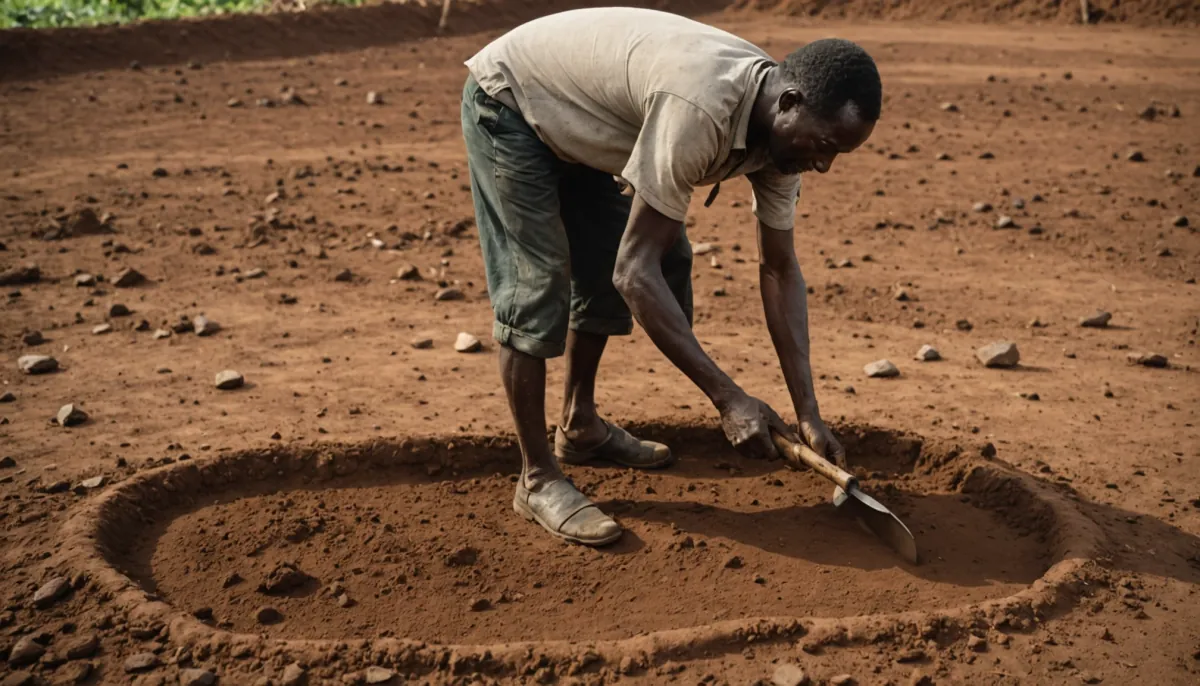
This article explores the different types of soil, their key characteristics, and the essential constituents that determine their properties. Learn about the physical, chemical, and biological properties of soil, and how these factors influence its suitability for various uses.
Soil is the foundation of terrestrial life, supporting plants, animals, and ecosystems. It serves as a medium for plant growth, a reservoir of water and nutrients, and a habitat for microorganisms.
Types of soil
Understanding soil types is crucial for agriculture, construction, and environmental conservation. Soils are classified based on their texture, composition, and physical properties. Below is a detailed exploration of the main types of soil.
1. Sandy Soil
Sandy soil is composed mainly of large particles of sand, with minimal silt or clay. It is characterized by its gritty texture and light weight. Sandy soil drains water quickly, making it dry and less fertile compared to other soils.
Properties:
- Texture: Coarse and gritty.
- Drainage: Excellent drainage due to large particle size.
- Water Retention: Poor, as water flows through quickly.
- Nutrient Content: Low, as nutrients are easily leached away.
Advantages:
- Easy to work with because of its loose structure.
- Warms up quickly in spring, benefiting early crop growth.
Disadvantages:
- Requires frequent watering and fertilization.
- Unsuitable for plants that need constant moisture.
Uses:
Sandy soil is ideal for crops that prefer well-drained soil, such as carrots, peanuts, and watermelon. It is also widely used in construction for making concrete and as a base for roadways.
2. Clay Soil
Clay soil is made up of extremely fine particles, which stick together tightly. It is heavy and compact, making it difficult to work with. However, it is highly fertile when managed correctly.
Properties:
- Texture: Smooth and sticky when wet; hard and compact when dry.
- Drainage: Poor, as water tends to pool on the surface.
- Water Retention: Excellent, as it holds water for extended periods.
- Nutrient Content: High, as it retains nutrients effectively.
Advantages:
- Rich in essential minerals and nutrients.
- Provides a stable foundation for plant roots.
Disadvantages:
- Difficult to cultivate due to compaction.
- Poor aeration can suffocate plant roots.
- Becomes waterlogged during heavy rains.
Uses:
Clay soil is suitable for crops like rice that require a lot of water. It is also used in pottery and brick-making due to its malleable nature.
3. Silty Soil
Silty soil has medium-sized particles and is known for its smooth and slippery texture. It is fertile and retains moisture well, making it one of the most desirable soil types for agriculture.
Properties:
- Texture: Smooth and soft.
- Drainage: Moderate; retains water longer than sandy soil but drains better than clay soil.
- Water Retention: Good, maintaining moisture without becoming waterlogged.
- Nutrient Content: High, as it holds nutrients effectively.
Advantages:
- Easy to work with due to its fine particles.
- Supports robust plant growth because of its fertility.
Disadvantages:
- Prone to erosion if not managed properly.
- Can become compacted under heavy machinery or frequent foot traffic.
Uses:
Silty soil is ideal for crops like wheat, corn, and soybeans. It is commonly found in river valleys and floodplains, where its fertility supports agriculture.
4. Loamy Soil
Loamy soil is a balanced mixture of sand, silt, and clay, often enriched with organic matter. It is considered the best soil type for agriculture and gardening due to its optimal drainage, aeration, and fertility.
Properties:
- Texture: Crumbly and soft.
- Drainage: Excellent, with good water-holding capacity.
- Water Retention: Balanced; retains moisture while preventing waterlogging.
- Nutrient Content: High, supporting healthy plant growth.
Advantages:
- Easy to cultivate and highly versatile.
- Provides good support for plant roots.
- Suitable for a wide variety of crops.
Disadvantages:
- Requires periodic replenishment of organic matter.
- May erode in areas with heavy rainfall.
Uses:
Loamy soil is ideal for growing vegetables, fruits, and flowers. It is also used for landscaping and gardening due to its superior qualities.
5. Peaty Soil
Peaty soil is rich in organic matter, often derived from decayed plant material. It is dark in color and retains a significant amount of moisture. Peaty soil is commonly found in wetland areas.
Properties:
- Texture: Spongy and soft.
- Drainage: Poor, as it holds a lot of water.
- Water Retention: High, often remaining waterlogged.
- Nutrient Content: Moderate, but can be improved with fertilizers.
Advantages:
- Retains moisture, reducing the need for frequent watering.
- Organic matter improves soil fertility.
Disadvantages:
- Acidic, which can hinder the growth of some plants.
- Requires liming to balance pH levels.
Uses:
Peaty soil is suitable for growing acid-loving plants like blueberries and azaleas. It is also used as a soil conditioner in gardening.
6. Chalky Soil
Chalky soil contains a high amount of calcium carbonate or lime. It is alkaline in nature and tends to be light-colored. Chalky soil is found in areas with underlying limestone or chalk bedrock.
Properties:
- Texture: Can range from light and stony to heavy and clay-like.
- Drainage: Drains well but may become dry quickly.
- Water Retention: Low, as water flows through quickly.
- Nutrient Content: Moderate but requires fertilizers to improve fertility.
Advantages:
- Suitable for plants that thrive in alkaline conditions.
- Drains well, preventing waterlogging.
Disadvantages:
- Poor nutrient availability due to alkalinity.
- Requires regular fertilization and pH adjustments.
Uses:
Chalky soil is used for growing shrubs, grasses, and other alkaline-tolerant plants. It is also suitable for vineyards, as grapes can thrive in such conditions.
7. Saline Soil
Saline soil contains high levels of soluble salts, making it unsuitable for most agricultural activities. It is common in arid and semi-arid regions, where evaporation exceeds precipitation.
Properties:
- Texture: Varies depending on the proportions of sand, silt, and clay.
- Drainage: Poor, as salts accumulate on the surface.
- Water Retention: Moderate, but salinity limits its usability.
- Nutrient Content: Low, as salts interfere with nutrient uptake.
Advantages:
- Supports salt-tolerant crops and plants.
- Found in areas with natural saline deposits, offering unique uses.
Disadvantages:
- Poor plant growth due to salinity.
- Requires costly soil reclamation techniques.
Uses:
Saline soil is used for cultivating salt-tolerant plants like barley and certain grasses. It is also studied for environmental research and restoration projects.
The classification of soil into types such as sandy, clay, silty, loamy, peaty, chalky, and saline highlights the diversity of this vital natural resource. Each soil type has unique properties that influence its usability in agriculture, construction, and landscaping. Understanding these properties helps in selecting the right soil for specific applications and managing it effectively to maximize productivity.
From the fertility of loamy soil to the drainage efficiency of sandy soil, the versatility of soil types underscores their importance in sustaining life and supporting human activities. Proper soil management and conservation are essential to ensure the long-term health of ecosystems and the sustainability of human endeavors.
Soil constituents and their properties
Soil Constituents and Their Properties
Soil is a complex mixture of organic and inorganic components that provide the foundation for plant growth and ecosystem sustainability. Its properties are determined by the proportions of its constituents, each playing a vital role in the soil’s physical, chemical, and biological characteristics. Below are the main constituents of soil and their respective properties:
1. Mineral Particles
Mineral particles form the solid framework of soil, derived from the weathering of rocks. These particles are categorized into three sizes: sand, silt, and clay.
Properties:
- Sand (2.0–0.05 mm):
- Largest particle size.
- Provides good aeration and drainage.
- Low water and nutrient retention capacity.
- Gives soil a gritty texture.
- Silt (0.05–0.002 mm):
- Medium-sized particles.
- Retains moisture better than sand.
- Fertile and smooth to the touch.
- Contributes to soil’s ability to hold nutrients.
- Clay (<0.002 mm):
- Smallest particle size.
- High water and nutrient retention.
- Poor drainage and aeration.
- Makes soil sticky when wet and hard when dry.
2. Organic Matter
Organic matter consists of decayed plant and animal material, including humus. It is critical for soil fertility and structure.
Properties:
- Enhances soil’s nutrient-holding capacity.
- Improves water retention and infiltration.
- Provides energy for soil microorganisms.
- Contributes to soil structure by binding particles into aggregates.
3. Soil Water
Soil water occupies the spaces between soil particles and is essential for plant growth and microbial activity.
Types of Soil Water:
- Gravitational Water:
- Drains quickly due to gravity.
- Not available to plants.
- Capillary Water:
- Held in small pores.
- Accessible to plant roots and vital for growth.
- Hygroscopic Water:
- Forms a thin film around soil particles.
- Unavailable to plants as it is tightly bound to particles.
Properties:
- Transports nutrients to plant roots.
- Facilitates chemical reactions in the soil.
- Influences soil temperature regulation.
4. Soil Air
Soil air fills the pores not occupied by water. It is crucial for the respiration of plant roots and soil organisms.
Properties:
- Rich in carbon dioxide (CO₂) and low in oxygen (O₂) compared to atmospheric air.
- Affects soil temperature and microbial activity.
- Influences plant root growth and nutrient uptake.
5. Soil Microorganisms
Soil hosts a diverse population of microorganisms, including bacteria, fungi, algae, and protozoa. These organisms play a significant role in soil health and fertility.
Properties:
- Decompose organic matter, releasing nutrients.
- Fix atmospheric nitrogen, making it available to plants.
- Promote soil structure through the production of organic compounds.
- Help suppress soil-borne diseases.
6. Inorganic Nutrients
Soil contains essential nutrients in mineral form, necessary for plant growth. These nutrients are categorized into macronutrients and micronutrients.
Properties:
- Macronutrients: Include nitrogen (N), phosphorus (P), potassium (K), calcium (Ca), magnesium (Mg), and sulfur (S). These are required in large quantities.
- Micronutrients: Include iron (Fe), manganese (Mn), zinc (Zn), copper (Cu), boron (B), molybdenum (Mo), and chlorine (Cl). These are needed in trace amounts.
7. Soil Colloids
Soil colloids are the smallest particles in soil, including clay and humus. They have a large surface area and a high capacity to hold water and nutrients.
Properties:
- Carry electrical charges, attracting ions like calcium, potassium, and magnesium.
- Improve soil’s cation exchange capacity (CEC), enhancing fertility.
- Influence soil pH and buffering capacity.
8. Soil Texture and Structure
The arrangement of soil particles and the relative proportions of sand, silt, and clay determine soil texture and structure.
Properties:
- Texture:
- Influences water retention, drainage, and aeration.
- Affects soil’s workability and plant root penetration.
- Structure:
- Refers to the aggregation of particles into clumps or peds.
- Affects porosity, water movement, and root growth.
Conclusion
Soil constituents, including mineral particles, organic matter, water, air, microorganisms, nutrients, and colloids, work together to determine soil’s physical, chemical, and biological properties. Understanding these components and their interactions is essential for effective soil management, sustainable agriculture, and environmental conservation.
Properties of Soil
Soil is a natural resource with diverse physical, chemical, and biological properties that influence its behavior and suitability for various uses, such as agriculture, construction, and ecosystem support. These properties are broadly categorized as follows:
1. Physical Properties of Soil
a) Soil Texture
- Refers to the proportion of sand, silt, and clay particles in the soil.
- Determines the soil’s feel and its ability to retain water and nutrients.
- Sandy Soil: Gritty texture, drains quickly.
- Clay Soil: Smooth and sticky when wet, retains water.
- Loamy Soil: A balanced mix, ideal for agriculture.
b) Soil Structure
- Describes the arrangement of soil particles into aggregates or clumps (peds).
- Affects water infiltration, drainage, root penetration, and aeration.
- Types include granular, blocky, platy, and prismatic structures.
c) Soil Color
- Indicates organic matter content, moisture, and mineral composition.
- Dark soils: High organic matter.
- Red or yellow soils: Presence of iron oxides.
d) Soil Porosity
- Refers to the volume of pore spaces between soil particles.
- Determines water retention, drainage, and aeration.
- Sandy soils have high porosity but poor water retention, while clay soils have low porosity but retain water.
e) Soil Permeability
- Refers to the soil’s ability to allow water and air to pass through.
- Coarser soils (e.g., sandy soils) are highly permeable, whereas finer soils (e.g., clay soils) are less permeable.
f) Soil Moisture
- Indicates the amount of water held in the soil.
- Types of soil water:
- Gravitational Water: Drains quickly.
- Capillary Water: Available to plants.
- Hygroscopic Water: Tightly bound, unavailable to plants.
g) Soil Temperature
- Influenced by soil color, texture, moisture, and exposure to sunlight.
- Affects seed germination, root growth, and microbial activity.
2. Chemical Properties of Soil
a) Soil pH
- Measures the acidity or alkalinity of the soil on a scale of 0 to 14.
- Acidic Soil: pH < 7, common in high rainfall areas.
- Neutral Soil: pH = 7, ideal for most crops.
- Alkaline Soil: pH > 7, often found in dry regions.
- Affects nutrient availability and microbial activity.
b) Cation Exchange Capacity (CEC)
- Indicates the soil’s ability to hold and exchange positively charged ions (cations) like calcium (Ca²⁺), potassium (K⁺), and magnesium (Mg²⁺).
- High CEC soils (e.g., clay and organic-rich soils) are more fertile.
c) Soil Salinity
- Refers to the concentration of soluble salts in the soil.
- High salinity can hinder plant growth and nutrient absorption.
d) Organic Matter
- Composed of decomposed plant and animal material, including humus.
- Improves soil fertility, water retention, and structure.
e) Nutrient Content
- Includes essential macronutrients (e.g., nitrogen, phosphorus, potassium) and micronutrients (e.g., iron, zinc, copper).
- Affects plant growth and crop yield.
3. Biological Properties of Soil
a) Microorganisms
- Includes bacteria, fungi, algae, and protozoa.
- Decompose organic matter, fix nitrogen, and promote soil fertility.
b) Soil Fauna
- Larger organisms like earthworms, insects, and burrowing animals.
- Improve soil aeration and structure through their activities.
c) Organic Matter Decomposition
- Biological activity breaks down organic material, releasing nutrients for plant uptake.
4. Mechanical Properties of Soil
a) Soil Consistency
- Refers to the soil’s strength and ability to resist deformation.
- Varies between wet, moist, and dry conditions.
b) Soil Compaction
- Occurs when soil particles are pressed together, reducing pore space.
- Can impede root growth and water infiltration.
c) Soil Erodibility
- Refers to the susceptibility of soil to erosion by water or wind.
- Depends on texture, structure, and vegetation cover.
5. Thermal Properties of Soil
- Heat Capacity: The soil’s ability to store heat.
- Thermal Conductivity: The rate at which heat moves through the soil.
- Thermal Diffusivity: The soil’s ability to transfer heat relative to its storage capacity.
These properties influence soil temperature and plant growth.
Soil properties are integral to its functionality and suitability for specific purposes. Physical properties like texture and structure influence water retention and aeration, while chemical properties like pH and nutrient content affect fertility. Biological and mechanical properties play a role in maintaining soil health and supporting plant growth. Understanding these properties is essential for sustainable soil management in agriculture, construction, and environmental conservation.
Conclusion
Soil is a complex and dynamic natural resource with diverse properties. Understanding the different types of soil and their constituents is crucial for sustainable agriculture, environmental conservation, and responsible land management. By recognizing the interplay between soil properties and plant growth, we can optimize agricultural practices, protect soil health, and ensure the long-term sustainability of our ecosystems.
Frequently Asked Questions on soil types and properties
- What are the main types of soil?
- Common soil types include sandy soil, clay soil, silty soil, loamy soil, peaty soil, chalky soil, and saline soil.
- What are the key constituents of soil?
- Soil constituents include mineral particles, organic matter, soil water, soil air, microorganisms, inorganic nutrients, soil colloids, and organic matter.
- What are the main physical properties of soil?
- Physical properties include texture, structure, color, porosity, permeability, moisture, and temperature.
- What are the main chemical properties of soil?
- Chemical properties include pH, cation exchange capacity (CEC), salinity, organic matter content, and nutrient content.
- How do soil properties influence plant growth?
- Soil properties significantly influence plant growth by affecting factors like water availability, nutrient uptake, root growth, and overall plant health.