

Food is essential for life. Different types of food exist worldwide. In Swahili, we say “aina za vyakula”. This guide explains many food categories. You will learn examples and benefits.
| Food Group | Examples | Key Nutrients |
|---|---|---|
| Grains | Rice, Wheat, Maize | Carbohydrates, Fiber |
| Legumes | Beans, Lentils, Peas | Protein, Fiber |
| Vegetables | Spinach, Carrots, Broccoli | Vitamins, Minerals |
| Fruits | Mango, Banana, Apple | Vitamins, Antioxidants |
| Meat | Beef, Chicken, Pork | Protein, Iron |
| Fish | Salmon, Tilapia, Sardines | Omega-3, Protein |
| Dairy | Milk, Cheese, Yogurt | Calcium, Protein |
| Eggs | Chicken Eggs, Duck Eggs | Protein, Vitamin B12 |
| Nuts | Almonds, Peanuts, Cashews | Healthy Fats, Vitamin E |
| Oils | Olive Oil, Coconut Oil | Fats, Vitamin E |

1. Grains and Cereals
Grains are staple foods worldwide. They provide energy and fiber. Common grains include rice, wheat, and maize. Whole grains are healthier than refined ones. They lower heart disease risk.
Examples of grains:
- Rice
- Wheat
- Oats
- Barley
- Quinoa
Brown rice and oatmeal are great choices. They keep you full longer. Try to swap white bread for whole wheat.
2. Legumes and Pulses
Legumes are plants with edible seeds. Beans, lentils, and peas are popular. They are rich in protein and fiber. Legumes are affordable and versatile.
Examples include:
- Black beans
- Kidney beans
- Chickpeas
- Lentils
- Green peas
You can make soups, stews, or salads. They are excellent for vegetarians. Plus, they improve digestion.
3. Vegetables
Vegetables are vital for good health. They contain vitamins, minerals, and antioxidants. Dark leafy greens are especially nutritious. Eat a rainbow of colors.
Healthy vegetables:
- Spinach
- Carrots
- Broccoli
- Bell peppers
- Tomatoes
Vegetables help prevent chronic diseases. They are low in calories. Include them in every meal.
4. Fruits
Fruits are naturally sweet and refreshing. They are packed with vitamins and fiber. Tropical fruits are common in Africa. Mangoes and bananas are favorites.
Fruit examples:
- Mango
- Banana
- Apple
- Orange
- Papaya
Eat fruits as snacks or desserts. They satisfy sugar cravings. Choose whole fruits over juices.

5. Meat and Poultry
Meat provides high-quality protein. It also supplies iron and zinc. Chicken and beef are common in many diets. Pork is also popular in some regions.
Types of meat:
- Beef
- Chicken
- Pork
- Lamb
- Goat
Lean cuts are healthier. Limit processed meats like bacon. They can raise cancer risk. Cook meat thoroughly.
6. Fish and Seafood
Fish is a great source of omega-3 fatty acids. These fats support brain health. Oily fish like salmon are especially good. Seafood includes prawns and shellfish.
Fish options:
- Salmon
- Tilapia
- Sardines
- Mackerel
- Shrimp
Eat fish twice a week. It reduces heart disease risk. Choose grilled or baked fish.
7. Dairy Products
Dairy comes from animal milk. It is rich in calcium and protein. Milk, cheese, and yogurt are common. They build strong bones and teeth.
Dairy foods:
- Milk
- Cheese
- Yogurt
- Butter
- Ghee
Choose low-fat or unsweetened options. Lactose-intolerant people can use alternatives. Plant-based milks are available.
8. Eggs
Eggs are a complete protein source. They contain all essential amino acids. They are also rich in vitamin B12. Eggs are versatile for breakfast, lunch, or dinner.
Types of eggs:
- Chicken eggs
- Duck eggs
- Quail eggs
Boil, fry, or scramble them. Eggs are affordable and easy to cook. Eat them with vegetables for balance.
9. Nuts and Seeds
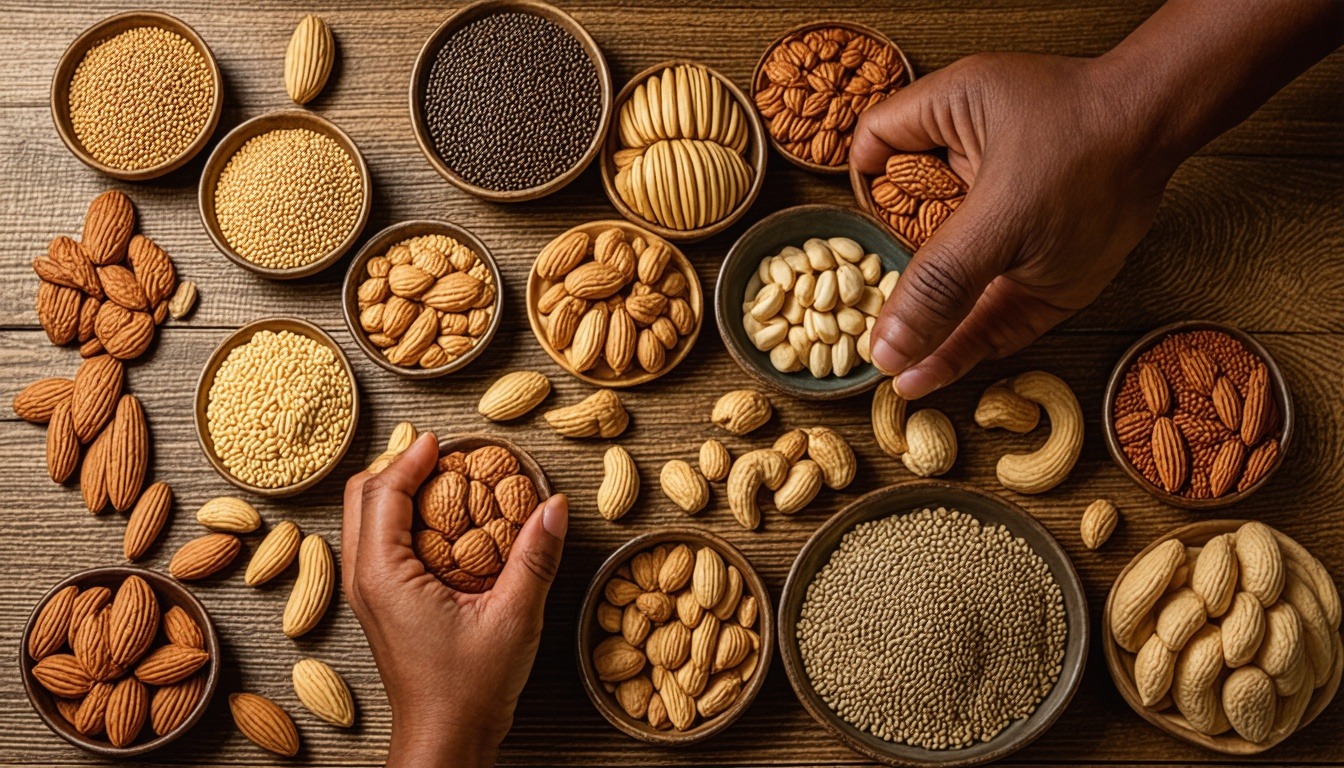
Nuts and seeds are nutrient-dense snacks. They contain healthy fats, protein, and minerals. Almonds and walnuts are popular. Seeds like chia and flax are superfoods.
Examples:
- Almonds
- Peanuts
- Cashews
- Sunflower seeds
- Chia seeds
Eat a handful daily. They support heart health. Be mindful of portions.
10. Oils and Fats
Fats are essential but need moderation. Healthy oils come from plants. Olive oil and coconut oil are good. They provide Vitamin E and energy.
Common oils:
- Olive oil
- Coconut oil
- Sunflower oil
- Avocado oil
Use oils in cooking or salad dressing. Avoid trans fats found in processed foods.
11. Sweeteners and Sugars
Sugar adds sweetness to food. Natural sweeteners like honey are healthier. But too much sugar is harmful. It can cause obesity and diabetes.
Types of sweeteners:
- Honey
- Maple syrup
- Brown sugar
- Artificial sweeteners
Limit added sugar in your diet. Read food labels carefully.
12. Herbs and Spices
Herbs and spices add flavor without calories. They also have antioxidants. Turmeric and ginger reduce inflammation. Garlic and onions boost immunity.
Popular spices:
- Turmeric
- Ginger
- Cinnamon
- Coriander
- Chili
Use them to season food. They make healthy dishes tasty.

13. Beverages
Drinks are part of daily meals. Water is essential for life. Tea and coffee are common. Fruit juices can be healthy but watch sugar.
Important beverages:
- Water
- Tea
- Coffee
- Fresh juice
- Smoothies
Stay hydrated throughout the day. Limit sugary sodas.
14. Fermented Foods
Fermentation preserves food and boosts probiotics. These good bacteria aid digestion. Yogurt and kimchi are examples. Traditional African fermented foods are rich.
Examples:
- Yogurt
- Kefir
- Sauerkraut
- Millet porridge (uji)
Fermented foods improve gut health. Try to include them daily.
15. Processed Foods
Processed foods are altered from their natural state. Some are fortified with nutrients. Many contain high salt and sugar. Examples are chips, packaged snacks, and instant noodles.
Highly processed foods:
- Burgers
- Frozen pizza
- Sodas
- Snack bars
Limit these for better health. Choose whole foods instead.
16. Traditional African Foods
Africa has diverse food cultures. Staple foods include maize, millet, and cassava. Dishes like ugali and fufu are common. They are often served with stews.
Traditional examples:
- Ugali (maize meal)
- Injera (teff flatbread)
- Jollof rice
- Bunny chow
These foods are nutritious and filling. They represent cultural heritage.

17. Street Foods
Street foods are quick and tasty. They are popular in many cities. Common street foods include samosas, skewers, and fried snacks. They are affordable but may be high in oil.
Street food examples:
- Samosa
- Maandazi (doughnuts)
- Grilled corn
- Meat skewers
Choose cleaner stalls. Eat them occasionally.
18. Organic Foods
Organic foods are grown without synthetic pesticides. They are considered healthier. Organic vegetables and fruits are common. They cost more but support the environment.
Organic products:
- Organic vegetables
- Organic fruits
- Organic dairy
- Organic meat
Look for certification labels. Wash all produce thoroughly.
19. Genetically Modified Foods
Genetically modified (GM) foods are altered in labs. They resist pests and improve yield. GM maize and soybeans are widespread. They cause debate about safety.
Common GM foods:
- Corn
- Soy
- Canola
- Cottonseed oil
Studies show they are safe. But some people prefer organic.
20. Superfoods
Superfoods have high nutrient density. They offer many health benefits. Examples include blueberries, kale, and quinoa. They are rich in antioxidants.
Top superfoods:
- Blueberries
- Kale
- Quinoa
- Chia seeds
- Turmeric
Add them to your diet. They fight disease and boost energy.
Practical Tips for Healthy Eating
Eat a variety of foods. Balance carbohydrates, proteins, and fats. Use the plate method: fill half with vegetables. Choose whole grains over refined.
“Let food be thy medicine and medicine be thy food.” – Hippocrates
Drink plenty of water. Limit sugar and salt. Cook at home more often.
Conclusion
Aina za vyakula covers many food types. Understanding them helps you choose wisely. A balanced diet prevents diseases. Include fruits, vegetables, and protein daily. Remember to stay active too. Good nutrition is key to life.
Frequently Asked Questions
What does “aina za vyakula” mean?
It means “types of food” in Swahili. It includes all categories of edible items.
How many types of food are there?
There are many ways to classify. Common groups include grains, proteins, dairy, fruits, vegetables, and fats.
Which food group gives the most energy?
Carbohydrates provide quick energy. They include grains, fruits, and starchy vegetables.
Are processed foods bad?
Some processed foods are okay. Highly processed ones have too much salt and sugar. Limit them.
Why are fruits and vegetables important?
They contain vitamins and minerals. They reduce the risk of chronic diseases. Eat at least five servings daily.



Leave a Reply