Category: Study Material

  • Agriculture in Uganda: Growth, Change and Food Security

    Agriculture in Uganda: Growth, Change and Food Security

    Agriculture in Uganda is the growing of crops and the rearing of livestock for food, income and raw materials, and it anchors the lives of most Ugandan families. The NCDC Senior 3 Agriculture syllabus records that more than 70% of the population is directly involved in agricultural production, and that the sector contributes over 25% of gross domestic product.

    Uganda’s journey runs from early subsistence farming, through colonial cash crops, to modern farming that must now deliver food security for a growing nation.

    Green Ugandan farmland with banana plants and smallholder crop gardens
    Green farmland and banana gardens of the kind smallholder families farm across Uganda.

    Early farming in Uganda

    Early farming in Uganda was subsistence farming. Families grew food for their own tables and reared livestock for milk, meat and status, with only a small surplus sold when the harvest allowed. Crops such as bananas, millet and yams supplied the daily food, while cattle such as the long-horned Ankole were kept for cultural reasons as much as for milk.

    • Subsistence farming was the foundation of early farming in Uganda: households grew what they ate and ate what they grew, selling only a small surplus when the harvest allowed.
    • Staple crops such as bananas, millet and yams supplied the daily carbohydrate food that kept a family fed through the seasons and between harvests.
    • Livestock rearing ran alongside the crops, so a family’s cattle, goats and poultry provided milk, meat, hides and manure for the garden.
    • The Ankole long-horned cattle of southwestern Uganda were kept for cultural reasons, as a buffer against drought and disease, and for income from selling live animals. This is the breed covered in the breeds and physical selection of production cattle notes.
    • Indigenous cattle breeds — the Ankole, the Zebu and the Nganda — are well adapted to local heat, disease and feed shortages, which made them the natural choice for early herders.
    • Simple hand tools did the work, because early farmers cleared, planted, weeded and harvested with hoes and other hand implements rather than with machines.
    • Communal life shaped the work, since planting, harvesting and herding were shared by families, clans and whole villages instead of being done alone.
    • Culture and ritual were woven into farming, as crops and animals appeared in ceremonies, marriage customs and the daily social life of the community.
    • Seasons and rainfall set the farming calendar, so families planted when the rains came and harvested when their crops had matured.
    • Food storage mattered greatly, because households dried or stored grain and other food to carry the family through dry periods and lean months.
    • Indigenous knowledge guided the farmer, who chose local seed, knew the soils and read the weather from long experience handed down the generations.
    • Crop diversity on one plot was common, with several crops grown together so that a family still had food if one crop failed.
    • No purchased inputs were needed, because early farmers used saved seed, animal manure and family labour, which kept costs low even though yields stayed modest.
    • Seasonal herding saw cattle keepers move animals to water and pasture in drier months, a practice still seen in Uganda’s cattle corridor today.
    Ankole long-horned cattle grazing on green Ugandan pasture
    Ankole long-horned cattle, the indigenous breed of southwestern Uganda, grazing on pasture.

    Common mistake: writing that “subsistence farming means farmers produce nothing to sell.” Subsistence farmers sell a small surplus when they can; the point is that most of what they grow is for the family’s own food, not for a market.

    The colonial period and cash crops

    The colonial period changed agriculture in Uganda by steering farmers away from growing mainly for the family and toward cash crops grown for export. Cotton and coffee became the main cash crops, and farmers were moved into growing them alongside, and sometimes instead of, their food crops. This linked Uganda’s farms to a global market for raw materials, often through monoculture — planting a single crop over a wide area.

    A Ugandan example shows the chain. Cotton grown by farmers in Bukwo is sold to a ginnery, which cleans the raw cotton into lint, and the lint is then spun into textiles. The farmer at the bottom of that chain sells raw, unprocessed cotton, which is why the farmer carries no value-added tax on it.

    CropTypeGrown for
    Bananas (matooke)Food cropStaple food, cooked and eaten daily across central and western Uganda.
    MilletFood cropCereal grain used for porridge and for local brew.
    MaizeFood cropStaple grain for posho and flour, with maize bran used as animal feed.
    BeansFood cropProtein-rich food eaten with matooke, posho or rice.
    RiceFood cropStaple grain grown in wetlands and under irrigation.
    CassavaFood cropStarchy root food and a drought-tolerant reserve crop.
    Sweet potatoesFood cropRoot food, with the vines fed to livestock.
    SorghumFood cropCereal for food and brew, also used as animal feed.
    CoffeeCash cropGrown for its beans, which are sold on the global market for export income.
    CottonCash cropGrown for its fibre (lint), which is ginned and spun into textiles.
    TeaCash cropGrown for its leaves, which are processed for drinking; Uganda’s highlands suit tea plantations.
    Sugar caneCash cropGrown for sugar, with molasses and bagasse used as energy feed for livestock.
    SoyabeanOilseed cropAn oilseed whose soybean meal is a protein source in animal feed.
    SunflowerOilseed cropAn oilseed whose sunflower cake is a protein source in animal feed.
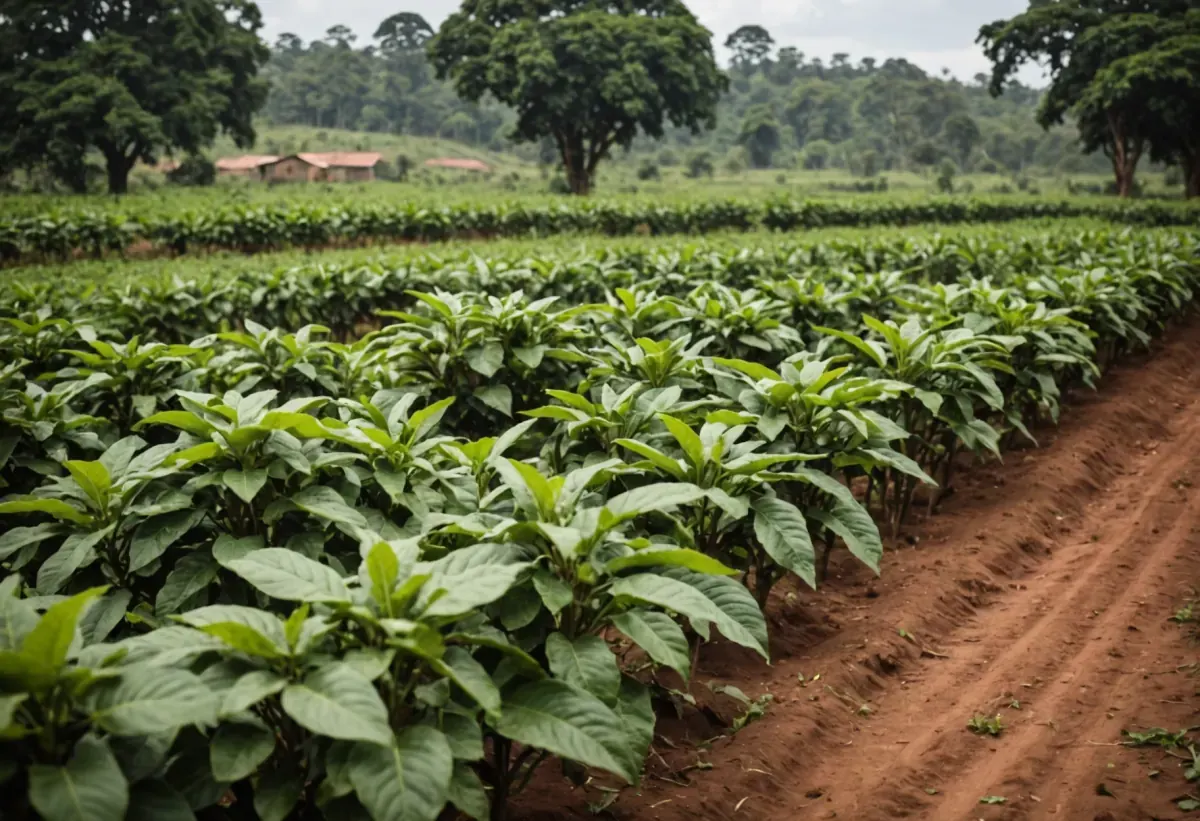
    Coffee plants growing in rows on a Ugandan smallholder farm
    Coffee bushes, one of Uganda’s main cash crops, grown on a smallholder plot.

    Exam tip: when you classify crops, name what the crop is grown for, not just the crop. Cotton is a cash crop because it is grown for sale as lint; maize is a food crop because most of it is eaten, even though a surplus is sold.

    Agriculture after independence

    After independence, agriculture in Uganda survived political upheaval and economic hardship, and it stayed the backbone of the economy. The country’s own syllabus records a huge expansion: land under agricultural production rose from 8 million acres in 1997 to 40 million acres. The same document records that more than 70% of the population is directly involved in agricultural production.

    • Agriculture stayed the backbone, for even through the political upheaval and economic hardship that followed independence, farming remained the main source of work and income for most Ugandans.
    • The 1997 baseline was small, since the NCDC Agriculture syllabus records only 8 million acres of land under agricultural production in that year.
    • Expansion then accelerated, with the syllabus recording 40 million acres under agricultural production by the time the document was published in 2019.
    • A five-fold rise is what that growth represents, because 40 million acres divided by 8 million acres equals five (40 ÷ 8 = 5).
    • Cooperatives were rebuilt, and the Uganda Cooperative Savings and Credit Union (UCSCU) was established in 1972 to bring savings and credit cooperatives together.
    • A legal framework now guides cooperatives through the Cooperative Societies Act, under which a SACCO must first register before it can be licensed to lend.
    • Government programmes in the late 20th and early 21st centuries aimed to raise productivity, improve access to markets and promote sustainable farming.
    • Improved seed varieties were introduced so that farmers could raise yields beyond what their saved local seed would produce.
    • Climate-smart agriculture became a stated goal, pairing crop and livestock farming with practices that protect soil and water.
    • Technology reached the farm, with mobile phones giving farmers access to weather forecasts, market prices and practical farming advice in a way that was once impossible.
    • The organic farming movement grew as some farmers cut back on synthetic inputs to reach markets that pay a premium for organically produced food.
    • Cash crops remained central, with coffee and tea continuing to earn export income while food crops fed the home market.
    • Youth and women became a stronger focus, as programmes worked to raise their skills, their access to land and their access to capital in farming.
    • Financial services appeared for farmers, with the Agricultural Credit Facility launched in 2009 and the Uganda Agricultural Insurance Scheme launched in 2017 to cover crop and livestock losses.

    Common mistake: writing that Uganda’s farmland shrank after independence. The syllabus shows the opposite — land under production grew from 8 million acres in 1997 to 40 million acres, a five-fold rise.

    Modern farming in Uganda today

    Modern agriculture in Uganda mixes smallholder food production with cash crops, dairy and new technology. The NCDC Agriculture syllabus (2019) records that more than 70% of the population is directly involved in agricultural production and that the sector contributes over 25% of gross domestic product — which underlines the value of agriculture to Ugandan communities.

    • Land under production reached 40 million acres, a huge increase on the 8 million acres that were under use in 1997, according to the NCDC Agriculture syllabus.
    • Population dependence is very high, since more than 70% of the population is directly involved in agricultural production and over half of these are in the subsistence sector.
    • GDP contribution is over 25%, which the NCDC syllabus records as agriculture’s share of Uganda’s gross domestic product and a sign of how much the economy leans on the land.
    • A taught subject, agriculture is an elective from Senior 1 to Senior 4, with four periods a week in Senior 3 and Senior 4 — the focus of the Senior 3 Agriculture notes on this site.
    • The national herd reached 14.5 million cattle in the 2021 National Livestock Census, up from 11.4 million recorded in 2008.
    • Milk output reached 3.7 billion litres a year by 2021, a five-fold increase on the 667.5 million litres recorded in 2008.
    • Mostly indigenous cattle make up the herd, since 77% of the national cattle population is indigenous and only 23% is exotic or cross-bred.
    • Youth-headed herds number 1.4 million livestock-keeping households, or 20.1% of the total, showing that young people already hold a real stake in farming.
    • Women farmers head 2.3 million livestock-keeping households, or 34.1% of the total, which makes women central to Uganda’s livestock economy.
    • A cash and food mix is insured nationally, since the Uganda Agricultural Insurance Scheme covers coffee, tea, maize, rice, beans, bananas, fruits, vegetables, cattle, pigs, poultry and fish.
    • Mobile money reached 65.9% of adults in 2023, up from 54.4% in 2018, which is how many farmers now send and receive payment for produce.
    • Savings groups are widespread, with about three in ten Ugandans belonging to a village savings group and SACCO use rising from 4.3% to 12.2% of adults between 2018 and 2023.
    • New farming methods are spreading, since hydroponics — growing crops without soil — is demonstrated at the Makerere University Agricultural Research Institute in Kabanyolo (MUARIK).
    • Simple tools still dominate, because 81.4% of livestock-keeping households own hand farm tools while only 0.2% own a tractor.

    Exam tip: quote the syllabus’s own figures and name the source. Write “the NCDC Agriculture syllabus (2019) records 40 million acres under production and over 70% of the population in agriculture” — naming NCDC earns the mark for source use.

    Challenges and opportunities for Ugandan agriculture

    Agriculture in Uganda faces real pressures — climate change, land degradation and limited access to finance — but each pressure opens a door for a young farmer who is ready to respond. The skill examiners want is matching each challenge to a practical, affordable solution.

    ChallengeEffect on farming
    Climate changeBrings drought and unreliable rains, so planting seasons shift and yields become harder to predict.
    Land degradationWorn-out soils and erosion reduce the fertility that crops need to grow well.
    Limited access to financeKeeps many farmers from buying improved seed and inputs, because affordable credit is hard to get.
    Crop failure and droughtFinScope Uganda 2023 records that 22% of adults faced crop failure, livestock death or drought — the second most common financial shock after illness.
    Low mechanisationOnly 0.2% of livestock-keeping households own a tractor, so most farm work is still done by hand.
    Animal diseaseFoot and mouth disease and tick-borne diseases such as East Coast fever cost farmers cattle, milk and income.
    Poor livestock shelterOnly 32.5% of cattle-keeping households had a shelter for their cattle in 2021, exposing animals to weather and disease.
    Thin insurance coverageThe Uganda Agricultural Insurance Scheme reaches below 1% of farming households a year, so most losses are not insured.
    Price falls after harvestSome households lose income when the price of their produce drops, especially when many farmers sell at once.
    Scarce equipmentOnly 16.4% of livestock-keeping households own feeding or watering troughs and just 11.3% own a spray pump.
    Rain dependenceBecause most fields rely on rainfall, a poor rainy season quickly becomes a poor harvest for the family.
    Adoption without finance78% of farmers practise mixed cropping but only 4% borrowed to fund it, and 41% use improved seed with only 5% borrowing for it.
    Weak formal savingOnly two in ten Ugandans have ever saved electronically, so much farm money is kept informally and earns nothing.
    OpportunityWhat a young farmer could do about it
    Improved seedPlant higher-yielding, drought-tolerant seed varieties in place of saved local seed to lift yields.
    Mobile technologyUse a phone to check weather forecasts and market prices before planting and before selling.
    Village savings groupsJoin a VSLA to save a little each week and borrow a lump sum for seed or tools.
    SACCOs and cooperativesJoin a SACCO or cooperative to pool resources, share knowledge and reach bigger markets together.
    Agricultural creditApply for Agricultural Credit Facility loans through a bank at up to 12% fixed interest per year.
    Crop insuranceInsure maize, beans, bananas and other crops under the Uganda Agricultural Insurance Scheme.
    HydroponicsLearn to grow leafy vegetables without soil at a demonstration site such as MUARIK in Kabanyolo.
    Drip irrigationBuild a simple drip system from a bucket and pipes to water a small garden in the dry season — the method in the low-cost drip irrigation for forage notes.
    Youth loansBorrow through youth agricultural loans aimed at people aged 18 to 35, often through a group.
    Organic farmingCut back on synthetic inputs and target markets that pay a premium for organically grown produce.
    Livestock improvementCross indigenous cattle with dairy breeds for more milk, or keep hardy local breeds for drought resilience.
    Value additionSell processed or graded produce — such as ginned cotton — to capture more of the value chain.
    Climate-smart practicesConserve soil and water on the farm to protect yields when rainfall becomes unreliable.
    Youth and women programmesJoin initiatives that raise skills, land access and capital for young and women farmers.

    Common mistake: listing only the challenges and stopping there. Examiners award marks for matching each challenge to a realistic response — for example, “limited finance” matched to “join a SACCO or apply for Agricultural Credit Facility credit at up to 12%”.

    Frequently asked questions about agriculture in Uganda

    What is agriculture in Uganda?

    Agriculture in Uganda is the growing of crops and the rearing of livestock for food, income and raw materials. It is the backbone of the economy: the NCDC syllabus records that over 70% of the population is directly involved in agricultural production and that the sector contributes over 25% of gross domestic product.

    Which crops are grown in Uganda?

    Uganda grows food crops such as bananas, maize, beans, rice, millet, sorghum, cassava and sweet potatoes. It also grows cash crops including coffee, cotton, tea and sugar cane, and it keeps livestock such as cattle, goats, pigs and poultry.

    What are the main cash crops of Uganda?

    The main cash crops are coffee, cotton and tea. Coffee is grown for its beans, which are sold on the global market; cotton for its fibre, which is ginned into textiles; and tea for its leaves, which are processed for drinking.

    What share of Ugandans depends on agriculture?

    More than 70% of Ugandans are directly involved in agricultural production, and over half of these work in the subsistence sector. These figures come from the NCDC Agriculture syllabus (2019), and they show how central farming is to Ugandan life.

    Why is agriculture important to Uganda’s economy?

    Agriculture contributes over 25% of Uganda’s gross domestic product and provides work for most of the population. It supplies the nation’s food, earns export income from cash crops such as coffee, and produces raw materials and jobs across rural areas.

    What challenges does agriculture in Uganda face?

    Agriculture in Uganda faces climate change, land degradation and limited access to finance. Farmers also cope with crop failure and drought, animal diseases, poor livestock shelter and very low insurance coverage, so each challenge needs a practical response.

    How can a young person start farming in Uganda?

    A young person can join a savings group or SACCO, learn a method such as drip irrigation or hydroponics, and apply for youth agricultural loans aimed at people aged 18 to 35. Starting small with one or two crops keeps the risk low.

    Key terms and revision summary

    Learn these terms, then attempt the exam-style questions below. Each answer outline shows the points an examiner looks for.

    TermMeaning
    AgricultureThe growing of crops and the rearing of livestock for food, income and raw materials.
    Subsistence farmingGrowing food mainly for the family’s own use, with only a small surplus sold when possible.
    Cash cropA crop grown mainly for sale, such as coffee or cotton.
    Food cropA crop grown mainly to be eaten, such as bananas, maize or beans.
    Gross domestic product (GDP)The total value of the goods and services a country produces in a year.
    Climate-smart agricultureFarming practices that protect soil and water while keeping yields steady as the climate changes.
    CooperativeA group that pools members’ resources to buy inputs, share knowledge and reach markets together.
    SACCOA savings and credit cooperative — a member-owned society that takes savings and lends to its members.
    HydroponicsGrowing crops without soil, in water or a solid growing medium.
    Improved seedHigher-yielding or drought-resistant seed varieties used in place of saved local seed.

    Exam-style questions and answer outlines

    1. State three differences between subsistence farming and commercial cash-crop farming. Outline: subsistence farmers grow mainly for the family’s food while cash-crop farmers grow mainly for sale; subsistence plots are usually small and diverse while cash-crop farms may be larger and planted to one crop; subsistence farming uses saved seed and family labour while cash-crop farming is linked to markets and exports.
    2. Name four food crops and three cash crops grown in Uganda, and state what one cash crop is grown for. Outline: food crops — bananas, maize, beans, millet (or rice, cassava, sweet potatoes); cash crops — coffee, cotton, tea; coffee is grown for its beans, which are sold on the global market.
    3. Using the NCDC Agriculture syllabus figures, describe the size and importance of agriculture in Uganda. Outline: 40 million acres under production (up from 8 million in 1997); more than 70% of the population directly involved; over 25% of GDP. Explain each figure and name NCDC as the source.
    4. Explain two challenges facing Ugandan agriculture and give one practical response to each. Outline: limited finance → join a SACCO or apply for Agricultural Credit Facility credit at up to 12%; climate change and drought → use drought-tolerant seed and drip irrigation; animal disease → vaccination and movement control.
    5. Why did colonial rule shift Ugandan farming from food crops toward cash crops? Outline: the colonial economy wanted raw materials for export, so it steered farmers into cash crops such as cotton and coffee, often grown as monocultures, alongside and sometimes in place of food crops.
  • Gratitude Expressed: The Global Tradition of Offerings and Thanksgiving

    Introduction: The Essence of Gratitude Through Time

    Throughout history and across cultures, offerings and thanksgiving have served as profound expressions of gratitude, humility, and acknowledgment. These practices are deeply ingrained in the human experience, symbolizing our appreciation for abundance, divine favor, and communal ties. This exploration takes us on a journey to understand the universal significance of these traditions and their enduring impact on our lives.

    Unveiling the Tradition Across Cultures and Ages

    Spiritual and Religious Practices

    From the ancient sacrificial altars to modern-day places of worship, the act of making offerings is a universal symbol of reverence and devotion. Whether it’s lighting incense in a serene temple, participating in a traditional feast, or giving alms, these practices are foundational in expressing gratitude to a higher power and seeking blessings for the future.

    Cultural Significance

    Harvest festivals and seasonal celebrations stand as testament to humanity’s connection with nature and the cycles of life. In every corner of the world, communities gather to give thanks for the bounty of the land. These festivals, rich with food, dance, and music, not only celebrate the earth’s generosity but also reinforce

    Offerings in a church typically refer to monetary contributions or donations made by congregants to support the church and its activities. Believers always give offertories in form of food stuff, money, clothes and other household items.

    Which purpose do offertories serve in churches?

    These offerings serve various purposes:

    1. Supporting the Church: Financial contributions help cover operational costs, maintenance, and support various church programs.
    2. Charitable Causes: Churches often allocate a portion of the offerings to support charitable causes or community outreach programs.
    3. Missionary Work: Funds may go towards supporting missionary work or international outreach efforts.
    4. Staff and Clergy: They can contribute to the salaries or stipends of church staff and clergy members.

    While monetary offerings are common, some churches may also have non-monetary offerings, such as goods or services donated to support the church’s activities or aid the community.

    Why do people give generously

    People give generously for various reasons:

    1. Altruism and Compassion: Many individuals give out of a genuine desire to help others and make a positive impact.
    2. Personal Beliefs: Religious, spiritual, or ethical beliefs often drive generosity, as teachings in many faiths encourage giving and helping those in need.
    3. Gratitude: Some people give as a way to express gratitude for what they have received in life.
    4. Social Connection: Giving can create a sense of belonging and connection within communities, contributing to a sense of purpose and satisfaction.
    5. Tax Benefits: In some cases, there might be tax incentives or benefits associated with charitable donations.
    6. Empathy and Understanding: Witnessing or empathizing with the struggles of others can motivate people to give generously to alleviate suffering and improve lives.

    Generosity stems from a combination of personal values, empathy, a desire to create positive change, and a sense of connection to others in need.

    Propose what church offerings can be used for

    Church offerings can be used for various purposes, supporting both the church’s internal operations and external charitable endeavors:

    1. Operational Costs: Covering expenses like utilities, maintenance, and administrative costs to keep the church running smoothly.
    2. Staff and Clergy Support: Providing salaries, stipends, or resources for clergy members and other church staff.
    3. Community Outreach: Funding programs that aid the local community, such as food banks, shelters, educational initiatives, or support for marginalized groups.
    4. Charitable Causes: Contributing to broader charitable causes, both locally and internationally, supporting disaster relief, medical missions, or education programs.
    5. Building and Expansion: Renovations, construction, or expansion of church facilities to accommodate growing congregations or enhance community services.
    6. Spiritual Development: Offering resources for spiritual growth, including workshops, educational materials, or events that nurture personal faith and growth.

    Using offerings for a mix of internal church needs and external charitable initiatives helps maintain the church’s functionality while actively contributing to the betterment of the broader community.

    What can be done to make all churches self-sustaining in terms of resources

    To work towards self-sustainability in terms of resources, churches can consider various strategies:

    1. Diversification of Income Streams: Developing multiple sources of income beyond traditional offerings, such as hosting events, renting out space, or starting community-based programs that generate revenue.
    2. Financial Planning and Budgeting: Implementing sound financial planning and budgeting practices to manage resources more efficiently and effectively.
    3. Stewardship Education: Providing education and guidance to congregants on financial stewardship and the importance of consistent giving to support the church’s sustainability.
    4. Utilizing Assets Creatively: Maximizing the use of church assets, such as real estate, to generate income, whether through rental or innovative business ventures.
    5. Partnerships and Collaborations: Collaborating with other organizations, both religious and secular, for joint ventures or programs that mutually benefit the community and the church.
    6. Volunteerism and In-Kind Contributions: Encouraging and utilizing volunteer efforts and in-kind contributions to reduce costs and support various church activities.

    By implementing a combination of these strategies, churches can work towards greater self-sustainability in terms of resources, allowing them to continue serving their community and congregants more effectively.

    Why should people give to God

    The act of giving to God, often through offerings or tithes in religious contexts, holds various meanings for believers:

    1. Obedience and Faith: Many see giving as an act of obedience to religious teachings and a demonstration of faith in a higher power or divine principles.
    2. Gratitude and Acknowledgment: Giving is often seen as an expression of gratitude for blessings received, acknowledging God as the ultimate provider.
    3. Supporting Spiritual Work: Contributions are often directed towards sustaining the church, supporting spiritual leaders, and enabling the continuation of religious practices and community services.
    4. Personal Growth: Giving is considered a way to grow spiritually, deepening one’s commitment and connection to faith and religious values.
    5. Act of Worship: For many, giving is an integral part of worship, representing a form of devotion and reverence to the divine.

    The act of giving to God is deeply rooted in religious teachings and personal convictions, serving as a way for believers to express their faith, gratitude, and commitment to their spiritual beliefs.

    What lessons do modern Christians gain after offertory

    After offertory, modern Christians often derive several lessons and values:

    1. Stewardship: Understanding the concept of responsible management and distribution of resources as a reflection of one’s faith and commitment.
    2. Generosity: Learning the importance of giving willingly and generously, not only financially but also through time, skills, and service.
    3. Trust in God: Recognizing that giving is an act of trust in God’s provision and acknowledging that all resources come from God.
    4. Community Support: Understanding the impact of contributions on the community and the role each individual plays in supporting the church and broader charitable initiatives.
    5. Sacrifice and Commitment: Emphasizing the idea of personal sacrifice as a means of expressing commitment to one’s faith and the betterment of others.

    These lessons from the offertory serve to instill values and teachings related to stewardship, generosity, faith, and communal support among modern Christians.

  • Unraveling the Mysteries of Life: A Deep Dive into Life and non-life Processes

    Introduction: Understanding Life Processes

    Life processes are the series of basic activities performed by living organisms to sustain life. These processes are fundamental for growth, development, and the maintenance of life. In this post, we explore the essential life processes, providing insights into how living beings survive, grow, and interact with their environment. Join us as we unravel the mysteries of life through a closer look at these fascinating biological functions.

    Examples of Life Processes

    1. Nutrition: The Foundation of Life

    How do living organisms obtain nutrition? Nutrition involves the intake and use of nutrients by organisms. Photosynthesis in plants and digestion in animals are prime examples of how living beings convert external sources of energy into usable forms.

    2. Respiration: Breathing Life into Cells

    • Understanding cellular respiration in living organisms This vital process is how cells extract energy from food. The breakdown of glucose to release energy exemplifies respiration’s critical role in sustaining life’s biological activities.

    3. Excretion: Cleansing the System

    • How do living organisms remove waste? Excretion is the process of removing toxic substances and waste products of metabolism from the body, crucial for maintaining homeostasis and preventing damage to the organism.

    4. Reproduction: Ensuring Continuity of Life

    • Exploring reproduction methods in living organisms Reproduction can be sexual or asexual, with various species employing different strategies to ensure their genetic legacy continues across generations.

    5. Growth and Development: From One Stage to the Next

    • The role of growth in the life cycle of organisms This process encompasses the physical changes and increase in size experienced by organisms, driven by cell division and differentiation.

    Conclusion: The Interconnectedness of Life Processes

    The exploration of life processes reveals the intricate and interconnected nature of living organisms. From obtaining nutrients to growing and reproducing, each process is a testament to the complexity and resilience of life. Understanding these processes not only deepens our appreciation for the natural world but also underscores the importance of preserving the delicate balance that sustains life on Earth.


    Distinguish between the life and non life processes

    here’s a brief distinction between life processes and non-life processes:

    Life Processes:

    1. Organization: Living organisms are highly organized, with cells as their basic structural units, whereas non-living things lack this level of structural complexity.
    2. Metabolism: Living organisms engage in metabolic activities, including the conversion of energy for growth, maintenance, and reproduction. Non-living things do not have metabolic processes.
    3. Response to Stimuli: Living organisms can respond to stimuli from their environment, adjusting their behavior or physiology. Non-living things do not exhibit purposeful responses.
    4. Reproduction: Living organisms can reproduce, producing offspring similar to themselves. Non-living things do not have the capacity for reproduction.
    5. Growth and Development: Living organisms undergo growth and development, with changes occurring throughout their life cycles. Non-living things do not grow or develop.
    6. Adaptation: Living organisms can adapt to changes in their environment over time through evolution. Non-living things do not evolve or adapt in the biological sense.
    7. Homeostasis: Living organisms maintain internal stability through homeostasis, regulating their internal environment. Non-living things do not exhibit this self-regulation.

    Non-life Processes:

    Non-life processes refer to actions or events that occur without the involvement of living organisms. These processes can happen in the natural world or through artificial means and do not require the biological mechanisms inherent to living beings. Instead, they follow physical or chemical laws, and their occurrence doesn’t depend on the life processes that characterize organisms, such as respiration, metabolism, or reproduction. Examples of non-life processes include:

    1. Lack of Organization: Non-living things lack the complex organization observed in living organisms, often being composed of simpler structures or lacking defined structures altogether.
    2. No Metabolism: Non-living things do not engage in metabolic processes; they don’t convert energy or carry out the biochemical reactions characteristic of living organisms.
    3. No Purposeful Response: Non-living things do not respond to stimuli in a purposeful or adaptive manner. Any apparent responses are typically a result of physical or chemical processes, not biological reactions.
    4. No Reproduction: Non-living things do not reproduce or produce offspring. Their existence and characteristics are not passed on to subsequent generations.
    5. No Growth or Development: Non-living things do not exhibit growth or development. Changes in non-living things are often due to physical or chemical processes rather than biological maturation.
    6. No Adaptation: Non-living things do not adapt to changes in their environment through evolution. Changes in non-living things occur due to external influences or natural processes.
    7. No Homeostasis: Non-living things do not regulate internal stability or maintain a dynamic equilibrium within themselves. They are subject to external forces and do not actively regulate their internal conditions.

    Give the roles of each life process

    Certainly! Each life process plays a crucial role in maintaining the existence, growth, and reproduction of living organisms:

    1. Nutrition:
    • Role: Provides the necessary nutrients and energy for the organism’s metabolic activities.
    • Importance: Sustains life by supporting growth, repair, and maintenance of the organism’s structure and functions.
    1. Respiration:
    • Role: Extracts energy from nutrients through oxygen intake and carbon dioxide release.
    • Importance: Powers various cellular processes, ensuring the organism has the energy required for its life activities.
    1. Transportation:
    • Role: Moves essential substances (e.g., nutrients, gases) within the organism.
    • Importance: Facilitates distribution of nutrients, gases, and other vital materials to cells, maintaining proper functioning.
    1. Excretion:
    • Role: Eliminates waste products and excess substances from the organism.
    • Importance: Prevents the accumulation of harmful byproducts, maintaining internal balance and health.
    1. Response to Stimuli:
    • Role: Allows the organism to react to changes in the environment.
    • Importance: Enhances the organism’s survival by enabling it to respond to threats, find resources, and adapt to its surroundings.
    1. Homeostasis:
    • Role: Regulates internal conditions to maintain a stable environment.
    • Importance: Ensures optimal conditions for life processes, preventing harmful fluctuations in temperature, pH, and other factors.
    1. Growth:
    • Role: Involves an increase in size or number of cells.
    • Importance: Enables the organism to reach maturity, supporting development and overall functionality.
    1. Reproduction:
    • Role: Involves the production of offspring, ensuring the continuation of the species.
    • Importance: Perpetuates the genetic information and characteristics of the organism, contributing to species survival.

    Each life process contributes to the overall well-being and survival of the organism, showcasing the intricate interplay of these processes in the web of life.

  • Unlocking the Past: A Comprehensive Guide to Secondary Sources of History and Their Impact

    Introduction:

    History is not just about dates and events; it’s about understanding the narratives that weave through time to shape our present. While primary sources offer a direct lens into the past, secondary sources of history provide analysis, interpretation, and synthesis of those primary sources. This blog post dives into the significance of secondary sources, their types, and their pivotal role in historical research.

    What Are Secondary Sources?

    Secondary sources of history are documents, recordings, or writings that analyze, interpret, or critique historical events. Unlike primary sources, which are direct accounts from the time of the event, secondary sources offer a second-hand perspective, often providing context, analysis, or commentary on historical phenomena.

    Types of Secondary Sources: of history

    • Books and Textbooks: Comprehensive overviews on historical topics.
    • Journal Articles: Scholarly papers offering in-depth analysis.
    • Historical Reviews: Summaries and critiques of historical writings.
    • Documentaries: Visual and auditory analyses of historical events.
    • Biographies: Life stories of historical figures, providing insights into their times.

    Importance of Secondary Sources:

    1. Contextual Understanding: They provide background and context to primary sources.
    2. Critical Analysis: Offer interpretations and critique, allowing for a deeper understanding of historical events.
    3. Scholarly Dialogue: Foster academic discussions, leading to a more nuanced view of history.

    How to Evaluate Secondary Sources:

    Evaluating the credibility and relevance of secondary sources is crucial. Consider the author’s qualifications, the source’s publication date, and the evidence presented. Analyzing multiple sources on the same topic can also offer a balanced perspective.

    Examples of Influential Secondary Sources: of history in the world

    • Eric Hobsbawm’s “The Age of Revolution”: A comprehensive analysis of the transformative period between 1789 and 1848.
    • “The Guns of August” by Barbara Tuchman: A detailed account of the events leading up to World War I.
    • “The Making of the English Working Class” by E.P. Thompson: Explores the development of the working class in the 18th and 19th centuries.

    Conclusion:

    Secondary sources are indispensable to the study of history. They not only offer analysis and interpretation but also challenge us to see beyond the surface of historical records. By critically engaging with secondary sources, historians and students alike can construct a more nuanced and comprehensive understanding of the past.

    Advantages of Using Secondary Sources in Historical Research

    1. Accessibility: Secondary sources are often more accessible than primary sources. They can be found in libraries, academic journals, and online platforms, making it easier for researchers to gather relevant information.

    2. Contextual Analysis: Secondary sources provide context and interpretation of historical events, helping readers understand the complexities and nuances of the past.

    3. Time-saving: Researching using secondary sources can save time. They summarize, analyze, and critique a wide range of primary materials, offering insights without the need to sift through numerous primary documents.

    4. Broad Perspectives: Secondary sources offer a variety of perspectives on historical events, allowing for a broader understanding and facilitating comparative analysis.

    Disadvantages of Using Secondary Sources in Historical Research

    1. Potential Bias: Secondary sources can introduce bias, as authors may interpret historical events through their own perspectives, potentially skewing the understanding of those events.

    2. Lack of Directness: Secondary sources are one step removed from the original events or primary materials, which may result in a loss of immediacy and specificity in the portrayal of historical facts.

    3. Over-reliance: Solely relying on secondary sources might limit the researcher’s exposure to original materials, potentially overlooking novel insights or interpretations not yet discussed in secondary literature.

    4. Quality and Credibility Issues: The quality and credibility of secondary sources can vary significantly. Researchers must critically evaluate each source’s reliability, which requires a good understanding of the field and its scholarship.

    Frequently Asked Questions (FAQs) about Secondary Sources of History

    Q1: What exactly are secondary sources of history? A1: Secondary sources of history are documents or recordings that discuss, analyze, or interpret primary sources. They are one step removed from the events or periods they discuss and include books, documentaries, journal articles, and more.

    Q2: Why are secondary sources important in historical research? A2: Secondary sources provide context, analysis, and interpretation of historical events. They help historians and researchers understand the significance of primary sources, offering insights into the broader historical narrative.

    Q3: How can I tell if a secondary source is credible? A3: Evaluate the credibility of a secondary source by considering the author’s qualifications, the source’s publication venue, its citation of primary sources, and its alignment with other scholarly work on the topic.

    Q4: Can secondary sources be biased? A4: Yes, all sources, including secondary sources, can have biases. It’s important to critically assess the author’s perspective, the time and context of the source’s production, and compare it with other secondary sources to get a well-rounded understanding of the topic.

    Q5: How do secondary sources compare to primary sources? A5: Primary sources are original materials from the time of the event being studied (e.g., diaries, photographs, and artifacts), while secondary sources analyze, interpret, or critique primary sources, offering a second layer of insight and context.

    Q6: Are textbooks considered secondary sources? A6: Yes, textbooks are considered secondary sources because they synthesize and analyze information from primary sources and other secondary research to provide an overview of historical periods or events.

    Q7: What role do secondary sources play in education? A7: In education, secondary sources are used to teach critical thinking and analytical skills. They allow students to explore different interpretations of historical events and understand the complexities of historical narratives.

    Q8: Can documentaries and films be considered secondary sources? A8: Yes, documentaries and films that analyze historical events or periods are considered secondary sources. They offer visual and auditory interpretations of history, although their accuracy and bias should be critically evaluated.

  • 8 Ways Chemistry Fuels Uganda’s Development and Innovation

    Embark on a fascinating exploration of how chemistry ignites progress and innovation across Uganda’s vibrant landscapes and sectors. In this compelling narrative, we uncover the eight pivotal areas where chemistry’s invisible hand guides growth, enhances well-being, and safeguards the environment. From the verdant fields of agriculture that feed the nation to the cutting-edge research that promises a sustainable future, chemistry is the silent catalyst behind Uganda’s thriving development. As we journey through these transformative sectors, we reveal the profound impact of chemistry on everyday life and its crucial role in building a resilient, prosperous Uganda. Discover the synergy between scientific discovery and practical application, where chemistry not only solves complex problems but also opens doors to exciting and meaningful careers. Join us in celebrating the power of chemistry as the foundation of Uganda’s journey toward innovation and sustainability.

    Importance of chemistry in Uganda

    Agriculture:

    The Chemical Bedrock of Growth
    Uganda’s agrarian economy thrives on chemistry. Soil chemistry, pesticide development, and crop nutrition are areas where chemistry meets agriculture to boost yields and ensure food security. Careers like agricultural chemists and agronomists are instrumental in this sector.

    2. Public Health:

    Chemistry’s Role in Saving Lives
    In public health, chemistry’s reach extends from water purification to pharmaceuticals, playing a crucial role in combating diseases and improving healthcare outcomes. Professionals in this field include clinical laboratory scientists and pharmaceutical researchers.

    3. Energy Sector:

    Powering Development Through Chemistry
    Chemistry’s contribution to the energy sector is undeniable, with its role in enhancing energy efficiency and fostering renewable sources. Careers such as chemical engineers and environmental scientists are vital for sustainable energy solutions.

    1. Education and Research: The Nucleus of Innovation
      The advancement of chemistry education and research is critical for nurturing future innovators and technologists. Chemists, educators, and researchers are at the forefront of scientific discovery and technological advancement.

    5. Environmental Conservation:

    Chemistry for a Greener Future
    Addressing environmental challenges requires a deep understanding of chemistry, from pollution mitigation to resource conservation. Environmental scientists and conservationists use chemistry to protect Uganda’s natural heritage.

    6. Mining and Minerals Processing:

    Unearthing Value with Chemistry
    In the mining sector, chemistry enhances mineral extraction and processing, contributing to economic growth while ensuring environmental sustainability. Careers in this field include geochemists and metallurgists.

    7. Manufacturing and Industry:

    The Chemical Foundation of Production
    Chemistry is pivotal in manufacturing, impacting everything from product quality to the development of new materials. Chemical engineers and industrial chemists are key players in this sector.

    8. Water Resource Management:

    Ensuring Purity Through Chemistry
    Chemistry is essential for managing Uganda’s water resources, ensuring the safety and sustainability of water for all uses. Water quality scientists and hydrologists work to maintain the balance between usage and conservation.

    Conclusion:

    The tapestry of Uganda’s development is intricately woven with the threads of chemical knowledge. From agriculture and public health to energy, manufacturing, and beyond, chemistry is a cornerstone of innovation, sustainability, and economic growth. As Uganda continues on its path of development, the role of chemistry and related careers will only grow in importance, highlighting the value of chemical science in solving national challenges and improving the quality of life for all Ugandans.

    Frequently Asked Questions (FAQs) about Chemistry and Careers in Uganda

    Q1: Why is chemistry important in Uganda’s agricultural sector? A1: Chemistry plays a crucial role in Uganda’s agricultural sector by enhancing soil fertility, developing safe and effective fertilizers and pesticides, and understanding the chemical processes essential for plant growth. This scientific knowledge is vital for increasing agricultural productivity and sustainability.

    Q2: How does chemistry contribute to public health in Uganda? A2: In public health, chemistry is fundamental for testing water quality, developing pharmaceuticals, and ensuring food safety. Knowledge of chemical principles helps in disease control, sanitation, and improving the overall healthcare outcomes in Uganda.

    Q3: What role does chemistry have in Uganda’s energy sector? A3: Chemistry is essential for understanding energy production processes, especially in developing renewable energy sources and optimizing power generation. It supports Uganda’s efforts in investing in sustainable and efficient energy projects.

    Q4: Can chemistry influence environmental conservation in Uganda? A4: Absolutely. Chemistry is key in addressing environmental challenges, including pollution mitigation, natural resource conservation, and promoting sustainable development practices. Environmental scientists rely on chemical knowledge to preserve Uganda’s biodiversity and ecosystems.

    Q5: How is chemistry involved in Uganda’s mining and minerals processing industry? A5: Chemistry is integral to mineral exploration and extraction processes, aiding in the development of environmentally friendly mining practices. It ensures that Uganda’s mineral resources are utilized sustainably and responsibly.

    Q6: What impact does chemistry have on manufacturing and industrial processes in Uganda? A6: In the manufacturing sector, chemistry is pivotal for quality control, developing new materials, and improving production processes. This drives economic growth and supports job creation in Uganda’s industrial landscape.

    Q7: Why is chemistry important for water resource management in Uganda? A7: Chemistry is vital for monitoring water quality, ensuring the safety of drinking water, and managing water treatment processes. It plays a critical role in sustainable water resource management, crucial for agriculture, industry, and domestic use in Uganda.

    Q8: How can I pursue a career in chemistry in Uganda? A8: Pursuing a career in chemistry in Uganda typically involves obtaining an education in chemical sciences, which can range from diploma courses to advanced degrees. Gaining practical experience through internships and research projects is also beneficial. Careers can be found in various sectors, including agriculture, healthcare, education, environmental conservation, and more.

    These FAQs aim to shed light on the multifaceted role of chemistry in Uganda’s development and the vast opportunities it presents for aspiring chemists and professionals looking to make a difference in their communities and the nation.

    Contribution of Chemistry to the Economy of Uganda

    Chemistry plays a significant role in contributing to the economy of Uganda across various sectors. Here are some key contributions of chemistry to the economic landscape:

    1. Agriculture and Agro-processing:
    • Fertilizer Production: Chemistry is crucial in the production of fertilizers, providing essential nutrients for soil fertility and crop yield improvement. This enhances agricultural productivity and contributes to food security, which is essential for economic growth.
    • Pesticide Development: Chemistry is involved in the formulation and development of pesticides that protect crops from pests and diseases. This helps to minimize agricultural losses, ensuring a stable food supply and supporting the livelihoods of farmers.
    1. Mining and Minerals Processing:
    • Mineral Exploration and Processing: Chemistry is fundamental in mineral exploration, extraction, and processing. It contributes to the optimization of mining processes, ensuring efficient extraction of valuable minerals and promoting sustainable mining practices.
    1. Energy Production:
    • Hydropower Generation: Uganda has significant hydropower resources. Chemistry is essential in understanding the chemical processes involved in power generation from hydropower plants. This contributes to the country’s energy production and economic development.
    • Renewable Energy Development: Chemistry is involved in the development of renewable energy sources such as biofuels and solar power. The research and application of chemical principles in these areas contribute to diversifying the energy mix, reducing dependence on non-renewable resources.
    1. Manufacturing and Industry:
    • Chemical Industry: Chemistry contributes to the growth of Uganda’s manufacturing sector through the production of chemicals used in various industries. This includes the production of raw materials, specialty chemicals, and industrial processes that support manufacturing activities.
    • Quality Control: Chemistry is vital in quality control processes across industries. Ensuring the quality of manufactured goods contributes to the competitiveness of Ugandan products in local and international markets.
    1. Healthcare and Pharmaceuticals:
    • Drug Development: Chemistry is central to pharmaceutical research and drug development. Local pharmaceutical industries benefit from the application of chemistry in creating essential medications, improving healthcare, and contributing to the overall well-being of the population.
    • Diagnostic Technologies: Chemistry plays a role in the development of diagnostic tools and technologies used in healthcare. This includes chemical analysis methods that aid in disease diagnosis and monitoring.
    1. Environmental Management:
    • Water Treatment: Chemistry is essential in water treatment processes, ensuring access to clean and safe drinking water. This contributes to public health, reduces waterborne diseases, and supports the overall well-being of the population.
    • Waste Management: Chemistry is involved in waste treatment and disposal processes, contributing to environmental sustainability. Proper waste management practices help mitigate environmental pollution and maintain ecosystem health.
    1. Education and Research:
    • Knowledge Economy: Chemistry education and research contribute to building a knowledge-based economy. Well-trained chemists and researchers support innovation, technological advancements, and the growth of the scientific community.

    In summary, the contributions of chemistry to the economy of Uganda are diverse and pervasive. From supporting agriculture and energy production to driving advancements in healthcare and industry, chemistry plays a crucial role in fostering economic development and sustainability. The application of chemical principles in various sectors contributes to increased productivity, improved quality of life, and the overall economic well-being of the country.

  • UNLEASH INNOVATION: DRIVE GROWTH AND SUCCESS

    Step into a realm where innovation and creativity meet success – our journey into the dynamic landscape of business innovation: Explore examples, types, and importance. This blog is your gateway to unlocking the secrets of innovation, from unraveling its profound meaning to exploring real-world examples. Join us as we delve into the various types of innovation, offering a comprehensive guide on how to foster the innovator’s mindset. Discover the key features that set successful innovators apart and embark on a transformative quest to become a driving force in the ever-evolving world of business. Welcome to a space where innovation is not just a concept; it’s the key to unlocking boundless opportunities and charting your path to success.

    What is innovation in business?

    In the context of business, innovation refers to the process of introducing new ideas, products, services, processes, or technologies with the aim of improving and transforming various aspects of the business to gain a competitive advantage and drive growth.

    Examples of innovation in business

    Innovation as a driving force for success in business can manifest in several ways:

    1. Product Innovation: This involves developing and introducing new or improved products or services that meet the changing needs and preferences of customers. For example, a tech company launching a new smartphone with innovative features.
    2. Process Innovation: Businesses can innovate by optimizing internal processes to enhance efficiency and reduce costs. This might include implementing new manufacturing techniques, supply chain improvements, or automation.
    3. Business Model Innovation: This involves rethinking the fundamental structure of a business, such as changing the way it creates, delivers, and captures value. Companies like Airbnb and Uber are known for their disruptive business models.
    4. Marketing and Strategy Innovation: Innovations in marketing strategies, branding, and market positioning can give a business a competitive edge. For example, using social media and influencer marketing to reach new customer segments.
    5. Technological Innovation: Advancements in technology can drive innovation by enabling businesses to develop new products, services, or processes. This might include using artificial intelligence, blockchain, or other emerging technologies.
    6. Cultural and Organizational Innovation: Fostering a culture of innovation within a company can lead to continuous improvement. This involves encouraging employees to generate and implement new ideas and being open to change.

    Innovation in business is essential for staying competitive, adapting to market changes, and addressing customer demands. It can lead to increased profitability, market share, and long-term sustainability.

    types of innovation

    Innovation can take various forms, and it’s often categorized into different types to help understand and manage the innovation process. Here are some common types of innovation:

    1. Product Innovation: This type of innovation involves developing new or improved products or services. It can range from incremental improvements to entirely novel creations. For example, a smartphone with new features or a groundbreaking medical device.
    2. Process Innovation: Process innovation focuses on optimizing or revolutionizing the internal processes within a company. This can lead to increased efficiency, reduced costs, and better quality. Automation, reengineering, and lean management are examples of process innovations.
    3. Business Model Innovation: Business model innovation involves rethinking how a company creates, delivers, and captures value. It can lead to new revenue streams, cost structures, and customer experiences. Companies like Netflix and Amazon have used innovative business models to disrupt traditional industries.
    4. Marketing Innovation: Marketing innovation pertains to the way a company promotes and communicates with its target audience. It might involve new advertising strategies, social media campaigns, or creative branding techniques.
    5. Service Innovation: This type of innovation focuses on improving or creating new services. It’s particularly relevant in industries like healthcare, finance, and hospitality, where service quality and customer experience are crucial.
    6. Technological Innovation: Technological innovation involves the development and application of new technologies. This can include breakthroughs in software, hardware, or other technical solutions. Think of the development of electric vehicles or advancements in artificial intelligence.
    7. Sustainability and Environmental Innovation: These innovations aim to reduce the environmental impact of products and processes. It includes efforts to develop eco-friendly products, renewable energy solutions, and sustainable practices.
    8. Open Innovation: Open innovation is a collaborative approach where companies seek external sources of ideas, technologies, and expertise to complement their in-house capabilities. It can involve partnerships, acquisitions, or crowdsourcing ideas from the public.
    9. Social Innovation: Social innovation focuses on addressing societal challenges, such as poverty, education, healthcare, and environmental issues. It often involves creative solutions to pressing social problems.
    10. Cultural and Organizational Innovation: This type of innovation revolves around creating a culture of innovation within a company. It may involve changes in leadership, employee empowerment, and fostering an environment that encourages experimentation and creativity.

    These types of innovation are not mutually exclusive and can often overlap. Successful organizations often employ a mix of these innovation types to stay competitive and adapt to changing market dynamics.

    importance of innovation

    Innovation is of paramount importance in various aspects of life, including business, technology, and society, for several reasons:

    1. Competitive Advantage: Innovation can provide a significant competitive edge. Businesses that innovate by creating new products, services, or processes often lead in their industries, attracting more customers and increasing market share.
    2. Market Responsiveness: Innovating allows companies to adapt to changing market conditions and customer demands. This flexibility is crucial in today’s rapidly evolving business landscape.
    3. Efficiency and Cost Savings: Process innovations can lead to increased efficiency and reduced operational costs. By streamlining operations and eliminating inefficiencies, organizations can allocate resources more effectively.
    4. Increased Productivity: Innovations, particularly technological ones, can enhance productivity. Automation, software solutions, and improved tools enable workers to accomplish more in less time.
    5. Revenue Growth: New products and services generated through innovation can lead to revenue growth. Customers are often willing to pay a premium for innovative solutions that address their needs.
    6. Sustainability: Innovations in sustainability and environmentally friendly practices are critical for reducing the negative impact of business activities on the environment. This is becoming increasingly important in the face of environmental challenges.
    7. Job Creation: Innovation can lead to the creation of new industries and job opportunities. It drives economic growth by spurring entrepreneurship and the development of new markets.
    8. Quality Improvement: Innovation can result in higher-quality products and services, leading to increased customer satisfaction and loyalty.
    9. Problem Solving: Innovation is key to solving complex problems, whether they are related to healthcare, energy, transportation, or other critical areas. It allows us to find creative solutions to societal challenges.
    10. Global Influence: Countries and organizations that lead in innovation have a stronger global influence. They set trends, standards, and shape the direction of various industries.
    11. Improved Standards of Living: Technological innovations in healthcare, education, and other sectors contribute to an improved standard of living by providing better access to essential services and enhancing quality of life.
    12. Social Progress: Social innovations can address pressing social issues, such as poverty, education, and healthcare, leading to improved social welfare and equity.
    13. Long-Term Sustainability: Innovation is essential for long-term sustainability, ensuring that businesses and societies can thrive in a rapidly changing world.

    In summary, innovation is a driving force for progress, growth, and adaptability in various domains. It fosters creativity, problem-solving, and positive change, making it a cornerstone of success in today’s dynamic and interconnected world.

    how can you become innovative

    Becoming innovative is a valuable trait in various aspects of life, from business to personal development. Here are some ways to become more innovative:

    Ways to Become Innovative in business:

    1. Cultivate Curiosity: Innovators are curious by nature. Foster a sense of wonder and an insatiable desire to learn and explore. Ask questions and seek answers.
    2. Open-Mindedness: Be open to new ideas, different perspectives, and experiences. Embrace diversity and be willing to challenge your own beliefs and assumptions.
    3. Embrace Failure: Innovators understand that failure is a part of the learning process. Don’t be afraid to take risks and learn from your mistakes.
    4. Develop Problem-Solving Skills: Innovators excel at identifying and solving problems. Practice critical thinking and creative problem-solving techniques.
    5. Collaborate: Innovation often thrives in a collaborative environment. Work with others, share ideas, and build on each other’s strengths.
    6. Continuous Learning: Stay up-to-date with the latest developments in your field and other areas of interest. Lifelong learning is a hallmark of innovative individuals.
    7. Embrace Change: Be adaptable and open to change. Innovation often requires leaving your comfort zone and trying new approaches.
    8. Creativity: Cultivate your creative thinking by exploring different art forms, brainstorming, or engaging in activities that encourage creativity.

    Key Features of an Innovator:

    1. Creativity: Innovators have the ability to think outside the box, come up with novel ideas, and connect seemingly unrelated concepts.
    2. Vision: They have a clear vision of what they want to achieve and are driven by a sense of purpose and passion.
    3. Resilience: Innovators are resilient and persistent in the face of setbacks. They don’t give up easily and are determined to see their ideas come to fruition.
    4. Risk-Taking: They are willing to take calculated risks. Innovators understand that uncertainty is a part of the innovation process.
    5. Adaptability: Innovators adapt to changing circumstances and are open to new information and feedback.
    6. Empathy: Understanding the needs and desires of others is crucial for creating solutions that resonate with people. Empathy helps innovators design products and services that address real problems.
    7. Resourcefulness: Innovators are resourceful and can make the most of what’s available to them, whether it’s time, money, or talent.
    8. Effective Communication: Being able to convey ideas clearly and persuasively is essential for gaining support and bringing others on board with your innovations.
    9. Networking: Building a network of diverse connections can provide fresh perspectives and opportunities for collaboration.
    10. Passion: Innovators are often deeply passionate about what they do, which fuels their drive to create and improve.

    Remember that innovation is a journey, and it’s a skill that can be developed over time. By adopting these traits and practices, you can become more innovative and make a positive impact in your chosen field or area of interest.

    FREQUENTLY ASKED QUESTIONS ABOUT INNOVATION IN BUSINESS

    1. What is the meaning of innovation in business?
    • Business innovation is the process of introducing new ideas, methods, products, or services that result in positive change, growth, and increased competitiveness within the industry.
    1. Can you provide examples of innovation in the business world?
    • Examples of business innovation include the introduction of new technologies, disruptive business models, product enhancements, and creative marketing strategies that redefine industry standards.
    1. What are the different types of innovation in business?
    • Business innovation can take various forms, such as product innovation, process innovation, business model innovation, and marketing innovation. Each type contributes uniquely to business development.
    1. How can I become an innovator in my business or industry?
    • To become an innovator, cultivate a curious mindset, stay informed about industry trends, embrace change, collaborate with diverse perspectives, and be open to experimentation and learning from failures.
    1. What key features distinguish successful innovators?
    • Successful innovators exhibit traits such as creativity, resilience, adaptability, a willingness to take risks, effective communication, and a focus on continuous learning and improvement.
    1. Why is innovation important for business growth?
    • Innovation is essential for business growth as it enables companies to stay competitive, meet evolving customer needs, and adapt to changes in the market, fostering long-term sustainability.
    1. How can businesses encourage a culture of innovation among employees?
    • Businesses can foster a culture of innovation by promoting open communication, providing resources for learning and development, recognizing and rewarding innovative efforts, and creating an environment that values experimentation.
    1. Are there challenges associated with implementing innovation in business?
    • Yes, challenges may include resistance to change, a fear of failure, and the need for substantial investments. Overcoming these challenges requires effective leadership, communication, and a commitment to the innovation process.
    1. What role does technology play in driving business innovation?
    • Technology plays a crucial role in business innovation by providing tools and platforms for automation, data analysis, and connectivity, enabling businesses to streamline processes and develop innovative solutions.
    1. Can small businesses benefit from innovation, or is it mainly for larger corporations?
    • Innovation is beneficial for businesses of all sizes. Small businesses can leverage innovation to differentiate themselves, improve efficiency, and create unique value propositions that help them compete effectively in the market.

    WHAT YOU SHOULD KNOW ABOUT INNOVATION IN BUSINESS

    As we conclude our exploration into the dynamic realm of business innovation, remember that innovation is not merely a concept; it is the driving force propelling businesses toward success. Armed with the understanding of its meaning, examples, types, and the key features of successful innovators, you now hold the tools to transform your approach to business. Embrace change, cultivate a culture of creativity, and embark on a continuous journey of innovation. Let this be the catalyst that propels you and your business into a future filled with endless possibilities. Thank you for joining us on this enlightening adventure, where innovation is not just a strategy but a way of shaping a thriving, resilient, and forward-thinking enterprise.

  • 20 Emerging Careers in Uganda’s Agriculture Sector for 2024

    20 Emerging Careers in Uganda’s Agriculture Sector for 2024

    Young Ugandan agricultural officer showing two students how to examine a coffee leaf

    Introduction:

    Agriculture remains the backbone of Uganda’s economy, employing approximately 80% of the population. As we embrace technology and sustainable farming practices, the sector is rapidly evolving, offering a myriad of career opportunities. Here, we explore 20 promising careers in Uganda’s agriculture sector, highlighting the diversity and potential for aspiring professionals in 2024.

    Career jobs in Uganda’s agriculture sector

    1. Smallholder Farmers:

    Empowering the backbone of Uganda’s agriculture, smallholder farmers engage in mixed farming, growing crops and rearing livestock on small plots. They are pivotal in sustaining food security and rural livelihoods.

    2. Soil Health Specialists:

    With a focus on sustainable agriculture, soil health specialists analyze soil conditions to advise on conservation practices, ensuring long-term productivity and environmental health.

    3. Agroforestry Technicians:

    Blending agriculture with forestry, agroforestry technicians develop land-use practices that enhance biodiversity, reduce erosion, and increase crop yield through strategic tree planting.

    4. Aquaculture Consultants:

    In response to rising fish demand, aquaculture consultants offer expertise in the sustainable cultivation of aquatic organisms, including fish and plants, contributing to food security and economic growth.

    5. Crop Rotation Advisors:

    Specializing in sustainable crop management, these advisors help farmers implement crop rotation strategies to improve soil health, reduce pests, and increase yield.

    6. Farm Technology Innovators:

    Leveraging technology, these innovators introduce precision farming tools, such as drones and IoT devices, to enhance productivity and resource management in farming operations.

    7. Agricultural Policy Advocates:

    Working within governmental or non-governmental organizations, advocates influence policy-making to support sustainable agricultural practices and rural development.

    8. Sustainable Supply Chain Coordinators:

    These coordinators ensure the ethical, sustainable sourcing of agricultural products, emphasizing fair trade practices and reducing carbon footprints.

    9. Community Supported Agriculture (CSA) Managers:

    CSA managers connect farmers directly with consumers, promoting local, fresh produce subscriptions that support small-scale farmers and community health.

    10. Biofortification Specialists:

    Focusing on nutrition, biofortification specialists develop crops with enhanced nutrients to combat malnutrition, working closely with agricultural biotechnologists.

    11. Agri-Tourism Entrepreneurs:

    Blending agriculture with tourism, these entrepreneurs create experiences that educate visitors about farming, conservation, and sustainable living, diversifying income sources for farmers.

    12. Organic Certification Consultants:

    As demand for organic products rises, certification consultants guide farmers through the process of organic certification, ensuring compliance with national and international standards.

    13. Renewable Energy Technicians in Agriculture:

    Specializing in green energy solutions, these technicians implement solar, wind, and biomass systems on farms to reduce energy costs and carbon footprints.

    14. Water Resource Managers:

    Critical in water-scarce regions, these managers devise efficient irrigation systems and water conservation strategies, ensuring sustainable water use in agriculture.

    15. Agricultural Extension Officers:

    These officers bridge the gap between research and farming, delivering the latest agricultural science and technology to rural communities, enhancing productivity and sustainability.

    16. Permaculture Designers:

    Focusing on sustainable land use design, permaculture designers create resilient agricultural ecosystems that mimic natural processes, promoting biodiversity and ecological harmony.

    17. Seed Sovereignty Coordinators:

    Championing seed conservation, these coordinators work with communities to preserve indigenous seed varieties, ensuring genetic diversity and food sovereignty.

    18. Urban Farming Specialists:

    Addressing food production in urban settings, these specialists develop innovative solutions like rooftop gardens and vertical farming to bring agriculture into cities.

    19. Climate Change Analysts in Agriculture:

    These analysts study the impact of climate change on agriculture, advising on adaptation and mitigation strategies to secure food production against environmental challenges.

    20. Agricultural Finance Advisors:

    They provide financial planning and support to farmers and agribusinesses, facilitating access to credit, insurance, and investment to grow and innovate.

    Conclusion:

    The agriculture sector in Uganda is ripe with opportunities, blending traditional practices with modern innovations. These 20 careers offer a glimpse into the sector’s future, promising a rewarding path for those passionate about agriculture and sustainability. As Uganda continues to embrace agricultural advancements, the potential for growth and development in this sector is boundless.

    Frequently Asked Questions About Careers in Agriculture

    1. What is a career in agriculture?

    A career in agriculture involves various professions related to farming, food production, and the management of natural resources. It encompasses a wide range of roles, from farmers and ranchers to agricultural scientists and environmental specialists.

    2. What qualifications do I need to work in agriculture?

    Qualifications vary depending on the specific career path. Some roles, like farming or livestock care, may require hands-on experience, while others, such as agricultural scientists or engineers, typically require at least a bachelor’s degree in relevant fields.

    3. What are the job prospects in agriculture?

    Job prospects in agriculture are generally stable, as the world’s population continues to grow, and the demand for food and agricultural products remains high. Career opportunities exist in both rural and urban areas.

    4. Is agriculture only about farming and ranching?

    No, agriculture encompasses a wide range of professions beyond farming and ranching. It includes roles in research, technology, business management, marketing, environmental sustainability, and policy development.

    5. How can I get started in a career in agriculture?

    To get started, consider your interests and goals within the field of agriculture. Choose relevant courses or degrees, gain practical experience, and network with professionals in the industry. Internships and entry-level positions are excellent ways to begin.

    6. Are there opportunities for sustainable and organic farming careers?

    Yes, there are opportunities in sustainable and organic farming, which have gained popularity due to increased awareness of environmental and health concerns. Careers in organic farming and sustainable agriculture focus on eco-friendly and ethical practices.

    7. What is the role of technology in agriculture careers?

    Technology plays a crucial role in modern agriculture. Careers in precision agriculture, agribusiness management, and agricultural engineering often involve using advanced tools such as GPS, drones, and data analysis software to enhance productivity and sustainability.

    8. Are there opportunities for advancement in agriculture careers?

    Yes, there are opportunities for advancement in agriculture. Many individuals start in entry-level positions and progress to management, research, or specialized roles as they gain experience and expertise.

    9. What are some challenges in agriculture careers?

    Challenges in agriculture may include unpredictable weather, pest and disease management, market fluctuations, and environmental concerns. Staying informed about industry trends and adopting new technologies can help mitigate these challenges.

    10. Can I make a difference in agriculture careers related to sustainability and the environment?

    Absolutely. Careers in agriculture offer many opportunities to address environmental and sustainability concerns. Roles in sustainable farming, conservation, and environmental sciences are focused on making a positive impact on the planet.

    11. Are there careers in agriculture that do not involve manual labor on a farm?

    Yes, there are numerous careers in agriculture that do not involve manual labor on a farm. These include roles in agricultural research, education, policy analysis, technology development, marketing, and many more.

    12. How do I stay updated on advancements in the agricultural field?

    To stay updated, consider joining agricultural associations, subscribing to industry publications, attending conferences and workshops, and networking with professionals in the field. Many universities and institutions also offer online courses in agricultural topics.

    13. What are the benefits of pursuing a career in agriculture?

    Benefits of an agriculture career can include job security, the opportunity to make a positive impact on food production and the environment, and the potential for career advancement and financial stability.

    14. Are there opportunities to work internationally in agriculture careers?

    Yes, many agricultural careers offer international opportunities, particularly in areas like agricultural development, research, and global trade. These roles may involve collaborating with organizations and governments worldwide.

  • Strengthening Your Family: The Power of Daily Prayer

    In

    the whirlwind of daily life, our families often crave a deeper connection, a shared experience that strengthens bonds and fosters a sense of unity. This blog delves into the meaning of prayer, why we should pray, the benefits of praying as a family and the effects of prayer in peoples’ lives. So, look no further than the powerful practice of family prayer. This time dedicated to connecting with something greater than ourselves, and with each other, can be transformative. Whether you’re a seasoned practitioner or just starting your journey, this blog delves into the power of daily prayer within the family unit. We’ll explore how this simple act can nurture faith, create a more unified household, and bring a sense of peace and purpose into your family life.

    Prayer: A Family Affair

    Prayer is a form of communication between humans and God. It is a way to express gratitude, seek forgiveness, and ask for help. Prayer can be done alone or with others.

    Why is it important for a family to pray together?

    Praying together as a family holds various important benefits:

    1.         Bonding and Unity: It fosters a sense of togetherness, strengthening family bonds through a shared spiritual practice.

    2.         Communication and Support: Provides an opportunity to discuss and share concerns, joys, and hopes, encouraging open communication and support among family members.

    3.         Values and Beliefs: Reinforces and shares common values and beliefs, helping to instill a shared moral and ethical framework within the family.

    4.         Emotional Support: Offers a space for comfort and emotional support during challenging times.

    5.         Teaching and Learning: Encourages teaching and learning about faith and spirituality within the family unit.

    6.         Ritual and Routine: Establishes a ritual or routine that provides stability and structure, which can be comforting and reassuring for all family members.

    Praying together helps create a sense of spiritual connection and togetherness that extends beyond the immediate family circle, fostering a deeper sense of belonging and shared purpose.

    WHY SHOULD CHILDREN BE INVOLVED IN PRAYER EARLY IN LIFE?

    Introducing children to prayer at an early age can have several positive impacts:

    1.         Establishing Values: It helps instill moral and ethical values and introduces them to the concept of something beyond themselves.

    2.         Emotional Development: Encourages emotional expression, empathy, and a sense of gratitude and humility.

    3.         Routine and Discipline: Introduces a routine and structure that can be comforting and grounding.

    4.         Family Bonding: Fosters a sense of togetherness and unity when families pray together.

    However, it’s important to allow children to explore their own beliefs and not impose prayer as an obligation. Creating a safe and open environment where they can ask questions and form their own understanding of spirituality is crucial.

    Reasons why some families do not pray at all

    There are several reasons why some families may not engage in prayer:

    1.         Different Beliefs: The family members might follow diverse belief systems or have no religious inclination, leading to a lack of prayer practice.

    2.         Lack of Tradition: In some cases, families may not have a tradition of prayer due to cultural or personal reasons.

    3.         Busy Lifestyles: Hectic schedules and demanding lifestyles may limit the time available for communal prayer or spiritual activities.

    4.         Differing Priorities: Some families prioritize other forms of bonding or activities over prayer.

    5.         Negative Experiences: Past negative experiences or disillusionment with organized religion might deter families from engaging in prayer.

    6.         Personal Beliefs: Individuals within the family might hold personal beliefs that don’t align with formal prayer.

    The decision not to pray can stem from various personal, cultural, or experiential reasons that differ from one family to another.

    What are the effects of neglecting prayer in families

    Neglecting prayer within a family can lead to several potential effects:

    1.         Lack of Spiritual Connection: Without prayer, there might be a lack of spiritual guidance and connection within the family unit.

    2.         Reduced Emotional Support: Absence of prayer might limit the space for emotional expression, support, and shared spiritual experiences.

    3.         Diminished Bonding: It could impact family unity and the sense of togetherness that often comes from shared spiritual practices.

    4.         Missed Moral and Ethical Development: The absence of prayer may lead to a potential lack of exposure to moral and ethical teachings found within many religious traditions.

    5.         Missed Opportunity for Reflection: Prayer often provides a space for reflection and gratitude, which could be missing in families that don’t engage in this practice.

    However, it’s important to note that families can foster strong bonds and values in various ways beyond prayer. Different families find diverse methods to instill morals, ethics, and emotional support, even without formalized prayer practices.

    The importance of prayer

    Prayer holds various significant aspects:

    1.         Connection: It fosters a connection to something greater, whether it’s a higher power, the universe, or an inner self, providing a sense of belonging and purpose.

    2.         Spiritual Growth: It supports personal and spiritual growth, offering a space for introspection, gratitude, and seeking guidance or strength.

    3.         Comfort and Support: Prayer can be a source of solace during challenging times, providing emotional support and a sense of reassurance.

    4.         Community and Unity: It brings people together, fostering a sense of community and unity when shared among families, groups, or communities.

    5.         Gratitude and Reflection: Encourages gratitude, reflection, and mindfulness, promoting a positive and introspective mindset.

    Prayer serves as a means of connecting with the divine, fostering personal growth, and nurturing a sense of community and support, making it a vital aspect of many people’s lives.

    The benefits of prayer

    The benefits of prayer encompass various aspects:

    1.         Mental and Emotional Well-being: Prayer can reduce stress, anxiety, and promote a more positive outlook on life, contributing to overall mental well-being.

    2.         Resilience and Coping: It provides a source of strength and resilience, helping individuals cope with challenges and adversity.

    3.         Mindfulness and Focus: Prayer encourages mindfulness, improving focus and a sense of present-moment awareness.

    4.         Health Benefits: Some studies suggest that prayer might positively impact physical health, contributing to lower blood pressure and improved immune function.

    5.         Relationships and Empathy: It can foster a sense of empathy, gratitude, and stronger social connections, positively impacting relationships.

    6.         Spiritual Growth: Facilitates personal and spiritual growth, nurturing a deeper connection to one’s beliefs and values.

    The benefits of prayer extend to various dimensions of well-being, encompassing mental, emotional, physical, and spiritual aspects of an individual’s life.

    As you embark on this journey of family prayer, remember, there’s no single “right” way to do it. The most important aspect is creating a space for connection, reflection, and shared faith. Let the love and support within your family guide you. As you weave prayer into the fabric of your daily lives, witness the beautiful tapestry of faith, unity, and love that unfolds.

  • Living vs. Nonliving & Animals vs. Plants: Mastering the Basics

    Unveiling the Wonders of Our World: Living vs. Nonliving & Animals vs. Plants

    Have you ever stared at a shimmering seashell and wondered: is it alive? Or maybe you’ve gazed at a towering tree and pondered: how is it different from a playful puppy? The natural world is bursting with fascinating mysteries, and understanding the fundamental differences between living and nonliving things, as well as animals and plants, forms the bedrock of our exploration. Buckle up, curious minds, because this journey will unlock a deeper appreciation for the incredible diversity of life on Earth!

    The differences between living and non living things

    Living things and non-living things differ in several key aspects:

    1.         Organization: Living things are highly organized, with complex structures at different levels (cells, tissues, organs), while non-living things lack this level of organization.

    2.         Metabolism: Living organisms engage in metabolic processes, converting energy for growth, reproduction, and maintenance. Non-living things do not have metabolic activities.

    3.         Response to Stimuli: Living organisms can respond to stimuli from their environment, adjusting their behavior or physiology. Non-living things lack this ability to respond in a purposeful manner.

    4.         Reproduction: Living things can reproduce, producing offspring similar to themselves. Non-living things do not have the capacity for reproduction.

    5.         Growth and Development: Living organisms exhibit growth and development, with changes occurring throughout their life cycles. Non-living things do not grow or develop in this manner.

    6.         Adaptation: Living organisms can adapt to changes in their environment over time through evolution. Non-living things do not evolve or adapt in the biological sense.

    7.         Cellular Structure: Living organisms are composed of cells, the basic units of life. Non-living things lack cellular structure.

    8.         Homeostasis: Living organisms maintain internal stability through homeostasis, regulating their internal environment. Non-living things do not exhibit this self-regulation.

    These distinctions help define the boundary between the living and non-living components of the natural world.

    Animals vs plants

    Differentiating animals and plants requires a critical analysis of our environment. Animals and plants are two distinct groups of living organisms, and they differ in various characteristics. Here are key points of differentiation between animals and plants:

    Plants:

    1.         Cell Structure:

    •          Cell Wall: Plants have a rigid cell wall made of cellulose outside their cell membrane.

    •          Plastids: Plants contain chloroplasts for photosynthesis, giving them their green color.

    2.         Mode of Nutrition:

    •          Autotrophic: Plants are autotrophic, producing their own food through photosynthesis.

    3.         Locomotion:

    •          Immobile: Generally, plants are stationary and do not exhibit active locomotion.

    4.         Growth:

    •          Indeterminate Growth: Plants continue to grow throughout their life, often with indeterminate growth patterns.

    5.         Reproduction:

    •          Asexual and Sexual: Plants can reproduce both sexually, through seeds and spores, and asexually, through processes like vegetative propagation.

    6.         Response to Stimuli:

    •          Tropisms: Plants respond to environmental stimuli through tropisms, such as phototropism (response to light) and gravitropism (response to gravity).

    7.         Respiration:

    •          Aerobic: Plants undergo aerobic respiration, utilizing oxygen to release energy from nutrients.

    Animals:

    1.         Cell Structure:

    •          No Cell Wall: Animals lack a cell wall, and their cells are surrounded only by a cell membrane.

    2.         Mode of Nutrition:

    •          Heterotrophic: Animals are heterotrophic, obtaining their food by consuming other organisms.

    3.         Locomotion:

    •          Mobile: Most animals are capable of active movement, exhibiting various forms of locomotion.

    4.         Growth:

    •          Determinate Growth: Animals typically stop growing after reaching a certain stage in their life cycle.

    5.         Reproduction:

    •          Sexual and Asexual: Animals reproduce sexually through the union of gametes, and some also have the ability to reproduce asexually in specific circumstances.

    6.         Response to Stimuli:

    •          Nervous System: Animals have a nervous system that allows for rapid and coordinated responses to stimuli.

    7.         Respiration:

    •          Aerobic: Animals undergo aerobic respiration, utilizing oxygen to extract energy from nutrients.

    These distinctions highlight the contrasting features and life strategies of plants and animals, illustrating their unique adaptations to different ecological niches.

    In closing, your grasp of the distinctions between living and nonliving things, as well as the unique characteristics of animals and plants, has taken a giant leap forward! This newfound knowledge empowers you to delve deeper into the marvels of the natural world. Whether marveling at the intricate dance of a butterfly or appreciating the majestic silence of a towering redwood, you’ll now view nature through a more discerning lens. Remember, the journey of discovery never ends. Keep exploring, keep questioning, and unlock the endless wonders that our planet holds!

    Frequently Asked Questions (FAQ) on Living vs. Nonliving & Animals vs. Plants

    Here are some commonly asked questions to enhance your understanding of living and nonliving things, as well as the differences between animals and plants:

    Living vs. Nonliving:

    • Q: Are rocks living things?
    • A: No, rocks are nonliving. They don’t grow, reproduce, or require energy to survive.
    • Q: What about fire? Is it alive?
    • A: Fire is not considered a living thing. While it exhibits some characteristics like movement and energy consumption, it doesn’t grow, reproduce on its own, or have a complex structure.
    • Q: Can viruses be considered living?
    • A: This is a debated topic. Viruses share some characteristics of living things, like reproduction, but they lack others, like independent growth and metabolism.

    Animals vs. Plants:

    • Q: Are fungi plants?
    • A: No, fungi are a separate kingdom of life distinct from plants. They share some similarities with plants, such as not moving, but they have different cell walls and obtain nutrients differently.
    • Q: What about carnivorous plants? Are they both animals and plants?
    • A: No, carnivorous plants are still classified as plants. They obtain some nutrients from insects they trap, but they still get most of their energy through photosynthesis like other plants.
    • Q: How do single-celled organisms fit in? Are they animals or plants?
    • A: Single-celled organisms can be classified as either animals (protozoa) or plants (algae) depending on their characteristics, such as how they obtain nutrients.

    These are just a few examples, and the exploration of life’s complexities continues! Feel free to research further and ask more questions as you delve deeper into the fascinating world around us.

  • Unlocking the Past: The Unparalleled Value of Primary Sources in Historical Research

    Unlocking the Past: The Unparalleled Value of Primary Sources in Historical Research

    An engaging featured image showcasing a blend of historical and modern research elements, featuring ancient manuscripts, digital tablets, a magnifying glass, and symbols of exploration like an antique compass and map, all set against a warm and inviting color palette to evoke scholarly intrigue and the timeless connection between past and present in historical research

    As we learn scientific sources of history, we have to see primary and secondary sources but not before, We discuss the definition of  scientific sources of history. we then shall critique advantages and disadvantages of scientific sources of history.

    What are scientific sources of history?

    Scientific sources of history refer to reliable and well-researched materials that historians use to reconstruct the past. These sources provide valuable information that helps us understand the events, people, and societies that have shaped history. There are various types of scientific sources in history, each with its own advantages and disadvantages. Here are some common types of scientific sources and the pros and cons associated with them: Primary sources of history are original documents, objects, or other materials that were created at the time under study. They serve as direct evidence of the past, offering firsthand accounts, insights, and data from the period in question. These sources are invaluable to historians, archaeologists, and researchers because they provide the raw materials for historical analysis and interpretation. Understanding primary sources is crucial for constructing accurate and nuanced narratives of past events, societies, and cultures.

    FORMS OF PRIMARY SOURCES OF HISTORY

    Primary sources can come in many forms, including texts, images, artifacts, and recordings. They are distinguished from secondary sources, which are analyses, interpretations, or summaries of primary source materials. The use of primary sources is fundamental in historical research as they offer an immediate connection to the events or people being studied.

    1. Written Documents: These include letters, diaries, official records, legal documents, treaties, constitutions, and other written materials produced by individuals or groups.
    1. Example: The Diary of Anne Frank provides a personal and poignant insight into life during the Holocaust.
    • Physical Artifacts: Objects made by humans, ranging from tools and clothing to buildings and artwork. Artifacts can reveal a lot about the technology, culture, and daily life of people in the past.
    1. Example: The Rosetta Stone, an ancient Egyptian artifact inscribed with the same text in three scripts, was crucial in deciphering Egyptian hieroglyphs.
    • Audio-Visual Materials: Photographs, films, audio recordings, and videos that capture moments, speeches, or events from the past.
    1. Example: The Zapruder film, a home movie capturing the assassination of President John F. Kennedy, has been extensively analyzed to understand the event.
    • Government and Official Records: Census data, military records, birth and death certificates, and other government documents. These can provide a wealth of information on demographics, administration, and governmental policies.
    1. Example: The Domesday Book, commissioned by William the Conqueror in 1086, is a comprehensive record of landholdings in England.
    • Archaeological Finds: Items unearthed through archaeological digs, including ruins of ancient buildings, graves, tools, and other physical remains.
    1. Example: The Terracotta Army, discovered in China, sheds light on the practices, beliefs, and military of the Qin Dynasty.
    • Oral Histories and Testimonies: Firsthand accounts from individuals speaking about their experiences. While these are often recorded or transcribed after the fact, they provide direct insights into personal experiences.
    1. Example: Survivor testimonies from the Hiroshima and Nagasaki atomic bombings offer powerful insights into the impact of nuclear warfare on human lives.
    • Works of Art: Paintings, literature, music, and sculptures can reflect the ideas, values, and aesthetics of the time in which they were created.
    1. Example: Picasso’s Guernica, a painting responding to the bombing of Guernica, Spain, during the Spanish Civil War, is a powerful anti-war symbol.

    Importance

    Primary sources are crucial for historical research as they allow researchers to get as close as possible to the original events or people being studied. They provide a foundation for historical narratives and analyses, helping to construct a detailed and accurate picture of the past. Through these sources, historians can challenge previous interpretations of history, uncover forgotten aspects, and give voice to those who were marginalized in historical accounts.

    advantages of primary sources of historyPrimary sources of history offer a range of advantages for understanding the past. Their direct connection to historical events, individuals, and cultures makes them invaluable tools for historians, researchers, and educators. Here are some key advantages of using primary sources:

    1. Authenticity: Primary sources are original documents or evidence from the period in question, offering an authentic glimpse into the past. They provide firsthand accounts that are not filtered through later interpretations or biases, allowing researchers to come as close as possible to the original events or thoughts of individuals from that time.
    2. Richness of Detail: These sources often contain a wealth of detail about daily life, societal structures, and individual perspectives that might not be captured in secondary sources. They can offer insights into the customs, language, emotions, and personal experiences of people from different eras.
    3. Diverse Perspectives: Primary sources can reveal a variety of viewpoints, including those of people who might have been marginalized in mainstream historical narratives. This diversity allows for a more nuanced and inclusive understanding of history, encompassing the experiences of different social, ethnic, and economic groups.
    4. Critical Thinking and Interpretation Skills: Working with primary sources requires and develops critical thinking and interpretive skills. Researchers must analyze the context, assess the reliability of the source, understand the perspective of the creator, and draw conclusions based on evidence. This process is fundamental to the discipline of history and valuable for educational development.
    5. Innovative Research: Primary sources can lead to new historical insights and interpretations. By uncovering previously overlooked documents or artifacts, researchers can challenge existing narratives and contribute to a more complex and detailed understanding of history.
    6. Emotional and Personal Connection: Engaging with primary sources can create a more personal and emotional connection to the past. Reading a diary entry, examining a personal artifact, or listening to an oral history can make historical events feel more real and relatable, enhancing educational experiences and public interest in history.
    7. Interdisciplinary Approaches: Many primary sources lend themselves to interdisciplinary study, incorporating methods and insights from fields such as archaeology, anthropology, literary studies, art history, and digital humanities. This broadens the scope of historical inquiry and allows for a more comprehensive understanding of past societies.
    8. Evidence for Theories and Narratives: Primary sources provide the evidence necessary to support or refute historical theories and narratives. They are the foundation upon which historical scholarship is built, enabling historians to construct arguments, write histories, and teach past events with authority and evidence.
    9. Cultural and Historical Preservation: Collecting and preserving primary sources is vital for cultural heritage and historical preservation. These sources are tangible links to the past, serving as memorials to human experiences and achievements across time.

    The use of primary sources enriches our understanding of history, adding depth, complexity, and authenticity to the study of the past. Despite the challenges they may present in terms of interpretation and preservation, primary sources remain indispensable for historical research, education, and public engagement with history.

    disadvantages of primary sources of historyWhile primary sources are invaluable for historical research, offering firsthand insights into the past, they also come with certain disadvantages and limitations that researchers must navigate. Here are some of the key disadvantages associated with primary sources of history:

    1. Bias and Subjectivity: Primary sources often reflect the personal viewpoints, biases, and cultural contexts of their creators. This can skew the representation of events, individuals, or societies, requiring careful analysis to separate subjective opinions from factual information.
    2. Incomplete Picture: No single primary source can provide a complete view of an event or period. Many sources may have been lost, destroyed, or never produced, leading to gaps in the historical record. This can make it challenging to form a comprehensive understanding of the past based solely on available primary sources.
    3. Difficulty in Interpretation: Primary sources can be difficult to interpret due to archaic language, unfamiliar cultural references, or incomplete information. This requires specialized knowledge or skills, such as language proficiency or an understanding of historical context, to accurately decode and analyze the content.
    4. Access and Preservation Issues: Many primary sources are fragile, rare, or located in archives and libraries around the world, making access difficult for researchers. Digitization efforts have improved access, but issues of preservation, copyright, and digitization priorities can still limit availability.
    5. Contextual Knowledge Required: To effectively use primary sources, researchers need a deep understanding of the broader historical, social, and cultural context. Without this knowledge, it’s easy to misinterpret the significance or meaning of a source.
    6. Time and Resource Intensive: Working with primary sources can be time-consuming and resource-intensive. It often involves travel to archives, painstaking analysis of documents or artifacts, and the need for specialized equipment or software for restoration, preservation, and analysis.
    7. Ethical and Legal Considerations: Some primary sources, especially those involving personal records, oral histories, or culturally sensitive materials, raise ethical and legal considerations. Researchers must navigate issues of privacy, consent, and cultural rights when using these sources.
    8. Quality and Preservation: The physical condition of primary sources can vary greatly, with many documents or artifacts being damaged, degraded, or incomplete. This can hinder their usability and the reliability of the information they contain.
    9. Overemphasis on Documented Societies: Reliance on primary sources can inadvertently bias historical understanding toward societies and groups that produced and preserved written records. Cultures with oral traditions or those that did not leave enduring physical artifacts may be underrepresented in historical narratives.
    10. Analysis Can Be Overwhelming: The sheer volume of available primary sources for certain topics or periods can be overwhelming, making it difficult for researchers to sift through and analyze all relevant materials effectively.

    Despite these disadvantages, primary sources remain a cornerstone of historical research. Historians and researchers must apply critical thinking, contextual knowledge, and methodological rigor to mitigate these limitations and extract valuable insights from these direct windows into the past.

    My verdict on primary sources and conclusion

    Primary sources stand as the bedrock upon which the edifice of history is constructed. They are the raw, unfiltered voices from the past, offering insights, perspectives, and details that secondary sources can only interpret or summarize. Despite the challenges and limitations inherent in their use—ranging from bias and subjectivity to access and preservation issues—primary sources are indispensable for a deep, nuanced understanding of historical events, cultures, and individuals.

    The verdict on primary sources is clear: while they require careful handling, critical analysis, and contextual understanding, their value in the study of history is unparalleled. They enable historians to construct narratives that are not only more accurate but also richer and more vivid, bringing the past to life with a directness and immediacy that secondary sources cannot match. The diversity of primary sources, from written documents and oral testimonies to artifacts and digital records, provides a multitude of lenses through which to view the past, offering a more inclusive and comprehensive history.

    In conclusion, the use of primary sources in historical research is both a challenge and a privilege. It demands a rigorous approach to analysis and interpretation, an ethical commitment to representation and preservation, and a creative engagement with the past. Yet, the rewards are immense. Primary sources allow us to hear the multiplicity of voices from history, to understand the complexity of human experiences, and to appreciate the profound connections between past and present. They are not just the foundation of historical scholarship; they are a bridge to the human stories that make up our shared heritage. In navigating their complexities and embracing their potential, we enrich our understanding of history and, ultimately, of ourselves.

    Key Takeaways on the Importance of Primary Sources in History

    When discussing the importance of primary sources in historical research, several key points emerge that are crucial for both understanding this topic and improving SEO rankings. Highlighting these takeaways can help make content more discoverable, engaging, and valuable to readers seeking to deepen their comprehension of history and its methodologies. Here are the key takeaways:

    1. Definition and Variety: Primary sources are original documents or physical evidence created at the time under study. They include a wide array of materials such as letters, diaries, government records, artifacts, photographs, and oral histories, each offering unique insights into the past.
    2. Authentic Insights: These sources provide firsthand accounts and direct evidence of historical events, offering an authentic glimpse into the lives, thoughts, and cultures of people from different eras. This authenticity is invaluable for constructing accurate historical narratives.
    3. Critical Thinking and Analysis: Engaging with primary sources develops critical thinking and analytical skills. Researchers learn to examine biases, interpret context, and assess the reliability of different perspectives, enriching their understanding of history.
    4. Challenges and Limitations: While primary sources are crucial, they come with challenges such as potential bias, difficulty in interpretation, and issues of access and preservation. Historians must navigate these challenges to use these sources effectively.
    5. Inclusivity in Historical Narratives: Primary sources can uncover diverse perspectives, including those of marginalized groups, offering a more inclusive view of history. This enriches our understanding of the past by highlighting multiple narratives and experiences.
    6. Enhanced Educational Value: For educators and students, primary sources make history more engaging and relatable, fostering a deeper emotional and intellectual connection to the past. They are key tools in teaching critical thinking and historical empathy.
    7. Interdisciplinary Approaches: The use of primary sources benefits from and contributes to interdisciplinary research, incorporating insights from fields such as archaeology, anthropology, and digital humanities. This broadens the scope of historical inquiry.
    8. Foundation of Historical Research: Despite their limitations, primary sources remain the foundation of historical research. They are essential for constructing accurate, nuanced, and compelling narratives of the past.
  • Chemistry: nature, intro, changes and importance

    Welcome to the discussion about the Nature of Chemistry. Relax and watchout for the unfolding of this lesson.

    What is Chemistry?

    Chemistry is the branch of science that deals with the study of matter, its properties, composition, structure, and the changes it undergoes during chemical reactions. It is often referred to as the “central science” because it connects and bridges other natural sciences, such as physics, biology, and environmental science. Chemistry plays a crucial role in understanding the fundamental principles that govern the behavior of atoms and molecules, leading to a deeper comprehension of the world around us.

    Nature of Chemistry:

    1.         Interdisciplinary Science:

    •          Chemistry is inherently interdisciplinary, connecting with other scientific disciplines like physics, biology, geology, and environmental science. It provides a foundation for understanding the composition and behavior of matter in various contexts.

    2.         Central Role in Technology:

    •          Chemistry is essential to technological advancements and innovations. It contributes to the development of materials, pharmaceuticals, fuels, and various products that improve our daily lives.

    3.         Study of Matter:

    •          Chemistry focuses on understanding the nature of matter, which is anything that occupies space and has mass. This includes atoms, molecules, and the substances they form.

    4.         Chemical Reactions:

    •          Chemistry investigates the changes that matter undergoes through chemical reactions. It explores how substances transform into new entities and the factors that influence these transformations.

    5.         Atomic and Molecular Level Understanding:

    •          Chemistry provides insights into the behavior of atoms and molecules, emphasizing the interactions and forces that govern their structure and properties.

    6.         Quantitative and Qualitative Analysis:

    •          Chemistry involves both quantitative and qualitative analysis. Through experiments and measurements, chemists can determine the composition of substances, predict reaction outcomes, and understand the underlying principles.

    7.         Fundamental to Life Sciences:

    •          Biochemistry, a branch of chemistry, is fundamental to understanding the chemical processes occurring within living organisms. It explores the molecular mechanisms of life, including processes like metabolism and DNA replication.

    8.         Environmental Chemistry:

    •          Chemistry plays a crucial role in addressing environmental issues, including pollution, climate change, and sustainable energy. Environmental chemistry investigates the impact of chemical substances on ecosystems and works towards sustainable solutions.

    9.         Practical Applications:

    •          Chemistry has numerous practical applications, from medicine and agriculture to manufacturing and energy production. It contributes to the development of new materials, pharmaceuticals, and technologies that shape modern society.

    10.       Constant Evolution:

    •          Chemistry is a dynamic and evolving field. Ongoing research leads to new discoveries, technologies, and applications, continuously expanding our understanding of the natural world.

    In summary, the nature of chemistry encompasses the systematic study of matter and its transformations, with wide-ranging applications and implications for various scientific and technological fields.

    Examples of changes that take place to substances in everyday life.

    As we delve deep into the study of chemistry, Let’s explore the changes that take place in each of the processes and identify additional examples of everyday processes where materials change from one form to another:

    1. The Rusting of a Kitchen Knife:

    Process: Rusting is a chemical process in which iron reacts with oxygen and water to form iron oxide (rust).

    Changes:

    •          The surface of the kitchen knife develops a reddish-brown layer (iron oxide).

    •          The structure of the metal is weakened over time.

    •          The knife may become dull and less effective due to the corrosion of the metal.

    1.  The Boiling of Water:

    •          Process: Boiling is a physical process in which water absorbs enough heat energy to change from a liquid to a gaseous state (water vapor).

    •          Changes:

    •          Water molecules gain energy and move more rapidly.

    •          Liquid water turns into water vapor.

    •          The temperature remains constant during the phase change until all the liquid water has converted to vapor.

    1.  The Rotting of Fruits:

    •          Process: Rotting is a biological and chemical process involving the decomposition of organic matter in fruits by microorganisms.

    •          Changes:

    •          Microorganisms (bacteria, fungi) break down complex organic compounds in the fruit.

    •          Foul odors may be produced as byproducts of microbial activity.

    •          The texture, color, and taste of the fruit change as its chemical composition is altered.

    Other Processes:

    1.  Combustion of Wood:

    •          Process: Combustion is a chemical process where a substance (wood) reacts with oxygen to produce heat, light, and new substances (carbon dioxide and water vapor).

    •          Changes:

    •          Wood is consumed by fire.

    •          Heat and light are produced.

    •          New substances, such as ash and gases, are formed.

    •  Fermentation of Bread Dough:

    •          Process: Fermentation is a biological and chemical process where yeast breaks down sugars in dough, producing carbon dioxide and ethanol.

    •          Changes:

    •          Carbon dioxide gas is produced, causing the dough to rise.

    •          Ethanol may contribute to the flavor.

    •          The dough changes from a dense mass to a light, airy structure.

    • Freezing of Water:

    •          Process: Freezing is a physical process where water loses enough heat energy to change from a liquid to a solid state (ice).

    •          Changes:

    •          Water molecules slow down and form a crystalline structure.

    •          Liquid water turns into solid ice.

    •          The temperature remains constant during the phase change until all the liquid water has converted to ice.

    •  Photosynthesis in Plants:

    •          Process: Photosynthesis is a biological process in which plants convert carbon dioxide and water into glucose using sunlight.

    •          Changes:

    •          Carbon dioxide is absorbed, and oxygen is released.

    •          Sunlight is converted into chemical energy (glucose).

    •          The color of leaves may change due to the presence of chlorophyll.

     The above examples illustrate the diverse ways in which substances undergo changes in our everyday lives, involving physical and chemical processes.

  • Entrepreneurship in Uganda: Traits, Qualities & Creativity

    Embark on a transformative journey into the heart of entrepreneurship in Uganda, especially about Traits, Qualities & Creativity. Our comprehensive guide navigates the vibrant landscape, unveiling the essence of entrepreneurship. Discover who an entrepreneur truly is, explore the defining qualities that lead to success, and delve into the realm of creativity in business. Join us as we unlock the secrets to thriving in the dynamic world of Ugandan entrepreneurship – where dreams become ventures and innovation knows no bounds. Let the entrepreneurial spirit ignite within you as we embark on this insightful exploration together.”

    meaning of entrepreneurship

    Entrepreneurship refers to the process of creating, developing, and managing a business or startup, often involving innovation and risk-taking. Entrepreneurs identify opportunities, gather resources, and take on the challenges of starting and running a business in pursuit of financial or social goals. Entrepreneurship involves traits such as creativity, initiative, and a willingness to take calculated risks.

    Who is an entrepreneur

    There are three ways to define an entrepreneur.

    1.         Business Innovator: An entrepreneur is an individual who identifies and capitalizes on business opportunities by introducing new products, services, or business models. They are known for their innovation and the ability to create something new or improve existing solutions.

    2.         Risk-Taker: Entrepreneurs are often willing to take calculated risks to achieve their business goals. They invest their time, money, and effort into ventures with uncertain outcomes, demonstrating a willingness to face challenges and uncertainties.

    3.         Business Leader: Entrepreneurs are also business leaders who take charge of their enterprises. They make critical decisions, manage resources, and drive the growth and direction of their businesses. They are responsible for the overall success and performance of their ventures.

    qualities of an entrepreneur

    Entrepreneurs possess a diverse set of qualities that contribute to their success in starting and running businesses. While individual entrepreneurs may vary, some common qualities include:

    1.         Visionary Leadership: Entrepreneurs often have a clear vision of what they want to achieve. They are capable of setting long-term goals and inspiring others to follow their lead.

    2.         Risk-taking: Entrepreneurship involves a degree of risk, and successful entrepreneurs are willing to take calculated risks. They understand that failure is a possibility but see it as an opportunity to learn and grow.

    3.         Adaptability: The business environment is dynamic, and entrepreneurs must be adaptable to changing circumstances. They can adjust their strategies and plans as needed to stay competitive.

    4.         Resilience: Facing challenges and setbacks is inevitable in entrepreneurship. Resilient entrepreneurs can bounce back from failures, learn from them, and keep moving forward.

    5.         Innovativeness: Entrepreneurs are often known for their creativity and ability to think outside the box. They seek innovative solutions to problems and are open to new ideas.

    6.         Self-motivation: Entrepreneurs are typically self-starters who don’t rely on external motivation to get things done. They have a strong internal drive to achieve their goals.

    7.         Decision-making skills: Successful entrepreneurs make decisions confidently and decisively. They weigh the available information, assess risks, and make timely choices.

    8.         Networking skills: Building and maintaining relationships with others is crucial in business. Entrepreneurs often have strong networking skills, enabling them to connect with potential partners, investors, and customers.

    9.         Financial literacy: Understanding financial aspects of business, such as budgeting, cash flow management, and financial planning, is essential for entrepreneurs to make informed decisions and sustain their ventures.

    10.       Passion: Entrepreneurs are often passionate about their ventures. This passion can be a driving force, helping them stay committed and overcome challenges.

    11.       Customer-focused mindset: Successful entrepreneurs understand their customers’ needs and preferences. They prioritize delivering value to customers, which is key to building a loyal customer base.

    12.       Time management: Entrepreneurs often juggle multiple tasks and responsibilities. Effective time management skills help them prioritize activities and maximize productivity.

    13.       Communication skills: Clear and effective communication is crucial in business. Entrepreneurs need to articulate their ideas, negotiate with stakeholders, and inspire their teams.

    14.       Ethical behavior: Operating with integrity and ethical principles is vital for long-term success. Entrepreneurs who build trust with customers, employees, and partners are more likely to thrive in the long run.

    While possessing these qualities can contribute to entrepreneurial success, it’s important to note that not every successful entrepreneur exhibits all these traits. The entrepreneurial journey is unique for each individual, and adaptability is often a key factor in navigating the challenges and opportunities that arise.

    What is creativity  

    Creativity is the ability to generate original and novel ideas, solutions, or expressions through the use of imagination and the application of unique thinking. It involves the capacity to think divergently, make connections between seemingly unrelated concepts, and produce something that is innovative, valuable, and often aesthetically or functionally pleasing. Creativity is a fundamental aspect of human intelligence and is integral to various fields, including art, science, problem-solving, and entrepreneurship.

    FREQUENTLY ASKED QUESTIONS ABOUT INTRODUCTION TO ENTREPRENEURSHIP

    1.         What is entrepreneurship in Uganda?

    •          Entrepreneurship in Uganda refers to the process of starting and running a business, often involving innovation, risk-taking, and the creation of value in the local market.

    2.         Who is considered an entrepreneur in Uganda?

    •          An entrepreneur in Uganda is an individual who identifies business opportunities, takes calculated risks, and organizes resources to create and operate a successful venture.

    3.         What qualities define a successful entrepreneur in Uganda?

    •          Successful entrepreneurs in Uganda exhibit qualities such as resilience, adaptability, leadership, vision, and a strong work ethic, enabling them to navigate challenges and drive business growth.

    4.         How important is creativity in Ugandan business ventures?

    •          Creativity is crucial in Ugandan business as it fosters innovation, helps businesses stand out, and enables entrepreneurs to solve problems creatively, leading to sustainable growth.

    5.         Can anyone become an entrepreneur in Uganda?

    •          Yes, anyone with a passion for business, a willingness to take risks, and the ability to learn and adapt can become an entrepreneur in Uganda.

    6.         What role does risk-taking play in Ugandan entrepreneurship?

    •          Risk-taking is inherent in entrepreneurship in Uganda, as it involves making decisions with uncertain outcomes. Successful entrepreneurs manage risks effectively and use them as opportunities for growth.

    7.         How can one develop the qualities of an entrepreneur in Uganda?

    •          Developing entrepreneurial qualities in Uganda involves continuous learning, networking, seeking mentorship, and gaining practical experience in business environments.

    8.         Is formal education necessary for becoming an entrepreneur in Uganda?

    •          While formal education can be beneficial, it is not a strict requirement for entrepreneurship in Uganda. Many successful entrepreneurs have learned through hands-on experience and continuous self-education.

    9.         What support is available for Ugandan entrepreneurs to enhance creativity in business?

    •          Ugandan entrepreneurs can access support through government programs, business incubators, and networking events, fostering an environment that encourages creative thinking and innovation.

    10.       How can Ugandan entrepreneurs stay resilient in the face of challenges?

    •          Staying resilient in Uganda involves building a strong support network, learning from failures, maintaining a positive mindset, and continuously adapting strategies to overcome obstacles in the entrepreneurial journey.

    WHAT YOU SHOULD KNOW

    As we conclude this enlightening journey into entrepreneurship in Uganda, remember that the path to success is paved with innovation, resilience, and a commitment to continuous learning. Embrace the qualities of a true entrepreneur, harness the power of creativity, and navigate the challenges with unwavering determination. In the dynamic landscape of Ugandan business, each step forward is an opportunity for growth. Whether you’re just beginning or already on the entrepreneurial path, may your ventures flourish, and your aspirations soar. Thank you for exploring the world of Ugandan entrepreneurship with us – where possibilities are limitless, and dreams are turned into reality.

  • Geography intro: significance and careers

    Introduction to Geography

    Geography, from its etymological roots, translates to “earth description.” It is a field of science dedicated to the study of the lands, features, inhabitants, and phenomena of Earth. Unlike other disciplines that may focus narrowly on specific aspects of human existence or the natural world, geography stands out by bridging the natural sciences (physical geography) with the social sciences (human geography). This unique intersection allows geographers to explore the complex relationships between humans and their environments, encompassing all things that surround us, whether they are natural landscapes or human-made infrastructures.

    The Meaning of Geography

    At its core, geography is concerned with the spatial analysis of various elements of the earth, including its physical compositions, such as mountains, rivers, and valleys, as well as its biological components, including human societies and their cultures. It seeks to understand where things are found, why they are there, and how they develop and change over time. Geography is inherently interdisciplinary, drawing on tools and knowledge from fields such as biology, anthropology, geology, and meteorology, to name a few.

    Human Beings and Their Environment

    In geography, the environment refers to all the external factors influencing living organisms. This encompasses everything around us, both the natural world — including forests, oceans, and weather systems — and human-made environments, such as cities, parks, and reservoirs. It is crucial to understand that elements like plants and water bodies, which may seem purely natural, can also be human-made. For example, a forest might be a natural old-growth area or a planted, managed timberland. Similarly, lakes can be natural formations or artificial reservoirs created by damming rivers. These distinctions are important in geography as they highlight the interplay between human activities and the natural world.

    Therefore, geography is a vital discipline that enriches our understanding of Earth’s diversity. It bridges the gap between human beings and their environments, offering insights into the dynamic interactions between natural processes and human actions. By studying geography, we learn not only about the physical layout of our planet but also about the cultural landscapes shaped by human activity. This knowledge is crucial for developing strategies to address environmental challenges, manage natural resources wisely, and build sustainable communities for future generations. Geography, thus, plays a key role in shaping our relationship with the environment, emphasizing the importance of stewardship and responsible decision-making to ensure a harmonious coexistence between humans and the natural world.

    The Significance of Studying Geography

    Studying geography is more than just memorizing the names of countries and their capitals; it’s about understanding the complex and interconnected nature of our world. The significance of studying geography lies in its ability to enhance our knowledge about Earth’s surfaces, environments, and the dynamic relationship between humans and their surroundings. Here are several key reasons that highlight the importance of geography in education and society:

    1. Promotes Environmental Awareness

    Geography helps individuals understand environmental challenges, such as climate change, deforestation, and water scarcity. It teaches the importance of sustainable living practices and the role humans play in protecting the planet.

    2. Improves Spatial Awareness

    Understanding geography enhances spatial thinking, helping individuals comprehend and visualize spatial relationships at various scales—from local to global. This skill is crucial in many fields, including urban planning, transportation, and environmental conservation.

    3. Fosters Cultural Awareness

    Geography offers insights into different cultures, languages, and ways of life, promoting cultural awareness and appreciation. This understanding is vital in our increasingly globalized world, where cross-cultural communication and cooperation are essential.

    4. Informs Decision Making

    Knowledge of geography aids in making informed decisions related to planning, resource management, and emergency response. It allows professionals and policymakers to consider geographical factors in their decision-making processes, leading to more effective and sustainable outcomes.

    5. Supports Economic Understanding

    Geography plays a crucial role in understanding economic patterns, trade relationships, and the distribution of resources. It helps explain why certain regions are more economically developed and how geographical advantages or disadvantages affect economic prosperity.

    6. Enhances Travel Experiences

    A solid grasp of geography enriches travel experiences, enabling travelers to appreciate the physical and cultural landscapes of new places more deeply. It also helps in understanding the geographical context behind historical events and current affairs.

    7. Prepares for Future Challenges

    Studying geography equips individuals with the knowledge and skills to address future challenges, such as managing natural disasters, planning sustainable cities, and adapting to climate change. It encourages problem-solving and critical thinking, skills that are vital in navigating the complexities of the 21st century.

    8. Encourages Scientific Inquiry

    Geography is inherently interdisciplinary, drawing on physics, biology, geology, and environmental science. It encourages a scientific approach to questions about Earth’s processes and human impact, fostering a curious and investigative mindset.

    9. Supports Global Citizenship

    Understanding geography helps individuals see themselves as part of a larger global community. It fosters a sense of responsibility towards other people and the environment, encouraging actions that support global well-being and sustainability.

    Conclusion

    The study of geography is fundamental in shaping informed, responsible, and globally aware individuals. It not only deepens our understanding of our planet and its diverse inhabitants but also prepares us to contribute positively to society and the environment. In an era marked by significant environmental and societal challenges, the significance of geography cannot be overstated.

    careers in geography

    Careers in geography offer a broad spectrum of opportunities, reflecting the discipline’s diverse nature, which encompasses physical geography, human geography, and geographic information systems (GIS). Professionals in this field work across both the public and private sectors, addressing global challenges such as climate change, urban planning, conservation, and resource management. Here are some notable career paths within the realm of geography:

    1. Cartographer

    Cartographers specialize in the creation and use of maps. They use GIS and other mapping software to represent complex geographical information in a way that is accessible and useful for various purposes, including environmental planning, urban development, and emergency management.

    2. Urban Planner

    Urban planners work to develop plans and programs for the use of land. They help create communities, accommodate population growth, and revitalize physical facilities in towns, cities, counties, and metropolitan areas. They focus on sustainability, community resilience, and enhancing the quality of life through strategic planning and policy.

    3. Environmental Consultant

    Environmental consultants use their knowledge of natural sciences to advise on environmental issues such as soil contamination, water pollution, and waste management. They work with organizations to ensure compliance with environmental regulations and to develop practices that minimize environmental impact.

    4. Climatologist

    Climatologists study climate patterns and trends over time. They analyze historical weather data to make predictions about future climate changes and their potential impact on the planet. Their work is crucial for developing strategies to mitigate the effects of climate change.

    5. Geographic Information Systems (GIS) Specialist

    GIS specialists use GIS technology to collect, analyze, and interpret location-based data. They support a wide range of applications, from environmental conservation and natural resources management to logistics and emergency response planning.

    6. Remote Sensing Analyst

    Remote sensing analysts utilize satellite images, aerial photographs, and other data collected from remote sensing technologies to analyze and monitor changes in the environment. This role is pivotal in disaster management, environmental conservation, and urban planning.

    7. Demographer

    Demographers study population dynamics, including birth rates, mortality rates, and migration patterns. They analyze statistical data to understand population trends and their implications for society, such as the need for public services, housing, and healthcare.

    8. Environmental Educator

    Environmental educators work in various settings, including schools, nonprofit organizations, and government agencies, to teach people about the natural world and how to protect it. They play a key role in raising awareness about environmental issues and promoting sustainability.

    9. Conservation Officer

    Conservation officers, also known as environmental or natural resource officers, enforce environmental laws and regulations. They work to protect wildlife, natural resources, and public lands, ensuring that environmental laws and regulations are followed.

    10. Policy Analyst

    Policy analysts in the field of geography analyze and develop policies related to land use, environmental protection, urban and rural development, and transportation. They work for government bodies, think tanks, and advocacy groups to shape policies that influence how societies interact with geographical spaces and resources.

    These careers, among others, underscore the importance and applicability of geography in addressing some of the most pressing issues facing the world today. Whether through direct environmental engagement, planning and policy, or education and advocacy, professionals in geography contribute significantly to our understanding and management of the Earth’s landscapes and resources.

  • farm Record-Keeping: examples and importance

    farm Record-Keeping: examples and importance

    What is record keeping on the farm?

    Record-keeping on the farm is the systematic practice of documenting and organizing essential data related to agricultural operations. It involves the recording of various aspects, including financial transactions, crop cultivation, livestock management, resource utilization, and other critical information pertinent to the farm’s activities.

    Record keeping on the farm is a crucial management practice that involves systematically documenting various aspects of farm operations. This includes tracking expenses, income, livestock production, crop yields, fertilizer and pesticide applications, equipment maintenance, and labor. Effective record-keeping allows farmers to make informed decisions, enhancing productivity and profitability.

    By maintaining detailed and accurate records, farmers can analyze trends over time, identify areas for improvement, and optimize resource allocation. For example, recording crop yields against specific inputs like fertilizers or pesticides can help in determining the most cost-effective practices. Similarly, tracking animal health records and breeding cycles aids in managing livestock more efficiently.

    Financial records are essential for budgeting, planning, and securing loans or grants. They provide a clear picture of the farm’s financial health, showing where money is being spent and earned. Additionally, these records are critical for tax preparation, ensuring compliance with regulations and potentially identifying tax-saving opportunities.

    In the digital age, many farmers are turning to software and mobile apps designed for agricultural record keeping. These tools simplify data entry, storage, and analysis, making it easier to access and utilize information for strategic decision-making.

    Overall, effective record keeping is foundational to farm management, supporting sustainability, and long-term success by enabling farmers to track their progress, plan for the future, and respond adaptively to market and environmental changes.

    Common examples of records kept on farms

    Farm record keeping involves a variety of records that are essential for efficient farm management, analysis, and planning. Here are some common types of records kept on farms:

    1. Financial Records:
    1. Income and expenditure records
    2. Receipts and invoices for purchases and sales
    3. Loan and credit records
    4. Asset inventory and depreciation schedules
    5. Tax records and documents
    1. Crop Production Records:
    1. Planting dates, varieties, and locations
    2. Input records (seeds, fertilizers, pesticides, water usage)
    3. Harvest yields and dates
    4. Crop rotation plans and field histories
    5. Pest and disease management logs
    1. Livestock Records:
    1. Birth, death, and purchase records
    2. Health and vaccination records
    3. Breeding and production records (e.g., milk yield, egg production)
    4. Feed consumption and conversion rates
    5. Weight and growth records
    1. Labor Records:
    1. Employee details, roles, and hours worked
    2. Training records
    3. Payroll and compensation details
    1. Equipment and Machinery Records:
    1. Purchase, repair, and maintenance logs
    2. Usage logs (hours of operation)
    3. Depreciation schedules
    1. Inventory Records:
    1. Supplies (seeds, feed, fertilizers, pesticides)
    2. Product inventory (stored crops, livestock products)
    3. Tools and equipment inventory
    1. Environmental and Compliance Records:
    1. Soil tests and health records
    2. Water usage and irrigation schedules
    3. Compliance with agricultural and environmental regulations
    4. Certifications (organic, animal welfare, etc.)
    1. Field and Farm Maps:
    1. Layouts of fields, crop locations, and rotations
    2. Infrastructure locations (buildings, irrigation systems)

    Why is record keeping important?

    The importance of record-keeping on a farm cannot be overstated. It plays a crucial role in the success and sustainability of agricultural operations. Here are several reasons why record-keeping is essential on a farm:

    1. Financial Management: Records help farmers track income and expenses. This is essential for budgeting, financial planning, and ensuring the farm remains profitable. It allows for better decision-making regarding investments, purchases, and pricing strategies.
    • Profitability Analysis: Detailed records enable farmers to analyze the profitability of specific crops, livestock, or farming practices. This information can guide future choices, emphasizing what works best for the farm’s financial health.
    • Resource Management: Recording data on inputs like seeds, fertilizers, water, and labor can help optimize resource use. This reduces wastage and improves resource efficiency.
    • Tax and Legal Compliance: Accurate records are crucial for tax reporting and compliance with government regulations. Failure to maintain proper records can lead to legal issues and financial penalties.
    • Performance Evaluation: Record-keeping allows farmers to assess the performance of different farming seasons and years. It helps in identifying trends, successes, and areas that need improvement.
    • Crop Rotation and Pest Management: Keeping track of which crops were planted where in previous seasons helps in planning for crop rotation and pest management. This can prevent soil depletion and reduce the risk of pest infestations.
    • Livestock Management: For livestock farms, records help in monitoring animal health, breeding cycles, vaccinations, and growth rates. This data is critical for herd management and ensuring the well-being of the animals.
    • Market Planning: Farmers can use historical data to plan for market demands. Knowing what crops or products were in demand during specific times of the year can help in production and marketing strategies.
    • Loan Applications: Many farmers require loans for various purposes, such as purchasing new equipment or expanding operations. Lenders often require detailed records to assess the farm’s creditworthiness.
    1. Disaster Preparedness: In the unfortunate event of a natural disaster or unforeseen circumstances, accurate records are essential for insurance claims and recovery efforts.
    1. Succession Planning: Records can be invaluable for farmers planning to pass on their farm to the next generation. They provide a clear history of the farm’s operations, assets, and challenges.
    1. Environmental Stewardship: Maintaining records related to soil health, water use, and environmental practices can demonstrate a commitment to sustainable and responsible farming, which is increasingly important to consumers and regulatory bodies.

    In summary, record-keeping is a foundational practice for effective farm management. It supports financial stability, decision-making, and regulatory compliance while also aiding in resource optimization, performance evaluation, and long-term sustainability. Farmers who maintain accurate records are better positioned to adapt to changing conditions and achieve success in their agricultural endeavors.

    frequently asked questions related to the importance of record-keeping on the farm:

    1. Why is record-keeping important for a farm?

    Record-keeping is crucial for farms to manage finances, monitor performance, comply with regulations, and make informed decisions about resource allocation and crop management.

    2. What types of records should I maintain on my farm?

    You should maintain records of financial transactions, crop and livestock data, input usage, labor, machinery maintenance, and any other relevant information for your specific farming operation.

    3. How can record-keeping benefit my farm financially?

    Keeping accurate financial records helps you track income and expenses, assess profitability, and make well-informed decisions regarding investments, pricing, and budgeting.

    4. How do records assist in managing resources on the farm?

    Records help you optimize resource use by tracking input quantities, ensuring efficient use of seeds, fertilizers, and water, and minimizing waste.

    5. What role do records play in legal and regulatory compliance on the farm?

    Accurate records are essential for tax reporting and compliance with government regulations. Failure to maintain proper records can result in legal issues and penalties.

    6. How can record-keeping improve crop management and pest control?

    Records help in planning crop rotations and identifying pest management strategies based on previous crop history, reducing soil depletion and the risk of pest infestations.

    7. What are the benefits of livestock records for animal farming operations?

    Livestock records assist in monitoring animal health, breeding cycles, vaccinations, growth rates, and overall herd management, contributing to animal welfare and productivity.

    8. How can records help in market planning for the farm’s products?

    Historical data on market demand for specific crops or products during different seasons allows for informed decisions regarding production and marketing strategies.

    9. Can accurate records assist in applying for loans for my farm?

    Yes, lenders often require detailed records to assess your farm’s creditworthiness when you apply for loans, making it easier to secure funding for various farm needs.

    10. How can record-keeping support disaster preparedness and recovery efforts?

    In the event of a natural disaster or unforeseen circumstances, records are essential for insurance claims, assessing damage, and planning recovery efforts.

    11. How do records contribute to succession planning for the farm?

    Records provide a clear history of the farm’s operations, assets, and challenges, which is valuable for succession planning when passing the farm to the next generation.

    12. What is the role of records in environmental stewardship on the farm?

    Records related to soil health, water use, and environmental practices demonstrate a commitment to sustainable and responsible farming, which is increasingly important for consumers and regulatory compliance.

    Effective record-keeping is a fundamental practice for farm management and plays a pivotal role in the financial, operational, and environmental success of farming operations.

  • Unveiling Worship: Exploring Forms and Biblical Teachings

    Unveiling Worship: Exploring Forms and Biblical Teachings

    Christians going to worship in Kasese catholic dioses church

    Dive into the essence of worship, where reverence and devotion intertwine in a sacred dance. In this exploration, we unravel the various forms of worship and delve into the rich Biblical teachings on worship encapsulated in the pages of the Bible. Join us on this enlightening journey as we navigate the spiritual landscape and uncover the profound significance of worship.

    WHAT IS WORSHIP

    Worship typically refers to the act of showing reverence, adoration, and devotion to a deity or a divine being. It is often expressed through rituals, prayers, songs, and other religious practices. Worship can take various forms and is a central element in many religious traditions, serving as a way for individuals or communities to connect with the sacred or the divine. The specific practices and beliefs associated with worship can vary widely across different religions and cultures. In addition to religious contexts, the term can also be used more broadly to describe deep admiration or respect for something, such as a person, an idea, or a cause.

    People worship in various ways depending on their beliefs and traditions. Some may worship through prayer, meditation, rituals, singing hymns or devotional songs, attending religious services, performing specific gestures or rites, making offerings, or even acts of service and kindness. Worship can be both personal and communal, and it often involves expressing reverence, gratitude, and connection to something considered sacred or divine. The specific practices can differ greatly among different religions and cultures.

    Forms of worship

    Worship can take numerous forms, some of which include:

    1.         Prayer: Communication with a higher power or deity, expressing thanks, requests, or praise.

    2.         Rituals and Ceremonies: Formalized practices, often with symbolic meaning, conducted as part of religious or spiritual observances.

    3.         Meditation: A practice focusing the mind, often to achieve a heightened state of consciousness or connection with the divine.

    4.         Offerings and Sacrifices: Giving something of value as a sign of respect or devotion.

    5.         Service and Acts of Kindness: Worshipping by helping others, embodying the values of one’s faith through actions.

    6.         Music and Chanting: Singing hymns, reciting religious verses, or engaging in musical worship.

    7.         Pilgrimages: Journeys to sacred places or sites of religious significance as an act of devotion.

    These forms vary widely among different faiths and belief systems, each having its unique ways of worshipping.

    Biblical teaching about worship

    The Bible, a timeless guide, offers profound insights into the nature of worship. From the Psalms’ poetic expressions to the teachings of Jesus, biblical wisdom imparts a holistic understanding of worship. Discover the call to worship in spirit and truth, the significance of a contrite heart, and the transformative power of gratitude as we delve into the biblical tapestry of worship.

    In the Bible, worship is depicted in various forms and is a central theme throughout. Some key teachings on worship include:

    1.         Sincerity and Spirit: Emphasizing the importance of worshiping with a genuine heart and in spirit (John 4:23-24).

    2.         Humility: Encouraging humility and reverence in approaching the divine (Psalm 95:6).

    3.         Thanksgiving and Praise: Expressing gratitude and praise to God through worship and song (Psalm 100:4).

    4.         Obedience and Service: Connecting worship to a life lived in obedience to God and service to others (Romans 12:1).

    5.         Community and Gathering: Highlighting the significance of communal worship and fellowship (Hebrews 10:25).

    6.         Holiness and Devotion: Encouraging a life of holiness and dedication to God in all aspects, not just during specific worship times (Romans 12:1).

    These teachings underline the depth and breadth of worship as a lifestyle that extends beyond rituals or specific acts, emphasizing the heart, mind, and actions of an individual in their relationship with the divine.

    Frequently asked questions on worship

    1.         What is worship, and why is it significant in religious practices?

    •          Worship is the act of showing reverence and devotion to a deity or divine being. It is significant in religious practices as a way for individuals to connect with the sacred, express gratitude, and deepen their spiritual connection.

    2.         Are there different forms of worship in various religious traditions?

    •          Yes, there are various forms of worship, including rituals, prayers, hymns, meditation, and acts of service. Different religious traditions may have unique practices and ceremonies that constitute worship.

    3.         How does worship contribute to spiritual growth and well-being?

    •          Worship is believed to contribute to spiritual growth and well-being by fostering a sense of connection to the divine, providing a framework for moral guidance, and offering a source of comfort and solace in times of difficulty.

    4.         Can worship extend beyond religious contexts?

    •          Yes, worship can extend beyond religious contexts. In a broader sense, worship can involve showing deep admiration, respect, or devotion to a person, idea, or cause, transcending religious boundaries.

    5.         What role do rituals play in worship, and why are they important?

    •          Rituals in worship serve as symbolic expressions of devotion and are important for creating a sense of sacred space and time. They provide structure to worship, fostering a deeper connection to the divine.

    6.         How does the concept of worship vary across different cultures?

    •          The concept of worship varies across cultures, with different traditions having unique rituals, symbols, and practices. Cultural influences shape the way individuals express reverence and devotion.

    7.         Is private or personal worship as significant as communal worship?

    •          Both private and communal worship have significance. Private worship allows for personal reflection and connection, while communal worship fosters a sense of community, shared beliefs, and collective spiritual energy.

    8.         What does the Bible teach about the sincerity of worship?

    •          The Bible emphasizes the importance of sincere and genuine worship. It teaches that worship should come from the heart, with authenticity, humility, and a true desire to honor the divine.

    9.         Can one worship without being affiliated with a specific religious tradition?

    •          Yes, individuals can engage in worship without being affiliated with a specific religious tradition. Personal expressions of spirituality and reverence can take various forms and are not limited to organized religions.

    10.       How can individuals enhance their worship experience?

    •          Individuals can enhance their worship experience by deepening their understanding of their faith, exploring different forms of worship, seeking spiritual guidance, and fostering a sincere and open-hearted connection with the divine.

    WAT YOU SHOULD KNOW

    As we conclude this exploration into worship, may the echoes of devotion linger in your heart. Whether through traditional rites or contemporary expressions, through psalms or silent contemplation, may your journey of worship be authentic and transformative. The teachings of the Bible illuminate the path, inviting us to worship not just with lips but with our lives. Thank you for joining us on this sacred odyssey, where worship becomes a profound dialogue between the finite and the infinite.

  • Explore Biology: Intro, meaning, Branches and careers

    Introduction to biology

    Biology is the scientific study of living organisms and their interactions with the environment. It explores the diversity of life, from microscopic bacteria to complex ecosystems. Key principles include genetics, evolution, ecology, and cellular processes, providing a foundation for understanding the intricacies of life on Earth.

    Introduction:

    In this chapter, we will delve into the fundamental concepts of biology, exploring the diverse realms of life. We’ll begin by examining the basic characteristics of living organisms and then journey through the intricacies of cells, genetics, and evolution. The chapter will also unfold the wonders of biodiversity, ecology, and the interdependence of living organisms within ecosystems. By the end, you’ll have a solid foundation in the key principles that underpin the fascinating world of biology.

    Meaning of biology

    Biology is the scientific discipline that investigates and studies living organisms and their interactions with each other and their environment. It encompasses a wide range of topics, from the structure and function of cells to the dynamics of ecosystems, aiming to understand the mechanisms that govern life and its various forms.

    The branches of biology

    Biology is a diverse field with numerous branches, each focusing on specific aspects of living organisms. Some major branches of biology include:

    1.         Botany: Study of plants, including their structure, growth, reproduction, and classification.

    2.         Zoology: Examination of animals and their behavior, physiology, classification, and distribution.

    3.         Microbiology: Exploration of microscopic organisms such as bacteria, viruses, and fungi.

    4.         Genetics: Investigation of heredity and variation in living organisms.

    5.         Ecology: Study of the relationships between living organisms and their environments.

    6.         Anatomy: Detailed examination of the structure of organisms and their parts.

    7.         Physiology: Analysis of the functions and activities of living organisms and their parts.

    8.         Evolutionary Biology: Exploration of the processes and patterns of biological evolution.

    9.         Cell Biology: Investigation of the structure and function of cells, the basic units of life.

    10.       Biochemistry: Study of the chemical processes within and related to living organisms.

    11.       Biotechnology: Application of biological principles to develop technologies for various purposes.

    12.       Neuroscience: Examination of the nervous system and its role in behavior and cognitive functions.

    These branches collectively contribute to our understanding of the complexity and diversity of life on Earth.

    Biology in everyday life

    Biology is woven into various aspects of our everyday lives, influencing and shaping our experiences in numerous ways:

    1.         Nutrition: Understanding biological processes helps us make informed choices about the food we eat and how it impacts our health.

    2.         Medicine: Biology is crucial in the development of medical treatments, drugs, and vaccines, contributing to advancements in healthcare.

    3.         Environmental Awareness: Biological concepts guide our understanding of ecosystems, biodiversity, and environmental issues, influencing our decisions to protect and conserve nature.

    4.         Genetic Traits: Biological principles explain inherited traits, genetic disorders, and the basis of family resemblances.

    5.         Fitness and Exercise: Knowledge of anatomy and physiology aids in optimizing physical fitness and well-being through exercise.

    6.         Disease Prevention: Understanding biology helps us comprehend the spread of diseases and the importance of practices like vaccination and hygiene.

    7.         Agriculture: Biological insights contribute to improving crop yields, pest control, and sustainable farming practices.

    8.         Reproduction and Family Planning: Biology plays a central role in family planning decisions and understanding reproductive health.

    9.         Biotechnology Applications: Everyday products, from medicines to household items, often involve biotechnological processes derived from biological principles.

    10.       Ecosystem Services: Appreciating the interconnectedness of living organisms highlights the importance of ecosystems in providing services like clean air, water, and pollination.

    11.       Pet Care: Understanding animal biology enhances our ability to care for pets, ensuring their health and well-being.

    12.       Forensic Science: Biological techniques aid in crime scene investigation, DNA analysis, and solving criminal cases.

    In essence, biology is not confined to laboratories; its principles are integral to our daily lives, influencing decisions from health and nutrition to environmental stewardship.

    careers in studying biology

    Studying biology opens up a diverse range of career paths, reflecting the breadth and depth of the field itself. Biology, the study of living organisms and their interactions with the environment, branches into numerous specialties, catering to a variety of interests and skills. Here are some careers for biology majors, spanning from traditional roles to emerging fields:

    1. Healthcare and Medicine

    • Doctor and Surgeon: Requires medical school and residency.
    • Nurse and Nurse Practitioner: Involves direct patient care, requiring specific nursing degrees.
    • Dentist: Specializes in oral health; requires dental school.
    • Pharmacist: Focuses on dispensing medications and advising on their safe use.
    • Physical Therapist: Helps patients recover and improve physical mobility.
    • Veterinarian: Cares for animals, requiring a degree in veterinary medicine.

    2. Research and Academia

    • Research Scientist: Conducts experiments in various biology subfields, often requiring a Ph.D.
    • Biotechnologist: Works on applying cellular and biomolecular processes to develop products.
    • Microbiologist: Studies microorganisms and their effects on humans, animals, and the environment.
    • Geneticist: Researches genes, genetic variation, and heredity in organisms.
    • Ecologist: Studies ecosystems and the interactions between organisms and their environments.
    • Professor: Teaches biology subjects at colleges and universities, often combined with research.

    3. Environmental Conservation

    • Conservation Biologist: Works to protect and restore biodiversity and natural habitats.
    • Wildlife Biologist: Studies and manages wild animal populations.
    • Environmental Scientist: Addresses environmental problems and works to protect the environment and human health.
    • Marine Biologist: Studies marine organisms and their behaviors in their natural habitats.

    4. Biotechnology and Pharmaceutical Industry

    • Biomedical Engineer: Combines engineering principles with medical and biological sciences to design and create equipment, devices, computer systems, and software.
    • Clinical Research Coordinator: Manages clinical trials to test new drugs for effectiveness and safety.
    • Quality Control Analyst: Ensures the quality and safety of products in fields such as pharmaceuticals and food production.

    5. Forensic Science

    • Forensic Scientist: Applies scientific methods to contribute to crime investigations, often requiring specialization in forensic biology.

    6. Science Communication and Policy

    • Science Writer/Journalist: Writes about scientific discoveries and trends for the general public or specific audiences.
    • Science Policy Analyst: Works at the intersection of science and policy, advising and developing policies related to science, technology, and environment.

    7. Education

    • Science Teacher: Teaches biology at middle schools, high schools, or private educational institutions, aiming to inspire the next generation of scientists.

    8. Industry Sales and Marketing

    • Technical Sales Representative: Sells scientific and technical products to businesses and research institutions, leveraging scientific knowledge to meet customer needs.

    Each of these career paths may require specific advanced degrees or certifications beyond a bachelor’s degree in biology. The field is ever-evolving, with new specialties and careers emerging as science advances. Whether you’re drawn to direct patient care, the intricacies of molecular biology, the vastness of ecosystems, or the innovation of biotechnological applications, a background in biology can be your gateway to a rewarding career.

    Frequently Asked Questions: Introduction to Biology

    What is biology?

    Answer: Biology is the scientific study of life and living organisms, including their structure, function, growth, evolution, distribution, and taxonomy. It explores the complex interactions between different forms of life and their environments.

    Why is biology important?

    Answer: Biology is crucial for understanding the natural world and all living things within it. It helps us to comprehend the processes of life, from molecular mechanisms within cells to ecosystem dynamics. This knowledge is vital for addressing challenges such as disease treatment, environmental conservation, and sustainable living.

    What are the main branches of biology?

    Answer: Biology is a diverse and expansive field, consisting of many branches. Major branches include botany (study of plants), zoology (study of animals), microbiology (study of microorganisms), genetics (study of genes and heredity), and ecology (study of ecosystems and the environment).

    Do I need a laboratory to study biology?

    Answer: While laboratory work is an important part of biology, enabling hands-on learning and experimentation, it’s not the only way to study biology. Observational studies, theoretical work, and computational biology are also key aspects of the field. However, access to a laboratory can enhance your understanding of biological concepts and methods.

    Can I specialize in biology?

    Answer: Yes, due to the vastness of the field, many biologists specialize in a specific area of study, such as molecular biology, evolutionary biology, marine biology, or neurobiology. Specialization usually occurs at the graduate level or in your career based on interests and opportunities.

    How does studying biology impact society?

    Answer: Biology has profound implications for society. It plays a critical role in addressing public health issues, improving agricultural productivity, conserving biodiversity, and developing new technologies and medicines. Understanding biology is essential for solving many of the world’s pressing problems.

    What skills do I need to be successful in biology?

    Answer: Successful biologists typically have a strong foundation in science and mathematics, good analytical and problem-solving skills, and the ability to think critically. Communication skills are also important, as sharing research findings is a key part of the scientific process. Curiosity, patience, and perseverance are essential traits for conducting research and making discoveries.

    How can I pursue a career in biology?

    Answer: A career in biology typically starts with a bachelor’s degree in biology or a closely related field. Further specialization often requires advanced degrees (Master’s or Ph.D.). Gaining experience through internships, research projects, and laboratory work is crucial. Career paths vary widely, from research and academia to applied fields in healthcare, environmental management, and biotechnology.

    What are some current hot topics in biology?

    Answer: Hot topics in biology include genetic editing (CRISPR-Cas9), personalized medicine, stem cell research, climate change and its impact on biodiversity, synthetic biology, and the microbiome’s influence on health and disease.

    Can biology be studied online?

    Answer: Yes, many aspects of biology can be studied online through courses and resources offered by educational institutions and platforms. While online studies can provide a solid theoretical foundation, practical laboratory skills may require hands-on experience, which some institutions offer through residential courses or partnerships.

  • REASONS WHY WE STUDY HISTORY

    REASONS WHY WE STUDY HISTORY

    History studies are important for understanding the present, developing critical thinking skills, and learning from past mistakes and successes. It enables us appreciate different cultures and perspectives, resulting into a more well-rounded understanding of the world and its challenges.

    What is history?

    History is the study of the past and the present which enables learners to predict the future. In order to be an all-round citizen, one must have a deep understanding of his historical background.

    The meaning of history encompasses several dimensions, integrating the study, analysis, and interpretation of past events and their impact on the present and future. At its core, history is about understanding how past human actions, decisions, cultures, and civilizations have shaped the world we live in today. It involves a careful examination of records, artifacts, and narratives to construct a coherent account of past events. The term “history” can be dissected into a few key components to appreciate its multifaceted nature:

    1.    Record of Past Events: History represents the chronological record of significant events (such as wars, movements, and cultural shifts) that have occurred over time, along with the exploration of their causes and effects.
    2. Interpretation and Analysis: It is not just about facts and dates; history involves interpreting the past through various lenses (e.g., economic, political, social) to understand the complexities of human societies and behaviors.
    3. Narrative Construction: Historians compile and synthesize evidence from the past to tell the story of humanity. This narrative construction helps in making sense of how past events are interconnected and how they have influenced the present.
    4. Lessons for the Future: By studying history, we can learn from past mistakes and successes, which can guide decision-making and strategy in both public and personal spheres. It offers insights into human nature, societal development, and the consequences of actions over time.
    5. Cultural and Identity Formation: History is crucial in shaping cultural, national, and individual identities. It provides a sense of belonging, understanding, and continuity, linking people to their heritage and to each other.
    6. Critical Thinking and Perspective: Engaging with history develops critical thinking skills, enabling individuals to analyze sources, question narratives, and appreciate multiple viewpoints. It fosters a deeper understanding of the complexities and diversities of human experiences.

    In summary, the meaning of history is multidimensional, serving as a record, a method of inquiry, a narrative, a lesson, a foundation for identity, and a tool for developing critical perspectives on the human condition. It bridges the past with the present, offering invaluable insights for shaping the future.

    There is a variety of reasons as to why we study history. Why people learn history matters due to political, social and economic reasons. Before we critique the reasons why an individual studies history, especially in a secondary school, let us discover the meaning of this subject.

    KEY TAKE AWAYS

    1. PREDICT THE FUTURE
    2. TO ERADICATE INDIVIDUALISM
    3. Develop empathy
    4. LEADERSHIP
    5. Transferrable skills
    6. Communication skills
    7. History reveals our origin
    8. Learn from our mistakes

    Why is history taught in schools?

    The following are some of the reasons why history is taught:

    1.     PREDICT THE FUTURE

    History enables a learner to deeply understand the past and the present in order to predict the future.   This subject provides learners with tools to scrutinize the past which eventually enables us to unlock patterns of the foreseeable future. For instance: we annalise the wars in history to avert the resurgence of new conflicts.

    2.     Eradicate individualism

    With the study of history, learners get an opportunity to flee from individualistic tendencies since they understand that they are one body and one spirit. With the story of the evolution of man, we learn that every one of us shares origin from apes.  You can never be the same when you are a historian. The narratives of migration and settlements discourage learners from religious discrimination, tribalism and racism.

    3.     Develop empathy

    When studying history, learners appreciate the need to understand other people’s cultures, ideas and traditions.

    4.     Leadership

    We learn appropriate leadership styles since it is imbedded with political education. E.G: napoleon, the great teaches us about constitutionalism.

    5.     Transferrable skills

    We learn skills like research, essay writing and critical thinking in the subject.

    History endows a learner with skills of critical thinking especially through linking a series of events. E.G: the course of any settlement; Bantu, Luo and Ngoni migration and settlement.

    LOGICAL REASONING AND PROBLEM SOLVING

    This is due to the research-oriented projects in the subject. E.G: the task of tracing our past. It would be difficult for a learner to leave any history class without mastering the art of analyzing issues.

    Appreciate the importance of politics in development.

    We learn lots of political events which shape our mindset on politics. For instance: the scramble and partition of Africa instigates history students with African nationalism.

    6.     COMMUNICATION SKILLS

    We learn to listen and speak, read and write. These skills enable one develop professionally.

    7.     History reveals our origin

    We recognize our origin through studying the past in history. Topics like the migrations inform us of where we come from. We thus develop a sense of belonging when we learn history.

    8.     Learn from mistakes

    The past is featured with a lot of mistakes. The study of history familiarizes learners to past mistakes which open their eyes to avoid similar mistakes in future. With the study of wars and rebellions, we avoid future conflicts once similar events present themselves.

    Conclusion

    The study of history is thus important for everyone to appreciate. Learners of history will develop a holistic approach to solving local, national and global challenges.

    Here’s your rewritten FAQ with each sentence under 20 words, optimized for readability by both humans and machines (ideal for generative engine optimisation):


    FAQ: Why We Study History

    1. What is the importance of studying history?

    Answer: History helps us understand the past and how it affects our present and future decisions.

    2. How does history help us understand different cultures?

    Answer: History shows how people lived, believed, and acted, helping us respect and understand different cultures.

    3. Can studying history improve our critical thinking skills?

    Answer: Yes. History trains us to analyze sources, spot bias, and think critically about events and perspectives.

    4. What role does history play in shaping our identity?

    Answer: History connects us to our roots and builds personal, community, and national identity and pride.

    5. Is there practical value in studying history?

    Answer: Yes. History helps in careers like law, education, policy, journalism, and sharpens research and analysis skills.

    6. How does history influence our future?

    Answer: History teaches lessons from past successes and failures to help guide better decisions for the future.

    7. Why is it important to study both the successes and failures in history?

    Answer: Studying both helps us learn, build resilience, avoid mistakes, and understand human growth and challenges.

    8. How does history inspire us?

    Answer: History shares stories of courage and change that motivate us to grow, lead, and make a  difference.

×
🚀 Stuck in School? Catch Up and Stand Out!

🚀 Stuck in School? Catch Up and Stand Out!

Don't let difficult topics hold you back. Our fast-track Remedial Courses are designed to bridge the gap and boost your confidence instantly.

What We Offer:

  • Speak Kiswahili From Day One: Master conversational Swahili with zero stress.

  • English for Locals: Perfect your grammar and speak English with absolute confidence.

  • Targeted Remedial Support: Easily catch up on core subjects you find challenging.

Stop struggling. Start mastering.


Learn More
Listen to Remedial Radio

Listen to Remedial Radio

Enjoy the rhythm of knowledge. where books sing!
Learn More