
Silage for livestock is fermented fodder made by packing fresh chopped crops, usually maize or grass, into airtight storage so natural bacteria turn the plant sugars into lactic acid. The acid preserves the feed, letting a farmer keep wet-season fodder and feed it during the dry months when pasture is scarce. Dairy farmers in Mbarara, Kiruhura, Luwero and Masaka rely on this practice to keep cows milking when grass dries out.
These notes cover what silage is, the crops to use, and how to make, store and feed it safely. It is one topic in the wider Senior 3 Agriculture notes .
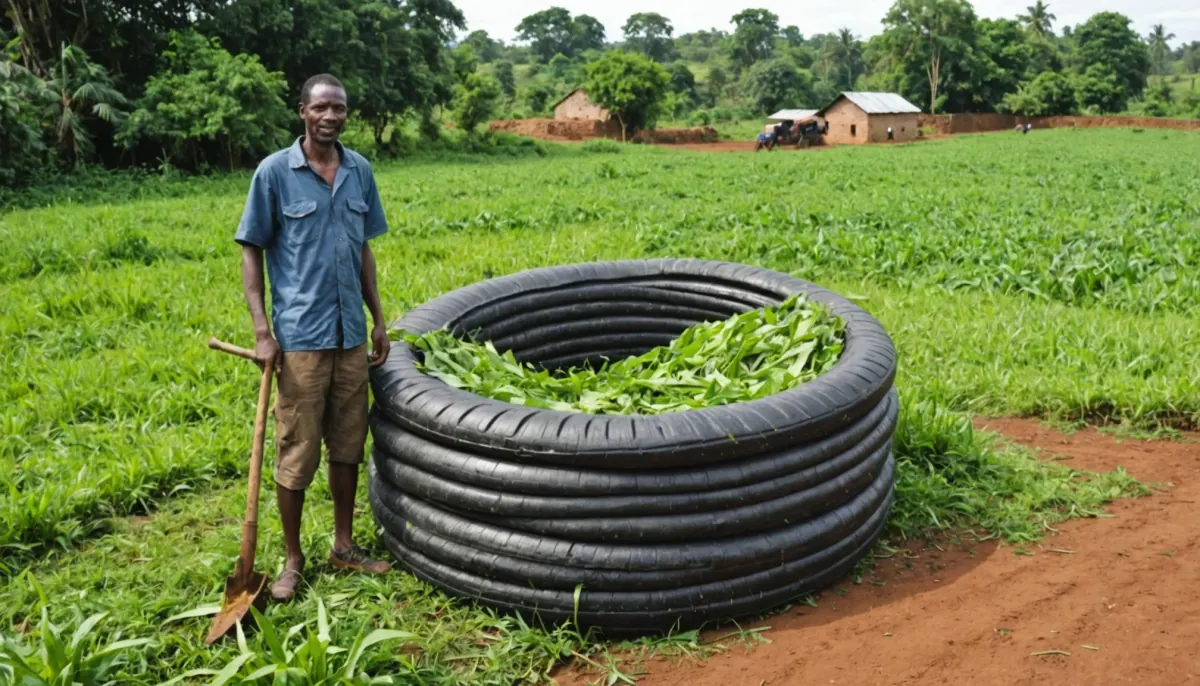
What silage is and why it matters
Silage is animal feed preserved by anaerobic fermentation, which means fermentation without air. Fresh chopped fodder is packed tightly and sealed so the little air left is used up and lactic-acid bacteria take over. The lactic acid they produce stops the feed from rotting, much as souring preserves food. That is why silage keeps feeding value that ordinary drying loses.
- Definition: Silage for livestock is fermented animal feed made by storing fresh crops such as maize or grass in airtight conditions.
- Anaerobic fermentation: The process runs without oxygen as natural bacteria turn plant sugars into lactic acid, which preserves the feed.
- Preserves nutrients: Gentle fermentation keeps more energy and protein than sun-drying, so the feed stays valuable for months.
- Dry-season insurance: Silage carries wet-season surplus into the dry season, which is why it counts among dry-season livestock feeds in the syllabus.
- Milk production: Dairy farmers who make silage report higher milk yields and healthier animals when pasture dries out.
- Lower feeding cost: Home-made silage costs less than bought concentrate, so a farmer feeds the herd well for less money.
- Whole-crop use: Nearly the entire maize or grass crop enters the silo, stems, leaves and grain together, cutting waste.
- Good-silage signs: Good silage is light green to golden brown, smells pleasantly sour, and shows no mould or slime.
- Silage versus hay: Unlike hay, which is first dried in the sun, silage is stored moist and fermented, suiting Uganda’s wet seasons. Compare the two methods in our notes on preparing hay for livestock, which sit alongside the rest of the Senior 3 Agriculture notes.
- Ugandan example: In Mbarara and Kiruhura, a farmer cuts maize in the wet season and opens the pit months later when pasture is gone.
- Curriculum link: The NCDC Agriculture syllabus includes livestock feed making, and silage is the practical dry-season feed a learner must prepare, covered in the Senior 3 Agriculture notes on livestock feed making.
- Animal health: Feeding mould-free fermented fodder keeps the gut healthy, because spoiled feed upsets digestion and appetite.
- Farm profitability: Reliable year-round feeding smooths milk flow and weight gain, so the farm earns more evenly across the year.
| Feature | Silage | Hay |
|---|---|---|
| What it is | Fresh chopped fodder preserved by fermentation without air | Dried forage preserved by removing moisture in the sun |
| Moisture at making | Kept moist and packed straight into airtight storage | Dried in the field before baling and stacking |
| Storage | Airtight pit, bunker, bag or tube | Dry, ventilated store or covered stack |
| Feeding value | Keeps more energy and protein; often more palatable | Good fibre; can lose leaves during drying and turning |
| Risk of spoilage | Mould if air enters or the seal breaks | Mould if baled too wet or stored damp |
Common mistake: writing that silage is “dried and stored feed”. Silage is not dried; it is stored moist and fermented. Hay is the dried one, and examiners test this contrast most years.
Crops used for making silage in Uganda
Almost any leafy crop that ferments well can be ensiled, and the crops used for making silage for livestock in Uganda are few and proven. Maize leads because its grain and stalk together carry high energy, while Napier grass, legumes and sweet potato vines add fibre and protein. The right choice depends on the animals being fed and on what grows well on the farm.
- Maize silage: Maize is the most popular Ugandan silage crop because grain and stalk together pack high energy for dairy cows.
- Napier grass: Napier grows widely on Ugandan farms and makes a medium-energy, medium-protein silage for beef cattle.
- Legume silage: Legumes such as lablab and desmodium are high in protein, suiting calves and mixing well with grass.
- Grass protein band: Grasses generally hold about 5–19% crude protein while legumes run 15–34%, so mixing the two balances a silage.
- Napier quality: Napier cut young is richer than tall grass; crude protein falls from about 9.2% at 30 cm to about 5% above 2 m.
- Maize grain value: Whole maize grain analyses at about 11.2% crude protein on a dry-matter basis, making maize energy feed.
- Maize stover: Dry maize stover is only about 3.7% crude protein on a dry-matter basis, so it is roughage, not good silage.
- Sweet potato vines: Sweet potato vines hold about 19.2% crude protein on a dry-matter basis and lift protein in grass silage.
- Forage sorghum: Sorghum and Columbus grass suit drier areas, though young sorghum must be avoided for prussic-acid risk.
- Harvest stage: Maize is cut at the milk-to-dough stage, when nutrients peak and the stalk still holds moisture to ferment.
- Calliandra leaves: Calliandra leaves, about 26.3% crude protein on a dry-matter basis, enrich a grass silage in small amounts.
- Local seed supply: Napier, Rhodes grass, lablab, desmodium, Brachiaria and calliandra are all sold commercially in Uganda.
- Ugandan example: On a zero-grazing unit near Kampala, a farmer ensiles maize and napier, then top-dresses with calliandra.
| Crop | Energy | Protein | Best fed to |
|---|---|---|---|
| Maize | High | Low | Dairy cows |
| Napier grass | Medium | Medium | Beef cattle |
| Legumes (lablab, desmodium) | Low | High | Calves and growing stock |
| Sweet potato vines | Medium | High | Mixed with grass silage |
Common mistake: calling maize silage a “protein feed”. Maize is energy feed at about 11.2% crude protein on a dry-matter basis. Mix in legumes or add a supplement to raise protein.
Steps in making quality silage
Making silage for livestock follows a fixed sequence, and each step must be done quickly. The aim at every stage is to remove air and let lactic-acid bacteria work on moist, chopped fodder. Any air left in, or any delay between cutting and sealing, invites mould and a sour, rotten result.
- Choose the crop: Pick a high-yield crop that ferments well, with maize preferred for energy and Napier for bulk.
- Harvest at the right stage: Cut maize at the milk-to-dough stage, when nutrients peak and moisture is still enough to ferment.
- Wilt the material: Wilt cut fodder briefly to shed surface water, but do not dry it out, as silage must stay moist.
- Chop finely: Chop into pieces of about 1–2 cm so the crop packs tightly, releasing sugars and leaving few air pockets.
- Check moisture: Squeeze a handful hard; it should ball up and leave the palm damp but not dripping juice.
- Fill the silo quickly: Pack the chopped material into the pit, drum or bag fast, ideally the same day, before it heats.
- Compact tightly: Press the material down hard, layer by layer, because oxygen is what lets spoilage organisms grow.
- Exclude air: Keep pressing as you fill so the heap is dense, since any pocket of air becomes a pocket of rot.
- Seal airtight: Cover with polythene and weigh it down with soil or sandbags so no air creeps in at the edges.
- Allow fermentation: Leave the silage sealed for about 21–30 days while lactic-acid bacteria turn sugars into acid.
- Store undisturbed: Do not open or poke the silo during fermentation, because breaking the seal spoils the batch.
- Open carefully: After 21–30 days, open one end and take feed from a clean face, then reseal what remains.
- Feed gradually: Introduce silage a little at a time over several days so the rumen adjusts without digestive upset.
| Step | What goes wrong at this step |
|---|---|
| 1. Harvest at the right stage | Too early loses yield; too late, the stalk is woody and low in sugar, so it ferments poorly. |
| 2. Wilt | Over-wilting dries the crop so bacteria cannot work; under-wilting leaves free water that leaks out. |
| 3. Chop | Long, uneven pieces trap air and refuse to compact, leaving pockets where mould grows. |
| 4. Compact | Light pressing leaves oxygen in the heap, so the top and edges heat and rot instead of fermenting. |
| 5. Exclude air | Remaining air lets yeasts and moulds consume the sugars the lactic bacteria need. |
| 6. Seal | A torn or poorly weighted cover lets rain and air in, the commonest cause of surface mould. |
| 7. Ferment | Opening too early stops the cure, leaving the feed half-sour and unstable. |
| 8. Store | Once opened, an untidy face exposed to air begins to heat and spoil within days. |
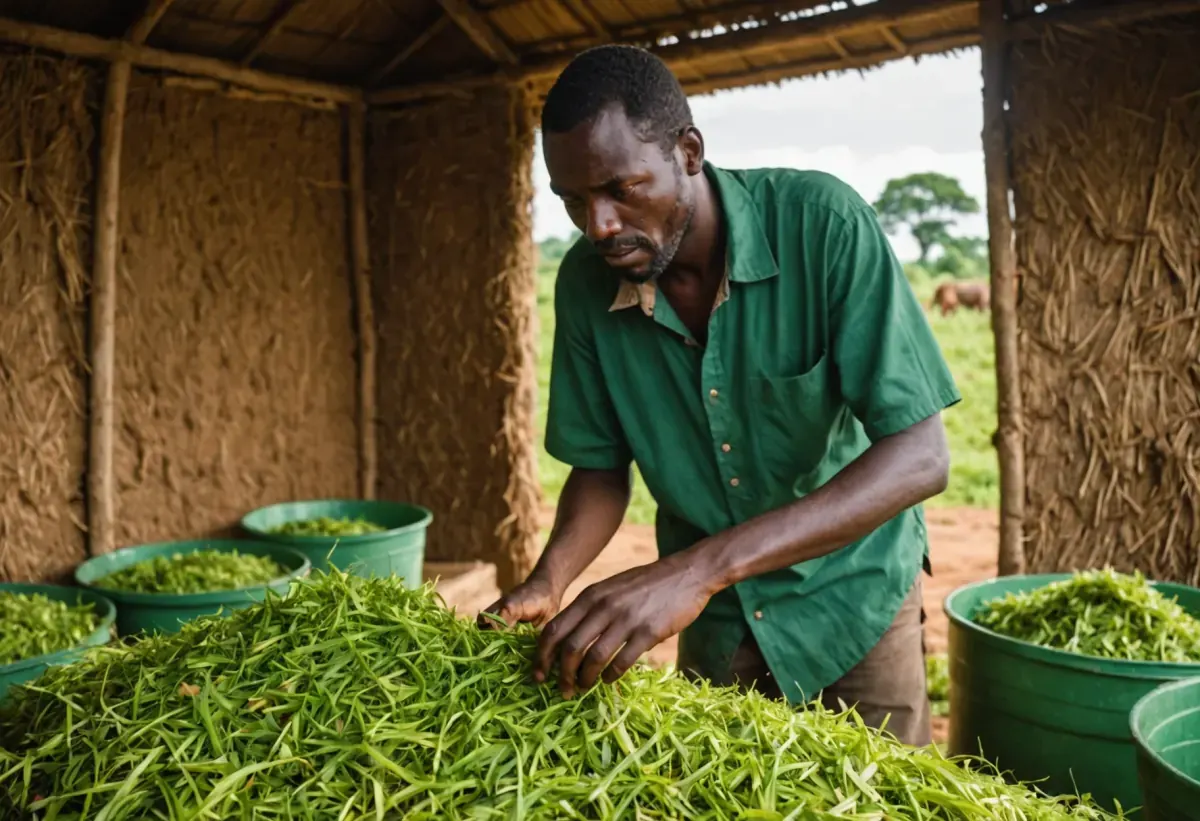
Exam tip: the moisture squeeze test is a favourite practical question. Name both parts: the material balls up without crumbling, and the palm is damp with no dripping juice.
Storage structures for silage
A silo has one job: to keep air and rain out while the crop ferments. The storage structures used for silage for livestock in Uganda weigh cost against the amount stored, and a low-cost pit serves most school and small farm needs.
- Pit silo: A lined pit dug in the ground is the cheapest and most common Ugandan silage store for small farmers.
- Bunker silo: A bunker is a larger, partly above-ground trench with walls, suiting medium to large dairy farms.
- Tower silo: A tall, sealed upright tower keeps feed well but costs much more, so it is rare on smallholdings.
- Above-ground clamp: A clamp is a heap built on the ground and covered, suiting a one-off batch where digging is hard.
- Bag or tube silage: Chopped fodder in heavy plastic bags or tubes gives flexible, portable storage for small and urban farmers.
- Drum silage: Clean metal or plastic drums make cheap, small silos for urban keepers with few animals.
- Site choice: Put the silo on drained, raised ground near the feeding point so water cannot flood in.
- Drainage: A pit needs a slight floor slope and a channel, because standing water ruins the bottom layers.
- Wall and floor: Line earth pits with polythene or plaster, since bare soil lets air and moisture spoil the edges.
- Capacity match: Size the silo to daily use so the open face is removed quickly and never heats or moulds.
- Sealing material: Polythene weighted with soil, tyres or sandbags is the standard seal, and tears must be repaired.
- Cost versus scale: Pits, drums and bags cost least and fit smallholders; bunkers and towers pay off only at scale.
- Ugandan example: A school farm can dig a pit for maize and use plastic tubes for napier, then compare which keeps better.
| Structure | Cost | Scale | Suitability for a Ugandan smallholder |
|---|---|---|---|
| Pit silo | Low | Small to medium | Best first choice; cheap, common and easy to dig and seal |
| Bunker silo | Medium | Large | Suited to bigger dairy herds and farms with machinery |
| Tower silo | High | Large | Rare; high cost makes it impractical for most smallholders |
| Above-ground clamp | Low to medium | One-off large batch | Useful where digging is hard or the water table is high |
| Plastic bag or tube | Low, flexible | Small, portable | Excellent for small and urban farmers; needs careful sealing |
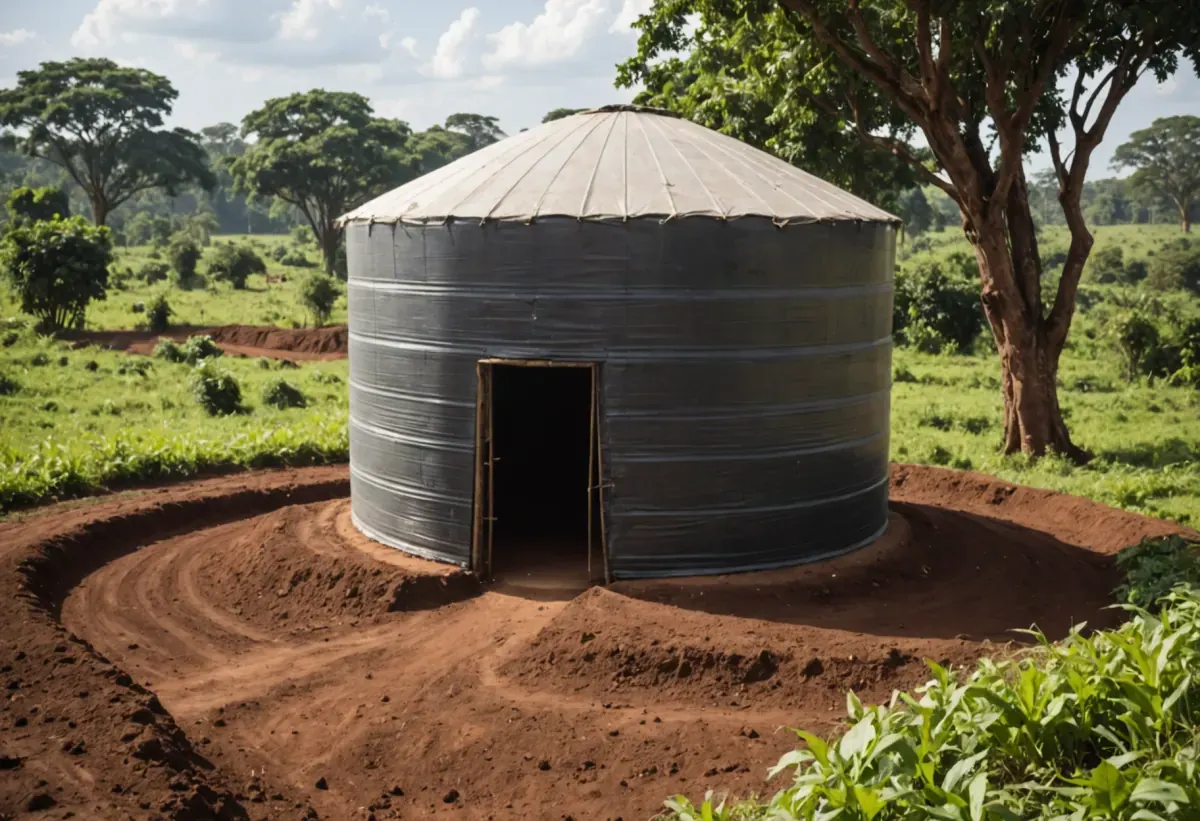
Common mistake: building the silo away from the feeding area. A silo beside the trough is used promptly, while a distant one is opened late and spoils.
Feeding silage and common problems
Feeding silage for livestock means giving it as a bulk roughage, usually alongside a protein supplement and clean water. Dairy cows can take 20–30 kg a day and beef cattle 15–25 kg, but the amounts only help if the feed is clean and introduced slowly. Most feeding problems trace back to a fault made at ensiling.
- Dairy cows: Feed a milking cow about 20–30 kg of silage daily with a protein supplement and clean water.
- Beef cattle: Give beef animals about 15–25 kg each day, combined with concentrates for fast weight gain.
- Introduce gradually: Bring silage in over several days, because a sudden change upsets the rumen and causes problems.
- Protein balance: Silage, especially maize silage, is low in protein, so mix legumes or a protein supplement.
- Clean water: Silage is moist but no substitute for water; a cow still needs daily drinking water to digest fibre.
- Fresh feed daily: Take out only what animals finish that day, because silage exposed to air heats and sours quickly.
- Mould fault: Mould, seen as grey or black patches, comes from poor compaction or a broken seal; press and reseal.
- Butyric smell: A sharp, unpleasant smell means poor fermentation from a too-wet or dirty crop; discard affected feed.
- Overheating: A silo that feels hot has air entering, so reseal it and press exposed faces firmly.
- Seepage: Brown liquid oozing out shows excess moisture; wilt the crop more before the next batch.
- Test before feeding: Check colour, smell and texture; good silage is greenish-golden, sour and free of slime.
- Nutrient value: Silage supplies energy, protein, fibre and some vitamins and minerals, supporting milk and growth.
- Ugandan example: A dairy keeper in Luwero opens one bag at a time and feeds it within two days to keep milk steady.
| Fault | Cause | Remedy |
|---|---|---|
| Mould | Air entering through poor compaction or a broken seal | Compact harder, reseal torn covers and discard mouldy feed |
| Butyric smell | Poor fermentation from a too-wet or dirty crop | Wilt more, keep soil out and feed only clean material |
| Overheating | Air entering the silo or an exposed feed face | Seal firmly, press the face and feed out faster |
| Seepage | Excess moisture in the ensiled crop | Wilt longer before chopping and drain the silo base |
Exam tip: link each fault to its step. Mould and overheating mean air entered; seepage means the crop was too wet; a butyric smell means fermentation failed.
Frequently asked questions about silage for livestock
- What is silage for livestock? Silage is fermented animal feed made by packing fresh chopped crops such as maize or grass into airtight storage. Natural bacteria turn the plant sugars into lactic acid, which preserves the feed. Farmers keep it for the dry season, when fresh pasture is scarce and expensive.
- Which crop is best for making silage in Uganda? Maize is the best because of its high energy content, which suits dairy cows. Napier grass gives medium energy and protein for beef cattle, while legumes such as lablab add protein for calves. Mixing a grass with a legume balances the ration.
- How long does silage take to be ready? Silage is ready after about 21 to 30 days of fermentation. The sealed silo must stay undisturbed for that whole period while the lactic-acid bacteria work. Opening it early stops the cure and leaves the feed half-sour.
- Can a small farmer make silage in Uganda? Yes. A smallholder can use a low-cost pit silo, a clean drum, or plastic bags and tubes, none of which needs machinery. The key steps of chopping, compacting and sealing are done by hand, so any farmer can make silage.
- How do you know if silage has gone bad? Check the colour, smell and feel. Good silage is light green to golden brown with a pleasant sour smell and no mould. Bad silage shows grey or black patches, smells sharp, feels slimy, or feels hot where air has entered.
- How much silage do you feed a dairy cow per day? A dairy cow takes about 20 to 30 kg a day, given with a protein supplement and clean water. Beef cattle take about 15 to 25 kg daily. Introduce silage gradually over several days so the rumen adjusts.
Key terms and revision summary
| Term | Meaning |
|---|---|
| Silage | Fermented animal feed made by storing fresh chopped crops airtight |
| Ensiling | The whole process of making silage, from chopping through to sealing |
| Anaerobic | Without air; the oxygen-free condition silage needs to ferment |
| Lactic acid | The acid bacteria produce from plant sugars that preserves the feed |
| Wilting | Letting cut fodder dry slightly to shed surface water before ensiling |
| Compaction | Pressing the chopped crop down hard to squeeze out trapped air |
| Silo | Any airtight structure, pit, bunker, tower, clamp, bag or tube, that stores silage |
| Seepage | Brown liquid oozing from too-wet silage, which carries away nutrients |
| Butyric smell | A sharp, unpleasant smell showing that fermentation went wrong |
| Milk-to-dough stage | The grain stage when maize is cut for silage, at peak nutrient value |
- Define silage for livestock and explain why it is a dry-season feed. Outline: define silage as feed preserved by anaerobic fermentation through lactic acid; it is made in the wet season and stored for the dry months, linking to the Senior 3 dry-season feeds outcome.
- Describe the steps of making quality silage from maize. Outline: harvest at the milk-to-dough stage, wilt, chop into 1–2 cm pieces, test moisture by squeezing, fill fast, compact, seal, and ferment for 21–30 days.
- Compare silage and hay as fodder conservation methods. Outline: silage is stored moist and fermented without air; hay is dried then stored dry; use the five-feature table to set them side by side.
- A farmer’s silage grows mould on top. State the cause and two remedies. Outline: air entered through poor compaction or a broken seal; compact harder and reseal the torn cover, then discard the mouldy feed.
- Give the moisture test used before ensiling and what each result means. Outline: squeeze a handful of chopped material; a ball with a damp, non-dripping palm is right, crumbling means too dry, and dripping means too wet.
- Why introduce silage to cattle gradually? Outline: a sudden change upsets the rumen microbes and causes digestive problems; introduce the feed over several days.



Leave a Reply