
Introduction
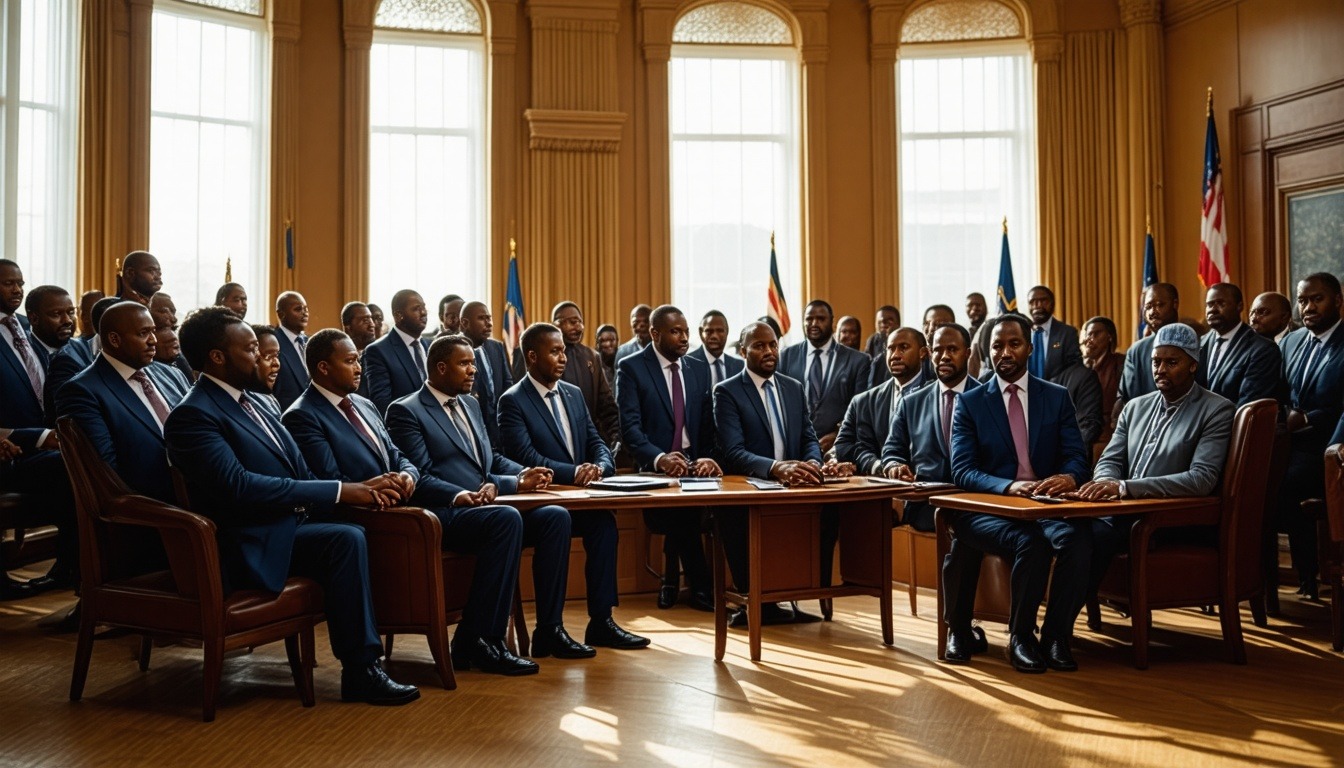
Democracy and leadership in East Africa are critical subjects for understanding the region’s political evolution, governance structures, and societal development. This comprehensive guide delves into the meaning of democracy, its features, the role of political parties, the benefits of democratic governance, and the various types of leadership found in East African communities. With a focus on academic depth, this article provides detailed insights suitable for students, researchers, and policymakers.
The Meaning of Democracy
Democracy, derived from the Greek words ‘demos’ (people) and ‘kratos’ (rule), literally means ‘rule by the people.’ In the context of East Africa, democracy encompasses a system of government where citizens exercise power directly or through elected representatives. It is a dynamic concept that varies across countries like Kenya, Tanzania, Uganda, Rwanda, Burundi, and South Sudan, each with unique historical and cultural influences.
At its core, democracy in East Africa implies political equality, popular sovereignty, and majority rule with respect for minority rights. It involves regular free and fair elections, protection of civil liberties, and the rule of law. but, the practical implementation faces challenges such as ethnic divisions, corruption, and weak institutions.
Understanding democracy in East Africa requires examining both its normative ideals and its empirical realities. While many countries have adopted democratic constitutions, the actual practice often falls short due to authoritarian tendencies, electoral fraud, and limited civic space. Nonetheless, the aspiration for democracy remains strong among citizens who seek accountability, transparency, and participation in governance.
Features of Democracy
The features of democracy in East Africa are shaped by both universal principles and local contexts. Key features include:
- Popular Sovereignty: Ultimate authority rests with the people, who exercise it through elections and referendums.
- Political Equality: All citizens have equal rights to participate in political processes, regardless of ethnicity, gender, or social status.
- Majority Rule with Minority Rights: Decisions are made by majority vote, but the rights of minorities are protected.
- Free and Fair Elections: Regular elections that are transparent, competitive, and credible.
- Rule of Law: All individuals and institutions are subject to and accountable to the law.
- Protection of Civil Liberties: Freedom of speech, assembly, association, and press are guaranteed.
- Pluralism: Multiple political parties and interest groups compete for power.
- Accountability and Transparency: Leaders are answerable to the people and must operate openly.
- Separation of Powers: Executive, legislature, and judiciary are independent and check each other.
- Constitutionalism: Government powers are limited by a constitution.
- Citizen Participation: Active involvement of citizens in decision-making beyond elections.
- Decentralization: Power is devolved to local levels to enhance governance.
These features aren’t always fully realized in East Africa. For instance, while Kenya has a robust constitution with devolution, corruption and ethnic politics undermine effectiveness. Tanzania maintains political stability but restricts some freedoms. Uganda has competitive elections but faces concerns over executive overreach. Nonetheless, these features provide a benchmark for assessing democratic health.
Political Parties in East Africa
What is a Political Party?
A political party is an organized group of people with similar political ideologies and goals that seeks to gain political power through elections, typically by fielding candidates for public office. In East Africa, political parties are vehicles for aggregating interests, mobilizing voters, and forming governments.
Why Political Parties Were Formed
Political parties in East Africa emerged primarily during the anti-colonial struggles of the mid-20th century. They were formed to:
- Unite people against colonial rule and demand independence.
- Articulate the interests of various ethnic, regional, and social groups.
- Provide a platform for political participation and representation.
- Mobilize resources and support for electoral competition.
- Formulate and advocate for specific policy agendas.
- Facilitate peaceful transfer of power through elections.
Role of Political Parties
Political parties play several crucial roles in democratic systems:
- Interest Aggregation: They combine diverse interests into coherent policy platforms.
- Political Recruitment: They identify, train, and present candidates for elections.
- Electoral Competition: They organize campaigns and mobilize voters.
- Government Formation: Winning parties form governments and implement policies.
- Policy Formulation: They develop and advocate for specific policies.
- Political Education: They inform citizens about issues and encourage participation.
- Checks and Balances: Opposition parties hold the government accountable.
- Representation: They represent the interests of their constituents.
- Conflict Resolution: They channel political competition into peaceful processes.
- Social Integration: They can bridge ethnic and regional divides.
Challenges Facing Political Parties
Political parties in East Africa face numerous challenges:
- Ethnic and Regional Fragmentation: Parties often align with ethnic groups, undermining national unity.
- Weak Institutionalization: Many parties lack internal democracy and are personality-driven.
- Corruption and Clientelism: Patronage networks dominate party politics.
- Lack of Policy Differentiation: Parties often have similar platforms, focusing on personalities rather than issues.
- Financial Constraints: Parties rely on wealthy donors, leading to elite capture.
- Electoral Manipulation: Incumbents often use state resources to gain unfair advantage.
- Intolerance and Violence: Political competition sometimes leads to conflict.
- Gender Inequality: Women are underrepresented in party leadership and candidacy.
- Legal and Regulatory Hurdles: Restrictive laws hamper party formation and operations.
- Low Public Trust: Citizens often view parties as self-serving and corrupt.
- Coalition Instability: Coalition governments are often fragile and short-lived.
- External Interference: Foreign powers sometimes influence party politics.
Benefits of Most Democratic Countries in East Africa
Countries in East Africa that have embraced democratic principles enjoy several benefits, though the degree varies. The most democratic countries in the region, often cited as Kenya, Tanzania, and Uganda (with qualifications), experience:
| Benefit | Description | Example from East Africa |
|---|---|---|
| Political Stability | Democratic processes reduce the likelihood of violent conflict by providing peaceful means for change. | Kenya’s 2010 constitution and devolution have contributed to stability despite ethnic tensions. |
| Economic Growth | Accountable governance attracts investment and promotes sustainable development. | Tanzania’s consistent growth (though slowing) is partly due to political stability. |
| Human Rights Protection | Democracies tend to respect civil liberties and human rights. | Uganda’s constitutional court has occasionally upheld rights (e.g., on land). |
| Rule of Law | Independent judiciary and legal frameworks ensure fairness and predictability. | Kenya’s judiciary has shown independence in high-profile cases. |
| Citizen Participation | Citizens have a voice in decision-making, leading to more responsive policies. | Local governance structures in Tanzania allow community input. |
| Social Services | Democratic governments are more likely to invest in education, health, and infrastructure. | Kenya’s free primary education policy was a democratic dividend. |
| International Relations | Democracies often have better diplomatic ties and aid relationships. | East African democracies receive more development assistance from Western donors. |
| Innovation and Entrepreneurship | Open societies foster creativity and business development. | Kenya’s tech hub (Silicon Savannah) thrives in a relatively open environment. |
| Peaceful Transitions | Regular elections allow for orderly change of leadership. | Tanzania has had peaceful transfers of power since independence. |
| Media Freedom | Free press holds government accountable and informs citizens. | Kenya has a vibrant media landscape, though under threat. |
but, these benefits aren’t guaranteed. Even in relatively democratic countries, challenges persist. For instance, Kenya’s democracy has been marred by post-election violence (2007/08) and corruption scandals. Tanzania’s democratic credentials have declined under President Magufuli, with increased repression. Uganda’s long-serving President Museveni has faced criticism for electoral irregularities. Thus, the benefits of democracy are contingent on continuous effort to uphold democratic values.
Different Types of Leadership in Our Communities
Leadership in East African communities is diverse, ranging from traditional to modern, formal to informal. Understanding these types is essential for grasping how governance operates at grassroots levels.
Traditional Leadership
Traditional leaders include chiefs, elders, clan heads, and monarchs. They derive authority from custom, lineage, and cultural heritage. In many communities, they play roles in dispute resolution, land allocation, and ceremonial functions. for instance, the Kabaka of Buganda in Uganda is a constitutional monarch with cultural significance. In Kenya, Council of Elders among the Maasai and Kikuyu mediate conflicts. Traditional leadership often coexists with state institutions, sometimes causing tensions over jurisdiction.
Political Leadership
Political leaders are elected or appointed officials at local, regional, and national levels. They include presidents, governors, members of parliament, and councilors. Their authority is derived from constitutions and electoral mandates. Political leadership is characterized by party affiliation, policy agendas, and accountability to voters. In East Africa, political leaders often face challenges of corruption, ethnic loyalty, and limited resources.
Religious Leadership
Religious leaders such as bishops, imams, pastors, and traditional healers wield significant influence in communities. They provide moral guidance, social services (e.g., schools, hospitals), and sometimes political commentary. In East Africa, religious leaders have been mediators in conflicts (e.g., the Inter-Religious Council of Uganda) and advocates for social justice. but, they can also exacerbate divisions if aligned with political factions.
Community-Based Leadership
This includes leaders of civil society organizations, cooperatives, women’s groups, youth associations, and self-help groups. They emerge from grassroots initiatives and focus on specific issues like development, health, or education. for instance, village savings and loan associations (VSLAs) have leaders who manage finances. Community-based leaders are often more trusted than political figures because they are seen as representing local interests.
Business Leadership
Business leaders, including entrepreneurs, corporate executives, and chamber of commerce heads, influence economic policy and job creation. They can lobby for favorable regulations and invest in community projects. In East Africa, figures like Manu Chandaria (Kenya) and Mohammed Dewji (Tanzania) are prominent. but, business leaders may prioritize profit over public good, leading to conflicts of interest.
Youth and Student Leadership
Youth leaders represent the interests of young people, who constitute a large portion of East Africa’s population. They are active in student unions, youth wings of political parties, and advocacy groups. Youth leadership is crucial for intergenerational dialogue and addressing issues like unemployment and education. Examples include the Kenya National Union of Students and Uganda National Students Association.
Women’s Leadership
Women leaders advocate for gender equality, reproductive rights, and women’s empowerment. They operate in formal politics (e.g., female parliamentarians like Martha Karua in Kenya) and informal spaces (e.g., women’s group leaders). Despite progress, women remain underrepresented in leadership due to patriarchal norms and structural barriers.
Intellectual and Academic Leadership
Academics, researchers, and thought leaders shape public discourse and policy through research, teaching, and commentary. They often serve as advisors to governments or civil society. For instance, the University of Dar es Salaam has produced influential thinkers. Intellectual leadership is vital for evidence-based policymaking.
Military Leadership
In some East African countries, military leaders have taken power through coups (e.g., Uganda under Idi Amin, Rwanda under Kagame originally). but, contemporary military leadership is supposed to be subordinate to civilian authority. In countries like Rwanda, the military is involved in development projects, blurring lines. Military leadership can ensure security but risks authoritarianism.
Informal Leadership
Informal leaders are individuals who command respect due to age, wealth, or personal qualities but hold no official position. They might be village elders, wealthy farmers, or retired professionals. Their influence is based on social capital and networks. Informal leaders often act as intermediaries between communities and formal institutions.
Conclusion
Democracy and leadership in East Africa are multifaceted and evolving. The meaning of democracy extends beyond elections to encompass participation, rights, and accountability. The features of democracy provide a framework, but their realization is uneven across the region. Political parties are essential for democratic competition, yet they face significant challenges that undermine their effectiveness. The benefits of democratic governance are evident in more stable and prosperous countries, but these gains are fragile. Leadership types in communities range from traditional to modern, each playing a unique role in governance. For East Africa to deepen democracy, it must strengthen institutions, promote inclusive leadership, and address root causes of political instability. This requires commitment from both leaders and citizens to uphold democratic values and foster a culture of peace, tolerance, and respect for human rights.
Frequently Asked Questions
What is the simple definition of democracy?
Democracy is a system of government where the people have the power to make decisions directly or through elected representatives. It is often described as ‘rule by the people’ and includes principles like political equality, majority rule, and protection of minority rights.
What are the main features of democracy in East Africa?
The main features include popular sovereignty, free and fair elections, rule of law, protection of civil liberties, political pluralism, separation of powers, and citizen participation. but, the extent to which these features are implemented varies by country.
Why were political parties formed in East Africa?
Political parties were primarily formed during the anti-colonial struggle to mobilize independence movements. After independence, they evolved to compete for power, articulate interests, and provide representation. They are essential for organizing elections and forming governments.
What challenges do political parties face in East Africa?
Challenges include ethnic fragmentation, weak institutionalization, corruption, lack of policy differentiation, financial constraints, electoral manipulation, violence, gender inequality, restrictive laws, low public trust, coalition instability, and external interference.
Which East African country is the most democratic?
Kenya is often considered the most democratic due to its robust constitution, independent judiciary, and vibrant civil society. but, Tanzania and Uganda also have democratic elements, though they have faced recent declines. According to the Democracy Index, Kenya ranks highest in the region.
What are the benefits of democracy in East Africa?
Benefits include political stability, economic growth, human rights protection, rule of law, citizen participation, improved social services, better international relations, innovation, peaceful transitions, and media freedom. These benefits contribute to overall development and quality of life.
What types of leadership exist in East African communities?
Leadership types include traditional (chiefs, elders), political (elected officials), religious (bishops, imams), community-based (civil society leaders), business, youth, women’s, intellectual, military, and informal leaders. Each type has distinct roles and sources of authority.
How does traditional leadership coexist with modern democracy?
Traditional leaders often complement state institutions by providing culturally relevant dispute resolution and local governance. but, conflicts can arise when traditional authority clashes with constitutional law. Many countries have formalized the role of traditional leaders within local government structures.
What is the role of youth in East African democracy?
Youth play a crucial role as voters, activists, and future leaders. They advocate for issues like employment, education, and political reform. Youth-led organizations and movements have been instrumental in demanding accountability and transparency, as seen in Kenya’s ‘Y’Enough’ movement.
How can democracy be strengthened in East Africa?
Strengthening democracy requires building strong institutions, ensuring free and fair elections, promoting civic education, reducing corruption, protecting civil liberties, encouraging inclusive leadership, and fostering a culture of tolerance and dialogue. Regional cooperation and international support can also help.



Leave a Reply