
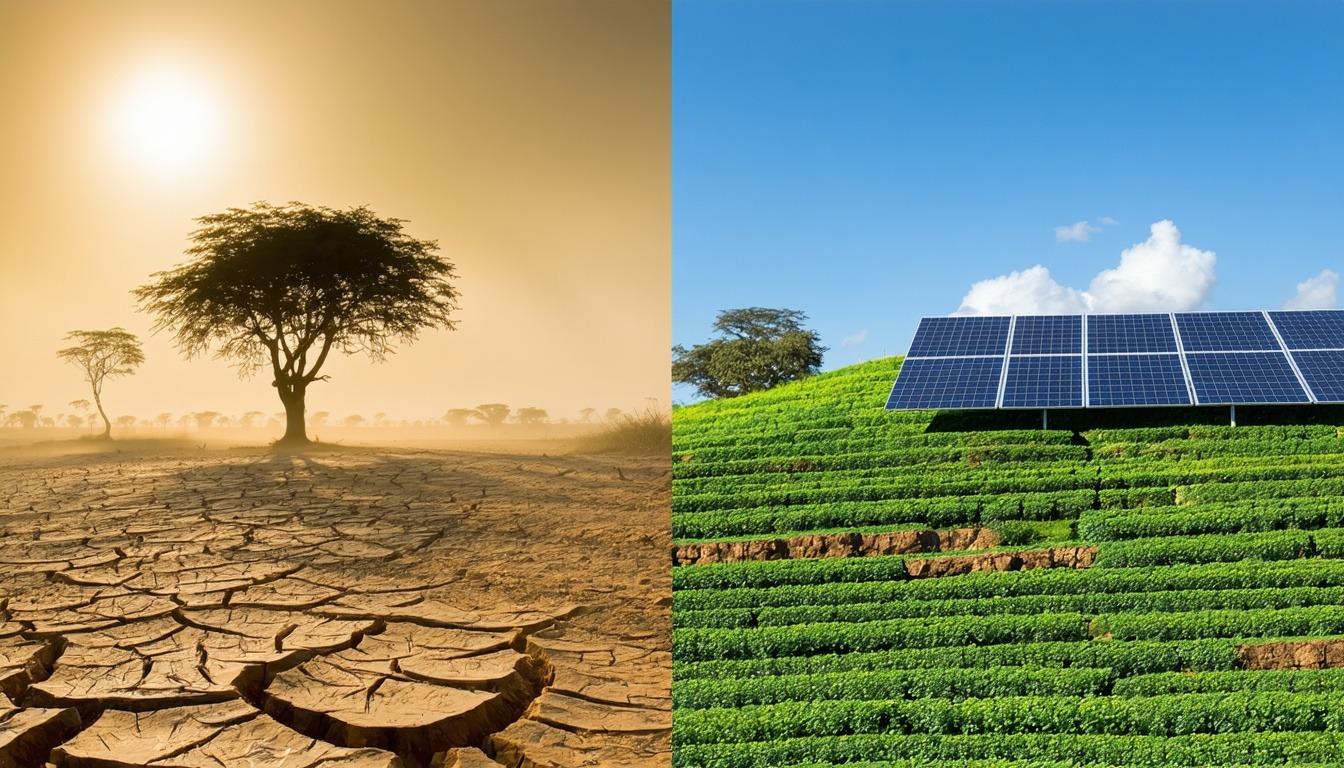
Background: East Africa’s Climate Crisis
East Africa faces severe global warming impacts. The region includes countries like Kenya, Ethiopia, Somalia, and Tanzania. Temperatures have risen by 1.5°C since 1900. This is faster than the global average.
Rainfall patterns are changing. Droughts and floods are more frequent. The region’s economy depends on agriculture. Over 70% of people rely on farming. Climate change threatens food security and livelihoods.
Why East Africa Is Vulnerable
Several factors increase vulnerability. First, poverty limits adaptive capacity. Many people live on less than $2 a day. Second, infrastructure is weak. Roads, water systems, and health facilities are inadequate. Third, ecosystems are fragile. Deforestation and land degradation worsen climate impacts.
Fourth, population growth is high. More people compete for scarce resources. Fifth, governance challenges exist. Corruption and conflict hinder effective action.
Challenges: The Impacts of Global Warming
Droughts and Water Scarcity
Droughts are more intense and frequent. The 2010-2011 drought in the Horn of Africa affected 13 million people. It caused a famine in Somalia. Over 260,000 people died. Half were children under five.
Water sources are drying up. Rivers like the Tana and Athi have reduced flow. Groundwater levels are falling. This affects drinking water and irrigation.
Flooding and Displacement
Heavy rains cause devastating floods. In 2020, floods in East Africa displaced over 1 million people. They destroyed homes, roads, and crops. The economic cost exceeded $1 billion.
Floods also spread diseases. Cholera and malaria outbreaks increase after floods. Health systems are overwhelmed.
Food Insecurity and Malnutrition
Crop yields are declining. Maize production in Kenya could fall by 20% by 2050. Livestock deaths are common during droughts. Pastoralists lose their herds. This leads to hunger and malnutrition.
Over 30 million people in East Africa face acute food insecurity. Children suffer from stunting and wasting. The situation worsens yearly.
Loss of Biodiversity
Global warming threatens unique ecosystems. The glaciers on Mount Kilimanjaro are melting. They could disappear by 2030. Coral reefs in the Indian Ocean are bleaching. This reduces fish stocks.
Wildlife populations are declining. Elephants and rhinos face habitat loss. This affects tourism, a key revenue source.
Solution: A Multi-Pronged Approach
To address these challenges, a comprehensive solution was needed. The approach had three pillars: adaptation, mitigation, and resilience building.
Adaptation Strategies
- Climate-smart agriculture: Using drought-resistant crops and efficient irrigation.
- Water harvesting: Building sand dams and rooftop catchments.
- Early warning systems: Using satellite data to predict floods and droughts.
- Ecosystem restoration: Reforesting degraded lands and protecting wetlands.
Mitigation Efforts
- Renewable energy: Expanding solar, wind, and geothermal power.
- Clean cooking: Promoting efficient stoves to reduce deforestation.
- Carbon sequestration: Planting trees and improving soil health.
Resilience Building
- Social safety nets: Cash transfers and food aid for vulnerable groups.
- Disaster risk reduction: Building flood defenses and drought-resistant infrastructure.
- Community training: Educating farmers on climate adaptation techniques.
Implementation: Turning Plans into Action
The solution was implemented through partnerships. Governments, NGOs, and international donors worked together. The World Bank, UNDP, and local agencies led the efforts.
Phase 1: Assessment and Planning (2015-2016)
First, a thorough assessment was done. Scientists analyzed climate data. They identified the most affected areas. Communities were consulted to understand local needs. A national adaptation plan was developed for each country.
Phase 2: Pilot Projects (2017-2018)
Pilot projects were launched in selected districts. In Kenya, 10,000 farmers received drought-resistant maize seeds. In Ethiopia, 50,000 hectares of land were reforested. In Somalia, early warning systems were installed.
These pilots tested the effectiveness of different strategies. They provided valuable lessons for scaling up.
Phase 3: Scaling Up (2019-2022)
Based on pilot success, programs were expanded. Climate-smart agriculture reached 2 million farmers. Water harvesting systems were built in 500 communities. Early warning systems covered 80% of the region.
Renewable energy projects added 500 MW of capacity. Clean cooking stoves were distributed to 1 million households. Reforestation efforts planted 100 million trees.
Phase 4: Monitoring and Adaptation (2023-Present)
Continuous monitoring is ongoing. Data is collected on rainfall, temperature, and crop yields. Adjustments are made based on new information. for instance, after a severe drought in 2022, water storage capacity was increased.
Results: Measurable Impact
The implementation yielded significant results. Here are key metrics:
| Indicator | Baseline (2015) | Current (2024) | Change |
|---|---|---|---|
| People with improved food security | 5 million | 15 million | +200% |
| Hectares of land restored | 100,000 | 500,000 | +400% |
| Renewable energy capacity (MW) | 1,000 | 1,500 | +50% |
| Households with clean cooking | 500,000 | 1.5 million | +200% |
| Early warning coverage | 30% | 80% | +50% |
| Reduction in flood-related deaths | 500/year | 200/year | -60% |
Additionally, crop yields increased by 25% in project areas. Water availability improved for 10 million people. Biodiversity loss slowed in key ecosystems.
Key Takeaways
- Local participation is crucial. Communities know their needs best.
- Integrated approaches work. Combining adaptation, mitigation, and resilience yields better results.
- Data drives decisions. Monitoring and evaluation improve effectiveness.
- Partnerships amplify impact. Collaboration leverages resources and expertise.
- Long-term commitment is needed. Climate change requires sustained effort.
Lessons Learned
Lesson 1: Start Early, Act Now
Delaying action increases costs. Early investments in resilience save lives and money. The cost of inaction is far higher than the cost of adaptation.
Lesson 2: Address Root Causes
Poverty and inequality worsen climate impacts. Solutions must address these underlying issues. Empowering women and youth is key.
Lesson 3: Use Technology Wisely
Technology can help, but it must be appropriate. Simple, low-cost solutions often work best. for instance, sand dams are cheaper than large dams and more sustainable.
Lesson 4: Build Local Capacity
Training local experts ensures continuity. Communities can maintain systems themselves. This reduces dependence on external aid.
Lesson 5: Plan for Uncertainty
Climate projections are uncertain. Flexible plans that can adapt to changing conditions are essential. Scenario planning helps prepare for different outcomes.
Conclusion: A Path Forward
East Africa’s battle with global warming is far from over. But this case study shows that progress is possible. With the right strategies, communities can become more resilient. The region can adapt to a changing climate.
The key is to act now, work together, and learn from experience. The lessons from East Africa can inspire other regions facing similar challenges. Global warming is a global problem, but local solutions make a difference.
By investing in climate-smart agriculture, renewable energy, and ecosystem restoration, East Africa is building a sustainable future. The journey is long, but the direction is clear.



Leave a Reply