
The meaning and purpose of work is the first question every Senior 3 CRE learner must answer. Work is purposeful human effort — physical or mental — that produces goods, services or value. Its purpose is to earn a living, develop God-given talents, serve others and share in God’s own creative work.
In a Ugandan community this looks like a boda-boda rider carrying a passenger, a mother weeding her garden, a nurse on a night shift and a student cleaning the compound.
These notes follow the NCDC Senior 3 CRE syllabus, Theme “Man’s dominion over the world”, Topic: Work, allocated 36 periods in Term 1. Study them alongside the Senior 3 CRE notes on work pillar and your class notes.

Meaning and purpose of work
Understanding the meaning and purpose of work starts with a clear definition: work is any purposeful human effort, physical or mental, that produces goods, services or value for oneself and for others. Its purpose is fourfold: to earn a living, to develop the talents God has given us, to serve the community, and to share in God’s own creative activity.
Scripture presents work as part of God’s design from the very beginning, not as a punishment that arrived later.
- Work as purposeful effort. Work is activity done with a goal in mind, not mere busyness; a farmer weeding matooke plants and a teacher marking books are both working because each aims at a useful result.
- Physical and mental labour. Work includes bodily effort, such as digging a garden or riding a boda-boda, and mental effort, such as planning a lesson, keeping accounts or writing a report.
- Earning a living. The first practical purpose of work is to earn money or food to meet needs, because a family that plants beans and sells the surplus can pay school fees and buy salt and soap.
- Developing God-given talents. Work is a channel for growing abilities; a young person who practises football, singing or carpentry turns raw talent into skill that can support a future career.
- Serving the community. Work benefits others, not only the worker; a nurse treats the sick, a mechanic repairs a neighbour’s bicycle, and a vendor supplies the market with fresh food.
- Cooperating with God’s creation. Genesis 2:15 says, “Yahweh God took the man, and put him into the garden of Eden to cultivate and keep it,” showing that work was given before sin as a good task.
- Dominion as responsible care. Genesis 1:28 tells people to “subdue” the earth and “have dominion,” meaning to manage creation wisely, as a caretaker tends a farm rather than as one who destroys it.
- Work as worship. When done honestly and well, work honours God; a Christian who works with diligence and fairness worships through the quality and honesty of what they do.
- Self-reliance. Work builds independence, because a person who can produce or earn no longer depends entirely on relatives, and Uganda’s national values list “Hard work for self-reliance” among the core values.
- Human dignity. Work gives a person worth and identity; being able to provide for oneself and others restores dignity, while idle dependence can rob a person of self-respect.
- Building relationships. Work places people alongside others, so a market day or a shared garden creates friendships, partnerships and networks that support life beyond the pay.
- Producing goods and services. At the level of society, work is what creates the food, roads, medicine and education everyone uses; without work, nothing is produced or maintained.
- Purpose differs from a job title. The purpose of work is wider than employment; a mother who farms for the family and a student doing chores are working even though neither draws a salary.
- Work and happiness. Meaningful work contributes to human happiness, because completing a task well, being paid fairly and being thanked all bring satisfaction that money alone cannot buy.
- A calling, not a curse. For a Christian, work is a vocation from God to serve, so even humble tasks like sweeping a church compound are done as service to God and neighbour.
| Purpose of work | What it means | Ugandan example |
|---|---|---|
| Earning a living | Meeting needs through income or food | A vendor sells tomatoes at the market to pay school fees |
| Developing talents | Growing abilities through practice | A learner practises drumming and singing in a church choir |
| Serving the community | Meeting the needs of others | A nurse immunises children at a health centre |
| Cooperating with God | Caring for creation as a steward | A farmer plants trees and protects the soil on family land |
| Self-reliance | Providing for oneself and family | A boda-boda rider earns enough to rent a room |
| Building relationships | Forming bonds and networks | Neighbours weed a common garden together |
Common mistake: do not write that work and employment mean the same thing. Employment is paid work done under an employer, while work is wider — a mother farming her garden and a learner sweeping the compound are working without being employed.
Genesis 1 and 2 are only the beginning of the Bible’s teaching on work. For the full Old Testament foundation, read Old Testament teachings on work and diligence, which covers Proverbs 6, Genesis 29 and the justice texts.
Types of work observed in the community
The meaning and purpose of work shows up in the many kinds of work you see around you. In a Ugandan community these happen side by side. The NCDC syllabus asks learners to explain the nature of work in modern society with a focus on professional, talent-based, online, middleman and non-professional jobs. Recognising these types helps you classify what you see and prepare for your own future.
- Subsistence farming. Most rural households grow food for the family; a household tends beans, maize and matooke and sells only the surplus, so farming is the largest employer in Uganda’s countryside.
- Market vending and petty trade. Vendors sell tomatoes, charcoal, second-hand clothes and fresh fish from stalls and roadside stands, turning small capital into daily income.
- Boda-boda transport. Motorcycle riders carry passengers and parcels between villages and towns, one of the most visible forms of informal work in Uganda today.
- Domestic work. Many people cook, clean, wash and care for children in homes, work that is essential but often unpaid or low-paid and easily overlooked.
- Craft and artisan work. Carpenters, tailors, mechanics, welders, hairdressers and potters make and repair goods with skilled hands, often learning on the job through apprenticeship.
- Professional work. Teachers, nurses, midwives, lawyers, accountants and engineers work after formal training and certification, serving in schools, hospitals, courts and offices.
- Talent-based work. Musicians, footballers, dancers, comedians and artists earn from natural ability, performing at weddings, concerts, church events and football matches.
- Online and digital work. Some Ugandans earn through freelance writing, graphic design, online tutoring, e-commerce and social media work, using phones and internet connections.
- Middleman work. Brokers, agents and commission-earners connect buyers with sellers, such as the produce middleman who buys matooke from farmers and resells it in town.
- Civil service and public work. Government employees such as police officers, district administrators and extension workers provide public services on a salary from the state.
- Security and guarding. Security guards watch homes, shops, schools and offices, a common source of employment for many young Ugandans.
- Factory and industrial work. Workers in factories process sugar, cement, beverages, textiles and other goods, part of Uganda’s growing industrial sector.
- Religious and church work. Pastors, catechists, church administrators and volunteers serve congregations, run schools and clinics, and organise charity and fundraising.
- Formal and informal work. Formal work has contracts, records and tax, while informal work is unregistered; most Ugandan jobs are informal, so knowing both matters for exams and for life.
- Permanent and casual labour. Some work is permanent with monthly pay and benefits, while casual labour is paid by the day or task, as when a worker is hired to weed for a single afternoon.
| Category named by NCDC | What it means | Ugandan example |
|---|---|---|
| Professional | Requires formal training and qualification | A registered nurse at a district hospital |
| Talent-based | Grows from natural ability and practice | A footballer or gospel singer earning from performance |
| Online | Done through the internet and digital tools | A freelancer writing articles for a client abroad |
| Middleman | Connects buyers and sellers for a commission | A produce broker buying maize from farmers to resell |
| Non-professional | Needs no formal certificate; skills learned on the job | A boda-boda rider, vendor or casual farm labourer |
Exam tip: when asked to explain the nature of work in modern society, name all five categories the syllabus lists — professional, talent-based, online, middleman and non-professional — then give one Ugandan example for each. Listing all five earns full marks for coverage.
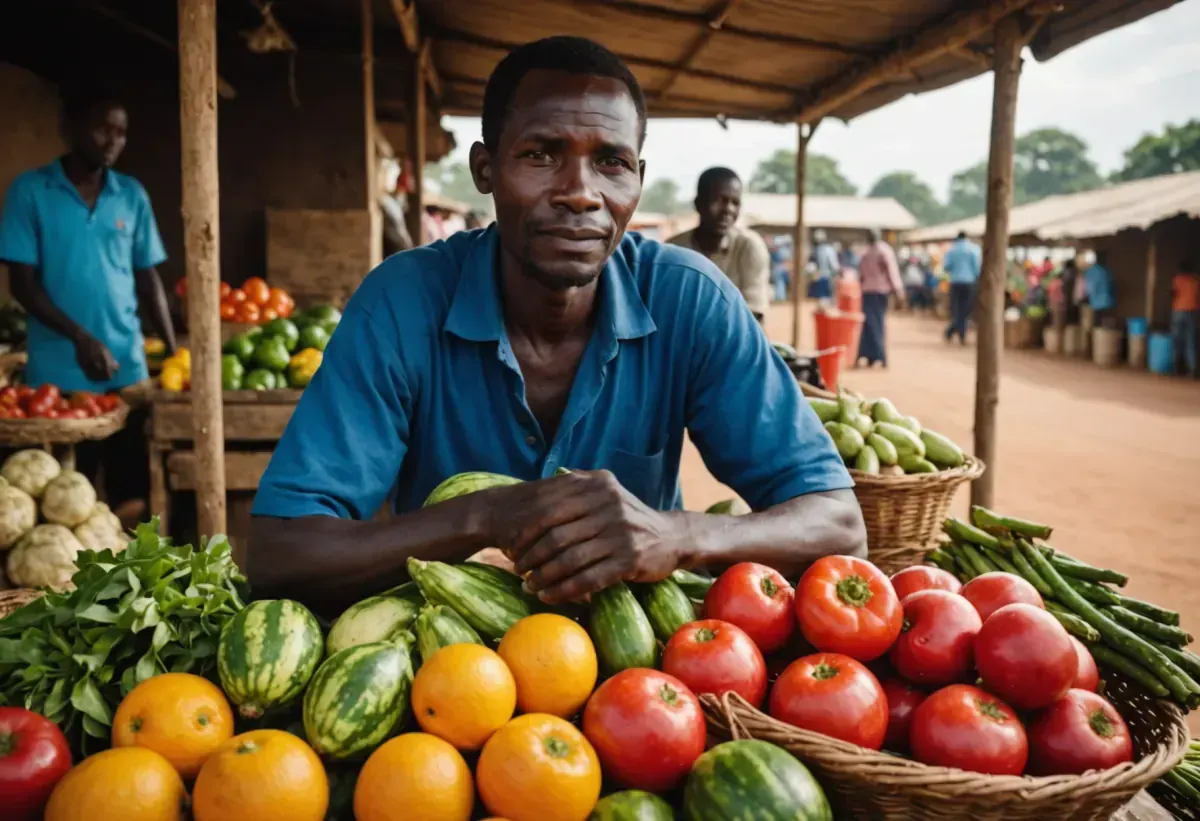
Professional and talent-based jobs
Professional jobs are those that require formal training, qualifications and often registration, such as teaching, nursing, law and engineering. Talent-based jobs grow from natural ability that is practised and refined, such as music, sport and art. The NCDC syllabus groups them together because both turn a person’s gifts into service and income.
- What makes a job professional. A professional job requires recognised training and a qualification, so a nurse must complete nursing school and be registered before practising.
- Formal education and certification. Professionals study for years and earn certificates, diplomas or degrees that prove their competence, unlike informal work learned on the job.
- Regulated professions. Some professions are regulated by law to protect the public, so medical workers, teachers and lawyers must meet set standards before they may serve.
- Teaching as professional work. Teachers plan lessons, mark work and guide learners, shaping the next generation in every school and classroom in Uganda.
- Medical and health professionals. Nurses, midwives, doctors and laboratory staff protect life and health, working under strict ethical codes because patients trust them with their lives.
- Legal, financial and technical professions. Lawyers, accountants, engineers and surveyors apply specialised knowledge, and their errors can be costly, which is why their training is long.
- What makes a job talent-based. A talent-based job rests on a natural gift, such as a good voice, quick feet or skilled hands, which the person develops through constant practice.
- Music and performance. Singers, drummers, deejays and comedians perform at weddings, crusades, concerts and ceremonies, turning entertainment into a source of income.
- Sport. Footballers, runners and netball and basketball players earn from their athletic ability, and village football teams often give young people their first taste of organised work.
- Art, craft and design. Painters, sculptors, fashion designers and graphic artists create beautiful and useful things, selling their work at markets, galleries and online.
- Talent plus training. Talent alone is rarely enough, so a gifted singer still learns vocal technique, and a talented footballer still needs coaching, discipline and fitness.
- The parable of the talents. In Matthew 25:15 a master entrusts servants with different amounts “to each according to his own ability,” teaching that every person should use faithfully whatever ability God has given.
- Faithfulness over size of gift. Matthew 25:21 rewards the faithful servant — “Well done, good and faithful servant” — so the value is not how much talent you have but how well you use it.
- Risks of talent alone. Relying only on natural ability without training, savings or a backup can leave a person vulnerable when injury, age or changing tastes reduce demand.
- Ugandan examples in view. Gospel musicians, national footballers and young fashion designers in Kampala show how professional and talent-based work can become careers that serve and inspire others.
| Feature | Professional job | Talent-based job |
|---|---|---|
| Entry requirement | Formal training and a certificate, diploma or degree | Natural ability developed through practice |
| Examples | Nurse, teacher, accountant, lawyer, engineer | Musician, footballer, dancer, artist |
| Regulation | Often regulated and licensed by a professional body | Rarely formally regulated |
| Income basis | Usually a monthly salary or set professional fees | Often performance fees, sales or winnings |
| Main risk | Long, costly training before earning | Unstable income and a short peak career |
Common mistake: do not confuse the word “talent” in the parable of the talents with “a natural gift.” In Matthew 25 a talent was a large sum of money; CRE applies the parable to abilities by analogy, so state that clearly in your answer. For the ethics behind these jobs, see professional work ethics and workplace dynamics.
Online and middleman work
Online work is any work done through the internet and digital tools, from freelancing and e-commerce to mobile money and social media management. Middleman work connects buyers and sellers and earns a commission. The NCDC syllabus names both, and they are among the fastest-growing types of work in modern Uganda.
- What online work is. Online work uses the internet to produce or deliver value, so the worker’s office is a phone, laptop or internet café rather than a fixed workplace.
- Mobile money agency. A mobile money agent registers customers, deposits and withdraws cash and processes transfers, earning a small commission on every transaction.
- Freelancing. Freelancers sell writing, design, programming or translation to clients anywhere in the world, delivering work over email and receiving payment digitally.
- E-commerce and online selling. Sellers advertise clothes, shoes, electronics and crafts on social media and online marketplaces, then deliver or dispatch goods to buyers.
- Online tutoring. Teachers and graduates offer lessons by video call or messaging, reaching learners who cannot travel to a physical classroom.
- Content creation. Bloggers, YouTubers and social media influencers earn from views, adverts and sponsored posts by creating useful or entertaining content.
- What middleman work is. A middleman stands between the producer and the buyer, arranging the sale, transport or service and taking a commission or margin for the service.
- Produce middlemen. Produce brokers buy maize, beans, coffee and matooke from farmers and resell to traders or factories, moving food from the village to the market.
- Agents and brokers. Land agents, insurance agents and clearing agents link clients with services they could not easily arrange alone, charging a fee for their knowledge and contacts.
- Airtime and service resellers. Small shops resell airtime, data, electricity tokens and water, acting as middlemen between utility companies and ordinary customers.
- Why both are growing. Cheaper smartphones and wider internet coverage have made online and middleman work easier to start, needing less capital than a shop or a farm.
- Low start-up cost. Compared with renting a shop or buying land, online and agency work often begins with only a phone and some data, which attracts young people.
- Risks of online work. Online scams, delayed payments, unstable income and the cost of data are real dangers, so a worker must verify clients and save carefully.
- Risks of middleman work. A middleman can be cheated by either side or left with unsold goods, and dishonest brokers who inflate prices or underpay farmers harm the community.
- Honesty and fairness. Because both depend on trust, honesty, clear agreements and fair pricing are the ethical foundation of online and middleman work.
| Type of work | How the worker earns | Ugandan example |
|---|---|---|
| Online freelancing | Fee per completed task or project | A graduate writes articles for a foreign client |
| E-commerce | Profit margin on goods sold online | A vendor sells shoes through WhatsApp and Facebook |
| Mobile money agency | Commission on each transaction | An agent in a trading centre handles deposits and withdrawals |
| Produce middleman | Margin between buying and selling price | A broker buys maize from farmers and resells to a miller |
| Service agent | Commission or brokerage fee | A land agent connects a buyer with a seller for a fee |
Exam tip: define online work and middleman work separately, then give one example of each in a Ugandan context. A mobile money agent does online-adjacent work, while a produce broker does classic middleman work — do not merge the two in your answer.
Value of community participation
Community participation is one way people live out the meaning and purpose of work in service of others. It means members of a community taking part together in shared activities — work, decisions, celebrations and problem-solving — for the common good. The NCDC syllabus asks learners to explain the value of community participation, which builds skills, trust and shared ownership of local development.
- What community participation is. It is the involvement of community members in shared activities such as building, cleaning, fundraising and decision-making, rather than leaving everything to leaders or government.
- Church fundraising and harambee. Congregations raise money for roofs, choirs, weddings and school fees through collections, pledges and functions, showing work done together for a shared cause.
- School clubs and associations. Learners join debating, Scripture Union, environment and agricultural clubs, where they plan activities, share duties and learn teamwork.
- Village football and sports. Organising a match or a league requires players, referees, a committee and fundraising, teaching discipline, cooperation and leadership through play.
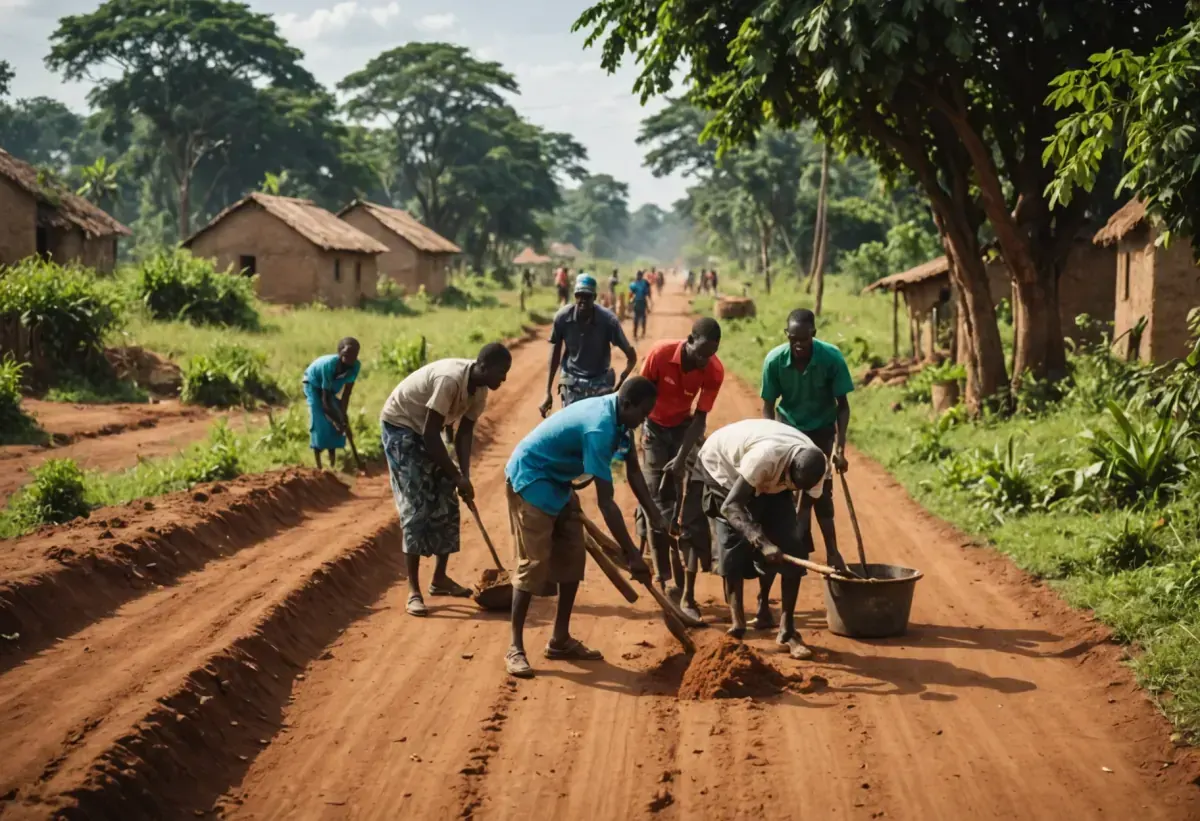
- Communal cleaning and road work. Neighbours clear drains, sweep markets and repair village roads together, keeping shared spaces safe and usable for everyone.
- Bulungi Bwansi tradition. In Buganda, community service known as Bulungi Bwansi encourages voluntary involvement in keeping the environment clean, a practice leaders still urge communities to revive.
- SACCOs and savings groups. Members save together, lend to one another and fund small businesses, so pooled effort gives each member capital no single person could raise alone.
- Support in times of need. When a neighbour is bereaved, sick or building a house, community members contribute money, food and labour, so no family faces hardship alone.
- Building social capital. Participation creates trust and networks; when people know and trust each other, they cooperate more easily in trade, security and development.
- Developing leadership. Taking a role in a club, SACCO or church committee trains young people to plan, speak, account for money and lead others.
- Learning civic responsibility. Participation teaches that development is everyone’s duty, not only the government’s, so citizens contribute labour, ideas and money to local projects.
- Health and awareness campaigns. Community members mobilise for immunisation, sanitation and HIV awareness drives, using local trust to reach people health workers alone cannot.
- Environmental care. Tree planting, wetland protection and waste collection organised by the community preserve the land and water on which everyone depends.
- Reducing isolation. Joining in shared work and celebration gives people belonging and friendship, protecting the young and elderly from loneliness and harmful idleness.
- Scriptural foundation. Titus 3:14 says, “Let our people also learn to maintain good works for necessary uses, that they may not be unfruitful,” and Galatians 6:9 urges us not to grow weary in doing good.
| Form of participation | What members do | Value it creates |
|---|---|---|
| Church fundraising | Give money, time and skills for a shared cause | Resources for roofs, choirs and community needs |
| School clubs | Plan and run activities together | Teamwork, leadership and skills |
| SACCO or savings group | Save, lend and fund businesses | Capital and financial inclusion |
| Communal cleaning | Clear drains, sweep markets, repair roads | Safe, healthy shared spaces |
| Bereavement support | Contribute money, food and labour | Care for families in crisis |
| Village sports | Organise matches and leagues | Discipline, cooperation and recreation |
Common mistake: do not reduce community participation to helping at church. It also includes school clubs, SACCOs, sports, cleaning campaigns, tree planting and support for the bereaved — give varied examples to score full marks.
The role of education in work today
Education equips a person with the knowledge, skills and values that make work possible and productive. The NCDC syllabus states that generic skills are the same skills sought by employers and which will unlock the world of work. Education is therefore the bridge between a learner and a livelihood.
- Knowledge for work. Education gives the knowledge a job needs, such as a nurse learning anatomy, a teacher learning methods, or an accountant learning how to keep records.
- Skills for the workplace. Schools and courses teach practical and thinking skills — reading, writing, computing, problem-solving and teamwork — that employers look for when hiring.
- Unlocking the world of work. The NCDC CRE syllabus says generic skills will unlock the world of work, meaning education opens doors to employment that stay closed without it.
- Closing the skills mismatch. When training matches what employers need, fewer people are unemployed; Uganda’s planners warn of a mismatch between what schools teach and what the labour market demands.
- Vocational and technical training. Technical schools and institutes teach carpentry, welding, tailoring, mechanics and farming, preparing learners for hands-on work and self-employment.
- Digital literacy. Learning to use computers, phones and the internet enables online work, research and modern office tasks, a skill now needed in almost every field.
- Character and work values. Education forms character, teaching honesty, punctuality, diligence and respect, the very values that make a worker reliable and trustworthy.
- Creativity and innovation. Good education encourages learners to create and innovate, and creativity and innovativeness is one of the values the NCDC syllabus names.
- Self-reliance and entrepreneurship. Education prepares learners to start enterprises rather than only wait for jobs, supporting the national value of hard work for self-reliance.
- Matching courses to the market. Choosing relevant courses and subjects helps learners avoid unemployment, since youth unemployment in Uganda stands higher for the young than for adults.
- Equal opportunity. Education opens work to all — girls and boys, and learners with disabilities — so that ability, not background, decides who can work.
- Lifelong learning. Learning does not end at school; workers keep studying through short courses, workshops and experience, so they can adapt as work changes.
- Preparing for service. Education is not only for personal gain but also equips a person to serve, because trained teachers, nurses and engineers serve their communities.
- Growth in wisdom and stature. Luke 2:52 says, “And Jesus increased in wisdom and stature, and in favor with God and men,” showing that growth in learning is part of a whole, balanced life.
- Education and unemployment. Education reduces but does not remove unemployment; the Uganda Bureau of Statistics Labour Market Survey 2025 puts national unemployment at 12.2%, so education must be combined with practical and vocational skills.
| What education provides | How it helps in work |
|---|---|
| Knowledge | Supplies the facts and understanding a job requires |
| Skills | Builds reading, writing, computing and problem-solving ability |
| Values | Forms honesty, diligence and respect that make a reliable worker |
| Digital literacy | Enables online work and modern office tasks |
| Vocational training | Prepares for hands-on trades and self-employment |
| Creativity | Fosters innovation and enterprise |
Exam tip: when asked about the role of education, do not stop at “it gives knowledge.” Add skills, values, digital literacy, vocational training and self-reliance, and support your answer with a statistic from the UBOS Labour Market Survey 2025.
Now that you understand the meaning and purpose of work, choosing a career that matches your abilities is the next step. Read career choice and personal fulfillment to connect your talents to a calling, and return to the Senior 3 CRE notes hub for the full course.
Frequently asked questions about work
- What is the meaning and purpose of work? The meaning and purpose of work is captured in work as purposeful physical or mental effort that produces goods, services or value. Its purposes are to earn a living, develop talents, serve the community and share in God’s work. For a Ugandan learner this ranges from a mother weeding her garden to a nurse on a night shift.
- What are the types of work in Uganda? The NCDC syllabus names professional, talent-based, online, middleman and non-professional jobs. In a Ugandan community you also observe farming, market vending, boda-boda transport, domestic work, craft work, security guarding, factory work and church work, alongside both formal and informal employment, which learners see every day.
- What is the difference between professional and talent-based jobs? Professional jobs need formal training and a qualification, such as nursing, teaching, law or engineering, and are often regulated. Talent-based jobs grow from natural ability developed by practice, such as music, sport and art, and rarely require a certificate to begin.
- What is online work and middleman work? Online work is done through the internet, such as freelancing, e-commerce, online tutoring and mobile money agency. Middleman work connects buyers and sellers for a commission, such as a produce broker who buys maize from farmers and resells it to a miller.
- Why is community participation important? Community participation builds skills, trust and shared ownership of development. Through church fundraising, school clubs, SACCOs, village football, communal cleaning and support for the bereaved, members pool money, labour and ideas, so no family faces hardship alone and local projects succeed.
- What is the role of education in work today? Education provides the knowledge, skills and values that unlock the world of work. It closes the skills mismatch, builds digital literacy, forms character, encourages creativity and self-reliance, and prepares learners for both employment and entrepreneurship, so that ability rather than background decides opportunity.
- What does the Bible say about work? The Bible presents work as God’s good design. Genesis 2:15 shows God placing the man in Eden to cultivate and keep it, and Proverbs 6:6-8 points to the ant’s diligence. Work is therefore a duty, a form of worship and a way to serve God and neighbour.
Key terms and revision summary
| Term | Definition |
|---|---|
| Work | Purposeful physical or mental effort that produces goods, services or value for oneself and others. |
| Employment | Paid work done for an employer under a contract, whether formal or informal. |
| Occupation | A person’s regular trade or profession, such as teaching, farming or nursing. |
| Professional job | Work requiring formal training, qualification and often registration, such as nursing or law. |
| Talent-based job | Work that grows from natural ability developed by practice, such as music or sport. |
| Online work | Work done through the internet and digital tools, such as freelancing or e-commerce. |
| Middleman | A person who connects buyers and sellers and earns a commission or margin. |
| Community participation | Involvement of community members in shared activities and decisions for the common good. |
| Skills mismatch | A gap between what education teaches and what employers actually need. |
| Self-reliance | The ability to provide for oneself through one’s own work, a core national value. |
| Stewardship | The responsible care of God’s creation and of the abilities entrusted to a person. |
| Dignity of labour | The belief that all honest work has worth and deserves respect, whatever its pay or status. |
The key terms below consolidate the meaning and purpose of work, its types and its value for quick revision. These exam-style questions mirror what UNEB asks on the Work topic — practise writing a definition, scripture, a Ugandan example and an evaluation in every answer, then test yourself with the UNEB past papers.
- Define work and explain four purposes of work in modern society. Outline: define work as purposeful effort producing goods, services or value. Explain earning a living, developing talents, serving the community and cooperating with God’s creation (Genesis 2:15), with a Ugandan example for each.
- Explain the nature of work in modern society, focusing on professional, talent-based, online, middleman and non-professional jobs. Outline: define each of the five categories, give one Ugandan example for each, and note that non-professional work includes farming, vending, boda-boda riding and domestic work.
- With reference to Genesis 1 and 2, explain the biblical basis for work. Outline: Genesis 1:27-28 shows people made in God’s image and told to subdue and have dominion; Genesis 2:15 places the man in Eden to cultivate and keep it. Work was given before sin, so it is good and a stewardship, not a curse.
- Assess the value of community participation in Uganda. Outline: define community participation; give examples (church fundraising, SACCOs, school clubs, Bulungi Bwansi, communal cleaning); show the value — skills, trust, capital, care, leadership, civic responsibility; support with Titus 3:14 or Galatians 6:9.
- Discuss the role of education in work today. Outline: knowledge, skills, values, digital literacy, vocational training and self-reliance; mention the skills mismatch and UBOS youth unemployment; use Luke 2:52 on growth; conclude that education unlocks the world of work.
- Distinguish between work and employment. Outline: work is wider — purposeful effort, paid or unpaid — while employment is paid work under an employer. Give examples: a mother farming (work) versus a teacher on a salary (employment).



Leave a Reply