
Cattle breeding systems are the organised methods a farmer uses to decide which cows and bulls mate, so the next generation is more productive, hardier and more fertile than the last. The four systems the syllabus requires are inbreeding, line breeding, crossbreeding and upgrading, while artificial insemination (AI) delivers the chosen bull’s semen without a live bull. These Senior 3 Agriculture notes on cattle production cover both in full.
The topic sits in the NCDC Agriculture Syllabus (2019, ISBN 978-9970-00-120-0), theme Animal Production, topic Cattle production, Term 1, 48 periods. It builds the competency of selecting desirable cattle for breeding and applying artificial insemination in rearing. For the wider course, begin from our Senior 3 Agriculture notes.
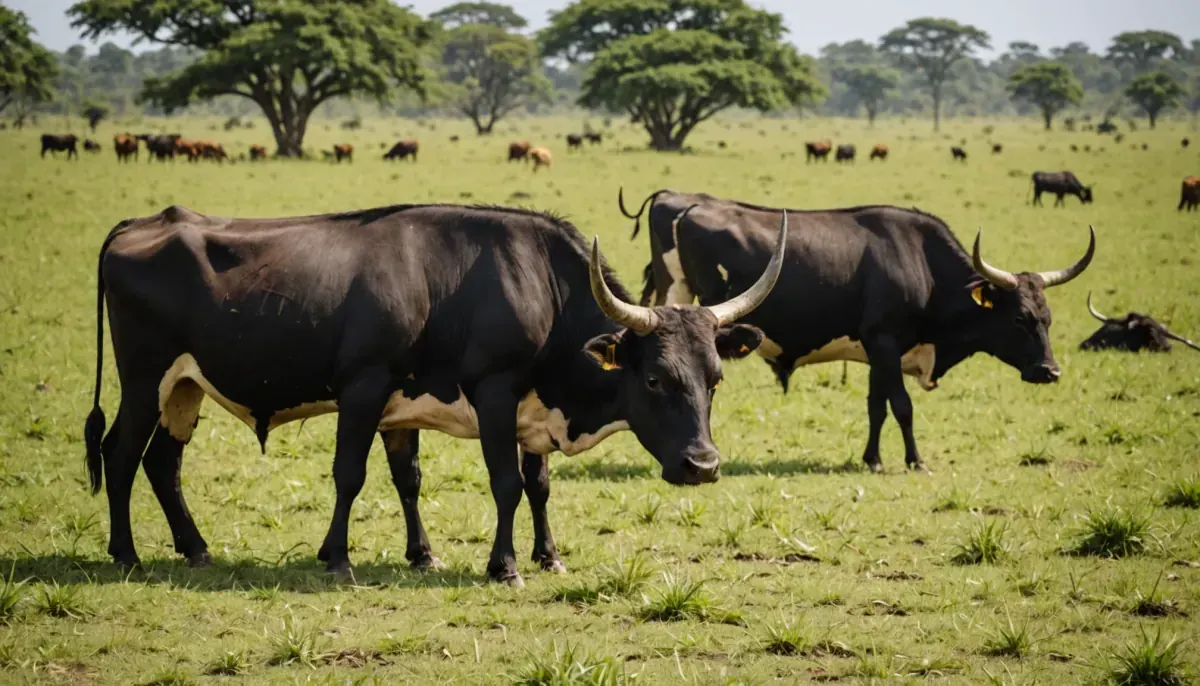
Breeding and selection systems used in cattle
A breeding system is a planned way of deciding which animals reproduce, and selection is the act of choosing those animals from measurable traits. Cattle breeding systems therefore answer one question: which cow should be served by which bull to make the herd better. Five systems matter for the Ugandan syllabus.
- Breeding system — a planned method of deciding which animals mate, chosen to fix, combine or improve desired traits in a herd.
- Selection — choosing the best animals as parents using measurable traits such as milk yield, growth rate, fertility and disease tolerance.
- Inbreeding — mating closely related animals, such as a bull to his own daughter, to make the offspring more uniform and predictable.
- Line breeding — a mild form of inbreeding that mates animals related through one outstanding ancestor, to keep that ancestor’s good genes.
- Outcrossing — mating unrelated animals of the same breed to introduce fresh genes and avoid the depression that close inbreeding brings.
- Crossbreeding — mating animals of two different breeds, such as an Ankole cow to a Friesian bull, to combine useful traits from both parents.
- Upgrading — repeatedly mating a crossbred female back to a purebred bull of one chosen breed until the herd becomes nearly pure.
- Syllabus list — the NCDC syllabus names “in breeding, line breeding, crossbreeding and upgrading” as the systems a Senior 3 learner must know.
- Why selection comes first — the syllabus competency is to “select desirable cattle for production and breeding” before any system is applied.
- Ugandan shift — Ugandan dairy farmers crossbreed Ankole with Holstein Friesian to raise milk yield, a change happening fast across the cattle corridor.
- Measured gain — a 2008 on-farm study in Kiruhura district found pure Ankole cows averaged 2.4 litres a day while 50% Friesian crosses gave 11.2 litres.
- Risk of haste — the same study warns that this crossbreeding is being “done haphazardly”, so farmers can lose hardy indigenous genes without proper records.
- National breeding body — NAGRC&DB (National Animal Genetic Resources Centre and Data Bank) spearheads livestock breeding, selecting sires and dams and guiding farmers on which bulls to use.
- Record keeping — every system depends on records of parentage and performance, which the syllabus lists as a learning outcome in its own right.
- Trait choice — a beef farmer selects for growth and frame, while a dairy farmer selects for milk yield and fertility, so the same system can serve different goals.
| Breeding system | Purpose | Advantage | Risk |
|---|---|---|---|
| Inbreeding | Fix a trait and make it uniform by mating close relatives | Uniform, predictable offspring | Inbreeding depression: low fertility, weak calves |
| Line breeding | Concentrate the genes of one outstanding ancestor | Keeps a proven line’s good traits | Still narrows the gene pool over time |
| Outcrossing | Bring fresh, unrelated genes into the breed | Restores vigour and fertility | Less uniform; traits less predictable |
| Crossbreeding | Combine two breeds’ useful traits | Hybrid vigour: faster growth, more milk | Loses the pure breed; crosses need re-planning |
| Upgrading | Turn a mixed herd into a nearly pure improved breed | Steady improvement toward a chosen breed | Slow; needs a purebred sire every generation |
Exam tip: the syllabus spells the systems as inbreeding, line breeding, crossbreeding and upgrading. If a question asks you to outline breeding systems, name those four and add outcrossing as the opposite of inbreeding for a fuller answer.
Principles of inbreeding and line breeding
Inbreeding and line breeding are the two close cattle breeding systems. Both increase homozygosity, meaning the offspring inherit the same version of a gene from both parents, which makes the herd uniform. The difference is the degree of relationship allowed.
- Inbreeding defined — mating animals more closely related than the average of the breed, such as a sire to his daughter or full brother to full sister.
- Line breeding defined — a gentler form that mates relatives through one common ancestor, such as a bull to his own granddaughter, to hold that ancestor’s traits.
- Shared principle — both systems work by raising homozygosity, so offspring carry the same allele of a gene from both the sire and the dam.
- Purpose of inbreeding — to make the herd uniform and to expose hidden recessive faults so a breeder can cull the animals that carry them.
- Purpose of line breeding — to concentrate the genes of one superior sire or dam and keep its proven production flowing through the herd.
- Inbreeding depression — the main risk: close inbreeding lowers fertility, milk yield and calf survival as harmful recessive genes meet in pairs.
- Degree of relationship — the closer the relationship, the faster homozygosity rises and the higher the risk of depression becomes.
- Why the syllabus pairs them — NCDC lists inbreeding and line breeding together because both are close systems that fix genes within a single breed.
- Purity advantage — a purebred Ankole or Boran line kept by careful inbreeding stays true to type and remains predictable for the farmer.
- Research value — research stations have used close breeding to study traits and reveal faults, though on working farms it is applied with caution.
- Records are essential — a breeder can line-breed safely only with a pedigree showing exactly which ancestor every animal descends from.
- Small-herd caution — a Ugandan smallholder with only two or three cows cannot inbreed without risk, because nearly every available mate is already related.
- Culling hidden faults — inbreeding reveals recessive defects, and a careful breeder removes from the herd any animal that actually shows one.
- Vigour trade-off — line breeding keeps more vigour than close inbreeding, which is why breeders prefer it when fixing a valued line.
| Feature | Inbreeding | Line breeding |
|---|---|---|
| Mating relationship | Close relatives (sire × daughter, sib × sib) | Distant relatives through one ancestor |
| Main goal | Uniformity and exposing hidden faults | Concentrate one ancestor’s genes |
| Speed of effect | Fast | Slow |
| Risk level | High (inbreeding depression) | Lower |
Common mistake: do not write that inbreeding and line breeding are the same. Inbreeding mates close relatives to fix the whole herd; line breeding keeps more distance and aims only at one outstanding ancestor’s traits.
Advantages and disadvantages of crossbreeding and upgrading
Crossbreeding and upgrading are the two cattle breeding systems that bring in genes from outside the herd. Crossbreeding mates two breeds in one cross to capture hybrid vigour, while upgrading works step by step toward one chosen pure breed. Both carry clear gains and clear risks.
- Crossbreeding defined — mating two different breeds, such as an Ankole cow and a Friesian bull, so the calf carries genes from both parents.
- Upgrading defined — mating a crossbred female to a purebred bull of one chosen breed, generation after generation, until the herd is nearly pure.
- Heterosis — hybrid vigour is the extra growth, health or milk a crossbred calf shows over either parent, and it is the main draw of crossbreeding.
- Measured milk gain — a 2008 Kiruhura study found 50% Friesian crosses yielded 11.2 litres a day against 2.4 litres for pure Ankole cows.
- Combining traits — crossbreeding joins the high milk of an exotic dairy breed with the hardiness of an indigenous breed in one animal.
- Faster improvement — crossbreeding raises production in a single generation, far quicker than selection within a pure breed ever could.
- Loss of pure type — the main disadvantage is that the pure indigenous breed is diluted and can disappear if crossing is uncontrolled.
- Haphazard crossing — Ugandan researchers warn the Friesian × Ankole crossing is happening fast and is “done haphazardly” without records.
- Why farmers keep Ankole — pure Ankole are kept for cultural reasons, as a buffer against drought and disease, and for income through live-animal sales.
- The national shift — UBOS’s 2021 census shows 23% of the national herd is now exotic or cross-bred, up from about 6% exotic in 2008, a rise driven by dairy crossing.
- Long calving intervals — historical research-station data in the FAO Uganda country report record calving intervals of 342 days for Ankole, 362 for Zebu and 420 for Nganda, meaning an indigenous cow may calve less than once a year.
- Upgrading’s advantage — upgrading gives steady, planned progress toward a chosen breed while keeping a measure of local adaptation in the herd.
- Upgrading’s disadvantage — it is slow and depends on a reliable supply of purebred semen or bulls in every single generation.
- Sire choice — NAGRC&DB guides farmers on which bulls to use, and its Bull Stud carries Friesian, Jersey, Guernsey, Boran and Sahiwal sires.
- Adaptation risk — a very high-grade, nearly pure exotic animal can lose the heat and disease tolerance of indigenous cattle, so grading must be planned.
- The HF>50% lesson — in Kiruhura the higher-grade crosses gave 10.4 litres a day, slightly below the 11.2 litres of the half-cross, hinting the half-cross suits the environment better.
| Aspect | Crossbreeding | Upgrading |
|---|---|---|
| Main advantage | Hybrid vigour — crosses outgrow and out-milk purebred parents | Steady, planned progress toward one chosen breed |
| Second advantage | Combines exotic milk with indigenous hardiness in one generation | Keeps a measure of local heat and disease tolerance |
| Main disadvantage | Dilutes and can eliminate the pure indigenous breed | Slow — takes several generations of controlled mating |
| Second disadvantage | Often done haphazardly, without records, losing good genes | Needs a reliable purebred bull or semen every generation |
Exam tip: when a question asks for advantages and disadvantages, write them in two clear columns and always give an East African example, such as “crossbreeding Ankole with Friesian raises milk from about 2.4 to 11 litres a day in Kiruhura”. A named example earns the application marks.
Application of artificial insemination in cattle rearing
Artificial insemination is placing collected semen into a cow’s reproductive tract at the correct time, without a live bull serving her. It is how a Ugandan smallholder gains access to the genes of a superior bull she could never afford to keep. Cattle breeding systems only pay off when the service is timed to the cow’s heat, and that timing is everything.
- AI defined — artificial insemination delivers processed semen into the reproductive tract at the right moment, with no live bull present.
- Syllabus outcome — NCDC learning outcome (f) requires the learner to “apply artificial insemination in rearing of cattle”, so this is examinable practical knowledge.
- No live bull needed — one bull’s semen, split into many frozen doses, can serve hundreds of cows spread across different farms.
- Better sires — AI lets a smallholder use semen from a superior bull that she could never afford to buy and keep on her own land.
- Disease control — AI avoids the direct contact of natural mating, so it reduces the spread of reproductive diseases between animals.
- Recorded parentage — because the sire is known and recorded on every dose, AI supports the breeding records the syllabus requires.
- National semen supply — NAGRC&DB collects semen at its Bull Stud from selected Friesian, Jersey, Guernsey, Boran and Sahiwal bulls.
- Guernsey made in Uganda — NAGRC&DB’s 2023 bull catalogue lists a Guernsey bull bred in Uganda itself, so locally produced semen is available.
- Tropical-adapted sires — the stud bulls are exotic breeds “bred and selected under tropical conditions” in East Africa, so they cope with our climate.
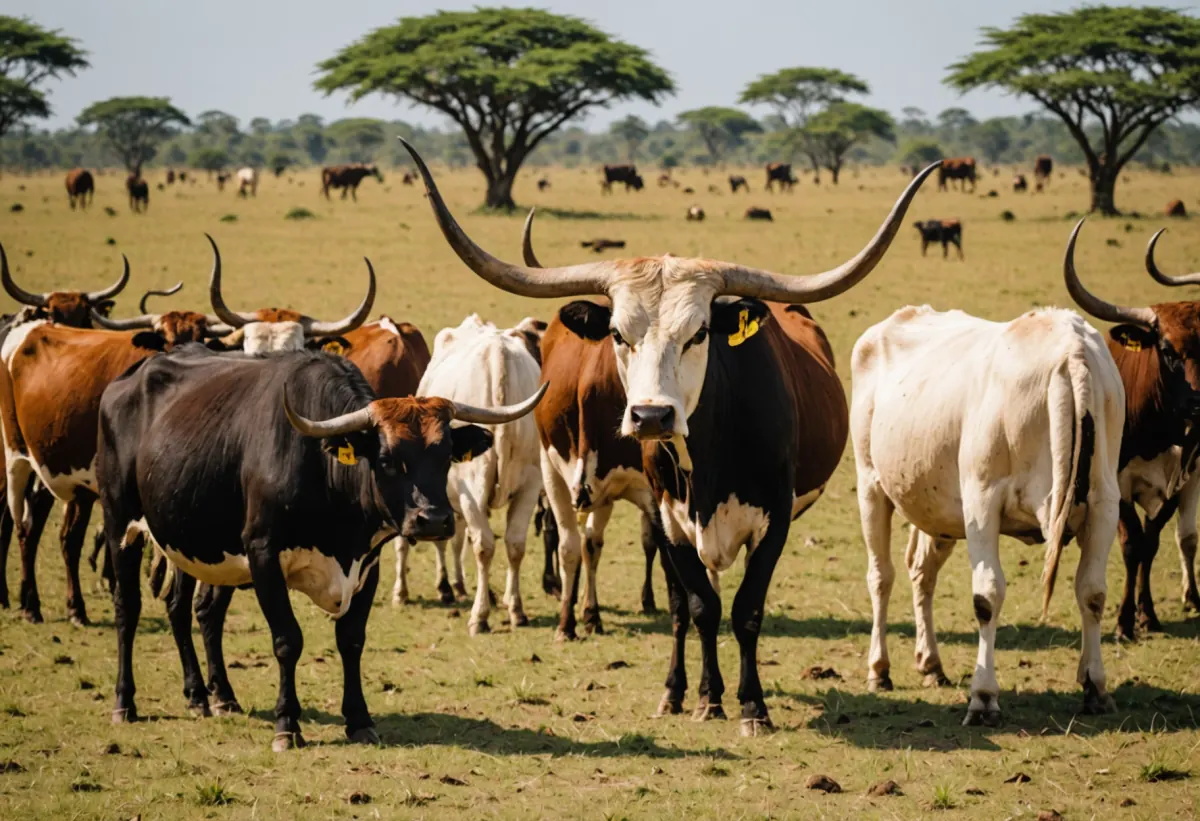
- Heat timing — AI only works if the cow is served during oestrus, the fertile period that repeats roughly every 21 days in cattle.
- Standing heat — the surest sign is a cow standing still when mounted by others; this is the moment to call the AI technician.
- Other heat signs — clear mucus from the vulva, restlessness, bellowing, mounting other cows, and a swollen, reddened vulva all signal heat.
- Smallholder routine — a farmer should watch the herd for heat twice a day, early morning and evening, because heat is easy to miss.
- Timing window — insemination is best about 12 to 18 hours after standing heat begins, so report heat the same day it is seen.
- Record the service — write down the date, sire and cow so the expected calving date and the next heat can be predicted accurately.
| Heat sign | What it tells you |
|---|---|
| Stands still when mounted | Standing heat — inseminate within 12 to 18 hours |
| Clear mucus from the vulva | Oestrus — the fertile window is open |
| Rides or mounts other cows | Coming into heat — watch closely |
| Restless, bellows, eats less | Early heat — confirm with the mounting test |
| Blood-tinged mucus two to three days later | Heat has passed — record it and plan the next cycle |
Common mistake: inseminating a cow that is not on standing heat wastes the semen dose. Always confirm standing heat before calling the technician — mucus alone, or riding other cows, is not enough on its own. See our routine husbandry practices notes for the daily checks that support this.
Techniques and steps in artificial insemination
The technique has one goal: put live sperm into the uterus at the moment the cow can conceive, without hurting her or wasting the dose. Every step, from the frozen straw to the final record, must be clean, calm and correctly sequenced.
- Semen storage — semen is kept frozen in liquid nitrogen at about −196 °C until the very moment it is needed for insemination.
- The straw — each dose is sealed in a small plastic straw labelled with the bull’s breed, name and registration number.
- Thawing — the technician thaws the straw in warm water for a set, short time so the sperm survive the rise in temperature.
- The AI gun — a long, thin insemination gun holds the straw and places the semen inside the cow’s reproductive tract.
- Hygiene — every step is kept clean, because dirt or dung entering the tract can cause infection and failed conception.
- Restraint — the cow is held safely in a crush so that neither the animal nor the technician is injured during the job.
- Rectal palpation — the technician’s gloved arm enters the rectum to grip and steady the cervix from outside the tract.
- Guiding the gun — the gun passes through the vulva and vagina, guided by the hand that is already holding the cervix.
- Deposition point — semen is deposited just beyond the cervix into the body of the uterus, where sperm can travel to meet the egg.
- Gentle release — after insemination the cow is released calmly, because rough handling or chasing can make her fail to conceive.
- Liquid nitrogen safety — handling the cold storage tank needs gloves and goggles, because liquid nitrogen causes severe cold burns.
- Technician training — AI is a skilled task, and an untrained person can injure the cow or waste an expensive semen dose.
- Clean water and towels — the vulva is wiped clean with a clean paper or cloth before the insemination gun is ever inserted.
- Post-service record — the service date and sire are recorded so the farmer can predict calving and watch for a return to heat.
- Return-to-heat check — the farmer watches the cow about 21 days later, and if she returns to heat the insemination may be repeated.
| Step | What the technician does | Safety point |
|---|---|---|
| 1 | Confirms the cow is in standing heat before anything else | Never inseminate a cow not on heat — it wastes the dose |
| 2 | Restrains the cow in a crush and stands to the side | Work behind a crush to avoid a kick |
| 3 | Prepares warm water at the correct thawing temperature | Follow the exact thaw time to keep sperm alive |
| 4 | Removes one straw from the liquid-nitrogen tank with forceps | Wear gloves and goggles; liquid nitrogen burns skin |
| 5 | Thaws the straw, dries it and loads it into the AI gun with a clean sheath | Keep the straw and sheath sterile throughout |
| 6 | Puts on a clean shoulder-length glove and lubricates it | A clean glove prevents infection of the tract |
| 7 | Wipes the vulva clean with clean paper or cloth | Remove dung and dirt before entry |
| 8 | Inserts the arm into the rectum and grips the cervix | Move gently and slowly to protect the rectum |
| 9 | Inserts the gun through the vulva and vagina to the cervix | Keep the gun tip clean as it passes in |
| 10 | Passes the gun through the cervix and deposits semen in the uterus | Deposit just beyond the cervix — not deep or rough |
| 11 | Withdraws slowly and releases the cow calmly | Never chase or startle the cow after service |
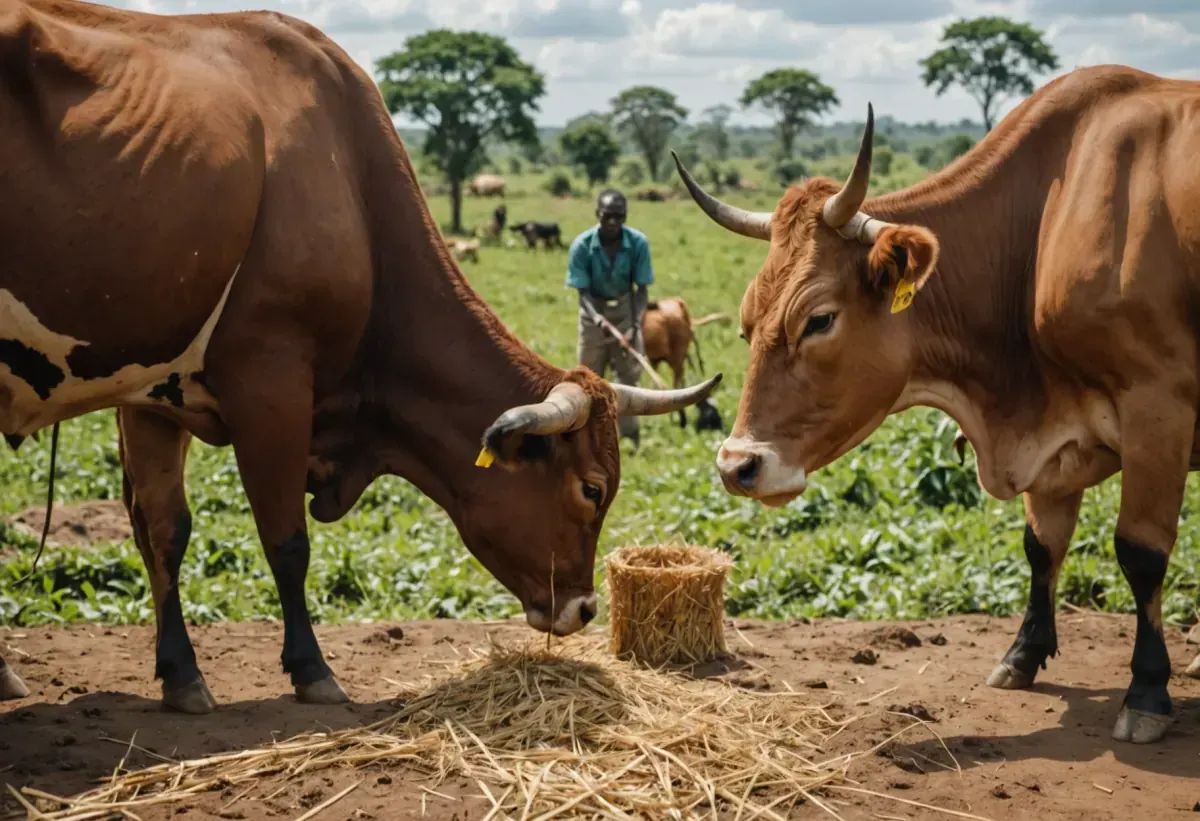
Exam tip: when describing AI steps, number them and keep this sequence: heat check, restraint, thaw, load, clean, insert, deposit, record. A clear ordered sequence earns full marks; a jumbled one does not.
Frequently asked questions about cattle breeding systems and artificial insemination
What are cattle breeding systems?
Cattle breeding systems are the organised ways a farmer decides which cows and bulls should mate so the next generation improves. The Ugandan Senior 3 syllabus names four: inbreeding, line breeding, crossbreeding and upgrading. Each system fixes or combines traits such as milk yield, growth rate, hardiness and fertility in a herd.
What is the difference between inbreeding and line breeding?
Inbreeding mates close relatives, such as a sire to his daughter, to make the herd uniform quickly, but it risks inbreeding depression. Line breeding is gentler: it mates animals related through one outstanding ancestor to keep that ancestor’s good genes while holding more vigour than close inbreeding.
Why do Ugandan farmers crossbreed indigenous and exotic cattle?
They crossbreed to combine the hardiness of indigenous cattle with the higher milk of exotic dairy breeds. A 2008 Kiruhura study found Ankole cows gave about 2.4 litres a day while 50 percent Friesian crosses gave 11.2 litres. That faster production is why crossing is spreading through the cattle corridor.
What is artificial insemination and how does it work?
Artificial insemination (AI) places collected semen into a cow’s reproductive tract at the correct time, without a live bull. A technician thaws a frozen semen straw, loads it into an insemination gun, and deposits the semen just beyond the cervix while the cow is on heat.
When is the best time to inseminate a cow?
The best time is about 12 to 18 hours after the start of standing heat, when the cow stands still to be mounted. Heat repeats roughly every 21 days, so a farmer should watch cows twice daily and call the technician the same day standing heat is seen.
What are the advantages of artificial insemination over natural mating?
AI lets a smallholder use semen from superior bulls she could not afford to keep, controls the spread of reproductive disease, and records the sire of every calf. One bull’s semen can also serve many cows across different farms, spreading good genes widely.
Key terms and revision summary
These key terms define the cattle breeding systems and artificial insemination vocabulary you will meet in the Senior 3 examination.
| Term | Definition |
|---|---|
| Breeding system | A planned method of deciding which animals mate, used to fix or improve traits in a herd. |
| Selection | Choosing the best animals as parents based on traits such as milk yield, growth and fertility. |
| Inbreeding | Mating closely related animals to make offspring more uniform; it risks inbreeding depression. |
| Line breeding | A mild form of inbreeding that mates relatives through one outstanding ancestor. |
| Outcrossing | Mating unrelated animals of the same breed to bring in fresh genes and restore vigour. |
| Crossbreeding | Mating animals of two different breeds to combine their useful traits through hybrid vigour. |
| Upgrading | Mating a crossbred female back to a purebred bull, generation after generation, toward a chosen breed. |
| Artificial insemination (AI) | Placing collected semen into a cow’s reproductive tract at the right time, without a live bull. |
| Oestrus (heat) | The fertile period, roughly every 21 days, when a cow will stand still to be mounted. |
| Semen | The fluid containing sperm, collected from a bull, processed and stored frozen in straws. |
| Heterosis (hybrid vigour) | The extra growth, health or milk a crossbred animal shows over either of its parents. |
| Bull stud | A centre where selected bulls are kept and semen is collected, such as NAGRC&DB’s Bull Stud. |
Exam-style questions
- Define the term “breeding system” and state four breeding systems used in cattle. — A breeding system is a planned method of choosing which animals reproduce. The four systems are inbreeding, line breeding, crossbreeding and upgrading.
- Distinguish between crossbreeding and upgrading. — Crossbreeding mates two different breeds in one cross; upgrading repeatedly mates the crossbred back to one purebred breed until the herd is nearly pure.
- Explain two advantages and two disadvantages of artificial insemination in cattle rearing. — Advantages: access to superior sires and control of reproductive disease. Disadvantages: it needs a trained technician with liquid nitrogen, and it fails if heat is not detected.
- Describe the steps a technician follows when carrying out artificial insemination. — Confirm heat, restrain in a crush, thaw the straw, load the gun, clean the vulva, grip the cervix, insert the gun, deposit the semen, then withdraw and record.
- State four signs that a cow is on heat and explain why heat detection matters for AI. — Standing to be mounted, clear mucus, restlessness and bellowing, and mounting other cows. Detection matters because AI only works during oestrus.
Test yourself on this and the rest of the cattle breeding systems topic with our Senior 3 Agriculture past papers and quizzes, then return to the breeds and physical selection of production cattle notes to close the loop between choosing stock and breeding it.



Leave a Reply