
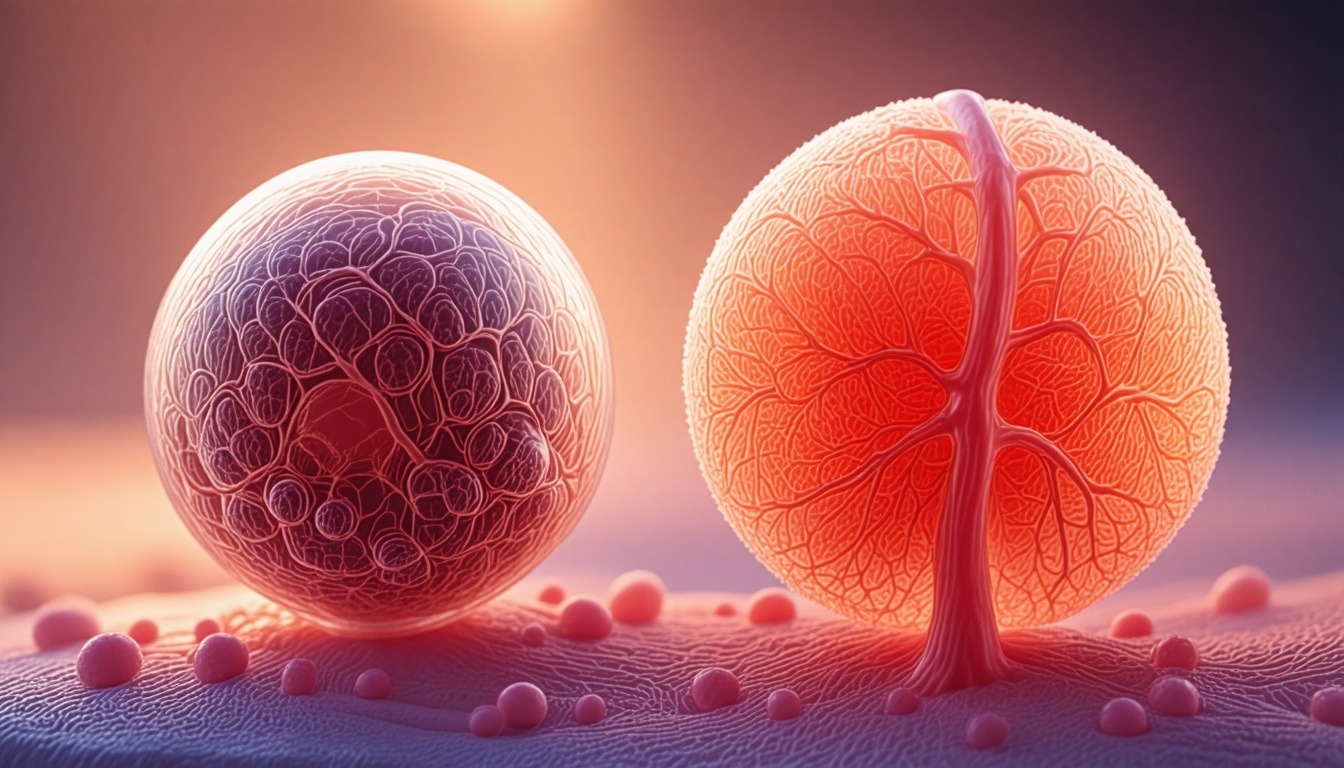
Introduction to Gaseous Exchange
Gaseous exchange is the process by which oxygen and carbon dioxide move between an organism and its environment. This fundamental biological process is essential for cellular respiration, which provides energy for all life processes. In simple unicellular organisms, gases can diffuse directly across the cell membrane, but as organisms increase in size and complexity, they face challenges that require specialised systems. Understanding the principles of surface area to volume ratios is key to grasping why these specialised systems are necessary.
Effective gaseous exchange relies on diffusion, the passive movement of molecules from areas of high concentration to low concentration. The rate of diffusion is influenced by factors such as concentration gradient, distance, surface area, and the properties of the exchange surface. In this article, we will delve into the relationship between surface area and volume, and explore how multicellular organisms have evolved to meet their gaseous exchange needs.
We will also examine the adaptations of various exchange surfaces, including the alveoli in mammals, the gills in fish, and the spongy mesophyll in plants. By the end, you will have a comprehensive understanding of why multicellular organisms can’t rely solely on simple diffusion and how their specialised systems overcome these limitations.
Prior Learning on Surface Area to Volume Ratios
The surface area to volume ratio (SA:V) is a critical concept in biology that explains the relationship between an organism’s size and its exchange capabilities. As a cell or organism grows, its volume increases faster than its surface area. This is because volume is a cubic function (length³) while surface area is a square function (length²). for instance, a cube with a side length of 1 cm has a surface area of 6 cm² and a volume of 1 cm³, giving an SA:V of 6:1. If the side length doubles to 2 cm, the surface area becomes 24 cm² and the volume becomes 8 cm³, resulting in an SA:V of 3:1. This decreasing ratio means that larger organisms have less surface area relative to their volume, making it harder for them to exchange gases efficiently through their outer surface.
This principle is fundamental to understanding why multicellular organisms need specialised systems for gaseous exchange. A high SA:V is advantageous for efficient diffusion because it provides a larger area for exchange relative to the volume that needs to be supplied. Unicellular organisms, such as amoebas, have a high SA:V and can rely on diffusion across their cell membrane. In contrast, multicellular organisms have a low SA:V and can’t meet their metabolic demands through the outer surface alone.
To illustrate this, consider a spherical cell with a radius of 0.1 mm. Its surface area is approximately 0.126 mm² and its volume is 0.00419 mm³, giving an SA:V of about 30:1. If the radius increases to 1 mm, the SA:V drops to about 3:1. This dramatic decrease shows why larger cells and organisms need adaptations to maintain efficient exchange. In multicellular organisms, internal surfaces such as the lungs and gills provide the necessary surface area for gas exchange.
Why Multicellular Organisms Need Specialised Systems for Gaseous Exchange
Multicellular organisms have a low surface area to volume ratio, which means that simple diffusion across the outer surface is insufficient to meet their oxygen demands and remove carbon dioxide. Additionally, these organisms have a higher metabolic rate due to the presence of many cells, each requiring oxygen for respiration. The distance from the surface to the innermost cells is also greater, slowing diffusion. Specialised gaseous exchange systems overcome these challenges by providing a large surface area, thin exchange surfaces, and a transport system to move gases to and from cells.
Consider the human respiratory system. The lungs contain millions of tiny air sacs called alveoli, which have a combined surface area of about 70 m². This massive surface area is essential for efficient gas exchange. The alveoli are surrounded by a dense network of capillaries, and their walls are only one cell thick, minimising the diffusion distance. Ventilation (breathing) maintains a concentration gradient by bringing in fresh oxygen and removing carbon dioxide. Without such a system, the body’s cells wouldn’t receive enough oxygen to sustain life.
Other multicellular organisms have evolved different adaptations. Fish have gills with thin filaments that increase surface area and are ventilated by water flow. Insects have a tracheal system of tubes that deliver oxygen directly to cells. Plants have stomata and spongy mesophyll for gas exchange. Each system reflects the organism’s environment and metabolic needs, but all share the common goal of overcoming the limitations imposed by a low SA:V.
The Need for a Gaseous Exchange System in a Multicellular Organism
The need for a gaseous exchange system arises from the combination of a low SA:V and a high metabolic demand. In humans, for instance, the resting oxygen consumption is about 250 mL per minute, which increases dramatically during exercise. The lungs must be able to supply this oxygen efficiently. The system also must remove carbon dioxide, a waste product that can be toxic if accumulated. Without a specialised system, the body would suffer from hypoxia (oxygen deficiency) and hypercapnia (excess carbon dioxide).
Additionally, the gaseous exchange system must be protected from damage and infection. The respiratory tract is lined with mucus and cilia that trap and remove pathogens and particles. The system also regulates pH by controlling carbon dioxide levels. The need for a specialised system is so not just about surface area, but also about regulation, protection, and integration with other systems such as the circulatory system.
In summary, the need for a gaseous exchange system in multicellular organisms is driven by physical constraints (low SA:V), metabolic demands, and the need for controlled, efficient exchange. The evolution of such systems is a key adaptation that allowed organisms to grow larger and more complex.
Principles of Diffusion and Fick’s Law
Diffusion is the passive movement of molecules from an area of high concentration to low concentration. Fick’s Law quantifies the rate of diffusion: Rate = (Surface area × Concentration gradient × Diffusion coefficient) / Distance. This law highlights the factors that can be modified to increase exchange efficiency. A large surface area, steep concentration gradient, and short diffusion distance all increase the rate. Specialised exchange systems optimise these factors.
for instance, the alveoli have a large surface area (70 m²), a thin wall (0.5 µm), and a constant concentration gradient maintained by ventilation and blood flow. The diffusion coefficient depends on the gas and the medium; oxygen diffuses faster in air than in water, which is why aquatic organisms often have more elaborate exchange surfaces.
In contrast, a unicellular organism relies on its cell membrane, which has a high SA:V and short diffusion distance. As organisms become multicellular, the distance increases, and the SA:V decreases, necessitating adaptations. Fick’s Law explains why these adaptations are effective.
Adaptations of Alveoli for Efficient Gaseous Exchange
The alveoli are the primary sites of gas exchange in mammals. They are tiny, balloon-like structures at the end of bronchioles. Several adaptations make them highly efficient: a large surface area (about 70 m² in humans), thin walls (one cell thick), a rich blood supply (capillaries), and a moist surface for gas dissolution. The walls of alveoli and capillaries are both very thin, allowing gases to diffuse quickly.
The alveoli are also elastic, allowing them to expand and recoil during breathing. They are coated with surfactant, a substance that reduces surface tension and prevents collapse. The constant ventilation ensures a high oxygen concentration in the alveoli and a low carbon dioxide concentration, maintaining the concentration gradient. The blood flowing through the capillaries has a low oxygen concentration (deoxygenated) and high carbon dioxide, further steepening the gradient.
These adaptations collectively ensure that oxygen diffuses into the blood and carbon dioxide diffuses out rapidly. Any damage to the alveoli, such as in emphysema, reduces surface area and impairs gas exchange, demonstrating the importance of these adaptations.
Comparison of Gaseous Exchange Systems Across Organisms
Different organisms have evolved diverse gaseous exchange systems suited to their environments. Mammals use lungs, fish use gills, insects use tracheae, and plants use stomata. Each system has a large surface area and thin exchange surfaces, but they differ in how they ventilate and transport gases.
Gills are external structures that are constantly bathed in water. They have a large surface area due to numerous filaments and lamellae. Water flows over the gills in one direction while blood flows in the opposite direction, creating a countercurrent exchange that maximises oxygen uptake. Lungs are internal and rely on ventilation through breathing. The tracheal system in insects consists of a network of tubes that deliver oxygen directly to cells, bypassing the circulatory system.
Plants have stomata on leaves that allow gas exchange. The spongy mesophyll cells have large air spaces that increase surface area. The table below summarises key features of these systems.
| Organism | System | Surface Area | Ventilation |
|---|---|---|---|
| Mammals | Lungs (alveoli) | ~70 m² | Tidal breathing |
| Fish | Gills | Large (filaments) | One-way water flow |
| Insects | Tracheae | Extensive tubes | Diffusion + body movements |
| Plants | Stomata | Spongy mesophyll | Diffusion |
This comparison shows that despite different structures, all systems achieve the same goal: efficient gas exchange through a large surface area, thin barriers, and maintenance of concentration gradients.
Surface Area to Volume Ratio in Cells and Organisms
The SA:V ratio isn’t only important for whole organisms but also for individual cells. Cells that are metabolically active, such as muscle cells, have a high demand for oxygen and must have a high SA:V. Many cells have folded membranes (e.g., microvilli in intestinal cells) to increase surface area. Red blood cells are biconcave to increase surface area for gas exchange.
In multicellular organisms, the SA:V of the whole organism is low, but the exchange surfaces have a high SA:V. for instance, the alveoli have a very high surface area relative to their volume. This is why they are so efficient. The concept of SA:V also explains why small organisms can rely on diffusion alone, while larger ones need specialised systems.
Understanding SA:V is essential for fields like pharmacology (drug absorption) and nanotechnology (designing nanoparticles). It is a unifying concept in biology that links form and function.
Factors Affecting the Rate of Gaseous Exchange
Several factors influence the rate of gaseous exchange, including surface area, concentration gradient, diffusion distance, temperature, and the properties of the gas and exchange surface. A larger surface area increases the area available for diffusion. A steeper concentration gradient increases the net movement of gases. A shorter diffusion distance speeds up exchange.
Temperature affects the kinetic energy of molecules; higher temperatures increase diffusion rates. The solubility of gases also matters; carbon dioxide is more soluble than oxygen, so it diffuses more rapidly across moist surfaces. The presence of carrier molecules (e.g., haemoglobin) can facilitate transport but doesn’t affect diffusion itself.
In disease states, these factors can be compromised. for instance, pneumonia causes fluid accumulation in the alveoli, increasing diffusion distance. Emphysema destroys alveolar walls, reducing surface area. Understanding these factors helps in diagnosing and treating respiratory conditions.
The Role of Ventilation and Perfusion in Gaseous Exchange
Ventilation refers to the movement of air into and out of the lungs, while perfusion is the blood flow through the pulmonary capillaries. For efficient gas exchange, ventilation and perfusion must be matched. If an alveolus is ventilated but not perfused, no gas exchange occurs. Conversely, if it is perfused but not ventilated, blood can’t pick up oxygen.
The body regulates this matching through mechanisms like hypoxic vasoconstriction, where blood vessels constrict in poorly ventilated areas to redirect blood to well-ventilated areas. This optimises gas exchange efficiency. During exercise, both ventilation and perfusion increase to meet the higher oxygen demand.
Mismatch can occur in diseases like pulmonary embolism (blockage of blood flow) or asthma (airway obstruction). Understanding ventilation-perfusion coupling is crucial for managing these conditions.
Gaseous Exchange in Plants: Stomata and Mesophyll
Plants also require gaseous exchange for photosynthesis and respiration. Stomata are pores on the leaf surface that allow carbon dioxide in and oxygen out. They are surrounded by guard cells that regulate opening and closing. The spongy mesophyll cells have large air spaces that increase surface area for gas exchange.
During the day, stomata open to allow CO₂ in for photosynthesis. At night, they may close to reduce water loss. This trade-off between gas exchange and water conservation is critical. The concentration gradient is maintained by photosynthesis (using CO₂) and respiration (producing CO₂).
Plants don’t have a specialised transport system for gases; they rely on diffusion through air spaces. This limits the size of leaves and the distance gases must travel. The SA:V of leaves is high due to their flat shape and internal air spaces.
Gaseous Exchange in Aquatic Organisms
Aquatic organisms face additional challenges because oxygen is less abundant in water (about 30 times less than in air) and diffuses more slowly. so, they require efficient exchange surfaces. Fish gills are highly adapted with a large surface area and countercurrent flow. The countercurrent system maintains a concentration gradient along the entire length of the gill filament, allowing up to 80% oxygen extraction.
Other aquatic animals, like amphibians, use skin and lungs. Some use gills only in larval stages. The efficiency of gas exchange in water is also affected by temperature and salinity. Understanding these adaptations is important for aquaculture and conservation.
The SA:V ratio is also relevant; small aquatic organisms can rely on diffusion across their body surface, while larger ones need gills or lungs.
Evolution of Gaseous Exchange Systems
The evolution of gaseous exchange systems is closely tied to the transition from aquatic to terrestrial life. Early organisms lived in water and relied on diffusion. As organisms became larger and moved onto land, they needed internal systems to prevent desiccation. Lungs evolved from swim bladders in fish. Insects developed tracheae, which are efficient but limit body size due to reliance on diffusion.
Birds have a unique system with air sacs that allow unidirectional airflow, making gas exchange more efficient. This adaptation supports their high metabolic demands for flight. Mammals evolved lungs with alveoli, which provide a large surface area in a compact space.
Understanding evolution helps explain the diversity of exchange systems and their constraints. for instance, the size of insects is limited by the efficiency of their tracheal system.
Clinical Relevance: Disorders of the Respiratory System
Disorders of the respiratory system often involve disruptions to the factors that facilitate efficient gas exchange. Asthma involves airway constriction, reducing ventilation. Emphysema destroys alveolar walls, decreasing surface area. Pneumonia fills alveoli with fluid, increasing diffusion distance. These conditions reduce oxygen uptake and can lead to hypoxia.
Treatment often aims to restore function: bronchodilators for asthma, oxygen therapy for hypoxia, and antibiotics for infections. In severe cases, mechanical ventilation may be needed. Understanding the underlying physiology is essential for effective treatment.
Smoking is a major cause of respiratory disease, damaging cilia, alveoli, and lung tissue. Prevention through lifestyle changes is crucial.
Frequently Asked Questions
What is surface area to volume ratio and why is it important?
The surface area to volume ratio (SA:V) is the relationship between the size of an organism’s outer surface and its internal volume. It is important because it determines the efficiency of diffusion. A high SA:V allows for rapid exchange of gases and nutrients, while a low SA:V requires specialised systems.
Why do multicellular organisms need a specialised gaseous exchange system?
Multicellular organisms have a low SA:V and a high metabolic demand, making simple diffusion insufficient. Specialised systems provide a large surface area, thin exchange surfaces, and mechanisms to maintain concentration gradients, ensuring all cells receive enough oxygen.
How do alveoli increase the rate of gas exchange?
Alveoli increase the rate of gas exchange by providing a large surface area (70 m²), thin walls (one cell thick), a rich blood supply, and a moist surface. Ventilation maintains a steep concentration gradient, and the short diffusion distance allows rapid diffusion.
What is Fick’s Law and how does it relate to gaseous exchange?
Fick’s Law states that the rate of diffusion is proportional to surface area and concentration gradient, and inversely proportional to distance. It explains why specialised exchange systems have large surface areas, thin barriers, and active ventilation or perfusion.
How do fish gills achieve efficient gas exchange?
Fish gills have a large surface area due to filaments and lamellae. They use countercurrent flow, where water flows opposite to blood, maintaining a concentration gradient along the entire gill. This allows up to 80% oxygen extraction from water.
Conclusion
In conclusion, the study of gaseous exchange and surface area to volume ratios reveals the fundamental constraints that shape the form and function of living organisms. The decreasing SA:V with increasing size explains why multicellular organisms can’t rely on simple diffusion and must evolve specialised systems. These systems, whether lungs, gills, tracheae, or stomata, all share common features: a large surface area, thin exchange surfaces, and mechanisms to maintain concentration gradients.
Understanding these principles isn’t only essential for biology students but also has practical applications in medicine, agriculture, and environmental science. The elegance of these systems reflects the power of evolution to overcome physical limitations. As we continue to explore life’s diversity, the concepts of SA:V and gaseous exchange remain central to our comprehension of how organisms function.



Leave a Reply