
Introduction
Routine husbandry practices are the cornerstone of efficient and humane livestock management. These practices not only ensure the well-being of the animals but also enhance farm productivity and profitability. Among the most critical procedures are identification, dehorning, and castration. Each of these requires a thorough understanding of animal anatomy, behavior, and welfare standards. This guide provides detailed academic notes on these essential techniques, incorporating modern methods, safety protocols, and record-keeping practices. Whether you are a veterinary student, an aspiring farmer, or an experienced livestock keeper, this article will serve as a comprehensive reference.
Cattle identification methods including tagging and microchips
Identification is the foundation of any successful livestock operation. It enables farmers to track individual animals for health management, breeding decisions, performance evaluation, and legal compliance. Reliable identification systems also support traceability during disease outbreaks and enhance the market value of cattle. In this section, we explore the most common and effective identification methods, ranging from traditional visual tags to advanced electronic microchips.
Importance of cattle identification
Without a robust identification system, it is impossible to maintain accurate medical records, monitor growth rates, or plan genetic improvements. Identification helps in:
- Maintaining individual health and vaccination schedules
- Recording milk production and reproductive status
- Preventing livestock theft and illegal movement
- Ensuring food safety through traceability
- Facilitating herd management and culling decisions
In many countries, cattle identification is a legal requirement, especially for ear tags under national animal identification programs.
Visual identification methods
Visual methods are the oldest and simplest forms of identification. They include:
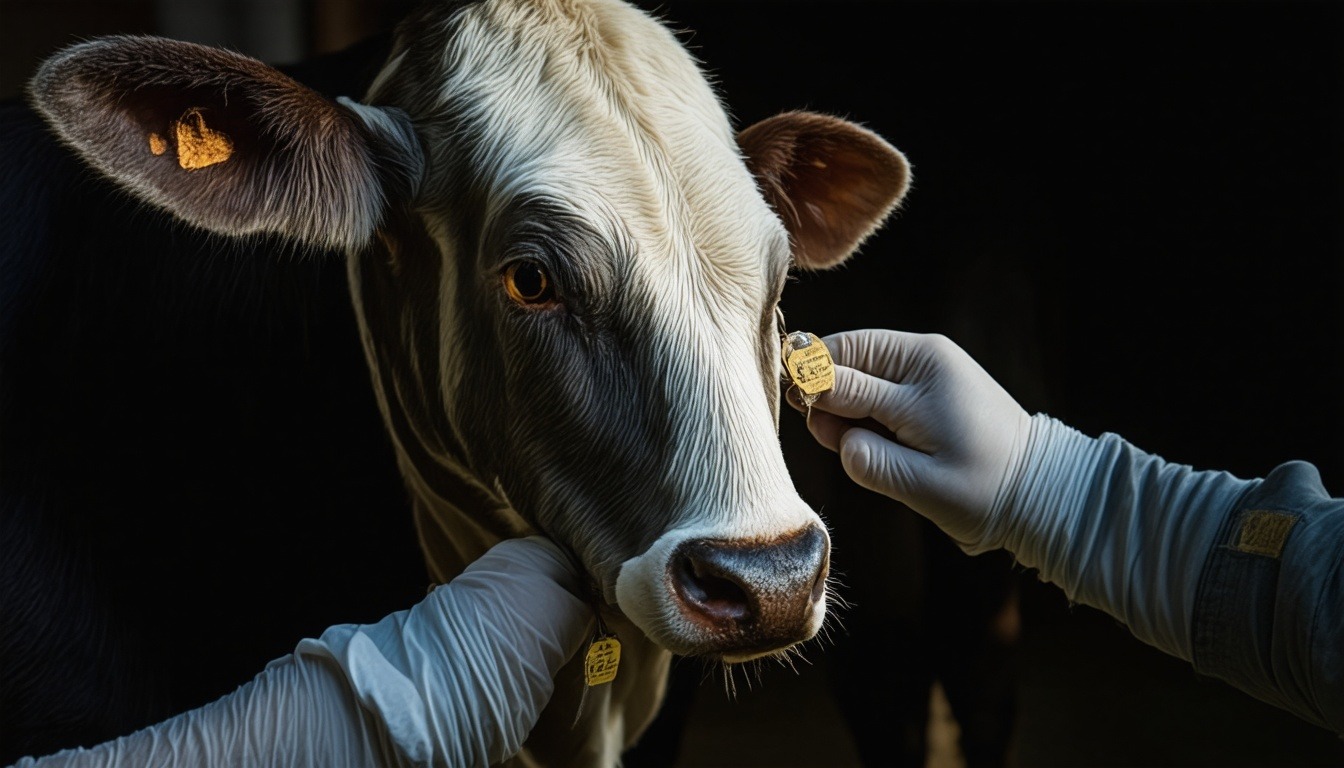
Ear tags are the most widely used visual identification. They come in plastic or metal variants and can be displayed in one or both ears. Tags carry individual numbers, barcodes, or logos. They are easy to apply, low-cost, and readable from a distance. but, they can get lost, torn, or cause ear infections if poorly applied.
Tattoos
Tattooing involves inking a unique code onto the inner surface of the ear using tattoo pliers and ink. This method is permanent, tamper-proof, and convenient for registration purposes. but, reading tattoos requires close contact, making it less practical for routine checks.
Branding
Hot iron branding is a traditional method that permanently marks the hide. Freeze branding, which uses extreme cold, is less painful and leaves a white hair pattern. Branding is still used for ownership identification but is increasingly discouraged due to welfare concerns and the advent of less painful methods.
Electronic identification methods
Electronic identification (EID) has revolutionized cattle management. It uses technology to automatically and accurately identify animals without visual inspection.
RFID tags contain a microchip that transmits a unique identifier to a reader. These tags are read quickly and reliably, even in dusty or rainy conditions. They are ideal for automated data collection at weigh scales or milking parlors.
Injectable microchips
Microchips are small devices, about the size of a grain of rice, implanted subcutaneously (often in the ear or under the tail). They are read with a scanner and provide a lifetime, tamper-proof identification. Microchips are more expensive than ear tags but are increasingly used for high-value breeding stock and in cases where theft is a concern.
Comparison of identification methods
| Method | Cost | Readability | Permanence | Welfare Impact | Suitability |
|---|---|---|---|---|---|
| Ear tags | Low | Easy visual | Moderate (may be lost) | Minimal | Routine commercial herds |
| Tattoos | Low | Requires close inspection | High | Mild discomfort | Purebred registration |
| Freeze branding | Medium | Good visual | Very high | Moderate | Ownership proofs |
| RFID tags | Medium | Electronic | High | Minimal | Dairy herd management |
| Microchips | High | Scanner-only | Very high | Minimal | Valuable genetics |
- Restraint: Safely restrain the animal in a crush or head gate to minimize movement.
- Site preparation: For ear tags, clean the middle of the ear with an antiseptic. For microchips, select the designated area (e.g., base of the ear) and swab with alcohol.
- Application: Use a sterile applicator to attach the tag; for microchips, insert the needle and depress the plunger.
- Verification: Scan the tag/microchip with a reader to ensure it is correctly functioning.
- Record: Immediately note the identification number in the animal’s record.
Key safety tip: Always use disposable or sterilized needles for microchipping to prevent cross-contamination between animals.
Practical steps for dehorning cattle
Dehorning, also known as disbudding in young calves, is the removal of horns to reduce the risk of injury to animals and handlers. Horned cattle can cause severe damage during transport, mixing, or feeding. Dehorning is a painful procedure that must be performed responsibly, with due attention to age, anesthesia, and aftercare. This section outlines the practical steps, methods, and welfare considerations.
Age considerations
Disbudding is performed when horn buds are still not attached to the skull, usually under 2 months of age. At this stage, the procedure is less invasive and quicker to recover from. Dehorning of older cattle involves cutting fully developed horns and is more stressful. It should be done only when absolutely necessary and always under veterinary supervision.
Methods of dehorning
Caustic paste (chemical disbudding)
This method uses substances like sodium hydroxide or calcium hydroxide to burn the horn bud. It is suitable for calves less than 2 weeks old. The paste is applied to the bud after clipping the surrounding hair. Care must be taken to avoid burning the skin or the dam.
Hot iron disbudding
A specially designed iron is heated to cherry red and applied over the horn bud for 10-15 seconds. This destroys the horn-producing cells. It is common in beef and dairy calves. It must be performed with adequate restraint and local anesthesia.
Mechanical dehorning (scoop, saw, or wire)
For older animals with attached horns, a dehorning scoop, guillotine, or saw is used to cut off the horn. This is a major operation that requires sedation, local anesthesia, and careful hemostasis. A rubber ring or torsion method may also be used but is less common.
Step-by-step procedure for hot iron dehorning
- Confirm age and health: Ensure the calf is healthy and hasn’t been stressed recently.
- Restraint: Place the calf in a calf cradle to keep it immobile but comfortable.
- Analgesia: Administer a local anesthetic (cornual nerve block) if permitted by local regulations. In many countries, this is mandatory.
- Clip hair: Clip the hair around the horn bud to expose the area.
- Apply the iron: Heat the iron to the correct temperature (around 500°C). Press firmly over the bud for 5-10 seconds, then rotate slightly.
- Check for completeness: The area should have a copper-brown ring; repeat if needed.
- Post-procedure: Apply a fly-repellent spray and monitor the calf for complications.
Pain management and safety
Dehorning causes pain; so, the use of local anesthesia and non-steroidal anti-inflammatory drugs (NSAIDs) is strongly recommended. Meloxicam or ketoprofen can be given per the veterinarian’s advice. Safety for the handler includes proper training in the use of tools and understanding of calf restraint.
Important: Never use caustic paste on calves older than 4 weeks, as the risk of sinus infection increases.
Aftercare
- Keep the calf in a clean, dry environment for at least a week.
- Check the wound daily for signs of infection, such as swelling, discharge, or foul odor.
- Provide soft feed and fresh water.
- Administer antibiotics only if prescribed by a veterinarian.
Methods and safety in cattle castration
Castration is the removal or destruction of the testicles to make male cattle sterile and reduce aggressive behavior. It is a common practice in beef production to improve meat quality and manage herd dynamics. but, it is a painful procedure, and choosing the right method and adhering to safety protocols are crucial for animal welfare and operator safety.
Reasons for castration
- Reduces aggression and dominance-related injuries.
- Eliminates unwanted breeding in mixed-sex grazing.
- Improves carcass quality (marbling and tenderness).
- Makes animals easier to handle and manage.
- Enables successful rearing in group feeding systems.
Age and timing
Castration is best performed early in life, typically from 2 weeks to 3 months of age. Younger animals recover faster and have fewer complications. but, it shouldn’t be done during weaning, castration, or other stressful events simultaneously. In many production systems, castration is carried out at the same time as dehorning to minimize handling stress.
Methods of castration
Surgical castration
This involves making an incision in the scrotum and removing the testicles. It is the most reliable method and can be performed at any age. It requires proper surgical technique, aseptic tools, and anesthesia. Complications include hemorrhage, infection, and in some cases, evisceration if the incision is too high.
Burdizzo (bloodless) castration
The Burdizzo emasculator crushes the spermatic cords without breaking the skin. It is a closed method that reduces the risk of infection. It is best for calves up to 3 months. but, if not applied correctly, the testicles may not atrophy completely, leaving the animal a “stagg”.
Rubber ring (elastrator) castration
A heavy rubber ring is placed around the scrotum to cut off blood supply. The testicles and scrotum eventually slough off in about 3-6 weeks. This method is best for very young calves (under 2 weeks) and is practically painless initially but can cause later pain. It is commonly used without anesthesia, but pain relief is increasingly recommended.
Safety precautions
Safety is paramount during castration, both for the animal and the operator. Use a proper restraint system, such as a crush or calf cradle. Never attempt surgical castration without training. Always use sterile instruments and maintain a clean environment. The use of pain relief, such as local anesthesia and NSAIDs, should be provided whenever possible.
Postoperative care
- Monitor the animal for excessive bleeding or swelling.
- Keep the animal in a clean, shaded area.
- Apply fly repellent to the wound to prevent myiasis.
- don’t mix with other animals for a few days.
- Ensure access to clean water and good-quality feed.
Veterinary advice: In many countries, castration without anesthesia is now considered illegal for older cattle. Always check local regulations and incorporate pain management into the protocol.
Keeping animal registers and production record cards
Accurate record keeping is the backbone of modern livestock farming. Animal registers and production record cards provide a systematic way to track each animal’s identity, health, reproduction, and performance. This information is invaluable for making informed management decisions and complying with food safety regulations.
Types of records
Individual animal register
This is a legal requirement in many jurisdictions. It contains the animal’s identification number, date of birth, breed, sex, dam and sire, movements, and health treatments. It serves as a lifetime diary for each animal.
Production record cards
These cards are used for dairy and breeding animals. They record daily or monthly milk yields, calving dates, weights, and feed amounts. They enable performance analysis and genetic selection.
Essential information to record
- Identification number: Ear tag or microchip number.
- Biographical data: Date of birth, breed, sex, and mother’s ID.
- Health record: Vaccinations, diseases, treatments, and withdrawal periods.
- Reproduction record: Heat dates, insemination dates, and calving results.
- Production data: Milk yield, weight gain, and carcass measurements.
Benefits of record keeping
Record keeping helps farmers to:
- Identify low-performing animals and improve culling decisions.
- Monitor the impact of nutritional changes.
- Plan breeding and calving seasons.
- Ensure treatment withdrawal periods are respected.
- Meet legal traceability requirements.
Example of a production record card layout
| Animal ID | Breed | Date of Birth | Dam ID | Milk Yield (kg) | Calving Date |
|---|---|---|---|---|---|
| RF-0145 | Holstein | 12-03-2022 | RF-0098 | 28.5 | 15-11-2023 |
| RF-0162 | Jersey | 25-07-2022 | RF-0112 | 18.2 | 02-12-2023 |
Digital vs. paper records
While paper records are cheap and simple, they are prone to errors and loss. Digital herd management software and mobile apps allow real-time data entry, integration with electronic scales and milk meters, and easy generation of reports. Many countries now require electronic submission of cattle movements, so a digital system is more future-proof.
Practical livestock handling techniques
Efficient livestock handling reduces stress for both animals and handlers. Understanding the natural behavior of cattle is essential to move them safely and with minimal resistance. This section covers the principles and practical techniques for low-stress handling that are essential for any stockperson.
Principles of safe and low-stress handling
Cattle are flight animals and have a wide field of vision but poor depth perception. They prefer to follow a leader and will move forward if you work at the edge of their flight zone. Key principles include:
- Flight zone: The amount of personal space the animal wants to keep. Respect it to encourage movement.
- Point of balance: Located at the shoulder; moving ahead of it pulls the animal forward, moving behind it pushes the animal forward.
- Pressure and release: Apply pressure to move the animal and release when it moves the correct way.
- Calmness: Avoid shouting, running, or sudden movements.
Handling facilities
Good facilities are crucial for safe handling. Essential elements include:
- Race (single-file alley): Width suited to cattle size to prevent turning.
- Crowd pen: A curved pen that allows the handler to direct cattle into the race naturally.
- Crush (squeeze chute): Restrains the animal for procedures like tagging, dehorning, or castration.
- Head gate: Secures the animal by the neck for head procedures.
- Non-slip flooring: To prevent falls and leg injuries.
Low-stress handling techniques
- Use of flight zones: Stand at the edge of the flight zone and slowly move into it to start the animal moving.
- Approach from the front: Cattle tend to move backwards when approached head-on. Approach from the side or front-quarter.
- Speak softly: A low, steady voice is calming.
- Use objects: A plastic paddle or flag can be used to direct movement without prolonged contact.
- Remove distractions: Avoid shadows, reflections, and noises that cause balking.
Golden rule: The human-animal relationship directly impacts production. Calm handling improves milk letdown, weight gain, and overall welfare.
Safety tips for handlers
- Always work with a partner when using a crush.
- Ensure all gates and latches are secure before entering the enclosure.
- Never wrap lead ropes around your hand or body.
- Wear sturdy, non-slip boots and protective gear (gloves, safety glasses).
- Be aware of the animal’s kick zone (directly behind) and head zone (swinging horn area).
Conclusion
Routine husbandry practices aren’t mere chores; they are skilled procedures that require knowledge, compassion, and precision. Identification systems such as ear tags and microchips provide the basis for individual care and farm management. Dehorning, when done humanely and correctly, protects herd mates and handlers from injury. Castration, if performed with proper pain relief, improves animal behavior and product quality. Detailed record keeping ensures that every animal is monitored and managed effectively. Above all, practical livestock handling techniques reduce stress and foster a safer environment for both cattle and people. By mastering these practices, farmers can elevate both animal welfare and farm profitability.
Frequently Asked Questions
What is the best age to dehorn cattle?
The best age is within the first 2 months of life, ideally between 2 and 6 weeks. At this stage, the horn buds haven’t yet adhered to the skull, making calcium or hot iron disbudding quick and effective. For younger calves, local anesthesia may be optional but is always recommended for pain control.
How long does it take for a microchip to be accepted in cattle?
Microchips are permanent devices; they remain functional for the animal’s lifetime. Once implanted, the chip is usually read immediately with a scanner. There is no “acceptance” period, but the site may have a small reaction for a few days. Ensure the chip is registered in a national database.
Is castration without anesthesia legal for cattle?
Legislation varies by country and is evolving. In the European Union, surgical castration without anesthesia is banned for cattle over a certain age (usually 2 months). In the United States, it is still allowed but welfare guidelines increasingly require pain management. Always consult your local veterinary authority.
What are the signs of infection after dehorning?
Infection signs include redness, swelling, discharge (pus), a foul odor, fever, loss of appetite, and head shaking. If any of these appear, contact a veterinarian immediately. Early intervention with antibiotics and wound cleaning is essential to avoid severe complications.
How can I make cattle handling less stressful?
Use low-stress techniques such as moving at the animal’s pace, working in the flight zone, and avoiding shouting. Ensure facilities are clean, well-lit, and quiet. Regular gentle handling from a young age desensitizes cattle, making them easier to manage throughout their lives.
Why is record keeping important in livestock farming?
Record keeping helps farmers track individual animal performance, detect health issues early, ensure treatment safety, comply with traceability laws, and make informed decisions about breeding, feeding, and culling. Without records, it is impossible to assess the financial viability of the herd.



Leave a Reply