
Cattle nutrition and feed rations mean feeding a cow everything it needs — energy, protein, minerals, water and fibre — in the right amounts for its age and stage, at the lowest cost. A balanced ration matches the feed you give to what the animal requires, while roughage keeps the rumen working.
This topic is Senior 3 Agriculture, theme “Animal Production”, topic “Cattle production”, Term 1 (48 periods), per the NCDC Agriculture Syllabus (2019, ISBN 978-9970-00-120-0) .
These notes cover the significance of good nutrition, the requirements of dairy cattle at each stage, how to build a balanced ration from Ugandan foodstuffs, and how to use roughage efficiently. A fully worked Pearson square shows how to mix maize bran and cottonseed cake into a 16% crude-protein dairy concentrate. Pair this page with the Senior 3 Agriculture notes on cattle production pillar and the Senior 3 Agriculture notes hub.
Roughage is bulky, fibrous plant feed such as napier grass, maize stover, hay and silage. Concentrate is energy- or protein-dense feed such as maize bran, cottonseed cake, fish meal and molasses. Roughage supplies fibre; concentrate tops up energy and protein.
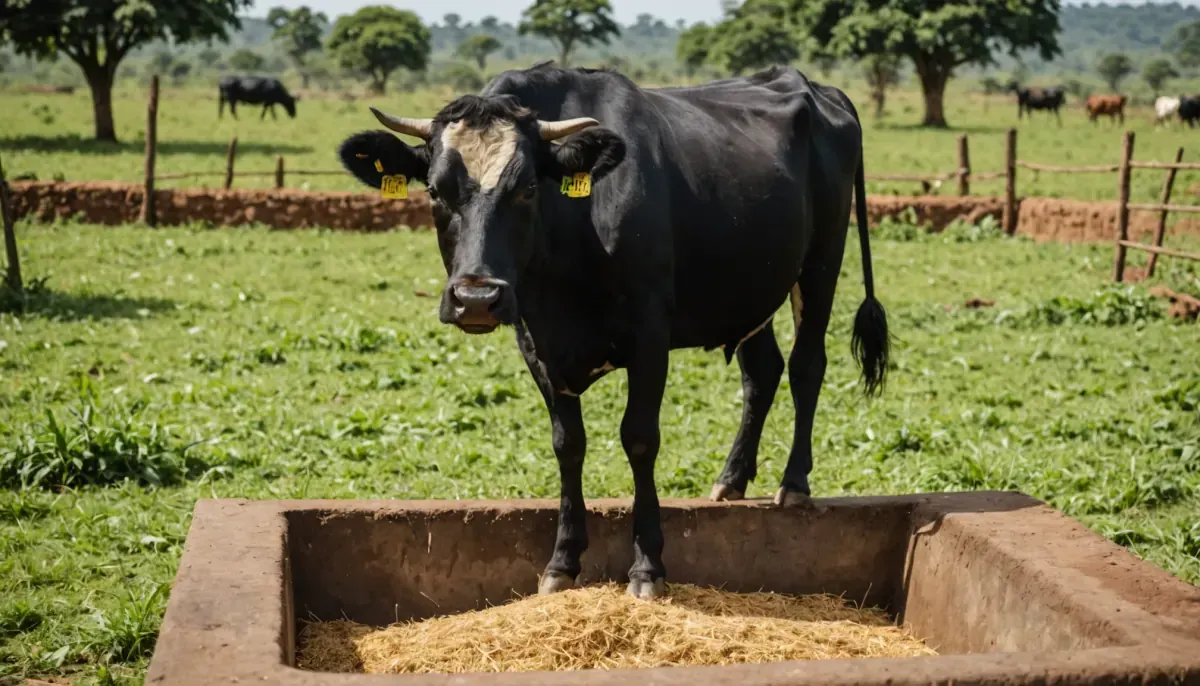
Significance of good nutrition in cattle rearing
Good nutrition matters because it decides growth, milk yield, fertility and health. A cow that is underfed grows slowly, gives less milk, comes on heat late and falls sick more often. Feed is also the largest running cost, so feeding well means feeding efficiently, not expensively. This is the first pillar of cattle nutrition and feed rations.
- Milk yield rises or falls with the ration; a dairy cow turns feed nutrients directly into milk, so output follows intake.
- Growth of calves and heifers depends on feeding; a calf given a 17.5% crude-protein booster feed (ILRI Manual 59, 2022) grows into a productive heifer sooner.
- Fertility responds to nutrition; underfed cows come on heat late, conceive late and calve at long intervals, which slows herd growth.
- Immunity and health weaken on a poor ration; undernourished cattle fall sick more easily and recover slowly from worms and disease.
- Body condition is the farmer’s gauge; reading the ribs, backbone and hips shows whether the animal is getting enough feed.
- Rumen function needs fibre; roughage keeps the rumen healthy and the cow chewing the cud, which protects digestion.
- Cost control follows from balance; matching protein and energy means no expensive ingredient is wasted, lowering the cost per litre.
- Water is part of nutrition; a ration fails without clean drinking water for digestion and milk production.
- Syllabus requirement: outcome 3.1(g) asks learners to “understand the significance of good nutrition in rearing of cattle” — an examinable outcome (NCDC, 2019).
- Dry-cow recovery matters; a dry cow must rebuild her body and grow the unborn calf, so feeding is continuous, not only at milking.
- Longevity improves with steady feeding; cows fed well through dry periods stay productive over more lactations.
- Ugandan practice: UBOS’s 2021 livestock census found keepers give cattle an average of 8.3 litres of water a day — a reminder that intake includes water, not only feed.
- Reproductive efficiency links to feeding; a cow in good condition returns to heat after calving sooner, tightening the calving interval.
- Practical skill: preparing rations and feeds is a hands-on syllabus outcome (u, s, v), not just theory to memorise.
| Area | Effect of good nutrition | Effect of poor nutrition |
|---|---|---|
| Milk | higher daily yield and a longer lactation | less milk and early drying off |
| Growth | fast, even frame in calves and heifers | stunted, slow growth |
| Fertility | early heat, short calving interval | late heat, long intervals |
| Health | stronger immunity, fast recovery | frequent sickness, slow recovery |
| Cost | efficient feed conversion per litre | wasted feed, higher cost per litre |
Common mistake: thinking “feeding a lot” equals “feeding well”. A cow can be full of dry maize stover yet starved of protein and energy. Balance matters more than volume.
Nutritional requirements of dairy cattle at different stages
Dairy cattle needs change with age and stage. A calf, a weaner, a heifer, a lactating cow and a dry cow each need a different mix of protein, energy, minerals, water and fibre. The syllabus outcome asks learners to prepare “feeds required by dairy cattle at different stages from locally available foodstuff”. Meeting these stage-by-stage needs is the core of cattle nutrition and feed rations.
- Calf (birth to weaning): the newborn must take colostrum, the first milk, then milk; a calf booster feed with a minimum 17.5% crude protein (ILRI Manual 59, 2022) supports early rumen development.
- Calf water and fibre: offer clean water and a little good hay early so the rumen builds the microbes that will later digest grass.
- Weaner (weaning to about one year): growth is the goal; the animal moves onto solid feed, quality roughage plus a growing ration, and no longer depends on milk.
- Weaner protein: the sources give a verified crude-protein figure only for calf booster (17.5%) and dairy meal (15.5%); a separate weaner figure is not stated, so none is invented here.
- Heifer (yearling to first calving): the target is steady growth toward mature size and readiness for breeding; feed quality roughage with a modest concentrate so she does not grow fat.
- Lactating cow: the highest demands of any stage; milk production calls for energy, protein, minerals and plenty of water together.
- Lactating cow concentrate: basic dairy meal carries a minimum 15.5% crude protein (ILRI Manual 59, 2022), and a homemade Kampala peri-urban ration reached 16.5% CP (EADD leaflet 6, 2010).
- Dry cow: the cow rests between lactations while the unborn calf grows; the ration is maintenance plus pregnancy, led by good roughage.
- Dry cow caution: do not let a dry cow grow fat; excess body condition at calving causes difficult calving and low milk in the next lactation.
- Mineral needs: every stage needs salt and minerals, which the syllabus links to “make mineral supplements” (outcome 3.2(d)) and which zero-grazing units supply in a mineral box.
- Water across stages: UBOS’s 2021 census records that Ugandan cattle keepers give cattle an average of 8.3 litres a day — a survey of practice, not a stated requirement.
- Protein bands to remember: the EADD leaflet classifies feeds as low (below 9%), moderate (9–18%) and high (above 18%) crude protein — a scale you can use in the exam.
- Energy versus protein: young and lactating animals need both; protein builds tissue and milk solids while energy fuels growth and milk volume.
- Stage changes feed form: milk and soft starter for the calf, dry concentrates for the adult, and conserved roughage for the dry season.
| Stage | Main aim | Feeding focus | Verified CP figure (where stated) |
|---|---|---|---|
| Calf | early growth and rumen development | colostrum, milk, calf booster, clean water | 17.5% CP calf booster feed (ILRI Manual 59, 2022) |
| Weaner | steady growth on solid feed | quality roughage plus a growing ration | not stated in the sources |
| Heifer | reach breeding size | quality roughage, modest concentrate | not stated in the sources |
| Lactating cow | peak milk output | energy plus protein plus minerals and water | 15.5% CP basic dairy meal minimum (ILRI Manual 59, 2022) |
| Dry cow | rest and fetal growth | roughage-led maintenance ration | not stated in the sources |
Exam tip: quote the two figures the syllabus sources actually give — 17.5% CP calf booster and 15.5% CP basic dairy meal (ILRI Manual 59, 2022). Do not invent protein numbers for the weaner, heifer or dry cow; say “not stated” instead.
Preparing a balanced ration from locally available foodstuff
A balanced ration supplies energy, protein, minerals, vitamins and water in the proportions an animal needs. Ugandan farmers build one from locally available foodstuffs — maize bran, cottonseed cake, wheat bran, fish meal, molasses and crop residues — mixed by calculation, usually the Pearson square. This is the centre of cattle nutrition and feed rations.
- Define a balanced ration: a feed that meets an animal’s nutrient needs in the right amounts and proportions, at the lowest cost.
- Local ingredients come first: the MAAIF Animal Feeds Policy (2004) lists maize, sorghum, cassava, sweet potatoes, cottonseed cake, soyabean, sunflower, fish, lake shells and bone ash as potential feed ingredients.
- Energy sources in Uganda: the same MAAIF policy names maize bran, bagasse and molasses as energy feed supplies.
- Protein sources in Uganda: MAAIF names cottonseed cake, sunflower cake and soybean meal as the main protein sources.
- Crude-protein values (percent dry matter) come from ILRI/EADD, Feeding dairy cattle in East Africa (2012, Appendix 2, p.87): maize bran 9.4%, cottonseed cake 33.0%, wheat bran 17.8%, fish meal 64.3%.
- More verified values: maize germ 22.6%, maize grain 11.2%, sweet potato vines 19.2%, dried cassava leaves 24.7% crude protein.
- Molasses is an energy feed, not protein: its crude protein is low (a global mean of about 5.5%, Feedipedia); use it for energy and palatability.
- The Pearson square is the exam-standard method: it blends one high-protein and one low-protein feed to a target crude protein.
- Label your basis: the crude-protein figures are on a dry-matter (% DM) basis, so the square balances protein per unit of dry matter.
- Add minerals separately: the Pearson square balances protein, not minerals, so add a salt and mineral premix or a mineral lick box.
- Quality matters as much as quantity: maize bran is commonly “adulterated with sawdust, husks, cassava, etc.” (ILRI Manual 59, 2022), so buy from a trusted miller.
- Check the processing type: cottonseed cake protein varies with extraction — the EADD sources give 33.0% for cake and 45.2% in one Kampala ration — so state which figure you used.
- Cost is part of balance: the syllabus’s feed-making outcome aims “to reduce costs”, so choose the cheaper ingredient that still meets protein.
- Record your working: in exams, marks go to the method — write the square, the parts, the percentages and the check.
Worked example — a 16% crude-protein dairy concentrate from maize bran and cottonseed cake. Requirement: prepare 100 kg of concentrate at about 16% CP using two common Ugandan feedstuffs. From ILRI/EADD, Feeding dairy cattle in East Africa (2012, Appendix 2, p.87): maize bran is 9.4% CP and cottonseed cake is 33.0% CP (both on a dry-matter basis).
The target of 16% sits between the 15.5% minimum for basic dairy meal (ILRI Manual 59, 2022) and the 16.5% CP homemade Kampala ration (EADD leaflet 6, 2010).
- Draw the square. Write the high-protein feed (cottonseed cake, 33.0%) top-left, the low-protein feed (maize bran, 9.4%) bottom-left, and the desired 16% in the centre.
- Subtract along the diagonals. Parts of cottonseed cake = 16 − 9.4 = 6.6 parts. Parts of maize bran = 33.0 − 16 = 17.0 parts. Ignore any negative sign.
- Total the parts. 6.6 + 17.0 = 23.6 parts in all.
- Convert to percentages. Cottonseed cake = 6.6 ÷ 23.6 × 100 = 27.97%, which rounds to 28%. Maize bran = 17.0 ÷ 23.6 × 100 = 72.03%, which rounds to 72%.
- Weigh a 100 kg batch. Cottonseed cake = 28 kg; maize bran = 72 kg.
- Check the crude protein. Cottonseed cake: 28 kg × 33.0% = 9.24 kg CP. Maize bran: 72 kg × 9.4% = 6.77 kg CP. Total = 9.24 + 6.77 = 16.01 kg CP in 100 kg = 16.0% CP.
The final ration is therefore 28% cottonseed cake and 72% maize bran, giving about 16.0% crude protein. Add a mineral supplement or salt lick separately, because this square balances protein only.
| Feedstuff | What it supplies | Limit or caution |
|---|---|---|
| Maize bran | moderate energy; 9.4% CP (DM) | often adulterated; about 9–12% CP in practice |
| Cottonseed cake | high protein; 33.0% CP (DM) | protein varies 23–45% with processing |
| Wheat bran / pollard | 17.8% CP (DM) | moderate energy |
| Maize germ | 22.6% CP (DM) | energy-dense |
| Fish meal | 64.3% CP (DM); ash 21.4% | costly; use sparingly |
| Molasses | energy and palatability; about 5.5% CP global mean | not a protein source |
| Sweet potato vines | 19.2% CP (DM) | feed up to 15 kg fresh per day |
| Dried cassava leaves | 24.7% CP; crude fibre 17.3% | fibrous |
| Maize stover (dry) | 3.7% CP (DM) | low-protein roughage filler |
| Calliandra / Sesbania leaves | 26.3% / 28.2% CP (DM) | legume fodder trees; harvest regularly |
Exam tip: show every line of the Pearson square. Subtract along the diagonals, total the parts, convert to percentages, then check that the blended crude protein equals the target. Method marks outweigh the final number.
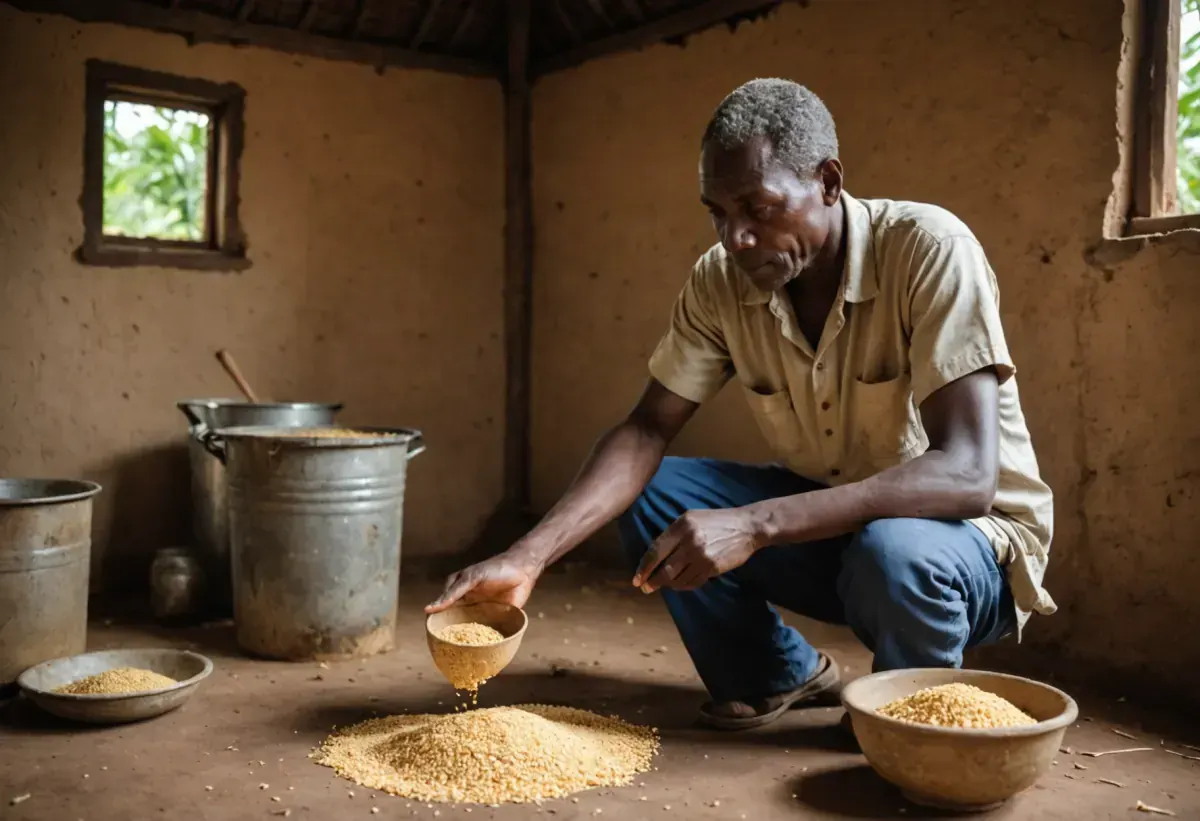
Efficient use of high-quality roughage
High-quality roughage is used efficiently when it is cut young, chopped, fed fresh and matched with a protein source. The syllabus outcome 3.1(h) asks learners to “make efficient use of high-quality roughage in rearing cattle”. Quality here means high protein and digestibility, not simply bulk. Roughage use is one half of cattle nutrition and feed rations, with concentrate the other.
- Roughage defined: bulky, fibrous plant feeds — grasses, crop residues, hay and silage — that fill the rumen and drive chewing.
- Cut napier at the right height: the EADD manual advises harvesting napier “at 1 m or every 6–8 weeks, stubble 5–10 cm”.
- Height changes protein: napier cut at 30 cm holds 9.2% CP, at 1 m it is 7.0%, and over 2 m it falls to 5.0% (ILRI/EADD 2012).
- Chop before feeding: chopped roughage reduces waste and lets the cow eat more of what is cut.
- Do not over-mature: the same napier that is 9.2% CP young drops to 5.0% CP when left over 2 m — late cutting wastes protein.
- Pair grass with legumes: grasses carry 5–19% CP while legumes carry 15–34% CP, so mixing the two lifts the ration’s protein.
- Feed fresh daily: zero-grazing units cut and carry fresh napier to the troughs every day.
- Use sweet potato vines well: they reach 19.2% CP and can be fed up to 15 kg fresh per day (ILRI/EADD 2012).
- Conserve the surplus: excess wet-season grass is preserved as hay or silage for the dry season.
- Watch napier stunt: this disease occurs “in Uganda, in areas bordering western Kenya”; uproot and burn diseased stools and use clean planting material (ILRI/EADD 2012).
- Choose the right species: Rhodes grass (6.3% CP) suits grazing and hay; lablab (16.8% CP whole plant) adds protein.
- Maize stover is a filler, not a main feed: dry stover is only 3.7% CP, so it must be paired with a legume or concentrate.
- Keep troughs and storage clean: mouldy or soiled roughage loses palatability and can sicken cattle.
- Match supply to demand: cut only what the herd will finish so fresh fodder does not wilt and lose quality.
| Roughage | Quality (CP where stated) | When to use it |
|---|---|---|
| Napier grass | 6.0% whole; 9.2% at 30 cm, 5.0% over 2 m | daily green chop in zero-grazing; cut at 1 m |
| Rhodes grass | 6.3% CP | grazing pasture and hay-making |
| Maize stover (dry) | 3.7% CP | dry-season filler after grain harvest |
| Hay | CP depends on the grass and cutting stage — not a fixed figure | conserved dry-season feed |
| Silage | CP depends on the crop and fermentation — not a fixed figure | conserved wet-season surplus |
| Legume hay | legumes range 15–34% CP | protein boost mixed with grass |
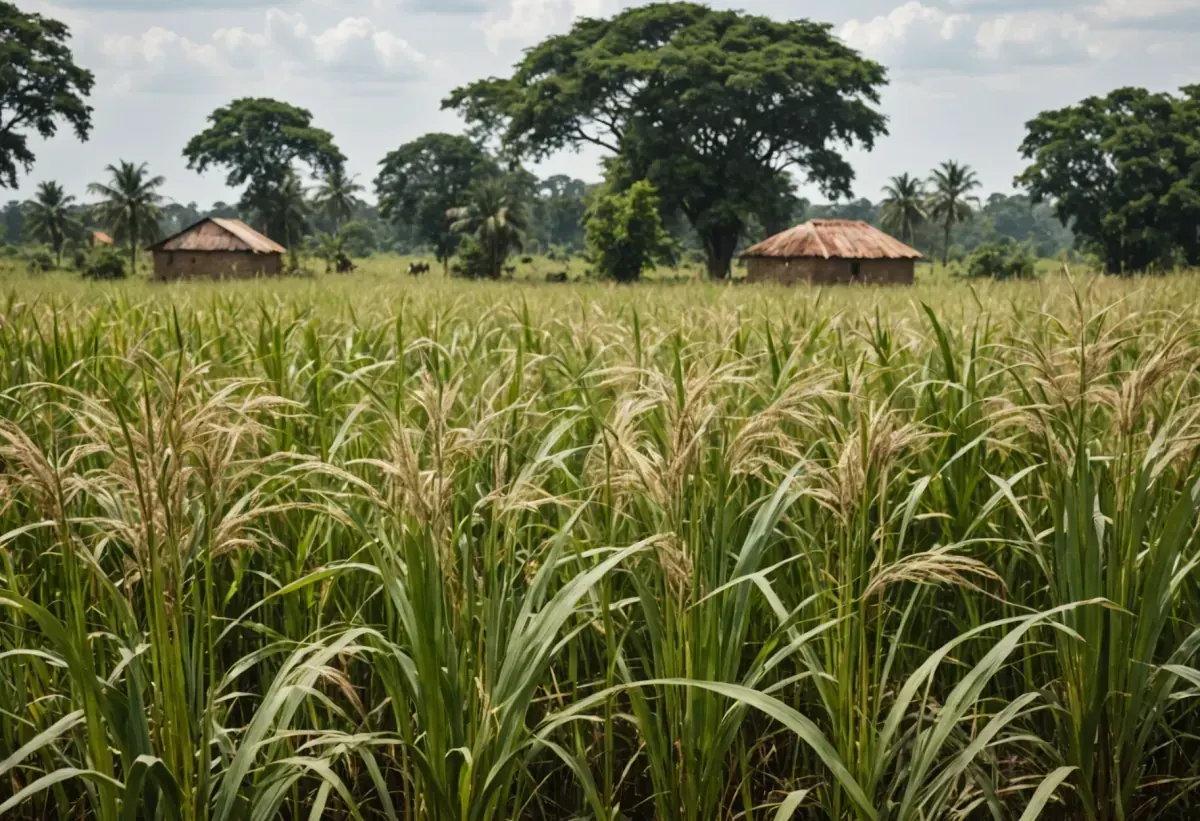
Common mistake: feeding mature, tall napier and expecting high protein. At over 2 m tall, napier holds about 5.0% CP; cut at 1 m for better quality.
Value of roughage in ruminant feeding
Roughage matters because ruminants are built to ferment fibre. The rumen’s microbes break down grass into energy and microbial protein, but only if fibre, water and protein are present together. Roughage also keeps the cow chewing, which buffers the rumen and protects health. This closes the cattle nutrition and feed rations picture.
- Ruminants need fibre: cattle are ruminants whose rumen microbes digest fibrous feed that a pig or chicken cannot.
- Roughage versus concentrate: roughage is bulky and fibrous (grass, stover, hay, silage); concentrate is dense in energy or protein (grains, brans, oilseed cakes, fish meal, molasses).
- Roughage drives cud-chewing: chewing the cud (rumination) produces saliva that buffers the rumen and prevents acidity.
- Concentrate adds the extras: concentrates top up energy and protein that grass alone may lack, especially for milking cows.
- Grass-versus-legume bands: grasses hold 5–19% CP and legumes 15–34% CP (ILRI/EADD 2012), which is why legumes are mixed into grass.
- Microbial protein: rumen microbes turn low-quality nitrogen into microbial protein the cow digests later in the gut.
- Fill value: roughage gives the “full” feeling and keeps the digestive tract moving, preventing digestive upsets.
- Cheapness: roughage is usually the cheapest feed on a Ugandan farm, especially napier cut on-farm.
- Dry-season value: conserved roughage (hay, silage) carries the herd through dry months when grass is scarce.
- Napier is the workhorse: cut young it supplies 9.2% CP and bulk; it is Uganda’s standard zero-grazing fodder.
- Legume roughage lifts protein: calliandra leaves (26.3% CP) and sesbania leaves (28.2% CP) add protein to a grass ration.
- Fibre protects milk fat: enough effective fibre in the ration supports milk fat and normal rumen fermentation.
- Balance the two: too much concentrate and too little roughage causes acidosis; too much poor roughage and too little concentrate limits yield.
- Syllabus value: outcome 3.1(h) makes “efficient use of high-quality roughage” an examinable skill, so define and compare the two feeds.
| Feature | Roughage | Concentrate |
|---|---|---|
| Nature | bulky, fibrous, high fibre | dense, low fibre |
| Ugandan examples | napier, Rhodes grass, maize stover, hay, silage | maize bran, cottonseed cake, fish meal, molasses |
| Main job | fill the rumen, drive chewing, supply fibre | supply energy and protein |
| Typical protein | grasses 5–19% CP; legumes 15–34% CP | cottonseed cake 33.0%; fish meal 64.3% CP |
| Cost | usually low, on-farm | higher, often bought |
Exam tip: define roughage and concentrate in one sentence each, then give a Ugandan example of each. That single contrast earns easy marks and appears in almost every cattle-nutrition paper.
Frequently asked questions about cattle nutrition and feed rations
What is a balanced ration for cattle?
A balanced ration is feed that supplies energy, protein, minerals, vitamins and water in the amounts an animal needs for its age and stage. It matches what you give to what the cow requires, using the cheapest available ingredients, so the animal produces well without wasting feed or money.
What is the difference between roughage and concentrate?
Roughage is bulky, fibrous plant feed such as napier grass, maize stover, hay and silage; it fills the rumen and drives chewing. Concentrate is dense in energy or protein, such as maize bran, cottonseed cake, fish meal and molasses. Roughage supplies fibre; concentrate tops up energy and protein.
How do I use a Pearson square to mix cattle feed?
Put the high-protein feed top-left and the low-protein feed bottom-left, with the target protein in the centre. Subtract across the diagonals to get parts, total them, and convert to percentages. Check that the blended crude protein equals your target before weighing the ingredients.
What is the best roughage for dairy cows in Uganda?
Napier grass is the standard zero-grazing fodder. Cut at about 1 m tall it holds 7.0% crude protein, and cut at 30 cm it reaches 9.2%. Mix it with a legume such as calliandra or lablab to lift the protein of the whole ration.
Why does napier grass lose protein as it grows taller?
As napier matures it develops more stem and fibre and less leaf, so the protein is diluted. Cut at 30 cm it has 9.2% crude protein, but left over 2 m it drops to 5.0%. That is why farmers cut young and often.
How much protein does a lactating cow need?
The syllabus sources give a minimum of 15.5% crude protein for basic dairy meal, and a Kampala peri-urban homemade ration reached 16.5%. A separate exact figure for the lactating cow’s whole diet is not stated, so avoid inventing one.
What is silage and why do farmers make it?
Silage is green forage that is chopped, compacted and sealed so it ferments without air, preserving moisture and nutrients. Farmers make it to store wet-season grass for the dry season, when fresh pasture is scarce and cattle would otherwise lose condition.
Which locally available feeds can I use to make cattle feed in Uganda?
Use maize bran, cottonseed cake, wheat bran, fish meal and molasses for the concentrate, and napier, sweet potato vines, calliandra and sesbania for roughage. MAAIF’s Animal Feeds Policy lists maize, sorghum, cassava, sweet potatoes, cottonseed cake, soyabean and sunflower as potential ingredients.
Key terms and revision summary
These cattle nutrition and feed rations notes turn the syllabus outcomes 3.1(g) and 3.1(h) into revision material. Learn the definitions, the two verified protein figures and the Pearson square method, then practise on past questions.
| Term | Definition |
|---|---|
| Balanced ration | feed that meets an animal’s nutrient needs in the right proportions |
| Roughage | bulky, fibrous feed — grass, stover, hay, silage |
| Concentrate | energy- or protein-dense feed — grains, brans, cakes, fish meal |
| Crude protein (CP) | nitrogen multiplied by 6.25, an estimate of a feed’s protein content |
| Dry matter (DM) | feed minus its water; CP is often expressed on a % DM basis |
| Pearson square | a diagonal method blending two feeds to a target protein |
| Silage | fermented, air-sealed green forage |
| Hay | sun-dried, conserved grass or legume |
| Napier grass | Uganda’s main zero-grazing fodder grass |
| Maize stover | dry maize stems and leaves left after harvest |
Exam-style questions
- Define roughage and concentrate, and give two Ugandan examples of each. Outline: roughage is bulky, fibrous feed (napier, maize stover); concentrate is dense energy or protein feed (maize bran, cottonseed cake).
- Use a Pearson square to find the parts of maize bran (9.4% CP) and cottonseed cake (33.0% CP) for a 16% CP ration. Outline: cottonseed cake parts = 16 − 9.4 = 6.6; maize bran parts = 33 − 16 = 17.0; total 23.6; so 28% cottonseed cake and 72% maize bran, checking to 16.0% CP.
- State four reasons why good nutrition matters in cattle rearing. Outline: milk yield, growth, fertility and health, each with a one-line reason.
- Explain why napier cut at 30 cm differs from napier left above 2 m. Outline: 9.2% CP at 30 cm versus 5.0% CP over 2 m; stem and fibre dilute protein as the grass matures; cut at 1 m.
- Compare the feeding needs of a calf, a heifer, a lactating cow and a dry cow. Outline: calf needs milk and a 17.5% CP booster; heifer grows on roughage plus a modest concentrate; lactating cow needs peak energy and protein (15.5% CP dairy meal minimum); dry cow needs maintenance and fetal growth on roughage.
For more practice, work through the Agriculture past papers and cross-check your method against the formulating and blending compound feeds notes and the classification of livestock feeds and raw ingredients guide.
Leave a Reply