
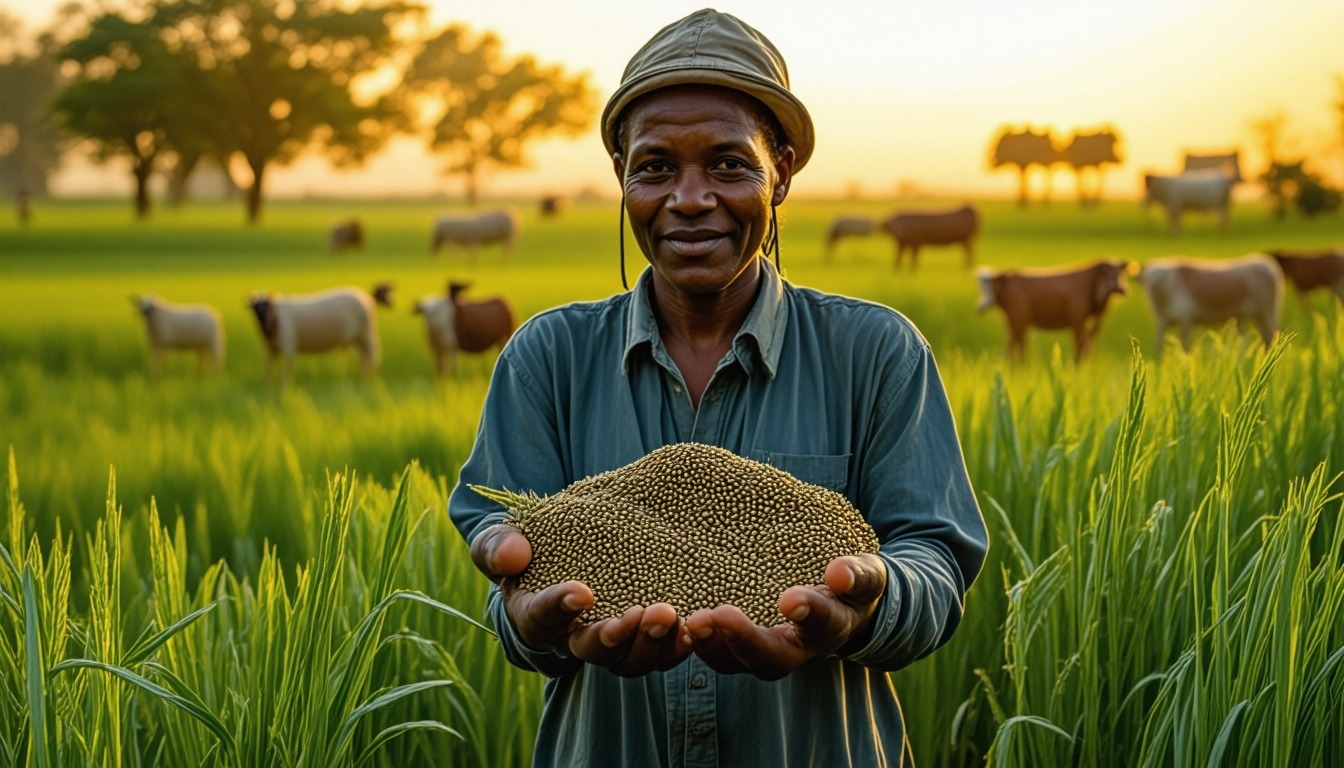
Introduction
Livestock feeding is the cornerstone of productive and profitable animal agriculture. The science of animal nutrition revolves around providing balanced diets that meet the physiological needs of animals while optimizing growth, reproduction, and health. To achieve this, farmers, nutritionists, and feed millers must understand the array of available feedstuffs, their nutritional composition, and the specific requirements of different animal species. This article explores the systematic classification of livestock feeds and raw ingredients, providing an academic yet practical overview of range and types of available livestock feeds, feed ingredients and nutritional values, specific nutritional requirements of different animals, and selecting raw materials for feed processing. By mastering these core concepts, stakeholders can enhance feed efficiency, reduce costs, and promote sustainable animal production.
Range and Types of Available Livestock Feeds
The diversity of livestock feeds is vast, ranging from simple pasture grasses to complex compound feeds. Feeds can be classified based on origin, composition, and purpose. Understanding the full spectrum of feed types is essential for ration formulation and on-farm feeding strategies.
1. Roughages and Forages
Roughages are plant-based feeds with high fiber content, typically exceeding 18% crude fiber on a dry matter basis. They are the foundation of ruminant diets and provide bulk and energy via microbial fermentation.
- Green forages: Fresh grasses, legumes, and leafy crops. Examples include napier grass, alfalfa, clover, and oats. They are rich in vitamins and minerals, with moderate protein depending on maturity.
- Dry roughages: Sun-dried or artificially dried forages such as hay and straw. Hay from legumes (e.g., lucerne) has high protein, while cereal straws are low in quality and digestibility.
- Silage: Fermented, high-moisture stored forages. Maize silage, grass silage, and legume silage are common. Silage preserves nutrients through anaerobic fermentation, making it a reliable winter feed.
- Crop residues: Stalks, husks, and leaves left after grain harvest. These include maize stover, wheat straw, and groundnut haulms. They are abundant but low in protein and energy, often requiring supplementation.
2. Concentrates
Concentrates are feeds with high nutrient density and low crude fiber (below 18%). They are further divided into energy and protein feeds.
- Energy feeds: Rich in easily digestible carbohydrates and fats. Cereal grains like maize, barley, sorghum, and wheat are primary energy sources. High-moisture grains and molasses also fall under this category.
- Protein feeds: Contain more than 20% crude protein. Oilseed cakes (soybean meal, groundnut cake, sunflower cake), fish meal, blood meal, and legume seeds (e.g., lupins) are common. Some protein feeds are of animal origin, such as meat and bone meal.
- By-product feeds: Industrial residues such as wheat bran, rice bran, brewers’ grains, and distillers’ dried grains. These often provide both energy and moderate protein, making them cost-effective.
3. Supplements and Feed Additives
Supplements are used to balance specific nutrients, while additives are non-nutritive products that improve feed utilization, preservation, or animal health.
- Mineral supplements: Limestone, dicalcium phosphate, magnesium oxide, and trace mineral premixes. They correct deficiencies in calcium, phosphorus, selenium, zinc, etc.
- Vitamin supplements: Synthetic or natural vitamins added to compensate for losses during processing or to meet high demands in stressed animals.
- Non-protein nitrogen (NPN): Urea and ammonium salts used in ruminant diets to supply nitrogen for microbial protein synthesis.
- Feed additives: Antibiotics (growth promoters), probiotics, enzymes, antioxidants, mold inhibitors, and flavoring agents. These improve feed efficiency, gut health, and product quality.
4. Special Feeds
- Milk replacers: Formulated for young calves, lambs, and piglets when maternal milk is insufficient. They contain dried skim milk, whey, and vegetable fats.
- Pet foods: Complete, balanced diets for dogs and cats, often extruded or canned.
- Aqua feeds: Pellets or extruded feeds for fish and shrimp with specific buoyancy and water stability.
5. Classification by Nutrient Content
- Basal feeds: High in energy, low in protein, such as maize and molasses.
- Supplemental feeds: High in protein or minerals, such as oilseed cakes and phosphate salts.
- Complete feeds: Nutritionally balanced mixtures intended as the sole diet, e.g., compound pellets for poultry or dairy cows.
Classification Systems for Livestock Feeds
Various systems exist to categorize feedstuffs systematically, permitting standardized identification and rational use. The most renowned is the International Feed Number (IFN) system, which assigns a six-digit code to each feed. Another common scheme divides feeds into eight classes: dry forages and roughages, pasture/range plants, silages, energy feeds, protein supplements, mineral supplements, vitamin supplements, and additives. This classification simplifies feed formulation and database management.
Feed Ingredients and Nutritional Values
Each feed ingredient possesses a unique chemical composition that dictates its acceptance and value in animal diets. The primary nutritional parameters include moisture, crude protein (CP), ether extract (EE), crude fiber (CF), nitrogen-free extract (NFE), minerals, and vitamins. Energy is often expressed as Total Digestible Nutrients (TDN), Digestible Energy (DE), Metabolizable Energy (ME), or Net Energy (NE). The table below illustrates the nutritional values of commonly used feed ingredients.
| Ingredient | Dry Matter | Crude Protein | TDN | Calcium | Phosphorus |
|---|---|---|---|---|---|
| Maize grain | 88 | 9 | 85 | 0.02 | 0.30 |
| Soybean meal | 89 | 48 | 73 | 0.25 | 0.60 |
| Wheat bran | 89 | 15 | 78 | 0.10 | 1.20 |
| Alfalfa hay | 90 | 17 | 58 | 1.20 | 0.25 |
| Fish meal | 92 | 65 | 72 | 5.00 | 3.00 |
| Molasses | 75 | 4 | 70 | 0.10 | 0.10 |
| Limestone | 99 | 0 | 0 | 38.00 | 0.02 |
Beyond these staples, alternative protein sources like insect meal (black soldier fly larvae) are emerging as sustainable ingredients, offering up to 60% crude protein. Similarly, algae and yeast products are valued for bioactive compounds and high protein content. Understanding the exact nutritional value of each batch of raw material is critical because natural variation occurs due to variety, climate, soil, and storage conditions. so, proximate analysis (Weende scheme) and near-infrared spectroscopy (NIR) are routinely used to predict nutrient composition.
Anti-Nutritional Factors
Some ingredients contain substances that interfere with nutrient utilization. Tannins in sorghum, phytic acid in cereal bran, trypsin inhibitors in raw soybean, gossypol in cottonseed cake, and glucosinolates in rapeseed meal must be inactivated or limited through processing or dietary inclusion caps. For instance, diets for monogastrics shouldn’t exceed 10-15% untreated cottonseed cake due to gossypol toxicity.
Specific Nutritional Requirements of Different Animals
Animals have distinct nutritional needs based on species, age, production stage, and physiological status. These requirements are best expressed as a percentage of the diet or grams per day. Below we discuss the unique needs of cattle, sheep/goats, poultry, and swine.
Cattle (Beef and Dairy)
Ruminants rely on microbial digestion in the rumen. so, their diets must include adequate roughage (at least 25-30% fiber) to maintain rumen function. Dairy cows in early lactation have remarkably high energy demands—sometimes exceeding 1.6 Mcal NE_l/kg of dry matter—and require about 17-18% crude protein. Beef cattle on finishing diets need lower fiber (10-20%) and higher energy to promote marbling. Mineral requirements include calcium (0.6% for lactating cows), phosphorus (0.4%), magnesium (0.2%), and sodium (0.25%). Trace minerals such as zinc, copper, and selenium are vital for immune function and reproduction.
Sheep and Goats
These small ruminants are often more efficient in using fibrous feeds than cattle. Their nutritional requirements vary with wool growth, milk production, and multiple foetuses. Pregnant ewes require elevated energy and protein in late gestation (90% of fetal growth occurs in the last 6 weeks). Protein needs range from 12-16% of diet dry matter, while fiber should be above 20%. Copper is essential but toxic in sheep at low levels (threshold 25 mg/kg), so specialized mineral mixtures are necessary.
Poultry (Layers and Broilers)
Poultry have simple stomachs and require highly digestible, concentrated diets. Broilers need high-energy, high-protein rations: starter (22-24% CP, 3000 kcal ME/kg), grower (20-22%), and finisher (18-20%). Layers require ample calcium (3.5-4.0%) for eggshell formation, but too much phosphorus can cause calcium depletion. Amino acid profiles, especially lysine and methionine, are critical because cereals are deficient in these. Enzymes like phytase are frequently added to enhance phosphorus utilization. Water intake is also strictly correlated with feed intake.
Swine (Pigs)
Pigs, like chickens, are monogastric and need well-balanced, nutrient-dense feeds. Gestating sows need 12-14% CP, while lactating sows require 18-20% CP. Grower-finisher pigs respond to crystalline amino acids (lysine, threonine, tryptophan) to lower nitrogen excretion. Fiber should be limited to 3-5% for high-energy diets. Essential fatty acids (linoleic acid) are needed for skin health and growth. Starter piglets (up to 20 kg) benefit from milk-derived ingredients due to enzyme immaturity.
Other Animals (Horses, Rabbits, Fish)
- Horses: Their hindgut fermentation allows them to digest fiber, but they are sensitive to starch overload; diets are forage-first with moderate grain concentrates.
- Rabbits: Require high fiber (15-20%) to prevent digestive disorders; caecotrophy supplements B-vitamins and protein.
- Fish: Coldwater species like trout need high protein (40-50%) and fat (15%); warmwater fish like tilapia can utilize plant proteins and carbohydrates more efficiently.
Always consult established standards such as the National Research Council (NRC) or Ensminger’s Feeds & Nutrition to determine precise nutrient requirements for your specific animal breed and production environment.
Selecting Raw Materials for Feed Processing
Selecting the right raw materials is a multidimensional decision that affects feed quality, animal performance, and economics. Feed millers and farmers must evaluate each ingredient against several criteria before inclusion in a formulation.
Key Selection Criteria
- Nutritional value: The ingredient must supply the targeted nutrients in adequate quantities and be digestible by the species. for instance, vegetable proteins are ideal for monogastrics if balanced for amino acids.
- Cost: The price per unit of nutrient (e.g., cost per ton of crude protein) is more important than the absolute price. Local by-products may be cheaper and equally valuable.
- Palatability: Animals must readily consume the feed. Molds, rancid fats, or bitter compounds reduce intake.
- Safety: Raw materials should be free from mycotoxins (e.g., aflatoxin, vomitoxin), pesticide residues, heavy metals, and pathogenic bacteria. Aflatoxin B1 is highly carcinogenic and immunosuppressive.
- Processing characteristics: Particle size, bulk density, and flowability affect mixing and pelleting. Ingredients that are dusty or bridge in bins complicate feed manufacturing.
- Availability and storage: Consistent supply throughout the year and ease of storage (dry, cool) reduce the risk of nutrient degradation.
- Legal and environmental constraints: Some countries ban animal proteins in ruminant feeds, and the feedlot industry faces scrutiny over phosphorus excretion.
Quality Assurance Practices
Prior to acceptance, raw materials should be sampled and subjected to laboratory analysis. Rapid test kits (e.g., ELISA) for mycotoxins, moisture meters, and density tests offer on-the-spot screening. Regular supplier audits and feed safety programs like HACCP (Hazard Analysis and Critical Control Points) are essential in modern feed production. Storage should be managed to maintain quality: grains kept at <14% moisture, protein meals in ventilated silos, and fats stored with antioxidants.
Formulation and Mixing
Once ingredients are selected, they are proportioned using linear programming to meet nutrient specifications at minimal cost. The formulator must account for ingredient variability by including safety margins (e.g., 2-5% above NRC requirements). Thorough mixing ensures uniformity; the coefficient of variation (CV) for trace nutrients should be less than 10%. Pelleting or extrusion can improve nutrient digestibility and hygiene.
Conclusion
The classification of livestock feeds and raw ingredients is a dynamic and essential field that integrates animal physiology, feed chemistry, and economics. By understanding the range and types of available livestock feeds—from forages to supplements—and their feed ingredients and nutritional values, managers can craft diets that meet the specific nutritional requirements of different animals, thereby maximizing productivity and welfare. Moreover, meticulous selecting raw materials for feed processing ensures safety, cost-effectiveness, and consistency. As global demand for animal protein increases, the efficient and sustainable use of feed resources will remain pivotal. This guide serves as a foundational reference for students, agribusiness professionals, and farmers seeking to optimize livestock nutrition.
Frequently Asked Questions
What is the primary difference between roughages and concentrates?
Roughages are high in fiber (over 18% crude fiber) and include pasture, hay, and silage, providing bulk and promoting rumen health. Concentrates are low in fiber and high in energy or protein, such as grains and oilseed cakes, and are used to increase nutrient density of the diet.
How are feed ingredients tested for nutritional value?
Laboratory methods include proximate analysis for moisture, protein, fat, fiber, and ash; bomb calorimetry for energy; and amino acid analysis via HPLC. Near-infrared spectroscopy (NIR) offers rapid, non-destructive screening of many nutrients simultaneously.
What are the signs of a nutrient deficiency in animals?
Common signs include poor growth, reduced milk yield, dull coat, infertility, weak bones (rickets or osteomalacia), and impaired immune response. for instance, vitamin A deficiency leads to night blindness in cattle, whereas calcium deficiency causes milk fever in dairy cows around calving.
Can one feed formula work for all animal species?
No. Different species have distinct digestive systems and metabolic needs. For instance, ruminants can utilize urea and high-fiber feeds, whereas poultry and pigs can’t. Formulating a universal feed would either under- or over-supply nutrients, leading to inefficiencies and health issues.
What are the best raw materials for small-scale feed processing?
For smallholders, locally available materials such as maize, soybean meal, rice bran, and vegetable waste are optimal. These are cost-effective and accessible. It is crucial to balance them with a vitamin-mineral premix, and to analyze for mold and aflatoxins.
Why is particle size important in feed processing?
Particle size affects surface area, nutrient digestibility, and mixing uniformity. For piglets, fine grinding improves digestion, but for dairy cows, too fine a grind can reduce rumen pH and fiber utilization. Ideal particle size varies by species and production stage.
How does feed storage impact nutritional quality?
Improper storage can lead to moisture-induced mold growth, rancidity of fats, and loss of vitamins. Storing feeds in cool, dry, well-ventilated areas and using preservatives like organic acids can extend shelf life and maintain nutrient integrity.



Leave a Reply