
Career choice and personal fulfillment belong together: a person finds lasting satisfaction when the work chosen matches the talents God gave and the values the person holds. In Uganda, a Senior 3 learner can follow many honest paths, including teaching, nursing, farming, market vending, boda-boda riding and running a mobile money agency.
A wise career decision does not chase only the biggest salary; it weighs ability, service to the community and personal happiness. These notes follow the Senior 3 CRE themes set out by Uganda’s National Curriculum Development Centre (NCDC). They also show why voluntary work builds the character that makes any career satisfying. Use the notes, comparison tables and exam tips to prepare your CRE answers.

Utilizing personal talents in making career choices
Utilising personal talents in making career choices means noticing what you do well and enjoy, then matching that strength to honest work you can learn and sustain. A talent is an ability God gives to be used, not buried. In Matthew 25:14-30 the master gives “to each according to his own ability” and expects every servant to use the gift. Talents therefore sit at the centre of career choice and personal fulfillment.
- Talent identification. A learner identifies talents by noticing what comes easily: writing essays, solving numbers, leading a school club, repairing radios or singing in the church choir.
- Ability differs by person. Matthew 25:15 records that the master gave different talents “to each according to his own ability,” so no learner should copy a friend’s career blindly.
- Interest and enjoyment. A talent usually shows itself through enjoyment, because you practise willingly what you love, whether it is growing vegetables or keeping accounts for a SACCO.
- School subjects as clues. Steady effort and good marks in particular subjects, such as Agriculture, Mathematics or Art, point toward careers like farming, engineering or design.
- Guidance from teachers and parents. Honest advice from teachers, parents and career counsellors helps a learner separate a passing dream from a realistic, sustainable career.
- Matching talent to market demand. In Uganda a talent is useful when it meets a community need, such as tailoring, phone repair, motor mechanics or mobile money agency work.
- Faithful use of small beginnings. The servants who used their talents were praised and given more, which teaches a learner to develop a small skill before expecting a big job.
- Avoid burying talent through fear. The servant who hid his one talent was condemned for fear and laziness, a warning against wasting ability while waiting for the perfect job.
- Practice and training. Talent is raw material; a gifted footballer still trains daily, and a gifted learner still needs formal study or an apprenticeship to become employable.
- Honest self-assessment. A learner asks three questions: What can I do well? What do I enjoy? What does my community need? The overlap of the three points to a fitting career.
- God as the giver of ability. Recognising talent as a gift from God makes career choice an act of stewardship rather than mere self-promotion or chasing prestige.
- Career choice is revisable. A young person may discover a new talent through school clubs, holiday work or church service, so career direction can grow as the person matures.
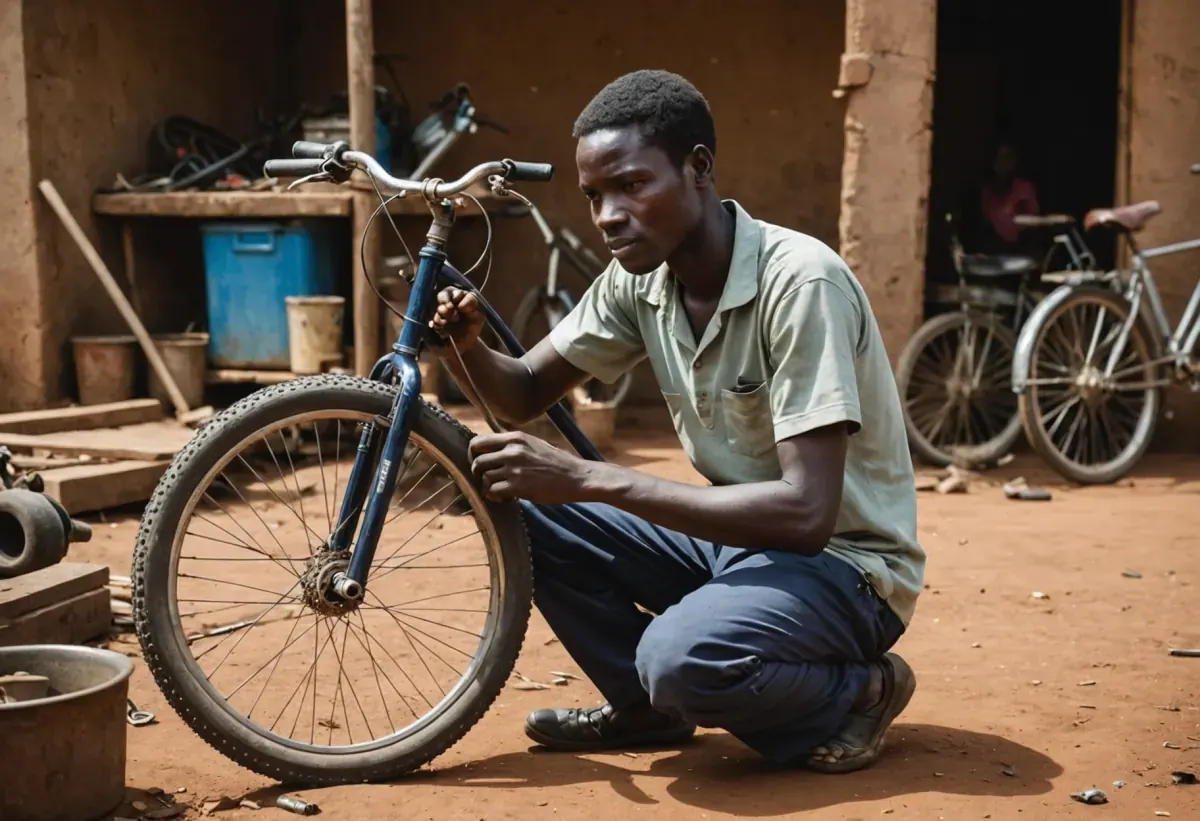
- East African examples. A boy who mends bicycles for neighbours may become a mechanic, and a girl who keeps the family produce records may grow into an accountant or a SACCO treasurer.
| Talent or strength | Possible career path | How to develop it |
|---|---|---|
| Clear speaking and patience | Teacher or catechist | Lead class discussions; train as a teacher |
| Working with numbers | Accountant, SACCO clerk, shop cashier | Study Mathematics; keep church or school accounts |
| Working with hands and tools | Mechanic, carpenter, electrician | Apprentice at a local garage or workshop |
| Growing crops and animals | Farmer, veterinary assistant | Work in the family garden; study Agriculture |
| Caring for the sick | Nurse, clinical officer, caregiver | Volunteer at a health centre; study Biology and Chemistry |
| Selling and serving customers | Market vendor, shopkeeper, mobile money agent | Help in a family shop; learn customer care |
Exam tip: When a question asks how talents guide career choice, structure your answer as define talent, give a biblical example from Matthew 25:14-30, name a Ugandan example, then state one benefit. Practise the same structure with CRE past papers.
Ideals of responsibility and dedication in work
Responsibility is accepting a duty and answering for its results; dedication is staying faithful to that duty over time. In Uganda, a responsible worker arrives on time, finishes the job and guards the money or tools entrusted to him. Scripture roots this in creation, where God placed the man in the garden “to cultivate and keep it” (Genesis 2:15).
- Responsibility defined. Responsibility is the readiness to accept a duty and answer for the result, whether sweeping a classroom, guarding a shop or delivering goods on a boda-boda.
- Dedication defined. Dedication is steady commitment over time; it keeps a teacher marking books late and a nurse checking patients even when tired.
- Work as stewardship. Genesis 2:15 says God put the man in the garden “to cultivate and keep it,” showing that work is caring for what God has entrusted to us.
- Punctuality. Arriving on time respects other people’s time and money, as when a market vendor opens early so customers and wholesalers are not kept waiting.
- Completing tasks. A responsible worker finishes what he starts, so a carpenter completes the desk rather than leaving it half-made for the client to finish.
- Caring for resources. Dedicated workers look after tools, stock and money; a mobile money agent who balances daily is trusted with more customers.
- Honesty in reporting. Responsibility includes reporting mistakes and shortages truthfully instead of hiding them, because hidden errors grow into bigger losses.
- The ant’s self-drive. Proverbs 6:6-8 points to the ant, which works without a supervisor and “provides her bread in the summer, and gathers her food in the harvest.”
- Working without constant supervision. A dedicated worker does not need someone standing over him; he digs the garden and serves customers even when the boss is away.
- Faithful in small duties. Matthew 25:21 praises the servant as “good and faithful” over a few things before he is set over many, so small duties train for big ones.
- Loyalty to the employer. Dedication means defending the employer’s good name and not stealing time, stock or secrets, because worker and employer depend on each other.
- Responsibility beyond pay. A responsible worker serves the community through the job, so a clinic cleaner who sanitises properly protects patients, not just earns a wage.
- Consequences of irresponsibility. Neglecting duty brings loss and shame, as a lazy guard leaves property unguarded and a careless cook wastes food that a family needs.
- Building a good name. A reputation for responsibility opens doors, because Ugandan employers and customers recommend people they can trust with money and goods.
| Situation | Responsible worker | Irresponsible worker |
|---|---|---|
| Morning arrival | Reports early and prepares tools | Arrives late and gives excuses |
| A difficult task | Asks for help and keeps trying | Abandons the work halfway |
| Money or stock | Records and balances honestly | Mixes accounts or takes stock |
| A mistake | Reports and corrects it | Hides it and blames others |
| Supervision | Works well even when alone | Works only when watched |
| The community | Sees the job as service | Sees only personal pay |
Common mistake: Learners write that dedication means working long hours. Dedication is faithfulness to the task, not just long hours. Link it to reliability and finishing the job, and add Genesis 2:15 or Proverbs 6:6-8.
Importance of determination honesty and co-operation
Determination is refusing to give up; honesty is speaking and acting truthfully with people and their property; co-operation is working together toward a shared goal. Together these three ideals build trust in a Ugandan workplace where people depend on one another, from family gardens to SACCO meetings and market stalls.
- Determination defined. Determination is the inner strength to keep trying after failure, as a student retakes a failed paper or a farmer replants after a dry season.
- Honesty defined. Honesty is telling the truth and dealing fairly with money, goods and information, so a vendor gives correct change and full measure.
- Co-operation defined. Co-operation is joining effort with others toward a common goal, as neighbours clear a field together or a church choir practises as one team.
- Perseverance in scripture. Galatians 6:9 urges, “Let us not be weary in doing good, for we will reap in due season, if we don’t give up.”
- Honesty as sowing truth. Galatians 6:7 warns, “Don’t be deceived. God is not mocked, for whatever a man sows, that he will also reap,” so dishonest gain brings its own harvest.
- Fair wages and honest dealings. Leviticus 19:13 says, “You shall not oppress your neighbor, nor rob him,” which in Uganda means paying a casual labourer his agreed wage on time.
- Bearing one another’s burdens. Galatians 6:2 says, “Bear one another’s burdens, and so fulfill the law of Christ,” the foundation of teamwork and mutual help.
- Determination and delayed reward. Many good results come late, so a learner who persists through revision and a trader who persists through slow seasons both reap in due time.
- Honesty builds trust. Customers return to a vendor who gives correct change, and members save with a SACCO treasurer who records every shilling faithfully.
- Co-operation in family and community work. In many Ugandan homes, siblings share garden, cooking and fetching water, teaching the teamwork that workplaces later require.
- Co-operation in school and church. School clubs, sports teams and church fundraising train learners to plan, share tasks and credit the whole group, not only themselves.
- Determination overcomes obstacles. A determined learner finds a way around obstacles, such as studying by lamp where electricity fails or revising with a friend when books are few.
- Honesty costs now but pays later. Refusing a bribe or returning lost money may lose a quick gain but protects a clean name that employers and communities trust.
- The three ideals together. Determination keeps the worker going, honesty keeps the work clean, and co-operation multiplies the result, so all three should appear together in answers.
| Ideal | Meaning | Ugandan example | Result |
|---|---|---|---|
| Determination | Persisting despite difficulty | Farmer replants after a dry season | Harvest in due season |
| Honesty | Truthful and fair dealing | Vendor gives correct change | Customer trust |
| Co-operation | Working together | Neighbours clear a field | Faster, bigger result |
Exam tip: When explaining Galatians 6:9, connect “due season” to patience in results. A learner who writes only “do not give up” misses the harvest idea the verse contains. Test yourself with CRE quizzes.
Relationship between work and personal happiness
Work and personal happiness are connected because a job done well brings provision, dignity and the joy of serving others. A Ugandan who works honestly can feed a family, pay school fees and rest with a clear conscience. The faithful servants in Matthew 25 entered “the joy” of their lord, showing that faithful work leads to joy while idleness and dishonesty bring worry.
Career choice and personal fulfillment both rest on this link between honest work and joy.
- Work provides for needs. Work gives the income to buy food, pay rent and school fees, and meeting these needs removes a major cause of worry and unhappiness.
- Work gives dignity. Earning an honest living lets a person stand with self-respect, unlike begging or stealing, which bring shame even when they bring money.
- The joy of a job well done. Matthew 25:21 invites the faithful servant to “Enter into the joy of your lord,” linking faithful work directly to joy and reward.
- Contentment over greed. 1 Timothy 6:6 teaches that “godliness with contentment is great gain,” so happiness comes from being content with honest results, not endless craving.
- Laziness brings need and shame. Proverbs 6:9-10 rebukes the sluggard for too much sleep and folded hands; idleness slowly takes away provision, so the idle person falls into need.
- Work gives purpose. A meaningful task gives each day direction, so a teacher, nurse or farmer wakes knowing his or her labour matters to real people.
- Service to others brings joy. Serving customers, patients or pupils well produces gratitude, and helping others is a deeper happiness than money alone can buy.
- Healthy pride in one’s work. Galatians 6:4 says each person should examine his own work and take pride in it, so satisfaction comes from honest effort, not from outdoing others.
- Work and relationships. Many Ugandans find happiness at work through relationships: a market stall becomes a place of friends, and a workshop becomes a team.
- Balanced work avoids burnout. Happiness needs rest too, so a worker who labours every hour without rest or worship eventually loses the very joy work should give.
- Honest work and a clear conscience. A person who earns cleanly sleeps well, while one who cheats or steals carries fear of being caught, which destroys inner peace.
- Work as worship. When work is done as service to God and neighbour, ordinary labour becomes worship, and this sense of calling makes even hard work satisfying.
- Money is not everything. Happiness does not come only from a big salary; a modest but honest and purposeful job can bring more peace than a rich but dishonest one.
- Happiness flows both ways. Happy workers work better and are more productive, while miserable, exploited workers perform poorly, so fair treatment increases both happiness and output.
| Channel | How work builds happiness | What destroys it |
|---|---|---|
| Provision | Meets food, fees and rent | Idleness and poverty |
| Dignity | Earns self-respect | Begging or stealing |
| Purpose | Gives daily direction | Aimless idleness |
| Service | Helps real people | Selfishness |
| Conscience | Clean earnings bring peace | Dishonest gain and fear |
Common mistake: Do not write that money brings happiness. The correct CRE answer links happiness to honest, purposeful work and contentment, using Matthew 25:21 or 1 Timothy 6:6, and explains the difference. Review the topic in our CRE textbooks and notes.
Importance of voluntary work in the community
Voluntary work is service given freely, without pay, for the good of the community. In Uganda it appears everywhere: sweeping a church, coaching a village football team, digging for a sick neighbour or teaching literacy after school. Scripture commands believers to keep doing good, and voluntary work builds both the community and the character of the volunteer.
- Voluntary work defined. Voluntary work is unpaid service offered willingly to help others, such as sweeping the church, weeding a school garden or visiting the sick.
- Scripture commands good works. Titus 3:14 urges believers to “learn to maintain good works for necessary uses, that they may not be unfruitful.”
- Doing good to all. Galatians 6:10 says, “as we have opportunity, let’s do what is good toward all men,” so volunteers seize chances to serve neighbours and strangers.
- Serving the least serves Christ. Matthew 25:35 records Jesus saying “I was hungry, and you gave me food to eat,” and Matthew 25:40 adds, “you did it to one of the least of these my brothers, you did it to me.”
- Cheerful giving. 2 Corinthians 9:7 states that “God loves a cheerful giver,” so voluntary service should come from a willing heart, not grudging duty.
- Building community spirit. Voluntary work unites people, as when a whole village clears a water source or builds a classroom together, strengthening neighbourly bonds.
- Church and school fundraising. Learners volunteer in church fundraising, harvest sales and school charity drives, raising money for roofs, books and the needy.
- Volunteering develops skills. Unpaid work teaches real skills, so a learner who helps at a health centre or library gains experience that later helps a career.
- Volunteering builds character. Serving without pay trains generosity, patience and humility, qualities that make a person a better worker and a better citizen.
- Filling gaps institutions cannot reach. Volunteers clean markets, care for orphans and the elderly, and repair community facilities, doing work that paid services may leave undone.
- Volunteer work and employability. Employers value people with a record of service, so voluntary work on a CV shows reliability and a heart for the community.
- Traditional communal labour. Voluntary work echoes traditional African communal labour, where neighbours helped one another clear fields, build houses and care for the bereaved.
- Not weary in doing good. Galatians 6:9 urges, “Let us not be weary in doing good, for we will reap in due season,” encouraging volunteers to persist when service is tiring.
- Volunteering and personal fulfillment. Serving others freely gives a deep satisfaction that money cannot buy, linking voluntary work directly to career choice and personal fulfillment.
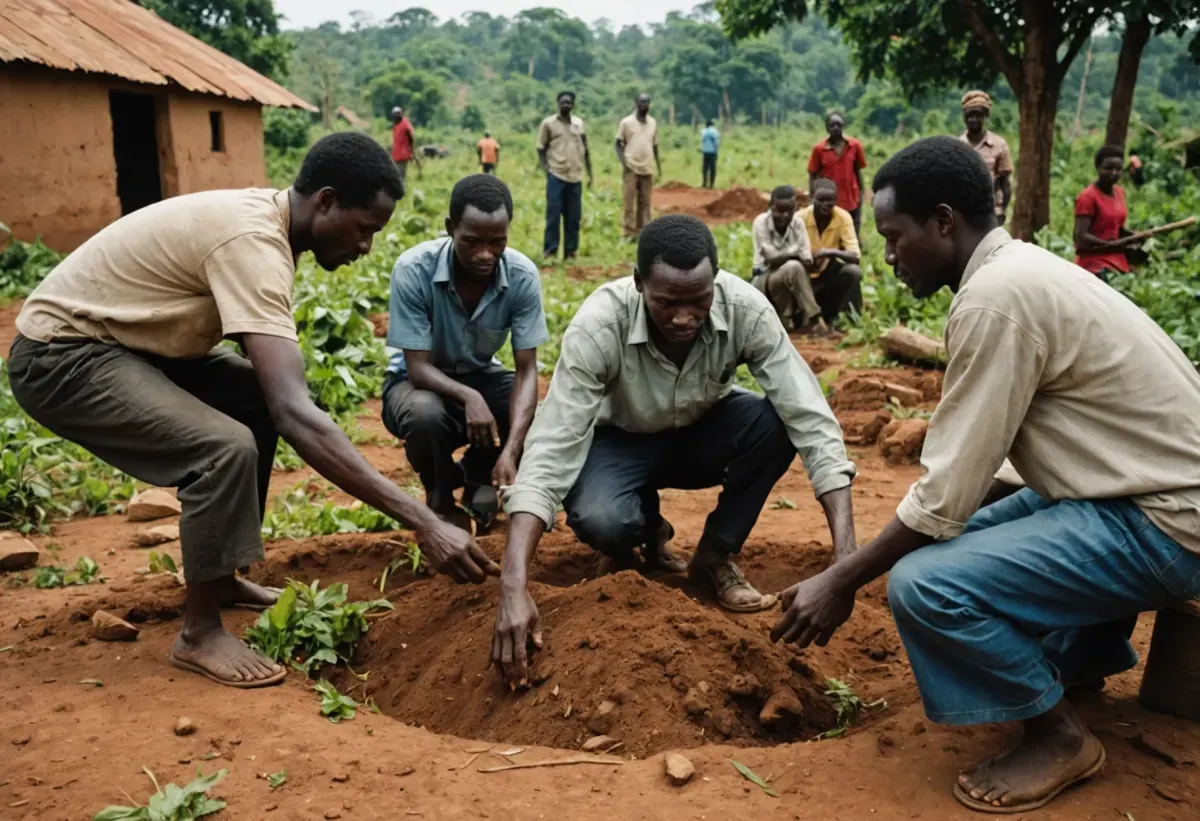
Schools registered under Uganda’s Ministry of Education and Sports run clubs and community days where learners practise this kind of service, and the habit carries into adult life.
| Voluntary activity | Where it happens | Benefit to community | Benefit to volunteer |
|---|---|---|---|
| Cleaning and weeding | Church, school, clinic | Clean, safe surroundings | Discipline, service habit |
| Coaching sport | Village football, school teams | Healthy youth, talent growth | Leadership, teamwork |
| Helping the sick and elderly | Homes, health centres | Care for the vulnerable | Compassion, patience |
| Fundraising | Church, school functions | Money for roofs, books, the needy | Planning, honesty |
| Teaching literacy | Community classes | More literate neighbours | Communication skill |
Exam tip: A question on voluntary work scores higher when you define it, quote Titus 3:14 or Galatians 6:10, give a Ugandan example, and name one benefit to the volunteer and one to the community. Browse our CRE revision courses for more support.
Frequently asked questions about career choice and personal fulfillment
What is career choice and personal fulfillment?
Career choice is selecting the kind of work you will train for and do, guided by your talents, interests and community needs. Personal fulfillment is the lasting satisfaction that comes when your work matches your abilities and values. In CRE, career choice and personal fulfillment are linked to using God-given talents and serving others, not merely chasing high pay.
How do personal talents help in choosing a career?
Talents are the abilities you do well and enjoy, such as working with numbers, speaking, building or farming. They point to careers you can learn and sustain. Matthew 25:14-30 teaches that God gives different abilities and expects each to be used. Matching talent to community needs, like mechanics or tailoring, leads to a fitting career.
What is the difference between responsibility and dedication at work?
Responsibility is accepting a duty and answering for its result, while dedication is staying faithful to that duty over time. A responsible vendor opens on time and gives correct change; a dedicated teacher keeps preparing lessons through hard seasons. Both make a worker trustworthy and dependable.
Why are determination, honesty and co-operation important in work?
Determination keeps you going through difficulty; honesty keeps your work clean and earns trust; co-operation multiplies what people can achieve together. Galatians 6:9 urges not giving up, and Galatians 6:2 calls believers to share burdens. In Uganda, farmers, vendors and SACCO members depend on all three.
Honest work provides for needs, gives dignity and purpose, and lets you serve others, all of which build happiness. Matthew 25:21 links faithful work to joy, and 1 Timothy 6:6 praises contentment. Happiness comes from clean, purposeful work, not from money alone or from dishonest gain.
Why is voluntary work important in the community?
Voluntary work is unpaid service that fills gaps, unites people and helps the vulnerable. Titus 3:14 and Galatians 6:10 command believers to do good works. In Uganda it includes cleaning churches, coaching football, fundraising and helping the sick, and it builds skills and character in the volunteer.
How should I answer a CRE exam question on career and fulfillment?
Define the key term first, add a scripture reference with its chapter and verse, give one Ugandan example, then state a benefit. For example, define talent, quote Matthew 25:14-30, name a mechanic or vendor example, and explain how using talent brings fulfillment and service to the community.
Key terms and revision summary
This revision summary brings the whole topic of career choice and personal fulfillment into one place. Learn the glossary, then attempt the exam-style questions and compare your outline with the model answers.
| Term | Meaning |
|---|---|
| Talent | A natural or developed ability given by God and used for work and service |
| Career choice | Selecting the work you will train for and do, guided by talents and needs |
| Responsibility | Accepting a duty and answering for its results |
| Dedication | Staying faithful to a task over time, even when it is hard |
| Determination | Persisting through difficulty without giving up |
| Honesty | Truthful, fair dealing with people, money and information |
| Co-operation | Working with others toward a shared goal |
| Personal fulfillment | Lasting satisfaction from work that matches abilities and values |
| Voluntary work | Unpaid service given freely for the good of the community |
| Stewardship | Caring faithfully for the people, resources and talents God entrusts to us |
Question 1: Explain how a learner can use personal talents to make a wise career choice.
Answer outline: Define talent. Identify talents through enjoyment and school subjects. Quote Matthew 25:14-30. Match talent to community needs, such as mechanics, tailoring or teaching.
State the benefit of using talent: fulfillment and service to the community.
Question 2: Describe the ideals of responsibility and dedication in work, using Ugandan examples.
Answer outline: Define both terms. Give examples: a vendor opening on time and a nurse checking patients. Add Genesis 2:15 and Proverbs 6:6-8. Explain how both build a good name and the trust of employers and customers.
Question 3: Discuss the importance of determination, honesty and co-operation in the workplace.
Answer outline: Define the three ideals. Quote Galatians 6:9 for determination, Galatians 6:7 or Leviticus 19:13 for honesty, and Galatians 6:2 for co-operation. Give a Ugandan example: a farmer replanting, a vendor giving correct change, and neighbours clearing a field. State the combined result.
Question 4: Explain the relationship between work and personal happiness.
Answer outline: State that honest work provides, dignifies and gives purpose. Quote Matthew 25:21 and 1 Timothy 6:6. Contrast with idleness and dishonest gain. Conclude that happiness follows clean, purposeful work rather than money alone.
Question 5: Why is voluntary work important in a Ugandan community?
Answer outline: Define voluntary work. Quote Titus 3:14 and Galatians 6:10. Give examples: cleaning a church, coaching football, fundraising and helping the sick. Name one benefit to the community and one to the volunteer.
Study these notes alongside your class work, and learn more about Remedial Corner for revision support built for Ugandan learners.



Leave a Reply