
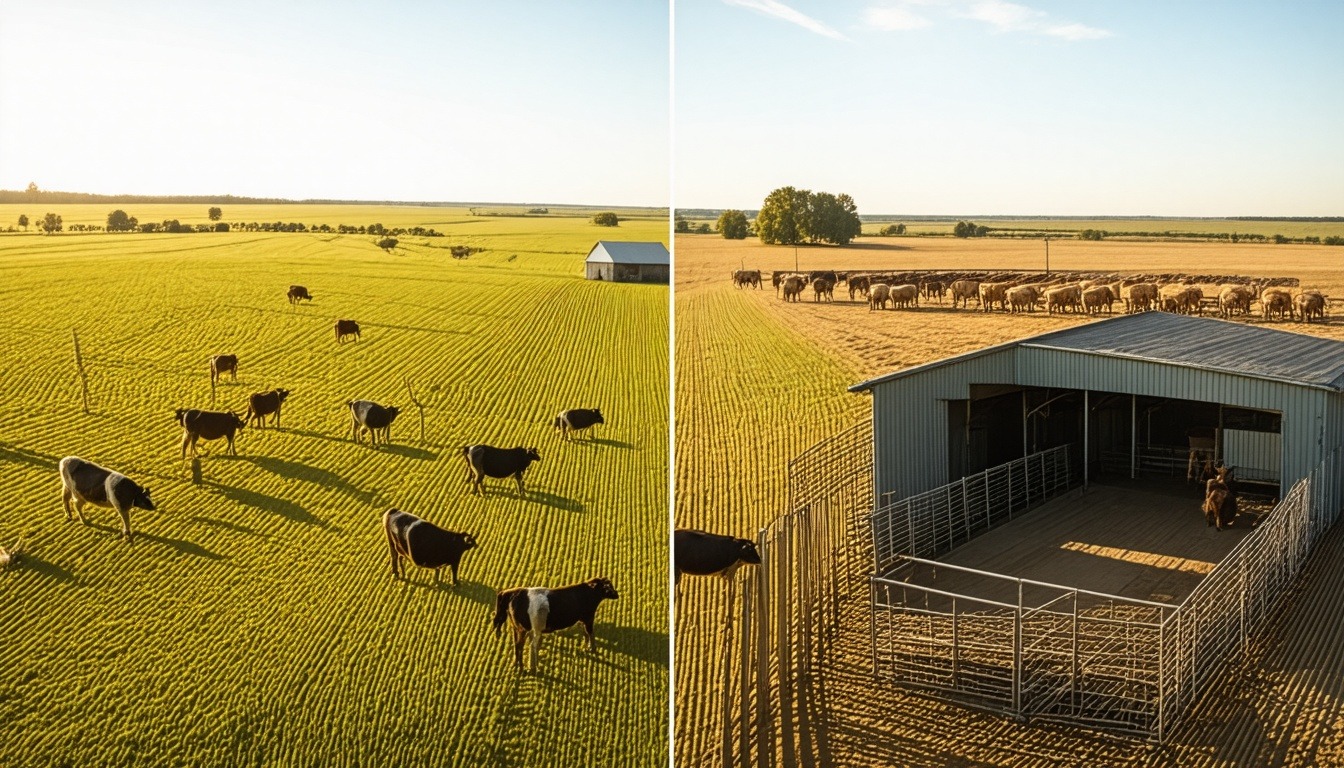
Cattle management is the practice of overseeing and caring for cattle to optimize their productivity, health, and well-being. The choice of management system determines how animals are housed, fed, bred, and handled, and directly impacts economic returns and environmental sustainability. Broadly, cattle management systems fall into three categories: extensive, semi-intensive, and intensive. These systems represent a spectrum of input intensity, land use, and capital investment. In this comprehensive guide, we will delve into each system, evaluate their features, and discuss their suitability for dairy and beef production. Whether you are a smallholder farmer or a large commercial operator, understanding the distinctions among these systems is crucial for making informed decisions.
Distinction between cattle management systems
The fundamental difference between extensive, semi-intensive, and intensive cattle management lies in the amount of external inputs (feed, labor, capital, technology) and land used per animal. Extensive systems rely on vast land areas with minimal inputs; intensive systems concentrate animals in small spaces with high inputs; semi-intensive systems fall somewhere in between. To clarify the distinction, the table below compares key parameters across the three systems.
| Parameter | Extensive | Semi-Intensive | Intensive |
|---|---|---|---|
| Land per animal | Very high (5–20 ha per head) | Moderate (0.5–2 ha per head) | Very low (0.1 ha or less) |
| Inputs (feed, fertilizer, etc.) | Minimal | Moderate | High |
| Labor requirement | Low | Medium | High |
| Capital investment | Low | Medium | High |
| Stocking density | Very low (e.g., 1 animal per 10 ha) | Medium (5–10 animals per ha) | High (>100 animals per ha) |
| Housing | None or minimal shelters | Simple shelters or night pens | Complete barns/feedlots |
| Feeding | Natural pasture grazing | Grazing + supplementation | Total mixed ration (TMR) or concentrate-based |
| Health management | Limited veterinary intervention | Regular vaccination & treatment | Proactive herd health programs |
| Productivity per animal | Low | Medium | High |
Extensive systems are common in areas with abundant land and low rainfall, such as the ranchlands of the Americas or African savannas. Intensive systems dominate in regions with scarce land and high demand for beef and milk, like the Netherlands and Israel. Semi-intensive systems are widespread among medium-scale farms in developing countries, offering a balance between productivity and cost.
Key takeaway: The distinction isn’t binary but a continuum—farms often adopt practices from more than one system to suit their unique conditions.
Evaluation of extensive cattle management
Extensive cattle management is the most traditional and land-dependent system. It relies on large grazing areas, often with native pastures, and minimal external inputs. This system is widely used in rangelands, savannas, and mountainous regions where land is cheap and abundant but pasture quality is variable.
Characteristics of Extensive Systems
- Low input reliance: Cattle feed almost exclusively on natural forage; no or little supplemental feeding is provided.
- Low labor and capital requirement: Because animals are free-roaming, fencing and handling infrastructure are minimal.
- Seasonal variation: Weight gain and milk production closely follow rainfall and grass growth patterns, leading to a “boom and bust” cycle.
- Minimal veterinary intervention: Health care is often reactive rather than preventive, and animals may go untreated unless severe illness occurs.
- Breeding is generally uncontrolled: Bulls run with cows throughout the year, leading to calving seasons spread over long periods.
Advantages of Extensive Systems
- Low financial investment: No expensive housing or feed requirements; the primary cost is land, and if land is family-owned, cash expenditure is minimal.
- Animal welfare: Animals exhibit natural behaviors—grazing, moving, socializing—which reduces stress-related diseases.
- Sustainable on proper stocking rates: When managed correctly, extensive systems can maintain grassland biodiversity and soil health.
- Resilience to price fluctuations: With low input costs, farmers can withstand periods of low beef or milk prices more easily than intensive producers.
Disadvantages of Extensive Systems
- Low productivity: Growth rates and yields are low, often 150–250 g/day for beef and 5–10 kg/day for dairy, compared to 1–1.5 kg/day and 30–40 kg/day respectively, in intensive systems.
- Vulnerability to drought and climate change: Excessive reliance on rainfall makes herds susceptible to poor nutrition and die-offs.
- Inefficient land use: Huge area per animal, which may be economically unviable in regions with high land value.
- Difficulty in health management: Farmers rarely see animals, making early disease detection nearly impossible.
- Overgrazing risk: Without careful paddock rotation, overgrazing leads to land degradation and reduced future carrying capacity.
Economic and Environmental Assessment
From an economic perspective, extensive systems offer low margins per hectare but also low capital exposure. This makes them attractive for investors seeking low-risk, low-return assets. Environmentally, they can be neutral or positive if managed under holistic planned grazing, which mimics natural herd movements. but, poorly managed extensive ranching is a leading cause of deforestation and desertification in places like the Amazon and Sub-Saharan Africa.
Evaluation of Extensive Systems for Smallholders
For smallholders, an extensive system is often the only feasible option due to limited capital. but, they can improve outcomes by introducing improved pasture, providing mineral licks, and dividing land into paddocks to control grazing. These practices move them toward semi-intensification without heavy investment.
Verdict: Extensive systems are best suited for beef cattle in expansive, low-cost land areas and for subsistence farming. They aren’t suitable for high-yield dairy production.
Features of semi-extensive cattle rearing
Semi-extensive cattle rearing is a pragmatic compromise between extensive and intensive systems. It allows cattle to graze naturally but adds inputs to boost productivity and manage risks. This system is popular among medium-scale farmers in emerging economies, where land is limited but not extremely costly.
Key Features of Semi-Intensive Systems
- Controlled grazing: Fields are fenced and divided into paddocks; rotational grazing is often practiced to maintain pasture quality.
- Supplemental feeding: During dry seasons or when pasture is scarce, farmers provide hay, silage, crop residues, or concentrates.
- Basic housing: Animals have access to simple shelters or night enclosures to protect them from extreme weather and predators. These structures may be made of locally available materials.
- Improved pasture: Farmers may introduce leguminous forages like Leucaena or Desmodium to enhance fodder quality.
- Health care: Regular vaccination and deworming are practiced, and farmers have access to veterinary services.
- Defined breeding periods: Controlled mating (e.g., seasonal calving) allows for better resource planning.
- Moderate stocking density: Typically 1–2 animals per hectare, which is higher than extensive but lower than intensive.
Advantages and Disadvantages
| Advantages | Disadvantages |
|---|---|
| Better productivity than extensive (150–400 kg beef gain/year or 8–15 kg milk/day) | Requires more labor and management skills |
| Lower capital requirement compared to intensive | Still dependent on weather and pasture growth |
| Improved animal welfare due to freedom and space | Investment needed for fencing and shelters |
| Flexible to scale up with available resources | May not achieve high enough yields for commercial markets |
| Sustainable if grazing is properly managed | Need for regular pasture renewal and maintenance |
Management Practices in Semi-Extensive Systems
To maximize efficiency, semi-extensive farmers often implement rotational grazing, where animals are moved to a new paddock every few days, allowing pasture regrowth. This practice increases forage yield by up to 30% and reduces parasite burden. Additionally, farmers may plant fodder crops like maize or Napier grass specifically for the dry season. This system also encourages the integration of livestock with crop production, as animal manure can be used to fertilize crops.
A good example is the zero-grazing semi-intensive models in Kenya, where dairy cows are kept in a zero-grazing unit during the night but graze on a small fodder plot during the day, receiving concentrates at milking.
Key takeaway: Semi-extensive systems offer a middle ground that is both economically and environmentally viable for many farms, especially where labor is available but capital is limited.
Intensive cattle management systems
Intensive cattle management involves the confinement of animals in high-density facilities where every aspect of their environment (feed, water, climate, health) is controlled to maximize output. This system is designed for maximum efficiency and is widely used in developed countries and for dairy cattle worldwide.
Components of Intensive Systems
1. Housing and Infrastructure
Animals are kept in barns, sheds, or feedlots with concrete or slatted floors. The design ensures easy cleaning, good drainage, and adequate ventilation to prevent respiratory diseases. For dairy herds, the farm typically has a milking parlor, which can be rotary or herringbone, equipped with automatic milk harvesters.
2. Feeding and Nutrition
Nutrition is scientifically formulated. Dairy cattle receive a Total Mixed Ration (TMR) composed of silage, hay, grains, oilseed meals, vitamins, and minerals. Beef cattle in feedlots are fed high-energy grain diets to achieve rapid weight gain. Water is supplied ad libitum via automatic drinkers. This precision feeding allows daily gains of 1.5–2 kg for beef and milk yields exceeding 35 kg/day for dairy.
3. Health and Biosecurity
Intensive systems implement strict biosecurity protocols, including vaccination schedules, quarantine for new arrivals, and regular footbaths for disinfection. With animals in close quarters, diseases like mastitis (dairy) and bovine respiratory disease (feedlot) can spread quickly, so vigilant monitoring is essential.
4. Breeding and Genetics
Artificial insemination (AI) and embryo transfer are commonly used. These technologies allow rapid genetic improvement, selecting for high milk yield, feed conversion, or marbling.
5. Animal Welfare Considerations
While intensive systems provide consistent nutrition and protection from weather, they often raise welfare concerns. Confinement restricts natural behaviors, leading to issues like lameness in dairy cows and tail biting in feedlot cattle. but, modern intensive systems have improved by providing enriched environments, comfortable bedding (cubicles), and precision monitoring for early detection of health problems.
Advantages and Disadvantages of Intensive Systems
| Advantages | Disadvantages |
|---|---|
| Highest productivity per animal and per unit area | High initial capital and operating costs |
| Year-round consistent production, irrespective of season | Dependence on external feed and energy supplies |
| Efficient management and collection of animal waste | Waste management challenges (nitrogen, phosphorus runoff, ammonia) |
| Reduced pressure on land, allowing farms near urban centers | Skilled labor and technical know-how required |
| Better control of diseases through biosecurity | Risk of rapid disease spread due to high density |
| Animal welfare can be maintained with good design | Potential for negative public perception regarding animal confinement |
Examples of Intensive Systems
- Dairy zero-grazing: Cows are housed all year, with no access to pasture. Common in Israel, Netherlands, and parts of the US.
- Beef feedlots: Concentrated Animal Feeding Operations (CAFOs) where cattle are fed high-grain diets for the last 90–120 days before slaughter. Mainly used in the US, Australia, and Canada.
- Stall-fed smallholder dairying: In many Asian and African cities, urban farmers keep cows in stalls and bring chopped fodder to them. This is a low-capital but intensive system due to the lack of grazing.
Verdict: Intensive systems are essential for meeting the protein demands of a growing global population. but, they must be adopted with a focus on sustainability and animal welfare.
Suitability of management systems for dairy and beef cattle
The choice of management system significantly impacts the profitability, animal health, and environmental footprint of cattle farming. Different classes of cattle—dairy versus beef—have different metabolic and behavioral needs. Let’s examine which system is most suitable for each.
Suitability for Dairy Cattle
Intensive systems are the most suitable for high-yielding dairy breeds such as Holsteins and Jerseys. These animals produce large quantities of milk (30–50 kg per day), requiring an energy-dense diet that can only be provided through TMR feeding. Intensive housing also protects the udder from environmental pathogens and facilitates milking. Countries like Israel and Germany rely almost exclusively on intensive dairy systems.
Semi-extensive systems can work in smallholder dairy farming, especially for indigenous or crossbred cattle that produce 5–15 kg per day. for instance, in the Kenyan Highlands, cows graze on Napier grass for a few hours and receive supplements at milking. This system reduces feed costs and maintains some cow comfort.
Extensive systems are generally not suitable for dairy because low and fluctuating nutrition results in unacceptably low milk yields, and long distances to gathering points make daily milking impractical. but, in some pastoral communities, zebu cattle are milked after grazing, but yields are often below 3 kg/day.
Suitability for Beef Cattle
Extensive systems are ideal for cow-calf operations and backgrounding. The vast rangelands of Brazil, Australia, and Argentina produce beef at very low cost, with animals gaining weight slowly on grass. These systems are suitable for mature bulls, heifers, and steers not intended for high-grade markets. They are also more environmentally sustainable in terms of carbon footprint.
Semi-intensive systems are recommended for finishing cattle where grain supplements are available. For instance, a farmer might graze cattle for 18 months and then feed them concentrates for the final 3–4 months to achieve desirable carcass weight and marbling. This is common in Southern Africa and parts of Europe.
Intensive feedlots are best for producing high-quality, marbled beef quickly. In the US, cattle in feedlots gain 1.5–2 kg/day and are marketed at 12–14 months. This system is preferred for high-end restaurant markets where texture and flavor are prized.
Comparative Table: Which System Suits Whom?
| System | Dairy (Production Level) | Beef (Production Level) | Suitable Producer Profile |
|---|---|---|---|
| Extensive | Low (5 kg/day) – only indigenous breeds | Low (0.2 kg ADG) – pasture-fed beef | Pastoralists, ranchers with large low-cost land |
| Semi-Intensive | Medium (10–15 kg/day) – crossbreds | Medium (0.6 kg ADG) – finished on supplements | Small to medium farmers with manageable capital |
| Intensive | High (30+ kg/day) – Holsteins | High (1.5 kg ADG) – feedlot marbled beef | Commercial operations with high investment ability |
Factors Influencing the Choice of System
- Land availability and quality: More land favors extensive; limited land pushes towards intensive.
- Climate and rainfall: Arid areas can’t support intensive pastures, so extensive systems dominate.
- Capital and access to credit: Intensive systems require substantial loans for building and feed.
- Labor cost: In developing countries, low labor costs make semi-intensive attractive.
- Market demands: Processors often require consistent, high-quality products, favoring intensive systems.
- Government policies: Subsidies, environmental regulations, and land tenure can influence the system.
Bottom line: There is no one-size-fits-all. Dairy producers seeking maximum yield should opt for intensive systems, while beef producers with abundant land should consider extensive. Semi-intensive remains the most flexible compromise.
Conclusion
Cattle management systems exist on a continuum from extensive to intensive. Although each system has its strengths and weaknesses, the choice should be guided by available resources, environmental conditions, production goals, and market context. Extensive systems offer low-cost, low-input production but yield low output per animal and per hectare. Semi-intensive systems provide a balanced approach, increasing productivity without exorbitant costs or welfare compromise. Intensive systems achieve the highest efficiency but demand high investment and careful management to mitigate risks like disease and environmental pollution.
The global push for sustainable food production is driving a convergence: extensive systems are adopting improved pasture management and rotational grazing to boost productivity, while intensive systems are investing in technology to reduce waste and improve animal comfort. Understanding the distinctions—and evaluating which system works best for your specific cattle type—is the first step toward successful cattle farming. Whether you raise dairy or beef, the ultimate goal is to produce healthy animals, protect the environment, and maintain a profitable enterprise.
Frequently Asked Questions
What is the difference between extensive and intensive cattle management?
Extensive cattle management relies on large land areas with low animal density and minimal feed, labor, and infrastructure. Intensive cattle management confines animals in small spaces with high inputs (feed, labor, capital) to maximize productivity. Extensive systems are land-extensive and input-extensive, while intensive systems are land-saving but input-intensive.
Which cattle management system is best for dairy farming?
Intensive systems are generally best for high-yielding dairy farming because they allow precise nutrition, milking, and health control, resulting in higher milk yields (30–50 kg/day). Semi-intensive can be suitable for smallholder dairy with crossbred cows (10–15 kg/day). Extensive is only viable for low-yield indigenous breeds.
What are the advantages of semi-extensive cattle rearing?
Semi-extensive systems combine grazing with supplementation and basic housing. Advantages include lower capital costs than intensive, better animal welfare than intensive, higher productivity than extensive, and reduced pressure on land. It’s a flexible system that can be improved gradually as resources allow.
How does intensive cattle management affect animal welfare?
Intensive systems can compromise welfare if animals are overcrowded or kept on hard floors, leading to lameness, stress, and disease. but, modern intensive systems with comfortable cubicles, proper ventilation, and enrichment can offer good welfare, and they provide consistent feeding and protection from harsh weather. Concern remains about the lack of natural grazing, but with proper design, welfare can be maintained.
Can extensive systems be sustainable in modern agriculture?
Yes, extensive systems can be sustainable if grazing is managed to prevent overexploitation. Practices like rotational grazing, herding, and maintaining native vegetation can preserve ecosystems and soil health. The low carbon footprint and high animal welfare make them attractive, but land fragmentation and climate change pose challenges.



Leave a Reply