
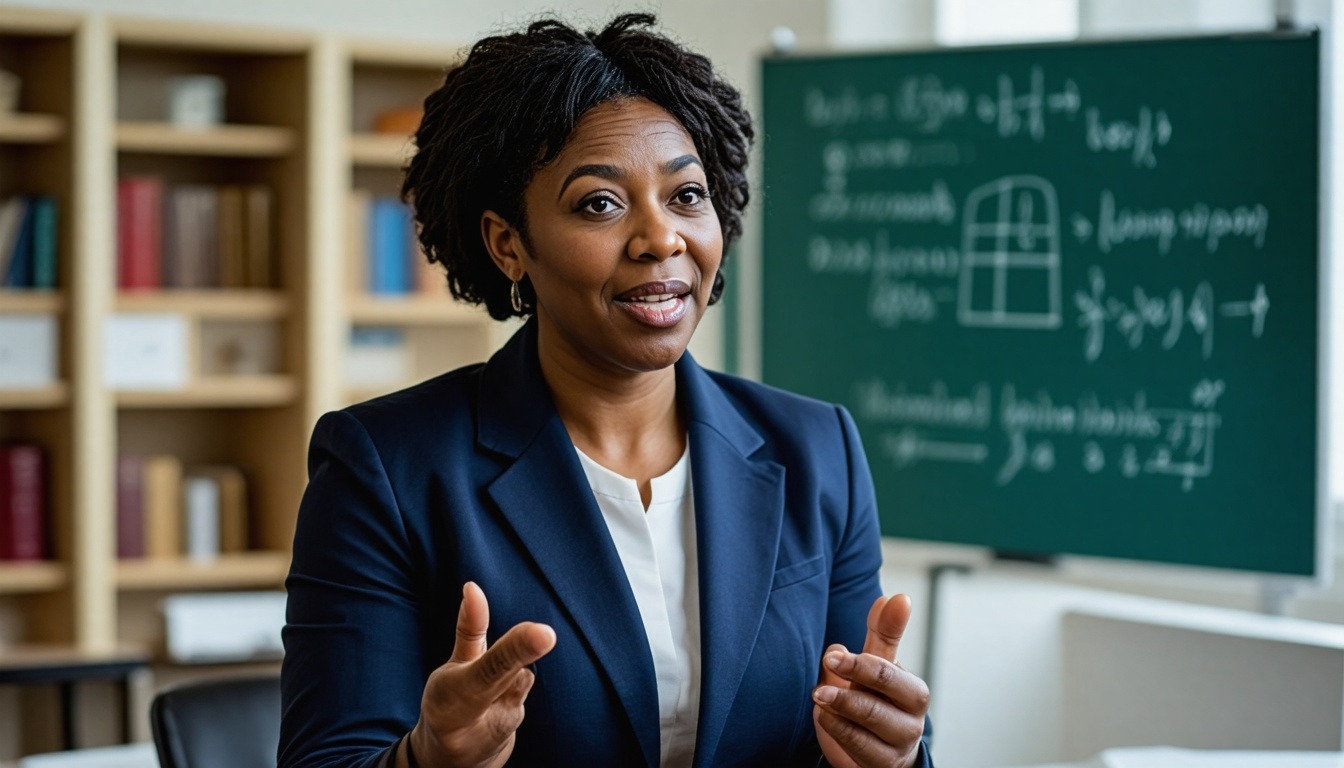
Mathematics is a hot topic in education. Should it be compulsory in secondary school? Some say yes. Others say no. To get clarity, we spoke with Dr. Sarah Mitchell. She is an education researcher with 20 years of experience. She has studied math curricula worldwide. Her insights are fresh and practical. Read on for a deep dive.
Meet the Expert: Dr. Sarah Mitchell
Dr. Mitchell is a professor at a leading university. She has written many papers on math education. She also advises schools on curriculum design. Her approach is balanced. She sees both sides of the debate. She believes in evidence-based answers. Let’s hear what she has to say.
Why Is Math So Debated?
Question: Why do people argue about compulsory math?
Dr. Mitchell: “Because math is powerful. It opens doors. But it also causes stress. Many students hate it.” She explains that the debate is about values. Some want practical skills. Others want academic rigor. The real question is: What is math for? “We must decide its purpose.”
Some argue that algebra is useless. Others say it trains the brain. Dr. Mitchell thinks both are right. “Math has many benefits. But we need to teach the right math.” She adds, “The current curriculum is often outdated.”
What Are the Benefits of Compulsory Math?
Question: What are the strongest arguments for making math compulsory?
Dr. Mitchell: “Math is everywhere. You need it for money, work, and daily life.” She lists key benefits:
- Critical thinking: Math teaches logic and problem-solving.
- Career readiness: Many jobs require math skills.
- Financial literacy: Understanding interest, budgets, and taxes.
- Equity: Compulsory math ensures all students get these skills.
She also mentions that math builds resilience. “Students learn to try again. They learn from mistakes.” That’s a life skill. Not just a school skill.
Here is a quick comparison table:
| Pros | Cons |
|---|---|
| Teaches logic | Causes anxiety |
| Required for STEM careers | Not relevant to all jobs |
| Builds problem-solving skills | Can be taught poorly |
| Ensures basic numeracy | May discourage creative students |
The table shows the trade-offs. Dr. Mitchell adds, “The benefits depend on how math is taught.”
What Are the Drawbacks?
Question: What do critics say about compulsory math?
Dr. Mitchell: “Forcing math can backfire. It can cause fear and hate.” Many students feel anxious in math class. This anxiety can last a lifetime. “They avoid anything with numbers.”
Another criticism is time. “Students spend hours on algebra. They could learn other skills.” for instance, coding or financial planning. “Not every student needs calculus.” She mentions Finland. There, math is less intense. But students still do well. “It’s about balance.”
Some experts say that math should be optional after age 14. That way, students can focus on their passions. Dr. Mitchell sees this view. But she also worries about equity. “If math is optional, some students will skip it. Then they miss out on future opportunities.”
Should Math Be Optional After a Certain Age?
Question: Do you think math should be optional? If so, when?
Dr. Mitchell: “I think we should make it compulsory until age 16. That ensures basic skills.” After that, students can choose. But she adds a condition. “The math must be relevant. No abstract proofs. Instead, real-world applications.”
She suggests offering different tracks. One track for STEM students. Another for arts and humanities. “Both tracks include math. But they use different examples.”
In her view, the current system is too rigid. “We teach the same math to everyone. That is a mistake.” She wants personalized learning. “Every student can learn math. But at their own pace.”
What Skills Do Students Actually Need?
Question: What math skills are most important for life?
Dr. Mitchell: “Mental arithmetic, percentages, and basic statistics.” These are used every day. “You need to understand interest rates.” You also need to read graphs. “Today, data is everywhere.” She suggests focusing on these core skills.
She also mentions reasoning. “Math teaches you to think clearly.” That is more valuable than memorizing formulas. “The goal is to make informed decisions.”
Practical advice: “Ask your child to calculate discounts.” Or “Discuss news statistics together.” These simple activities build skills.
How Should Math Be Taught?
Question: What teaching methods work best?
Dr. Mitchell: “Active learning is key. Students must do, not just listen.” She recommends group work and projects. “for instance, plan a budget for a trip.” This makes math tangible.
She also urges teachers to connect math to real life. “Show how geometry is used in art.” Or “How statistics are used in sports.” When students see relevance, they engage more.
Technology can help. “Use apps and simulations.” But she warns: “Tech is a tool, not a substitute.” Good teaching still matters.
She also highlights the importance of a growth mindset. “Praise effort, not just answers.” Students need to feel safe to make mistakes. “Mistakes are learning opportunities.”
What About Students Who Struggle?
Question: What can we do for students who find math hard?
Dr. Mitchell: “First, identify the root cause.” Some students have dyscalculia. Others just have math anxiety. “Both need different support.”
For anxiety, she suggests reducing pressure. “Allow extra time on tests.” “Offer alternative assessments.” for instance, oral presentations instead of written tests.
For learning gaps, use interventions. “Small group tutoring works well.” Also, use visual and hands-on tools. “Manipulatives help abstract concepts.”
The key is early intervention. “Don’t wait until high school.” Address issues in primary school. Kids who fall behind often stay behind.
She also advises parents: “Be positive about math.” Don’t say ‘I was bad at math.’ That sends a negative message. Instead, say ‘Math takes practice.’
What Is the Future of Math Education?
Question: How will math education change in the next decade?
Dr. Mitchell: “We will see more personalized learning.” AI will adapt lessons to each student. “No more one-size-fits-all.” Students will get instant feedback.
She predicts more focus on data literacy. “Schools will teach how to interpret data.” This is already important. It will become essential.
Also, new subjects like coding may merge with math. “Learning to code is logical thinking.” So computer science might be part of math class. “Or math might be part of computer science.”
She cautions, though, that technology can’t replace human teachers. “The best teacher is still a person.” AI will assist, but not replace.
Practical Advice for Parents and Educators
Question: What should parents and teachers do now?
Dr. Mitchell: “Show enthusiasm for math.” If you love it, your kids will too. “Find math in everyday life.” Cooking, shopping, and sports all use math.
For teachers, she recommends project-based learning. “Let students explore big questions.” for instance, ‘How do we design a park?’ This uses geometry, area, and budget.
She also says to reduce drill. “Repetition is boring.” Instead, use games and puzzles. “Make math playful.”
For schools, she advises flexible timing. “Some students need more time.” Allow them to take math over a longer period. “That prevents burnout.”
Finally, she reminds us: “The goal isn’t to create mathematicians.” It is to create capable citizens. “Math is a tool for life.”
Conclusion
So, should math be compulsory? Dr. Mitchell says yes. But only if we teach it well. She wants relevant, engaging, and personalized math. She wants less stress and more application. Her advice is clear: make math useful. Then it will be valued.
Education is always evolving. We must adapt. The future of math is bright. But it requires change. Let’s listen to the experts. Let’s put students first.
Frequently Asked Questions
Is math really necessary for everyday life?
Yes, math is everywhere. You use it for money, cooking, and time. Even simple tasks need math. for instance, comparing prices. Or measuring ingredients. Basic math is vital.
What if a student struggles with math despite trying?
Struggling doesn’t mean failure. It means the approach may need to change. Try different methods. Use visuals, games, or tutoring. Also check for learning disabilities. Early help is crucial.
Should students be forced to take math if they hate it?
Forcing can work if done kindly. The goal is to make math less scary. Show its relevance. Use real-world examples. If students see value, they may change their minds. But respect their feelings.
What are the best math apps for secondary students?
Many apps are great. Khan Academy, Photomath, and Prodigy are popular. They offer practice and explanations. Choose one that matches your child’s level. Use them as supplements, not substitutes.
Will AI replace the need for math skills?
AI can calculate fast. But you still need to understand concepts. for instance, you must know if an answer makes sense. AI can’t think for you. So math skills remain important.
In short, math isn’t just a subject. It’s a life skill. The expert interview shows the need for change. But compulsory math is still the best choice. We just need to teach it better.



Leave a Reply