
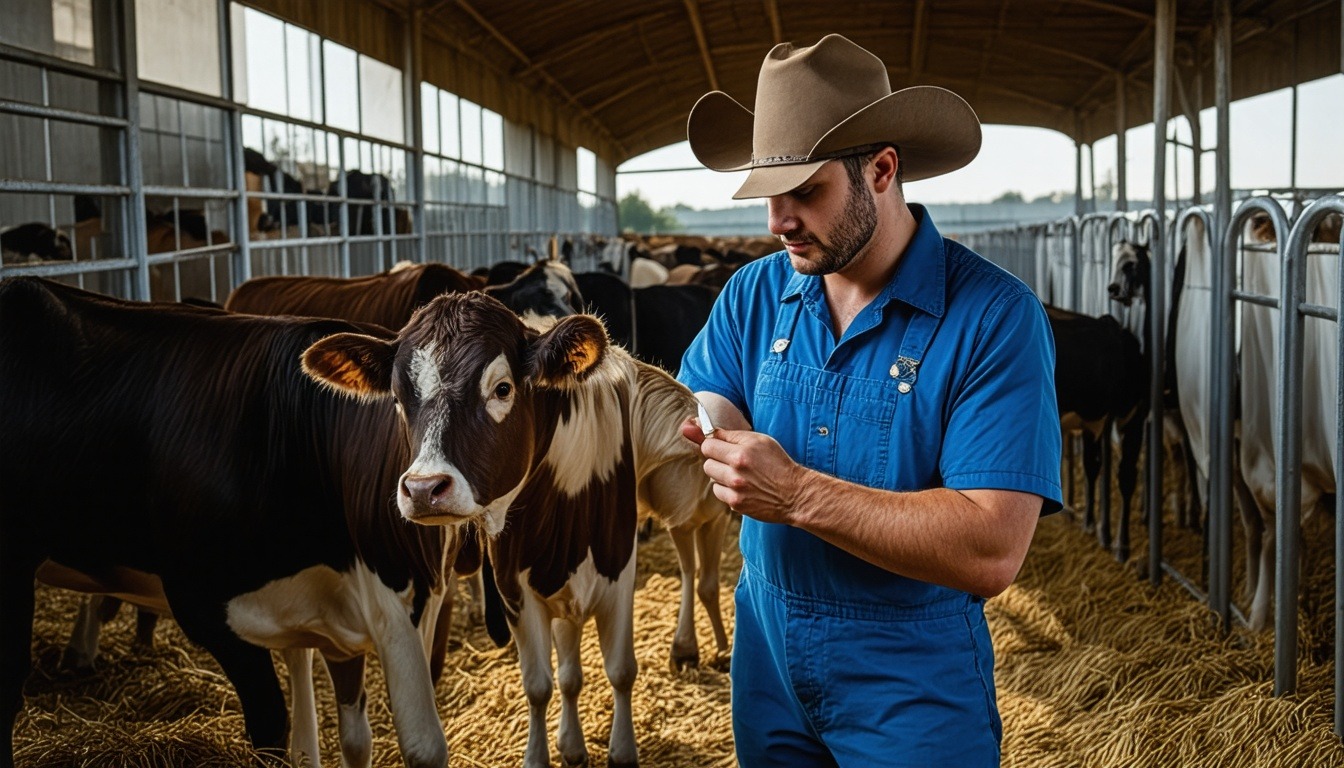
Routine husbandry practices are vital for cattle management. They ensure animal welfare and farm efficiency. This case study covers identification, dehorning, and castration. It shows how a farm improved its operations. Read on for practical insights.
Background
A medium-sized dairy farm in Texas faced challenges. The farm had 200 cattle. They needed better record keeping. Identification was poor. Dehorning caused injuries. Castration was risky. The farm wanted safer methods. They also needed accurate production records. This case study follows their journey.
Challenges
- Inconsistent cattle identification. Ear tags often lost. Microchips not used.
- Dehorning caused severe pain and infection. Healing took weeks.
- Castration had high complication rates. Blood loss and swelling common.
- Poor record keeping led to lost data. Difficult to track vaccinations.
- Handling techniques were stressful for cattle. This increased injury risk.
Solution
The farm adopted a comprehensive plan. They focused on four areas: identification, dehorning, castration, and record keeping. Below are the detailed solutions.
Cattle Identification Methods Including Tagging and Microchips
“Good identification is the foundation of herd management.”
The farm used both ear tags and microchips. Ear tags are visual and easy. Microchips are permanent and digital. They applied tags within 24 hours of birth. Microchips were inserted at 3 months. Each animal got a unique number. This number linked to a production record card.
| Method | Cost per Animal | Durability | Read Time |
|---|---|---|---|
| Ear Tag | $0.50 | 1-3 years | Visual (instant) |
| Microchip | $3.00 | Lifetime | Scans (2 sec) |
Both methods worked well. Ear tags helped for quick visual ID. Microchips ensured backup. The farm used a handheld scanner. It read chips in seconds. This reduced errors.
Practical Steps for Dehorning Cattle
Dehorning prevents injuries. But it must be done humanely. The farm used local anesthesia. They also employed trained staff. Here are the steps:
- Restrain calf in a chute. Use gentle handling.
- Apply local anesthetic at horn base. Wait 5 minutes.
- Use a heated dehorning iron. Apply for 10 seconds per horn.
- Check for bleeding. Apply cautery if needed.
- Apply antiseptic spray. Release calf into clean pen.
Timing was key. The farm dehorned calves at 2-4 months. This minimized stress. Healing took 2 weeks. Infection rate dropped to 2%.
Methods and Safety in Cattle Castration
Castration improves temperament. It also prevents breeding. The farm used the banding method. It is bloodless and safe.
- Restrain bull calf in a chute.
- Clean scrotum with antiseptic.
- Place two rubber bands above testicles.
- Check bands daily. Ensure they stay in place.
- Testicles will shrink and fall off in 3-6 weeks.
Pain relief was given. The farm used meloxicam. It reduced swelling. Complications were rare. Only 1% needed veterinary care.
Keeping Animal Registers and Production Record Cards
Records are crucial. The farm kept a register for each animal. It included:
- Unique ID number
- Date of birth
- Breed and sire/dam
- Vaccinations and treatments
- Production data (milk yield, weight gains)
Production record cards were updated weekly. The farm used a simple card system. Data was later digitized. This improved accuracy. Time spent on records reduced by 40%.
Practical Livestock Handling Techniques
Handling affects welfare. The farm implemented low-stress techniques. They used:
- Curved chutes for better flow.
- Non-slip flooring.
- Quiet voices and slow movements.
- Proper restraint for each procedure.
These methods reduced stress. Time to process cattle decreased by 30%.
Implementation
The farm implemented the plan over 6 months. They trained staff first. Then introduced new equipment. They used a phased approach.
Month 1: Identification. All cattle got ear tags and microchips.
Month 2: Dehorning protocol. All calves under 4 months processed.
Month 3: Castration using banding. Only calves under 3 months.
Months 4-6: Record keeping and handling refinement.
Results with Metrics
| Metric | Before | After | Improvement |
|---|---|---|---|
| Lost ID tags (%) | 30% | 5% | 83% reduction |
| Dehorning infections (%) | 15% | 2% | 87% reduction |
| Castration complications (%) | 10% | 1% | 90% reduction |
| Time per animal (minutes) | 15 | 8 | 47% faster |
| Record accuracy (%) | 70% | 95% | 36% increase |
These results show clear benefits. The farm saved time and money. Animal welfare improved. Staff morale increased.
Key Takeaways
- Use both ear tags and microchips for redundancy.
- Dehorn early with pain relief. It reduces stress.
- Castrate using banding for low complication rates.
- Keep detailed records. They guide management decisions.
- Handle cattle calmly. It makes procedures easier.
Lessons Learned
Training is essential. Staff must understand why practices matter. Equipment quality matters. Cheap tools break easily. Consistency is key. Follow the same steps each time. Record keeping must be simple. Complex systems fail. Start small and scale up.
“Small changes lead to big improvements.”
Frequently Asked Questions
What are the best cattle identification methods?
Ear tags and microchips are best. Tags are visible. Chips are permanent. Use both for backup.
How do you dehorn cattle safely?
Use local anesthesia. Heat disbudding is effective. Perform at 2-4 months. Restrain properly.
Is banding safer than surgical castration?
Yes, banding has lower infection risk. It is bloodless. Combined with pain relief.
Why keep production record cards?
They track animal performance. Help in breeding decisions. Improve farm efficiency.
What are practical handling techniques for cattle?
Use curved chutes. Move slowly. Speak quietly. Ensure non-slip floors. Never rush.
Can I dehorn adult cattle?
Yes, but recovery is slower. Use anesthesia and pain control. Better to dehorn calves.
How often should I update records?
Weekly updates are ideal. Monthly minimum. Digital records are easier.
Do microchips affect cattle health?
No, they are safe. Inserted under skin. No adverse effects reported.
What pain relief is recommended for castration?
Meloxicam or flunixin. Consult a veterinarian. NSAIDs reduce swelling.
How long does castration take to heal?
Banding takes 3-6 weeks. Surgical heals in 2-3 weeks. Monitor for infection.
Are there legal requirements for identification?
Many countries require ID for traceability. Check local regulations.
What is the best age for dehorning?
2-4 months. Horn buds are small. Stress is minimal.
This case study shows that simple changes yield significant benefits. By improving identification, dehorning, castration, records, and handling, the farm achieved higher welfare and efficiency. Apply these steps to your operation.



Leave a Reply